
This is a articles category subcategory of Stories

Discursive Veto. How Kosovo and Historical Narratives Enable Serbia to Maneuver Between East and West?
Author: Daria Vorobiova Serbia in the modern geopolitical situation is perceived as a country caught between two fires: the West and the East. Its indicative neutrality, not associating itself with any global organization and acting as a "third party," is telling. In reality, this political ambivalence has calculated mechanisms used by statesmen to preserve their political position and policy of "securing funding without additional obligations," while in return manipulating public opinion. Illustration photo. Retrieved from Pexels (www.pexels.com) Neither to the West, nor to the East Looking at survey results on the political preferences of Serbs reveals a deeply divided population: for instance, a telling example is the 2023 WFD survey. It showed that 43% of Serbs believe they should rely on Russia in international relations, and only 25.8% of respondents stated they should rely on the European Union. Also notable is the question of whether Serbia belongs to the West or the East: 42% of respondents answered that Serbia is not part of either, while the same proportion answered logically about belonging to the West or the East. Serbian society is extremely fragmented in its political preferences: this problem leads to a general instability of civic engagement in politics, as without consensus among the sides, it is impossible to exert strong civic influence on the political life of the state as a whole [1]. How much does the state influence the political preferences of Serbs? Following data from the same survey, it is evident that 59.2% of respondents note that they view political information about events in Serbia through television. The state exerts sufficient influence on television, considering channels like RTS, RTV Pink, Happy TV, which are known for publishing information deliberately portrayed in a light favorable to the state. Under such conditions, the question arises – if a large number of citizens receive such information, can their political preferences be genuinely logical and justified? [2] Also, television programs have been observed deliberately portraying the EU in a bad light, while Russia is presented in the moral image of a fraternal state. The key problem with this presentation of information is the excessive moralization of "good" Russia and "bad" European Union. Typically, this moral assessment is based solely on subjectivity, in no way appealing to rational reflections on the benefits of such "friendship" for Serbia [3]. And it is precisely the "moral" justification, as well as the "moral boundaries of the permissible," that allow Serbian politicians to maintain their position for as long as possible, instilling in citizens an unstable pluralism of opinions to weaken their civic stance. The problem of "moralizing" politics as a key factor of ambivalence This appeal to everything moral begins with historical origins and serves as the foundation for forming nationalist narratives. The narratives consist of three components: the "victim question," the "pride question," and the main unifying factor, the moral discursive veto point. By combining these components, it becomes possible to manipulate public opinion, set the boundaries of discourse to slow down potential civic activity, and at the necessary moment say: "here is the boundary you must not cross." The "victim question" is characterized by a moral appeal to grievance, primarily towards the West, which in the narratives is viewed as a military aggressor (following the events of 1999) protecting Kosovo (which is a sacred question of the origin of statehood), and also as an economic usurper (the European Union as an economic organization where, upon accession, Serbia would lose its informal independence). An image of an enemy is created, but also an image of a savior, a potential "fraternal state" that can selflessly help Serbia escape crude dependence on the "humiliating" West. Russia occupies this role, but in the case of investments and their positive influence, China can also be considered. The "pride question" is characterized by a centuries-long history of battles (for example, the Battle of Kosovo) and the preservation of the nation and its culture during long periods of statelessness. This factor is supposed to act as a unifying force ("we have only ourselves, and no one will help us except us") and one that reduces the factor of destabilization, since there are "enemies" against which Serbia must be ready to act as a united front in case of danger. The unifying factor is the Kosovo question – less as a territorial issue and more as a discursive veto point: it marks the limit beyond which reform, recognition, or alignment becomes politically illegible. Since many reforms for EU accession and funding require normalization of relations with Kosovo and its recognition as a separate state, Serbian politicians (for example, Aleksandar Vučić) support the aforementioned narratives precisely on this issue. A. Vučić's speech on 04.11.2025 in Brussels: «Neću da priznam Kosovo da bismo ušli u EU» ("I will not recognize Kosovo so that we enter the EU") [4]; In an address to the people of Kosovo: «ne postoji „dobro rešenje kosovskog problema za Srbe“ i da ga nikada neće biti» ("there is no 'good solution to the Kosovo problem for Serbs' and there never will be"), «Srbi bili najstradalniji narod na Kosovu» ("Serbs were the most suffering people in Kosovo") [5]; speech at the Palace of Serbia: «Vučić je rekao da je Kosovo (...) našom zemljom u skladu sa Ustavom Republike Srbije i Poveljom Ujedinjenih nacija i Rezolucijom 12.44» ("Vučić said that Kosovo (...) is our land in accordance with the Constitution of the Republic of Serbia and the Charter of the United Nations and Resolution 1244") [6]. These three factors help form a stable national narrative, which allows simultaneously maintaining the image of the EU as an "enemy" while preserving active economic relations. Naturally, it is assumed that when using this funding as outlined in the documentation, Serbia should join the European Union after meeting all conditions. Is such a policy feasible? Active neutrality Serbia's neutrality is not an absence of policy but its active form, maintained by state elites through media propaganda, fragmenting Serbian society and helping to brake at the right moments and shift the blame to the "enemy," not to Serbia. The European Commission has noted that Serbia is moving too slowly in implementing necessary reforms, especially those related to freedom of speech, eliminating corruption, and normalizing relations with Kosovo [7]. The question of slowness also became important in cases where the EU itself delayed necessary payments to Serbia, demanding additional guarantees that the funds would be spent in the intended direction [8]. Such neutrality helps Serbian political elites navigate relations with the European Union: maintaining the possibility of obtaining economic and political resources while keeping a political distance from it, simultaneously shifting responsibility for the stagnation of reforms onto "enemies" and unsolvable historical traumas inflicted by these same "enemies." The price of this strategy is the weakness of fragmented civic pressure, the slowdown of necessary reforms, and the dependence of the political course on a constantly perpetuated conflict that does not approach resolution if Serbia truly chooses a European path. In this context, the key question is not which side Serbia will join in the future, but how long civil society can exist in a state-managed ambivalence, how long it can survive without the reforms it tries to grasp through protests. Bibliography: “Opinion Poll Report: Socio-political Views of Serbian Citizens in 2023.” WFD. Westminster Foundation for Democracy (WFD), Serbia, 2023. https://www.wfd.org/sites/default/files/2023-04/wfd_nws_2023_eng_final.pdf. “Defunding Disinformation in the Balkans. How International Brands Support Russia’s Agenda.” by BFMI & CRTA, n.d. https://crta.rs/wp-content/uploads/2023/12/CRTA_BFMI_Defunding_Disinformation_in_the_Balkans_Report.pdf. “Media Monitoring of Foreign Actors.” CRTA. https://crta.rs/en/media-monitoring-of-foreign-actors-november-2024/. B92. “Vučić: Neću Da Priznam Kosovo Da Bismo Ušli U EU; Postoji Mogućnost Da Otvorimo Klaster 3 Pre Kraja Godine.” B92.net, November 4, 2025. https://www.b92.net/info/politika/178701/vucic-necu-da-priznam-kosovo-da-bismo-usli-u-eu-postoji-mogucnost-da-otvorimo-klaster-3-pre-kraja-godine/vest РТС. “Vučić Za Veltvohe: Potrebno Kompromisno Rešenje Za KiM, a Ne Da Albanci Dobiju Sve, a Srbi Ništa,” n.d. https://www.rts.rs/lat/vesti/politika/5462184/vucic-za-veltvohe-potrebno-kompromisno-resenje-za-kim-a-ne-da-albanci-dobiju-sve-a-srbi-nista.html. Urednik. “Vučić Odgovorio Evropskom Diplomati: Kosovo Je Dio Srbije - Top Portal.” Top Portal, November 6, 2025. https://topportal.info/vucic-odgovorio-evropskom-diplomati-kosovo-je-dio-srbije/. Belgrade, N1. “EC Report Says Serbia Slow on Credible Reforms.” N1 Info RS, November 4, 2025. https://n1info.rs/english/news/ec-report-says-serbia-slow-on-credible-reforms/. Rakic, Snezana. “Why Is Serbia Still Waiting for EU Funds That Its Neighbours Have Received?” Serbian Monitor, May 23, 2025. https://www.serbianmonitor.com/en/why-is-serbia-still-waiting-for-eu-funds-that-its-neighbours-have-received/.

Functioning Is Not the Same as Being Well
Author: Stamena Kozić, a high school student from Serbia In the Balkans, mental health is often recognized only when it reaches an extreme. As long as a person continues to function-attending school, going to work, fulfilling responsibilities-this is treated as proof of stability. Functioning becomes evidence that everything is "fine", even when it's not. As a result, struggles such as anxiety, depression and burnout are rarely seen as legitimate unless they interfere with productivity. The ability to keep going is praised, while the cost of doing so remains invisible. Illustration photo. Retrieved from Pexels (www.pexels.com) However, data tells a different story. Research conducted in Serbia alone shows that approximately one-third of the population can be considered psychologically vulnerable. Around 15.6% of people report symptoms of depression, 7.2% experience symptoms of anxiety, and 1.6% are at high risk of suicide. These numbers exist alongside everyday functioning, challenging the idea that productivity equals well-being. Mental health in Balkan schools In the Balkans, seeing a psychologist is still not normalized within the school system and is often perceived as a last resort rather than a form of prevention or care. Students are typically referred to school psychologists only after being labeled as “problematic,” when their difficulties become visible through academic failure, behavioral issues, or a noticeable decline in productivity. These markers are treated as the primary indicators of distress, while emotional suffering does not necessarily disrupt performance and remains largely unaddressed. Well-performing students—those who maintain good grades, attend classes regularly, and meet institutional expectations—are rarely checked on or encouraged to seek support. This creates an environment in which psychological help is associated with dysfunction and punishment rather than well-being. As a result, schools unintentionally reinforce the idea that as long as a student continues to function, there is no need for help, even if that functioning comes at the cost of mental and emotional health. This mindset is especially dangerous because many mental health conditions do not immediately disrupt outward functioning. Disorders such as eating disorders often operate within this logic of "not being sick enough." Individuals may continue to perform well academically or socially, leading both themselves and others to believe there is no reason to seek help. This delay in recognition frequently allows the condition to worsen, increasing both psychological and physical risks. In extreme cases, the consequences of untreated mental illness can be fatal—underscoring the cost of a system that equates visible dysfunction with the legitimacy of suffering. Why Mental Health Remains a Taboo in the Balkans? Mental health continues to be a taboo in the Balkans largely because the region's recent history has been defined by survival rather than stability. Wars, political transitions, and prolonged economic insecurity have shaped societies in which endurance is valued more than emotional openness. In such environments, psychological distress was often viewed as luxury concern, something secondary to immediate survival. As a result suffering became normalized as an expected part of life, rather than recognized as a condition that deserves care and attention. Stigma surrounding professional mental health support further reinforces this mindset. Therapy and psychiatric care are frequently associated with severe illness or social failure, rather than prevention or self-understanding. As the aforementioned research shows, many people seek help only when their condition becomes unmanageable, if they seek it at all. This is compounded by structural barriers: mental health services across the region remain underfunded, unevenly distributed, and difficult to access, particularly for young people. Long waiting times, limited school-based support, and high costs in private care discourage early intervention. Over time, emotional restraint has been learned and passed down across generations. Parents and grandparents who endured hardship without psychological support often model silence as resilience. Phrases such as "others have it worse" or "you'll get over it" are commonly used, unintentionally minimizing emotional pain. Together, historical trauma, stigma, and systemic limitations have created a culture in which mental health struggles are only acknowledged when they become impossible to ignore- maintaining the same pattern of recognition through crisis rather than care. How Mental Health Is Approached in Other Countries? In many countries outside the Balkans, mental health is increasingly treated as an integral part of public conversation rather than a private issue. Discussions about anxiety, depression, and burnout are more visible in media, education, and policy, helping reduce sigma around seeking support. Asking for professional help is often framed as an act of responsibility and self-awareness, not weakness. Mental health education is frequently incorporated into school curricula, teaching students to recognize emotional distress early and encouraging them to seek help before problems escalate. Therapy is widely normalized, with school counselors and mental health professionals positioned as preventive resources rather than emergency responses. This emphasis on prevention- addressing mental health before it reaches a crisis point—stands in sharp contrast to systems that acknowledge psychological distress only after functioning begins to fall. How Can We Begin to Change This? Redefining strength is the first step: true resilience is not just endurance or silence, but the courage to acknowledge vulnerability and seek help when needed. Creating spaces for honest conversations—at home, in schools, and in public lifecan gradually break the stigma that has persisted for generations.
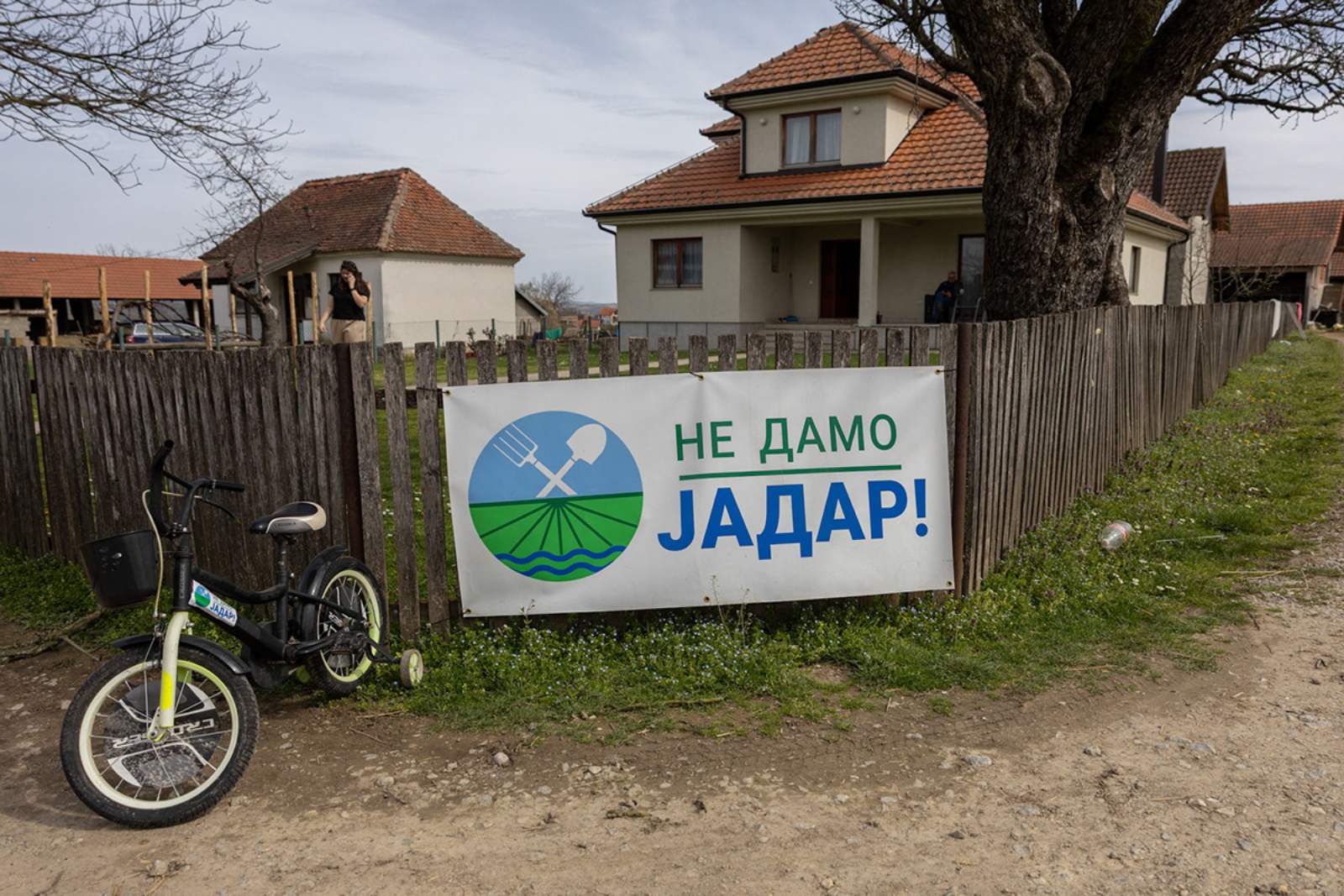
The Green Extraction Illusion: Rio Tinto, Lithium, and the New Colonialism in Serbia
In recent years, the world has embraced a narrative of “green transition.” As the climate crisis accelerates, batteries and renewable technologies are widely promoted as a way out of fossil fuel dependency. Indeed, moving away from oil and gas is necessary and urgent. But the story of Rio Tinto’s planned lithium mining project in Serbia’s Jadar Valley shows that not every solution marketed as green is just, sustainable, or emancipatory. Source: https://protesti.pics/studenti The logic behind the project is straightforward: Europe wants to electrify transport, store renewable energy, and reduce emissions. Lithium, the essential component for batteries, is in high demand. Serbia, with one of the largest lithium deposits in Europe, has become a prime target for extraction. And Rio Tinto—an Anglo-Australian mining giant notorious for environmental and human rights scandals worldwide—is leading the charge. Yet, if we look more closely, this is not a break with the past. It is a continuation of the same colonial patterns that have governed the global economy for centuries: a wealthy industrial center exploiting a periphery, leaving behind toxic landscapes and broken communities. A Familiar Pattern: From Oil to Lithium While battery production is often framed as the opposite of oil—“clean,” “green,” “progressive”—the underlying dynamics are strikingly similar. During the petroleum boom of the 20th century, transnational corporations from richer states set up operations in poorer countries, promising prosperity. What they delivered was often environmental devastation, political corruption, and lasting social division. Today, lithium is marketed as a savior. But extraction projects like the Jadar mine threaten to poison rivers, destroy arable land, and displace communities, all in the name of sustainability. In reality, this is what the French authors Servigne and Stevens, in How Everything Can Collapse, describe as the “green growth illusion”—the idea that we can maintain endless consumption by simply swapping one resource for another. It is a convenient ideology that avoids the deeper reckoning with how overproduction and extractivism drive ecological collapse. Echoes of Bolivia: The Global Lithium Rush Serbia is not alone in this struggle. Bolivia’s experience shows how lithium extraction, if driven by foreign capital and export agendas, can reproduce dependency and injustice rather than build sovereignty or sustainability. In Bolivia, often called the “Saudi Arabia of lithium,” decades of neoliberal reforms and failed nationalization attempts have left the country struggling to secure fair terms for its own natural wealth. As Mašina reports, massive deposits in the Salar de Uyuni were meant to deliver prosperity to local communities. Instead, Bolivians have faced environmental damage, water depletion, and new forms of foreign dependence, despite initial promises of industrial development and ecological responsibility. This comparison matters because Serbia is being told the same story: that lithium will bring jobs, modernization, and geopolitical relevance. But if Bolivia teaches us anything, it is that “resource nationalism” without democratic participation and strong environmental protection is just another variant of extractive colonialism. Green Colonialism and Political Complicity Many students and activists in Serbia argue that Rio Tinto’s project is possible not despite Aleksandar Vučić’s autocratic rule, but because of it. Over the past year, students have protested corruption, attacks on independent institutions, and repeated violations of civil liberties. Yet the European Union has been largely silent. Why? According to many critics, it is because Brussels has a strategic interest in Serbia’s lithium deposits. For all its proclamations about democracy and rule of law, the EU is willing to look the other way when it comes to Vučić’s consolidation of power—so long as he remains a reliable supplier of raw materials. As one student protester put it: “The EU does not care about democracy if you can guarantee them cheap lithium.” This is precisely how colonial economies were justified in the past: sacrifice zones in less developed regions, a steady flow of raw materials to the industrial core, and local populations reduced to labor pools and collateral damage. The only novelty today is that the extraction is branded as “green.” What Future Are We Choosing? If climate collapse is the defining crisis of our time, it is vital that the solutions we pursue are not only technologically effective but also socially just. Extractive megaprojects imposed from above reproduce the same patterns that have already devastated ecosystems and disempowered communities. They deepen inequalities and accelerate the destruction of life-support systems in the name of “progress.” Rio Tinto’s project in Serbia is a case study in how the green transition can become a new front for exploitation, not an exit from it. To truly break with fossil fuel logics, we must reject both their material infrastructure and the ideological foundations that treat land and people as expendable. If Europe wants to build an energy transition worthy of the name, it must stop outsourcing environmental damage to the peripheries of the continent. It must support local self-determination, invest in circular economies, and abandon the dogma of endless growth that has led us to this brink. Anything less is not a solution—it is simply a new form of colonial extraction wearing a green mask.
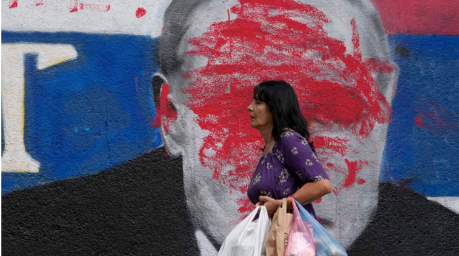
Graffiti as a Battlefield: War, Memory, and Power on the Walls of Belgrade
We are thrilled to publish a new thought-provoking piece by Vladimir Petrović and Novak Vučo from the Innovation Center of the Institute for Contemporary History, University of Belgrade. Their article, “Belgrade Graffiti & Murals: Continuation of War by Other Means? – Traces of War in Yugoslavia and Ukraine in Belgrade Street Art: Reflections on Connections”, offers a gripping tour through Belgrade's streets, where right-wing nationalism, war nostalgia, and geopolitical tensions are fought out in paint, stencils, and slogans. From Ratko Mladić murals to the letter “Z” and graffiti wars over Kosovo and Ukraine — this text explores how political walls in Belgrade are covered in more than just paint, they’re layered with history, ideology, and unresolved conflict. The article has been positively peer-reviewed by Dr. Vjeran Pavlaković, one of the leading experts on graffiti, memory, and transitional justice in Southeast Europe. 👇 Download and read the full article in PDF: N.Vučo, V.Petrović - Belgrade Graffiti & MuralsDownload

How to Teach Philosophy Differently: Insights from Southern Serbia
How Can We Make Philosophy Teaching FAIR? – Principles of Feminist Reconstructed Philosophy Education is a groundbreaking book that reimagines how philosophy can be taught in high schools—making it fairer, more just, and more inclusive. Developed through action research in classrooms across southern Serbia, this book is both a critical reflection on traditional teaching and a practical handbook filled with ready-to-use lesson ideas. The authors explore one central question through a feminist lens: How can philosophy help change the world? Download the book for free here:👉 Get the PDF The book’s author at the launch event, photo by Emilija Krstic What’s Inside? The book offers: A clear analysis of the current education system in Serbia, mapping challenges and exploring why previous reforms often fell short. Principles and methods for FAIR (Feminist Reconstructed) philosophy teaching, where theory and practice come together as equally important tools. Detailed lesson plans, workshop ideas, and classroom activities, from discussions on gender stereotypes to creative exercises that connect philosophy to everyday life. Open-access materials, all available to download via QR codes in the book, so teachers can easily apply this approach. Accessible even to those new to feminist or education theory, the book draws on current research and real experiences from classrooms. It’s intended for philosophy teachers—and educators in other social sciences—who want to make learning more relevant and engaging. The authors stress that this is not a quick-fix recipe but an invitation to rethink, question, and learn together with young people, in a spirit of solidarity and respect. Action Research That Inspired the Book The book is rooted in action research carried out in late 2024 and early 2025 in five high schools in Niš, Bujanovac, Bela Palanka, and Vlasotince. The authors worked closely with students and teachers to design and test a new approach to philosophy. Lessons were fully participatory—students discussed, shared ideas, and reflected on what they learned and how it made them feel. Many encountered feminist philosophy for the first time, opening space for important conversations about equality, identity, and democracy. The research showed that young people—especially girls—are eager to see contemporary topics and gender equality reflected in their education. A Call for Change Based on this experience, the authors prepared an official proposal to update Serbia’s philosophy curriculum. The proposal calls for: Introducing more women philosophers and gender perspectives. Adopting interactive, student-centered teaching methods. While the Institute for the Improvement of Education has formally received the proposal, it hasn’t yet been approved. Officials have said it will be considered during curriculum revisions planned for late 2025 and early 2026. Meanwhile, the authors and their partners are continuing to advocate for change. They invite teachers, students, parents, and anyone interested to join this effort—by discussing it, sharing information, or reaching out to institutions. This isn’t just about feminist philosophy; it’s about building an education system where critical thinking and fairness truly matter. What Reviewers Are Saying This book was shaped by a community of scholars, teachers, students, and activists. Reviewers describe it as an ambitious and much-needed innovation in Serbian education. Here’s what some of them said: “One of the book’s greatest contributions is that it avoids pseudo-feminist critiques and superficial trends, and instead seriously engages with the question: How does philosophy change the world?”– Eva D. Bahovec, Professor of Philosophy, University of Ljubljana “This is one of the pioneering efforts in our education system, filling a gap that has existed for far too long.”– Daša Duhaček, Professor of Political Theory, University of Belgrade “I hope future generations will learn about feminism early enough that something finally changes—and that girls will feel safer walking alone.”– Adrijana Tomić, high school student, Bujanovac Download the Book How Can We Make Philosophy Teaching FAIR? – Principles of Feminist Reconstructed Philosophy Education is available as a free PDF.👉 Download here Feel free to share it with colleagues, students, and anyone interested in more inclusive and thoughtful education. This project was supported by the National Coalition for Decentralization, Proaktiv, and the Human Rights Committee Niš, funded by the European Union in Serbia.

From Istanbul to Belgrade: How Citizens Are Challenging Power
Protesters in Istanbul clash with riot police after the arrest of Mayor Ekrem İmamoğlu in March 2025.Turkey is witnessing its largest wave of protests in over a decade. Demonstrations exploded across the country starting March 19, 2025, after Istanbul’s popular mayor Ekrem İmamoğlu – a leading opposition figure – was detained and arrested along with over 100 others. Crowds swiftly poured into the streets of Istanbul, Ankara, İzmir and nearly every major city, rallying against what they see as a politically motivated crackdown by President Recep Tayyip Erdoğan’s government. The protests began as a show of solidarity with İmamoğlu but have grown into a broader outcry over Turkey’s direction. We will try to answer the questions – who, what, where, when, why, and how – and paint a picture of a nation at a crossroads. A drone view shows people gathering during a rally to protest against the arrest of Istanbul Mayor Ekrem Imamoglu as part of a corruption investigation, in Istanbul, Turkey, March 29, 2025. (Reuters) What Sparked the Unrest in Turkey? Who is involved: The protests involve hundreds of thousands of ordinary Turks from all walks of life. Opposition political parties, led by İmamoğlu’s Republican People’s Party (CHP), quickly threw their support behind the movement. University students have been at the forefront, and people spanning the political spectrum – right-wing and left-wing – have united under national symbols like Turkish flags and images of Atatürk, Turkey’s founding father. Even some expatriate Turks have rallied in solidarity, with demonstrations reported in places like Northern Cyprus, Ireland and Western Europe. On the other side, the government and security forces have mobilized heavily to contain the unrest, indicating how seriously Erdoğan’s administration views the challenge. What and Where: The movement erupted nationwide, with massive protests in Istanbul (home to the largest crowds), the capital Ankara, the Aegean city İzmir, and dozens of other provinces. Within hours of İmamoğlu’s arrest on March 19, crowds gathered outside Istanbul’s police headquarters, and by the next day large demonstrations had spread to cities and towns across Turkey. Protesters chant slogans like “İmamoğlu, you are not alone!” and “Erdogan, dictator!”, voicing anger not only at the arrest but at years of eroding democratic norms. The timing (When): Starting March 19, 2025, protests have continued through the spring and into the summer, with major weekend rallies. For instance, a late-March weekend saw what the CHP claimed were over 2 million people rallying in Istanbul, an unprecedented turnout since the Gezi Park protests of 2013. As of July 2025, demonstrations are still ongoing in various forms, sustaining momentum for over three months. Why – causes and grievances: The immediate trigger was the arrest of Ekrem İmamoğlu, who is widely seen as Erdoğan’s chief political rival and a potential future presidential candidate. The arrest – on charges of corruption and even aiding terrorism – is viewed by protesters as politically motivated to sideline a democratic opponent. “The day the government decides its opponents is the day democracy dies,” warned İmamoğlu’s wife, Dilek İmamoğlu, urging citizens to raise their voices. Beyond İmamoğlu’s case, broader frustrations fuel the unrest. Turkey has been mired in an economic crisis with soaring inflation (over 40% annually by early 2025) and a sharply devalued lira, leaving many struggling with high prices and rents. Protesters decry what they call growing autocracy under Erdoğan – citing authoritarianism, corruption, and democratic backsliding as core issues. In essence, “We’re fighting not just for Ekrem, but for Turkey,” as Dilek İmamoğlu told one crowd. Many see this as a fight for the future of the republic itself, demanding justice, rule of law, and a voice in how the country is governed. How are the protests unfolding: Largely through peaceful mass rallies, marches, and civil disobedience – though tensions have occasionally flared. Protesters have organized huge demonstrations and even strikes and boycotts; for example, CHP called for boycotting businesses seen as pro-government. In the streets, a festive yet defiant atmosphere prevails: people wave national flags, sing the national anthem, and carry banners with quotes like “Sovereignty belongs unconditionally to the nation”. University students and even pensioners march side by side, banging pots in cacerolazo protests and shining laser pointers – creative tactics to show dissent. Social media and messaging apps have been crucial for organizing, despite government efforts to restrict them. Notably, protests have cut across typical political divides – uniting secularists and conservatives, Turks and Kurds (flags of a pro-Kurdish party were seen in the crowds) – indicating widespread discontent beyond any one faction. Authorities Crack Down: Government Response and Public Reaction The Turkish authorities have responded with a mix of hardline measures and dismissive rhetoric. Erdoğan’s government moved quickly to ban public gatherings in Istanbul and later Ankara and Izmir, imposing a temporary prohibition on protests. Riot police with water cannon trucks and tear gas have been deployed in city centers. In Istanbul, police barricaded roads around the detention center holding İmamoğlu, and clashes erupted as officers used pepper spray on crowds outside institutions like Istanbul University. Over the first week of unrest, nearly 2,000 protesters were detained according to the Interior Ministry, including many students and even journalists (a visiting Swedish reporter and a BBC correspondent were briefly held). More than 300 students were reportedly arrested in nighttime raids on their homes for joining demonstrations or posting protest support online. While most have since been released pending trials, such tactics have been condemned by human rights observers as intimidation. Erdoğan has dismissed the protesters as “marginal groups” and accused the opposition of destabilizing Turkey. He even claimed the opposition was “sinking the economy” and vowed that “sabotage targeting the Turkish economy will be held accountable” – effectively blaming protesters for the country’s financial woes. This combative stance suggests the government is doubling down rather than yielding to protester demands. Thus far, key demands of the protesters include the release of Ekrem İmamoğlu, an end to what they call persecution of the opposition, and guarantees of free and fair elections in the future. Many are also boldly calling for the resignation of Erdoğan’s government (chants of “Hükümet istifa!” – “Government resign!” – echo at rallies). The CHP and allied opposition parties have shown rare unity, continuing to nominate İmamoğlu as their presidential candidate despite his imprisonment. Public reaction within Turkey is sharply divided. The protest movement enjoys broad support among urban populations, youth, and those frustrated with economic hardship and corruption. Crowds have remained energized even through Ramadan and into national holidays. On the other side, Erdoğan’s loyal base and pro-government media either minimize the protests or label them as unlawful. Major state-aligned TV channels have given scant coverage to the demonstrations, focusing instead on government events. In response, protesters have leveraged alternative channels – from independent news outlets to social media – to get their message out. (Notably, activists even staged a symbolic blockade of the state broadcaster’s offices to protest biased coverage) Internationally, Turkey’s turmoil has drawn concern: for example, U.S. and EU officials have cautiously urged respect for democratic rights. But Erdoğan, emboldened by a recent electoral win in 2023, has so far resisted any compromise, betting that his control over state institutions will outlast the street fury. Unrest in Serbia: A Parallel Wave of Protest Police detain a demonstrator during student-led road blockades in Belgrade, Serbia, July 3, 2025.Even as Turkey’s protests rage, a different but resonant movement has been unfolding in Serbia. For roughly eight months now, Serbians have held persistent anti-government protests, which intensified into 2025. The Serbian protests were sparked by tragedy: on November 1, 2024, a newly renovated train station canopy collapsed in the northern city of Novi Sad, killing 16 people. Public outrage erupted amid allegations that corruption and negligence were to blame for the disaster. By late November, students in Novi Sad began organizing silent vigils and class boycotts to honor the victims and demand accountability. This soon grew into a nationwide movement against what protesters call a culture of corruption, cronyism and authoritarian governance under President Aleksandar Vučić. Throughout late 2024 and into 2025, the Serbian protests gained momentum and spread to hundreds of towns and cities – over 400 locations by March 2025. This breadth is extraordinary for a country of Serbia’s size, reflecting deep frustration beyond the capital. The movement has been largely student-led and decentralized: university and high school students launched daily actions, including brief traffic blockades each day at the exact time of the Novi Sad collapse (11:52 a.m.), stopping traffic for 16 minutes in memory of the 16 lives lost. Over time, other segments of society joined in – teachers, professors, opposition activists, workers, even farmers. Major rallies in cities like Belgrade, Novi Sad, Niš, Kragujevac have drawn tens of thousands of people, sometimes in defiance of police roadblocks set up to prevent them from converging. An independent monitoring group estimated about 140,000 protesters gathered in Belgrade during a mid-March demonstration, making it one of the largest in recent Serbian history. The demands of Serbian protesters have evolved and broadened. Initially, they sought accountability for the Novi Sad tragedy – investigations and punishment for any officials or contractors whose corruption led to the collapse. When President Vučić’s government reshuffled but remained in power, protesters shifted focus to systemic change. They began calling for snap elections to be held well before the scheduled 2027 date, declaring Vučić’s regime “illegitimate”. To ensure any elections are truly democratic, they demand reforms: a cleanup of voter rolls, equal media access for opposition voices, and an end to alleged vote-buying. Students also insist on better funding and autonomy for universities, recognition of student bodies in decision-making, and education reforms after a decade of what they see as decline. In essence, Serbia’s protests target what they describe as authoritarian drift and state capture under Vučić – strikingly similar themes to those in Turkey’s unrest, albeit triggered by a different event. The response of Serbian authorities has grown increasingly forceful in recent weeks. For many months, weekly marches and campus sit-ins went peacefully, but by mid-2025 tensions escalated. In early July, riot police clashed with demonstrators in Belgrade and other cities, firing tear gas and pushing back crowds that had begun to blockade major intersections. During one large rally on July 1, scuffles broke out; by the next day, police detained 79 protesters in a crackdown, including students manning a blockade outside Belgrade’s law school. Officials reported dozens of injuries on both sides. President Vučić and his interior minister have taken a hard line – Vučić lashed out that protest organizers were “terrorists” trying to overthrow the state, and warned darkly of foreign instigators behind the unrest (though he offered no evidence). Pro-government media in Serbia have echoed this narrative, launching a smear campaign painting protesters as violent extremists or puppets of Western intelligence. These claims are strongly denied by protesters, who note that Serbians have a history of toppling strongmen (as they did with Slobodan Milošević in 2000) through people power. Human rights groups and the European Union have voiced concern over Belgrade’s heavy-handed tactics, with the U.N. human rights office urging Serbia to respect peaceful assembly after reports of “violence, harassment & arbitrary detention” of protesters. Parallels and Contrasts: Turkey’s Protests vs Serbia’s Protests Despite different spark points, the protest movements in Turkey and Serbia share notable similarities – and key differences – in their causes, organization, public reception, and media environments. Below is a breakdown: Causes and Triggers: Both uprisings began in response to a galvanizing incident that symbolized deeper grievances. In Turkey, the trigger was explicitly political – the jailing of an opposition leader (İmamoğlu) seen as a threat to an entrenched ruler. In Serbia, it was a deadly infrastructure failure – a collapsed station roof – viewed as a consequence of government corruption and incompetence. In both cases, what started as outrage over a specific event quickly evolved into a broader protest against the ruling regime’s misrule. Turks are decrying years of democratic backsliding, alleged politicization of the judiciary, and economic mismanagement. Serbians likewise are protesting corruption, lack of accountability, and what they see as authoritarian tendencies in Vučić’s 12-year rule. Essentially, demand for good governance and justice is at the heart of both movements, even if one was triggered by an opposition arrest and the other by a tragic accident. Organization and Leadership: The organizational dynamics differ. Turkey’s protests, while spontaneous in spirit, have the backing of established opposition parties and politicians – the CHP and other opposition parties actively mobilized supporters, and prominent figures like CHP leader Özgür Özel and Ankara’s mayor Mansur Yavaş have joined in or voiced support. A broad coalition of civil society groups, unions, and even rival political ideologies have united, using national unity symbols (e.g. portraits of Atatürk) to bridge divides. In Serbia, the protests have been notably grassroots and student-driven. There is no single charismatic leader; instead, student councils and ad-hoc committees have coordinated actions across universities. Opposition parties in Serbia did eventually lend support, but the momentum has largely come from young people and civic groups rather than top-down party rallies. Both countries’ movements have leveraged creative tactics (marches, road blockades, campus strikes), but Serbia’s are uniquely centered on academic institutions (many universities remain under student blockade as of April 2025), whereas Turkey’s are centered in city squares and municipal centers. In short, Turkey’s protests have visible leadership from opposition politicians, while Serbia’s are a more diffuse youth-led civic uprising. Public Response and Scale: Both movements have drawn massive turnouts, reflecting significant public backing. Turkey’s crowds reach into the hundreds of thousands nationally; at one Istanbul rally in late March, over 2 million people were claimed to be in attendance (opposition figures). Demonstrations have occurred in almost every province of Turkey, a scale not seen since at least 2013. Serbia’s protests, relative to its population, are similarly widespread – active in 400+ towns and cities by spring 2025. In Belgrade, independent estimates put recent crowds in the six figures, and even medium-sized cities have seen rallies of thousands. Both countries have seen multi-generational participation: young students and older citizens marching together, united by a feeling that the country is at a turning point. Notably, neither movement has been completely universal – the ruling parties still command a base that has largely stayed off the streets. But in both Turkey and Serbia, the protesting portion of the public is energized, creative, and sustained in a way that has clearly rattled those in power. The geographic spread (nationwide reach, not just capital-centric) and longevity of these protests mark a significant similarity. Media Coverage and Government Narrative: Both regimes have reacted by trying to control the narrative. In Turkey, where mainstream media is mostly pro-government, coverage of the protests has been limited or skewed – state TV largely echoed Erdoğan’s line that the protests are a “show” by marginal agitators. The government even temporarily restricted social media platforms like Twitter (X), YouTube, and Instagram to hamper protest organization and reporting. Independent Turkish journalists face intimidation; some foreign reporters were detained while covering rallies. Likewise in Serbia, state-friendly media have minimized the protests or depicted them as violent riots. President Vučić’s labeling of protesters as “terrorists” was amplified on certain TV channels, aiming to erode public sympathy. Protesters in Serbia have responded by directly challenging media bias – one dramatic act was the blockade of the national broadcaster RTS, disrupting its programming to demand fair reporting. International media, by contrast, have covered both Turkey’s and Serbia’s unrest extensively, framing them as battles for democracy. This external spotlight put pressure on authorities: for example, the UN and European officials criticized Serbia’s police crackdown and urged restraint, while Western diplomats quietly pressed Turkey to respect political pluralism. Overall, media freedom issues are central in both cases: protesters accuse their governments of propaganda and censorship, and in both countries independent journalism itself has become part of the story. In conclusion, Turkey and Serbia – though different in context, size, and political system – are experiencing converging currents of popular dissent. In both nations, citizens have been driven to the streets by a sense that their leaders have amassed too much power for too long, at the expense of accountability and everyday people’s well-being. The Turkish protests continue to demand a reversal of democratic backsliding and relief from economic pain, while Serbian protesters press for an end to corruption and a voice for the next generation in shaping the country’s future. How these movements unfold remains to be seen, but in both Istanbul and Belgrade the message ringing out is unmistakable: people have limits to their patience, and when those are crossed – whether by a political witch-hunt or a national tragedy – the public will stand up, speak out, and insist on change. Both Balkan and Anatolian streets now echo with calls for justice, proving that demands for democracy and accountability transcend borders in this turbulent moment for the region.