
This is a reviews category subcategory of Stories
Propaganda in Mostar graffiti
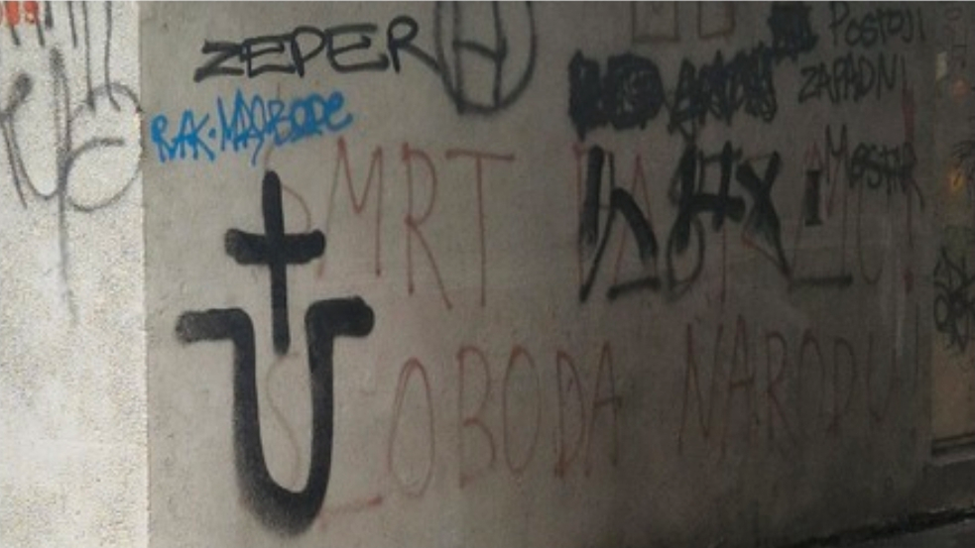
Author: Almin Šemić Ovaj članak možete pročitati na naškom ovde. On the wall of a building near the Glass Bank in Mostar, behind the Croatian National Theatre, in Knez Domagoj Street, there is a graffiti piece shown in the cover photograph that testifies to the long-standing presence of various messages in Mostar’s public space. Photo sourced from the Bljesak.info news portal As can be observed, the wall surface had previously been used for different inscriptions, including football supporter markings and other messages, indicating that this space functions as an open surface for informal visual communication. At the centre of attention is the graffiti bearing the message “Death to Fascism, Freedom to the People,” over which the symbol of the Ustasha “U” has been drawn. This creates a direct and clear ideological contrast within the same visual field between the anti-fascist slogan and a symbol that carries an opposing historical and political meaning. Furthermore, the message represents both a contrast and a reflection of Mostar’s society, where individuals express their affiliation with one ideology or multiple ideologies through such graffiti. On the same wall, there is also the inscription “There Is a Western Mostar,” which can be interpreted as a form of narrative concerning the division of Mostar. Such messages do not function merely as individual expressions but as recurring discourses that shape perceptions of the city and its boundaries in a symbolic sense. As Joseph Goebbels once stated, “A lie repeated a hundred times becomes the truth.” Just imagine how many times such a message, along with similar messages, had to be repeated in order to become normalized. In the context of children and propaganda, within ten years, sustained propagandistic influence may result in people no longer knowing whether Mostar was an anti-fascist city. Consider also how many times the phrase “Mostar Gymnasium” had to be repeated in order to erase the name of Aleksa Šantić. On a road in the suburban Mostar settlement of Vrapčići, near Mikulića Mahala, a graffiti inscription containing a message directed at a particular ethnic group was written. The inscription was sprayed in black paint directly onto the asphalt, without any additional visual elements, suggesting a rapid and informal intervention in public space. This is characteristic of graffiti intended to communicate a message quickly and directly. Photo sourced from the Večernji list news portal According to media reports, specifically from Raport and Večernji List, the graffiti was noticed in the early morning hours, after which the case was reported to the competent authorities, who conducted an investigation. Available information further suggests that similar inscriptions had previously been recorded in this area, indicating a continuity in the use of public surfaces for messages carrying political and identity-related connotations. Unlike graffiti that relies on symbolism or indirect messages, this inscription is characterized by its explicit and unambiguous formulation. What distinguishes it from the graffiti discussed in the previous section of this article is precisely the directness and explicitness of its message, which does not rely on symbolic conflict but instead communicates its content openly and unequivocally. Whereas the previous graffiti functioned through the overlapping of signs and the creation of ideological conflict within the same visual space, this one relies on a clear verbal formulation that requires no additional interpretation. From an analytical perspective, as previously noted, the message of the graffiti is clearly directed toward a specific ethnic group, as evidenced by the wording itself. Its structure and choice of words indicate an attempt at direct communication with a clearly defined “other,” while public space is used as a channel for transmitting such a message. At the same time, although it is impossible to determine with certainty who was responsible for creating the graffiti, the manner in which it is formulated points to a pattern characteristic of anonymous actors operating outside institutional frameworks. It is precisely this anonymity that allows the message to exist without the assumption of responsibility, while its public visibility ensures the dissemination of the message without intermediaries. In this context, the graffiti may be interpreted as a form of expression that does not seek dialogue but rather a one-sided assertion of presence and attitude within a particular space. Its function is not informative but performative: it does not merely communicate content, but also establishes a particular relationship toward the space and the community in which it appears. It is also possible to identify elements of propaganda within this graffiti, although it does not operate through an organized or institutional form. The message is formulated directly and without symbolic complexity, which is one of the fundamental characteristics of propaganda: clarity and ease of understanding without the need for additional interpretation. It is directed toward a specific group and employs emotionally charged language, thereby attracting attention and potentially influencing both the perceptions and emotions of passers-by. Although the identity of the author remains unknown, the manner in which the graffiti was created suggests an attempt to transmit a particular viewpoint through public space and reinforce the presence of that narrative, placing it within the broader framework of informal and decentralized propaganda. One may therefore consider how many times such a propagandistic message would need to be repeated before it becomes perceived as reality. On the wall of a residential building in Mostar, a graffiti inscription containing multiple messages written in black and red spray paint can be observed. The upper section consists of a sentence referring to territorial expansion and a historical context, accompanied by a symbol and a year, while the lower section contains the inscription “Ustaše Mostar: Fascism Lives!”. Photo sourced from the Mostarski.ba news portal The use of different colours and the arrangement of the messages suggest that the graffiti was not created at a single moment but rather represents a layered intervention produced by multiple authors or during different stages. The inclusion of geographical references and ideological terminology indicates an attempt to symbolically define the space and connect it with particular historical interpretations. The upper section of the graffiti, referring to historical context and territorial boundaries, demonstrates an awareness of historical narratives and their role in contemporary public discourse. From the perspective of propaganda studies, this graffiti illustrates how public space can become a site of competing messages that seek to influence the perceptions of passers-by. The upper inscription employs historical references and territorial allusions to suggest a particular political and identity-based framework, relying on recognizable symbols and narratives that already possess emotional and ideological significance within Mostar. Such an approach corresponds to several basic principles of propaganda, including the simplification of messages, reliance on familiar symbols, and attempts to associate a specific space with a particular collective identity. Furthermore, repetition represents one of the fundamental mechanisms of propaganda. Through the repeated appearance of similar messages and symbols in public space, certain narratives may gradually become normalized and integrated into collective perceptions. This raises broader questions regarding institutional responses to such messages and the extent to which public authorities address their presence within the urban environment. If viewed alongside recent incidents, such as attempts to remove graffiti depicting Slobodan Praljak in Ortiješ, as well as acts involving the placement of Ustaša stickers and symbols on monuments in Baćevići, the graffiti may be interpreted within a wider pattern of symbolic and ideological contestation in public space. In the context of propaganda, the graffiti can also be understood as an affirmation of a particular ideological narrative that relies on historical references and symbols associated with the legacy of fascism. Such messages do not operate in isolation. Rather, they often build upon existing social and political tensions, particularly in communities such as Mostar, where public space continues to bear the legacy of the conflicts of the 1990s. In this sense, the graffiti may be connected to narratives emerging from the war in Bosnia and Herzegovina, including the conflict between Bosniaks and Croats, with symbols and messages serving as mechanisms for the reinterpretation or preservation of specific forms of collective memory. Although the territorial divisions established during the war may no longer exist in a formal sense, symbolic boundaries continue to shape public discourse and spatial perceptions within the city. The repeated appearance of ideologically charged symbols, attacks on memorial sites, and disputes over historical narratives demonstrate how public space remains a field in which competing interpretations of the past are expressed and contested. The emotional dimension of propaganda is also evident in such messages, as they seek not only to communicate information but also to provoke emotional responses and influence attitudes toward coexistence, identity, and collective belonging. On an information board located in front of a building associated with the religious and cultural institutions of the Serbian community in Mostar, specifically in front of the Bishop’s Residence, a graffiti inscription was written in purple spray paint containing the markings “1981” and “4th Corps.” Photo sourced from the Top Portal news portal These references may be linked to local identity-based and historical contexts. The number “1981” is commonly associated with the Red Army (Football club Velež Mostar) supporters’ group, while “4th Corps” refers to a formation of the Army of the Republic of Bosnia and Herzegovina that operated in this area during the Bosnian War. The choice of location itself—an information board identifying a museum and religious site—further emphasizes the symbolic dimension of the intervention within this space. From an analytical perspective, the graffiti can be understood as a form of symbolic marking of space, through which a particular identity framework is communicated by means of brief and recognizable references. Such messages do not necessarily require explicit verbal formulations in order to be understood by the local community, as their meaning is constructed through existing social and historical references. In this context, the graffiti may function as a signal of the presence of a particular group or narrative within a given space, especially when it is displayed at a location associated with another community. Consequently, the message may be recognizable not only to members of the local community but also to a wider audience familiar with the historical and social significance of these references. Within the framework of propaganda studies, this graffiti may be viewed as a form of symbolic and identity-based territorial marking that relies not on direct statements but on recognizable signs embedded within the local context. The inscriptions “4th Corps” and “1981” evoke wartime and supporter-group symbolism, and through the combination of these references communicate a particular identity narrative. Their meaning is further shaped by the location, given that the graffiti appears on a board situated in front of a building associated with institutions of the Serbian community in Mostar, thereby giving the message a more specific and targeted dimension. In this sense, the graffiti may be interpreted as a signal of the presence of a particular social or ideological group within a space symbolically associated with another community. Similar inscriptions containing the same references have previously been documented at this and related locations, suggesting a pattern of repetition and the use of public space for the transmission of coded messages, a characteristic feature of informal forms of propagandistic communication. At first glance, the graffiti reading “KILL THE BALIJA” at the Bunica picnic site may appear to be just another act of vandalism in public space. However, its message extends beyond ordinary graffiti and enters the sphere of hate propaganda, ethnic intolerance, and symbolic violence. The location itself further amplifies the significance of the message. A natural recreational area, which should represent a space of leisure, social interaction, and escape from societal tensions, is transformed into a site of intimidation and a reminder of wartime narratives that have not completely disappeared from the public sphere of Bosnia and Herzegovina, even decades after the conflict. Photo sourced from the Blagaj Info Facebook page The message of the graffiti is direct, aggressive, and leaves little room for interpretation. The use of the term “balija,” which is employed within nationalist discourse as a derogatory label for Bosniaks, demonstrates a clear intention to dehumanize a particular ethnic group. Dehumanization has historically been one of the central elements of hate propaganda, involving the portrayal of the “other” as inferior, dangerous, or undesirable. When such language is combined with the imperative “kill,” the graffiti moves beyond hate speech and becomes an explicit call for violence. Visually, the graffiti is not artistically complex, yet its propagandistic power lies precisely in its brutal simplicity. The black lettering, roughly painted on a concrete surface, conveys a sense of urgency and raw aggression. There is no aesthetic ambition and no symbolism intended to obscure its meaning; the objective is not artistic expression but rather the dissemination of fear and the provocation of a reaction. Graffiti of this kind often functions as a territorial marker, representing an attempt to symbolically claim space through a nationalist message. It is particularly important to consider the context of Mostar and Herzegovina, regions that continue to bear the legacy of wartime divisions. Within such an environment, graffiti can serve as a means of prolonging conflict in symbolic form. Their impact extends beyond the individual reader, influencing the broader social atmosphere by creating feelings of insecurity and reinforcing distrust between communities. In this case, the propaganda does not seek to persuade through rational argumentation but through emotions, primarily hatred, fear, and anger. Such graffiti also performs a function of normalizing extremist discourse. When messages that advocate violence remain visible in public space for extended periods without a response from institutions or the wider community, they may create the impression of social tolerance toward such expressions. In this way, the graffiti becomes more than an isolated incident; it becomes part of a broader culture of silence and passivity regarding nationalist violence. From a propaganda perspective, the graffiti employs several key mechanisms: simplification of the message, identification of an “enemy,” emotional manipulation, and public visibility. For this reason, its influence can be particularly significant among younger generations who grow up surrounded by symbols of division. Rather than encouraging dialogue and shared public space, messages of this kind contribute to an atmosphere of conflict and serve as a reminder that public space in Bosnia and Herzegovina continues to function as a site of political and identity-based struggle.
A Tragic Incident with a Happy Ending: The Vinca Case in Goran Milasinovic’s Novel
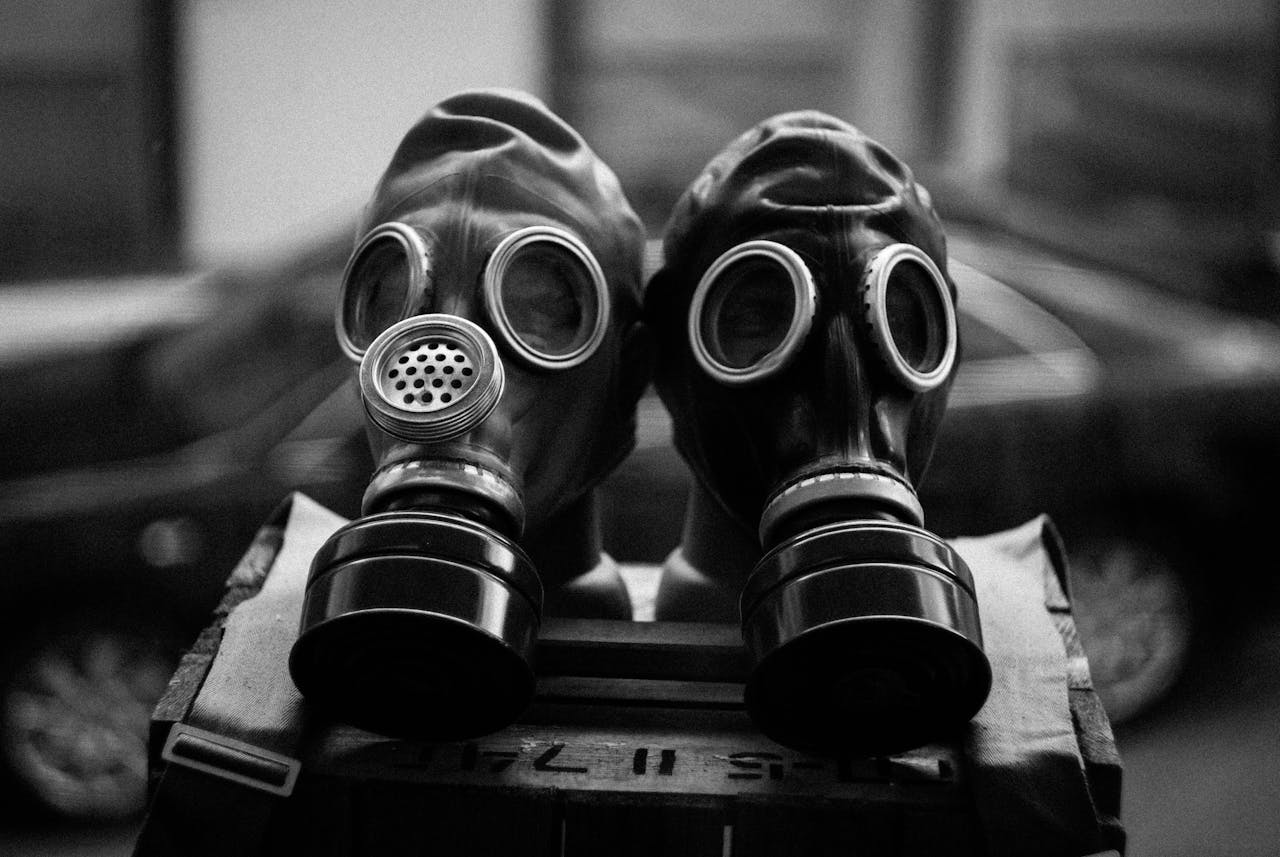
Author: Semran Murtezani, Master of International Law "The Vinca Case" is a novel by Goran Milasinovic that recounts a tragic incident at the Vinca Nuclear Institute in 1958. Although a work of fiction, the novel’s subject matter is specific and unique, holding significant historical value for understanding the political, scientific, and security dynamics of former Yugoslavia and beyond. The narrative explores the ethical, humanitarian, and scientific complexities surrounding nuclear research, detailing how the futures of six scientists at the Vinca Nuclear Institute transformed in unimaginable ways. Notably, the novel is grounded in real events. The title, "The Vinca Case" refers to the village of Vinca, home to a laboratory dedicated to nuclear research during the Cold War. This era in Yugoslav history was characterized by a complex interplay of scientific ambition and political tension, particularly in the realm of nuclear weapons development. Six scientists at the laboratory suddenly found themselves in a life-altering situation following a catastrophic accident, exposed to lethal levels of radiation during a nuclear experiment. Milasinovic’s fluid narrative style provides a detailed and accessible portrayal of the events, creating a vivid and compelling account of this pivotal moment. After World War II, nuclear weapons development reshaped international relations and marked a new phase in human history. Rivalry among states centered on advancing their nuclear capabilities, posing new challenges across economic, political, and scientific spheres. Nations sought to adapt to contemporary policies to gain prestige on the international stage, while also striving to establish protective mechanisms against potential threats to national security. The Vinca incident marked a turning point in Yugoslavia’s approach to nuclear technology. It drastically altered the lives of six ambitious scientists, some just at the outset of their careers, who suddenly faced a life-or-death situation due to high radiation exposure. The need for urgent medical intervention was critical, as the consequences of the incident were severe and shocking. Fortunately, the Yugoslav state decided to cover all medical expenses for their recovery, bolstering the state's image as a caring protector of its citizens. This was not mere political rhetoric; from start to finish, the state ensured the injured scientists received world-class treatment at the renowned Curie Institute in France. However, an unexpected challenge awaited them during their treatment. At the heart of "The Vinca Case" is an ethical dilemma faced by a French doctor involved in the scientists’ recovery. This character personifies the moral conflicts that arise when medical experimentation intersects with nuclear science. As the doctor confronts the consequences of the accident, readers are invited to reflect on the complexities of scientific progress and the ethical weight of human life in its wake. Despite using all conventional methods, the doctor’s efforts to treat the scientists prove unsuccessful. He is left with a profound ethical dilemma: should he proceed with a groundbreaking, experimental treatment or leave the scientists’ fates to chance? This decision is fraught with uncertainty; the doctor must first convince himself and then his colleagues, aware that success is far from guaranteed. Nevertheless, the severity of the circumstances drives him to make a historic choice—to proceed with the bold experiment. Under the careful supervision of the Curie Institute, preparations for the treatment begin. Ultimately, the experiment succeeds with five of the six scientists, marking the first successful human bone marrow transplants and a major milestone in medical history. However, Vladimir Gavric, one of the scientists, does not survive the transplant process. This event is not only a significant scientific breakthrough but also an emblem of friendship between France and the former Yugoslav Republic, particularly among the survivors, donors, and medical personnel involved. In summary, the novel underscores the delicate balance between fortune and misfortune. In the aftermath of the incident, the Yugoslav government formed a commission to examine the causes and consequences of the tragedy, concluding that the incident was due to "unprofessionalism and negligence." Through this novel, readers are given an in-depth exploration of both a tragic incident and a remarkable story of medical success, conveyed with meticulous detail.
Hive (2021): A Powerful Tale of Resilience and Empowerment in Kosovo Cinema
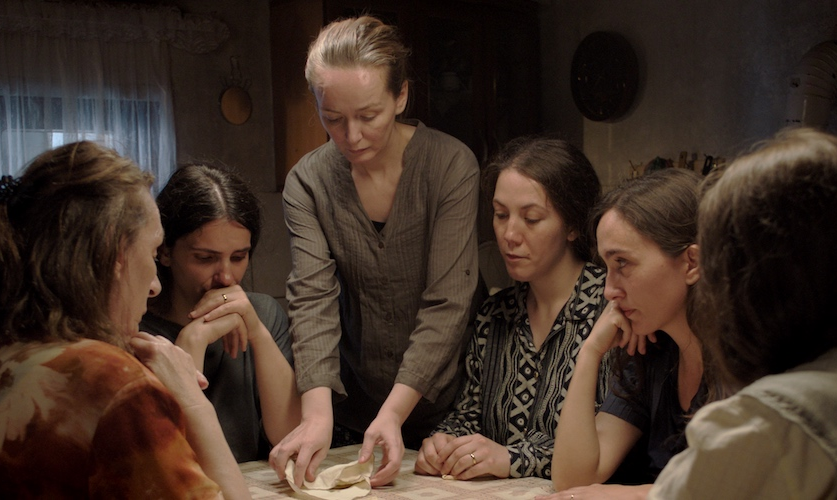
Since Serbian militias entered villages in the Kosovar province in 1999, many boys and men have been missing, including Fahrije’s husband—a single parent who had been caring for their two children and her disabled father-in-law. Left to ensure her family’s survival, Fahrije takes matters into her own hands. She first obtains a driver’s license, then starts a small business, actions that provoke the wrath of the conservative, patriarchal local society. The director, Blerta Basholli, originally from Kosovo, first encountered Fahrije Hoti’s story during an interview she gave on American television, in which she discussed the backlash she faced for seeking independence and proposing a cooperative to provide work for other widows in her community. At the time, the director was living in New York on a scholarship. Initially, she mistook the story for a joke due to her emotional and geographical distance from Kosovo. However, upon realizing the seriousness of Fahrije’s situation, she was inspired to delve deeper. Captivated by the story, the director began writing and directing what would eventually become Hive in 2011. A decade later, the film made history by winning all three major awards in the World Cinema section at the Sundance Film Festival—the only film to ever achieve this feat. Basholli approaches the story with restraint and confidence, avoiding unnecessary melodrama or overemphasis. This is a tale of humanity and resistance, framed by a clear feminist perspective. In Hive, patriarchy is represented not only through visible actions—such as stones smashing Fahrije’s car windows, her father-in-law’s objections or an attempted assault by a supplier—but also through the absence of a male protector. The ghost of patriarchy lingers in the perception that Fahrije’s efforts to support herself dishonor her missing husband. Her grief is entangled with guilt: if her husband is dead, her actions are seen as a confirmation of his death, dissolving their marriage, and rejecting her eternal dependence on him. If, by some miracle, he were alive, many believe he would feel ashamed of her. Fahrije’s husband thus becomes like Schrödinger’s cat—both alive and dead—while society seeks to confine her autonomy. The backdrop of numerous missing persons and the ongoing search for their remains adds an emotionally charged layer to the narrative, making Hive reminiscent of Parallel Mothers by Pedro Almodóvar. However, unlike Almodóvar’s melodramatic approach to historical tragedy, Basholli masterfully integrates the collective trauma of a community with one woman’s personal journey toward emancipation. Fahrije’s struggle becomes an example for the other widows in her village, who rally around her. Central to Fahrije’s transformation is her evolving relationship with her late husband’s beehive, which gives the film its title. Initially, she is a foreign presence, vulnerable to stings despite protective gear, and haunted by the notion that her husband had "never been stung." However, as she confronts societal obstacles and normalized misogyny disguised as tradition, she finds her strength. She emerges as the queen of the hive, uniting the worker bees to create an independent, resilient ecosystem that requires no male master. This symbolism underscores the real-life success of Fahrije and her colleagues, celebrated in the film’s credits. This way, Hive highlights the critical importance of women’s solidarity in challenging male dominance. Fahrije’s story is one of hope in a nation still haunted by the ghosts of a brutal war. The fact that the narrative is based on true events and a real woman makes its impact even more profound.

The Rise of Authoritarianism in the Western Balkans, a book by Florian Bieber
Author: Vladimir Stojković Florian Biber's book The Rise of Authoritarianism in the Western Balkans is a handbook for understanding social conditions in the region. He points out in detail and precisely the similarities and differences in the unfolding of socio-political processes in the countries of this region. All social aspects and processes, such as media, corruption, reform, governance rights, etc., are covered. All the events that significantly influenced the emergence of authoritarianism are described in detail and chronologically framed. This book is written so that it can be understood even by people who know nothing about the situation in the Western Balkans. It gives them a complete picture of events and social oscillations in these countries. Its core consists of three chapters, which discuss the challenges of democratic consolidation, patterns of authoritarianism, and mechanisms of authoritarianism. Challenges of democratic consolidation This chapter primarily deals with the causes that led to the emergence of a semi-authoritarian regime throughout this region during the nineties. The beginning of these processes is linked to the fall of communist regimes throughout Central and Eastern Europe, first in Romania and Bulgaria and then in Yugoslavia and Albania. Interestingly, the Balkan countries lagged far behind Central European countries in deconstructing the communist regimes in their countries. This book segment also discusses the first multiparty elections in this part of Europe and the democratization process in these societies. However, multiparty politics marked the first years after the Union of Communists' monopoly, but without realized democracy. For the political parties that came to power after those elections, the priority wasn't the development of democracy and the democratization of society but the preservation of the monopoly over the management of the state apparatus. At the end of the 1990s and the beginning of the 2000s, there was a breakthrough and strengthening of democracy in these areas. That period didn't last long, but during 2002 and 2003, nationalist parties returned and took over power, primarily in Serbia and Bosnia. Unlike Hungary, Poland, and the Czech Republic, which quickly established democratic regimes and moved on through European integration, the countries of the Western Balkans cackled with regimes that brought them only instability, troubles, and wars. Patterns of authoritarianism In this part of the book, Bieber describes the situation in each country of the region in detail. The author identifies all the different social factors that led to the decline of democracy and the slowing down of its processes. External influences, internal circumstances, and economic crises have all contributed to the strengthening of authoritarianism and the decline of democracy in the region's countries. In Montenegro, the dominant Democratic Party of Socialists (DPS) evolved over the years and underwent different phases of ruling style. North Macedonia's direction towards authoritarianism was achieved after the conflict with Greece regarding the country's name and the failed attempt to enter the NATO alliance in 2008. After Kosovo declared independence, the ruling elite relied on external support. The external partners, in turn, ignored Kosovo's society's problems, primarily problems in the rule of law and anti-corruption. The external factor allowed this to secure consent to cooperation with Serbia. Authoritarianism returned to Serbia in 2012 with the coming to power of the Serbian Progressive Party (SNS) and Aleksandar Vučić. Party clientelism reaches its peak. In Albania, the government of Salia Berisha is characterized as a stabilocracy. This term was first used in that context. After that, the socialist government of Edi Rama made progress in reforms, but the main characteristic of his rule was the remnants of the old system in the form of party clientelism. In Bosnia and Herzegovina, the government was mainly composed of ethno-nationalist parties, which always aspired to absolute control over the state. In Croatia, the ruling Croatian Democratic Union (HDZ) was passing through several phases. During the nineties, the Croatian regime went through two stages. In the first phase, which lasted until the end of the war in 1995, the ruling party encouraged a nationalist atmosphere, and after that, the regime led by Tudjman switched to a sultanist form of ruling. It's a political system in which he relied on the closest people around him. So, there is no single authoritarian model, but there are common circumstances that repeat and which, together, strengthened authoritarianism in the Western Balkans. Mechanisms of authoritarianism In the third part of this book, the author talks about the different ways authoritarian regimes led until the capture of the state. These are political crises, nationalism, weak opposition, media control, etc. This chapter also discusses the role of the external factor and its contribution to maintaining this regime, namely the so-called regimes of competitive authoritarianism. Given that democracy and European integration have been important goals for the region's countries in the last twenty years, open authoritarianism is not possible. Therefore, the rulers of these countries apply competitive authoritarianism, which implies a model of governance in which rulers use authoritarian forms of governance, mostly informal, to avoid formal rules of democracy. So, it is about the simultaneity of these two systems (democracy and authoritarianism) in the way regimes in the countries of the Western Balkans work. Conclusion Apart from individuals who usually deal with this topic and monitor socio-political processes in the Western Balkans, this book is very good for those who need to know more about this topic. Florian Biber clearly and objectively processes and explains the circumstances that led to certain socio-political events and changes. A gradual familiarization with the political history of each country, framed by a chronological framework for each of those events, provides us with an exact overview of all those events. In addition to getting to know the situation in these countries, the book can also serve as a guide it gives us direction to understand, in the best possible way, how certain political systems work. Also, as individuals, we can see the mistakes and the bad things and try to correct them in the following period so that similar negative processes are not repeated. That would be our contribution to the further development of democracy and improving the socio-political situation in the Western Balkans.
Language and Identity in the Balkans. Serbo-Croatian and its Disintegration, by Robert D. Greenberg: a Review
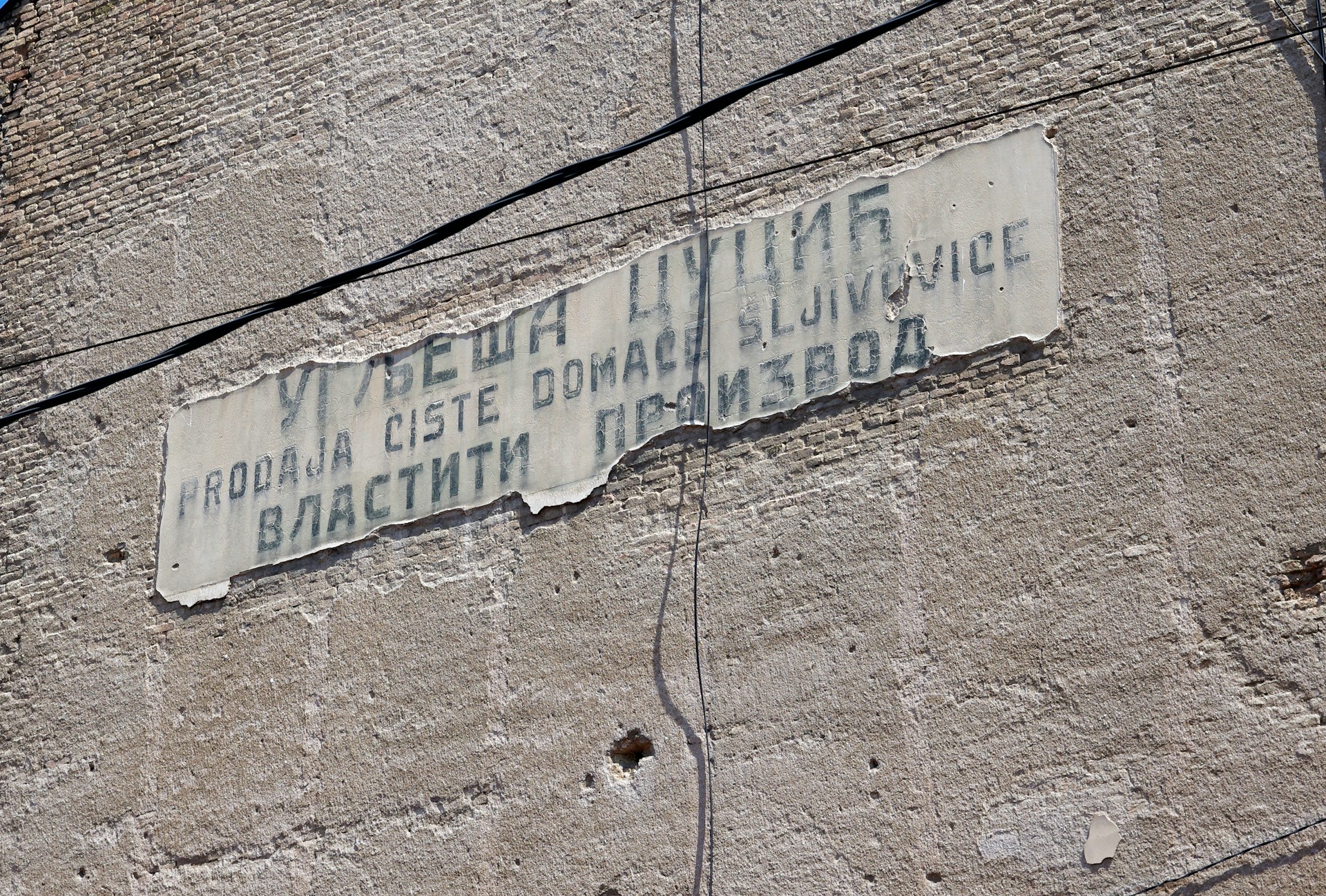
Presentation Language and Identity in the Balkans. Serbo-Croatian and its Disintegration is an book by Robert D. Greenberg, published in 2004 by Oxford University Press. Robert D. Greenberg is an academic specialised in Slavic Studies. This book is the result of several years' fieldworks and readings. The 190 pages (170 excluding the bibliography) of this work deal with Serbo-Croatian from its conception in the 19th century until the 4 languages that succeeded it after 1992 and their development up to 2004/2006: Bosnian, Croatian, Montenegrin and Serbian. The author begins by looking at the history of the codification of a language common to Serbs and Croats despite their many dialects. He then looks at its existence, which has been punctuated by controversies. Finally, he looks at the codification after 1992 (when the collapse of socialist Yugoslavia began) of Croatian, Serbian and Bosnian, and the beginnings of Montenegrin. He organises his work into 7 parts (including an introduction and a conclusion), each divided into (sub-)sub-sections. Here they are summarised below with key points: I – Introduction Robert D. Greenberg begins his paper by presenting his inspiration, aim and method. The many works from different academic disciplines on the subject of Serbo-Croatian, its disintegration and the cultural and political issues of its successors often take sides. This is for this reason that he wants to publish a book that is not Serb-centric nor Croat-centric. He reminds us that in the 19th century, the romanticism, nationalism and independences achieved (or proclaimed) were to a very large extent led through language. Language proved to be a powerful symbol of identity, and this also affected the Balkans. Finally, using maps and clear explanations, the author explains the different dialects, pronunciations, similarities and combinations of Serbo-Croatian and the languages of the territories of the future South Slavic states. II – Serbo-Croatian: United or not, we fall This section provides an overview of the birth of Serbo-Croatian through 19th century. The author describes the literary and linguistic initiatives at the beginning of that century that later led to the codification of the language. The aim was to unify the peoples of the same region, despite their differences. This linguistic union was part of and also a starting point for a political union that would be realised through the Kingdom of Serbs, Croats and Slovenes, just after the First World War. The author also presents Vuk Karadžić and Ljudevit Gaj, their grammar books and dictionaries and their efforts, challenges and choices that led to the codification of future Serbo-Croatian. It also details the three models of linguistic unity: centrally monitored unity, government-imposed unity, pluricentric unity. Serbo-Croatian went through the three of them in that order and followed the pluricentric unity model during socialist Yugoslavia (1944-1992). Finally, he quotes the linguist Bugarski, who defines Serbo-Croatian as having a weak internal identity within Yugoslavia. On the other hand, beyond the borders, this identity is strong and often claimed, because it shows the union of the different peoples and constituents of this State. This weakness can also be seen through the many controversies, tensions, the opposition and resistance that the language and its implementation have provoked, even before the socialist era. III – Serbian: Isn't my language yours too? This third section only deals with Serbian, i.e. the standard Serbian that replaced Serbo-Croatian from 1992 onwards in Serbia, and in Montenegro from 1992 to 2004. Robert D. Greenberg presents the two variants in use in these territories, and the beginnings of a voluntary distinction for a future Montenegrin. Once again, in both Serbia and Montenegro, debates between fractions of linguists, oppositions and controversies are numerous. They all are proof of the cultural, social, identity and political conflicts that contributed to the total disintegration of socialist Yugoslavia. One of the reasons for this is that Serbian speakers speak different variants and live in (at least) 3 different states: Serbia, Montenegro and Bosnia-Herzegovina. Serbian standard language is based on two dialects and two pronunciations and therefore it is more diverse as a standard language than standard Bosnian and Croatian. The author goes on to discuss the importance of institutions and academies in codifying and sanctioning the language. Writing, lexicon, orthography, pronunciation, religious and ethnic implications, among others, are examples of the responsibilities and guidelines of these Academies. IV – Montenegro: A mountain out of a molehill? In this fourth part, Robert D. Greenberg looks at Montenegrin and its slower development. Indeed, the ideas and desires to establish a standard Montenegrin language distinct from the others (Serbian and Croatian) do not date from the 1990s. Awareness of a different literature and language goes back much further in time. However, these ideas and desires were reinforced at a rather later moment, especially following the Croatian protest movements and demands, more precisely since the 1970s. At the start of the disintegration of Yugoslavia and just before independence in 2006, the demands were more and more vivid. Debates, controversies and oppositions followed. This book is published in 2004, therefore the author evokes the future of a Montenegrin language distinct from Serbian that is not official yet. The birth of a language concretised after the referendum on independence scheduled for 2006. I must add that in 2007, the proclaimed independence and the Constitution marked the beginning of the existence of a Montenegrin language with its own characteristics (pronunciation, lexicon, alphabetical characters). Here again, language is very closely linked to identity. Here too the author discusses the many difficulties involved in establishing and codifying this successor language of Serbo-Croat and distinct of Serbian. Which dialect(s) should be chosen? What should be done with a (large) part of the population claiming to be Serbian and speaking Serbian? The author concludes this section by asserting that the existence of Montenegrin as a distinct language is the final step in the dissolution of Serbo-Croatian. V – Croatian: We are separate but equal twins In this section focusing on the Croatian language, Robert D. Greenberg looks back to the 19th century and then at the specific characteristics of the Croatian language, which does everything it can to differentiate itself from Serbian. This desire to be different (because it is impossible to fundamentally opposed them) does not date from the 1990s. Croats have always claimed their own history, identity, language and dialects. The author looks back at these claims, these differences, these debates and these struggles for the recognition and establishment of a language distinct from Serbian, since the mid-nineteenth century, despite the standardisation of Serbo-Croatian. This section therefore looks back at the genesis of this unified language bearing a unifying objective but from the Croatian point of view. It also shows the codification of Croatian from 1992 onwards. This is an interesting aspect because we can see the often expressed desire to clearly distinguish Croatian from Serbian and the Serbs, accused of being imperialist. This rejection is not the first in their relations since in the previous century efforts were made to counter the magyarisation and germanisation of Croatian society and language. To this end, after socialist Yugoslavia, the Croatian language was purified of “serbisms” and “internationalisms”, partly by removing Serbian terms and creating new words based on "uniquely" Croatian characteristics, or using again forgotten words in modern Croatian. Everyday attitudes are also one of the manifestations of this rejection, since speakers of Serbian or users of words considered to be “Serbian” are seen in a bad way. This mainly concerns the lexicon since the grammars are almost identical. Despite this, debates, controversies and hesitations mark this process as much as other successors of Serbo-Croatian. VI – Bosnian: A camel with three humps? This last part concerns Bosnian and “Bosniac”. These two terms misused or serving identity goals show all the complexity of the linguistic question in Bosnia-Herzegovina. In Bosnia-Herzegovina live Serbs, most of whom live in the Serbian entity Republika Srpska, and Croats, most of whom live in the Federation of Bosnia-Herzegovina. The country's third constituent group and also the majority are the Bosniacs. This term refers to Muslim Bosnians, as being distinct from Orthodox Serbs and Catholic Croats. In theory, all of them are Bosnians since they all are citizens of Bosnia-Herzegovina (and not all of them have a faith or practice it). In reality, since the war, the three have become more and more separated. While the term “Bosniac” refers specifically to Muslim Bosnians (sometimes more generally to Muslim Slav), the term “Bosnian” can refer to the citizens of Bosnia-Herzegovina no matter their religion, and to the language of the country. Serbs and Croats in Bosnia-Herzegovina have languages and kin-states some tend to identify with: Serbia and Croatia. On the other hand, Bosniacs are attached to the term “bosanski”, “Bosnian”, for the language spoken by them and in the country in general because they feel attached to the region and this more global term. Bosnian Serbs can say they speak Serbian or Bosnian, and Bosnian Croats can say they speak Croatian or Bosnian. It usually depends on the identity, cultural, political implications the name of the language(s) bear. Some nationalists such as Serbs accuse Bosniacs of using the term “Bosnian” to deny the existence of Croats et Serbs in Bosnia-Herzegovina. But those nationalists also call the language “Bosniac” while they deny at the same time a language distinct from Serbian for Bosniacs. At the end of the day, the language is Bosnian and each one uses the name they want to use. Nonetheless, with time and the work of the Bosnian language’s codifiers since the 1990’s, Bosnian language tends to use more and more “Bosniac” elements. Understand: elements used especially by Bosniac and more linked to Muslim culture, as distinct form Serbian and Croatian. It means for example words borrowed from Ottoman Turkish and some pronunciation such as the use of the letter and sound “h”. Here once again we see that language is a strong marker of identity. VII – Conclusions This concluding section is much appreciated, as it sums up the most important points made throughout the book. The 19th century saw the codification of a unified language bearing a unifying purpose: Serbo-Croatian, or Croatian-Serbian, the language of the South Slavs who were united in 3 several states from 1918 to 1991 (and 2003 for Montenegro). As time went on each constituent republic and then state claimed its own uniqueness and distinction from its neighbours. This led in part to the disintegration of Yugoslavia and Serbo-Croatian. This language has 4 standard languages successors: Serbian, Croatian, Bosnian and Montenegrin. Since language is a symbol and marker of identity it is easy to understand why it is at the heart of cultural and political demands. It is also understandable that it has provoked many long-lasting debates, controversies and oppositions. The name in itself of these languages is a delicate issue. Every people and every state wants (or would like) its own language, different from those of its neighbours. And the process in 2004 is not yet complete since Montenegrin is not yet official and Bosnian is still evolving. Concluding remarks and recommendations If you are interested in Serbo-Croatian or its successor languages, then Language and Identity in the Balkans. Serbo-Croatian and its Disintegration is for you. In just a few pages given the density of the subject, Robert D. Greenberg succeeded in summarising and presenting clearly the evolution, the issues and the complexity of linguistic and political questions in former Yugoslavia. The book is divided into sections of 2 to 5 pages making it very accessible whether you want to find out more about it, expand your knowledge or deepen it. Content is organised and this helps us to see things even more clearly and to grasp and assimilate the information more easily. What's more, the maps, quotes, language extracts, tables and chronological timelines make it even easier to understand. Finally, the many names cited (of linguists, for example) help to broaden horizons by providing references to check. This book provides an insight into the linguistic, social, cultural and political aspects of Serbo-Croatian, Serbian, Croatian, Bosnian and Montenegrin. If you are interested in “naški”, “our language”, language and identity: read it.
Titostalgia by Mitja Velikonja: a Review
Titostalgia. A Study of Nostalgia for Josip Broz, Mitja Velikonja, Mirovni Institut, Ljubljana, 2008. Available for free download and to buy here. Titostalgia. A Study of Nostalgia for Josip Broz is a book by Mitja Velikonja, a Slovenian academic working on memory, subcultures, and South-Eastern Europe. Published in 2008 by the Institute for Peace in Ljubljana, it only addresses what concerns the subject up to that year. Of about 150 pages, 120 excluding the bibliography, it deals with titostalgia, a contraction of the terms "nostalgia" and "Tito." Josip Broz, known as "Tito", was the leader of socialist Yugoslavia from 1944 until his death in 1980. Before that, during the Second World War, he led the Partisans who liberated pre-war and post-war Yugoslavia entities. He was, therefore, an important figure – the most important in socialist Yugoslavia, and is inherently associated with it even today. What Titostalgia addresses is nostalgia for Tito: How is he remembered today? How does the memory for Tito manifest? Where? In what objects? Moreover, what does it show about society? Mitja Velikonja has organized his work on titostalgia into three parts, plus an introduction and a conclusion. The following is a review of his study. Introduction The introduction shortly explains the notions that will be developed further: nostalgia, nostalgia for Tito, and yugonostalgia, nostalgia for socialist Yugoslavia. The two go together since Tito was a socialist Yugoslavia, and a socialist Yugoslavia would never have existed without him. We regret one while regretting the other. However, one of the two, titostalgia, is expressed more concretely and efficiently, since it concerns someone. This someone can be represented in objects, celebrated in places and events. Thus, we show what he embodied. However, firstly, a political figure, he is now (partly) a commercial tool. Nostalgia and Memory This part explains the notions of memory and nostalgia. Memory is formed during a given period – in this case, Tito's socialist Yugoslavia for titostalgia (1944-1980). It can also be formed after this period through more or less realistic memories and by the presence of this period in daily life under different forms. Nostalgic memories are proof of dissatisfaction in the present, disappointment with unmet promises, and the impossibility of projecting oneself into the future. In reaction, we turn to the past, which we know and idealize. There are two types of nostalgia: direct nostalgia, that is to say, nostalgia for a period that the individual has experienced, and indirect nostalgia, which is transmitted to an individual who did not experience this era. Nostalgia is, therefore, a regret for the past that we want for our future because we are unhappy with the present. Unfortunately, we know that this wish is unreachable, so we lose hope. The past no longer exists, and the future does not exist either. Nostalgia is a feeling, but it can also be used for commercial purposes, for example. The nostalgic feeling is cultivated by objects we purchase or get and by events in which we participate to remind us of the past and give ourselves a moment of enjoyment. The author Mitja Velikonja presents this to us here: titostalgia is used for commercial and tourist purposes. He describes how he proceeded to study this nostalgia. He noted the representations of Tito, their places, objects, their creators, and users/consumers. The Culture of Titostalgia In this part, Mitja examines the objects, places, and events where titostalgia is present. It can be found in all spheres: public and private spaces, hotels and restaurants, urban spaces, etc. Consumers good Here are some of the objects where we find Tito and which, therefore, illustrate and cultivate the titostalgic feeling: pens, cups, notebooks, clothes, accessories, statues, and statuettes. These everyday objects can be found and purchased and are sold everywhere, both in the countries of former Yugoslavia and beyond their borders, such as Germany, Russia, and China. Some of these objects have been produced since he died in 1980 and the breakup of socialist Yugoslavia in 1991 to use his image to sell more. Another part of these objects dates from when he ruled the State and continues circulating: stamps, cards, and medals. Other elements that cause and cultivate titostalgia are food, but especially drink: sandwiches, mineral water, and alcohol. Literature also fosters this nostalgia with realistic or sensational writings by authors who knew him. What are they talking about? They are talking about his diet, private life, and everything. Another field in which titostalgia manifests itself is tourism. Many places, hotels, restaurants, and cafes brag that Tito was once there to attract customers and tourists. However, his name is also in every day and non-commercial places: parks, squares, streets, schools, and factories. Places Therefore, places are full of elements that cultivate Tito's nostalgia. In his birthplace, Krumovec, in Croatia, a memorial and a park with his name have been erected. The village is even a pilgrimage site. At the House of Flowers, in Belgrade, Serbia, lies his tomb in the Museum of Yugoslavia History, which is, therefore, (and perhaps even above all) a Tito museum. Finally, events, culture, and the arts are also vectors of titostalgia: events, sports, movies, exhibitions, music groups, books, etc. The image and figure of Tito are, therefore, present in all areas and forms: in the public, in the private, in the collective, in the official, and in the individual spheres. Many of these elements are produced for commercial purposes by using his image to attract and sell. Titostalgic Culture Here, the author does not deal with "where" Tito is present but with "how" he is represented and what he embodies. This concerns both the elements mentioned in the above section and others. His portrait, evocation, and memory are comforting since they remind us of a time when "everything was better and easier." It also serves as a historical marker: "during Tito's time," "after Tito." Titostalgia is explained and justified: "We miss him, we love him. He was a humble man, close to the people, he beamed. He made Yugoslavia famous and respected globally and guaranteed security, prosperity, and progress." Therefore, His image is positive, reassuring, comforting, and representative of an era when everything was fine. Limits, Clarifications, and State of Society Mitja Velikonja presents and rejects this section's arguments about the material and immaterial titostalgia. He goes beyond received discourses and ideas, delving into them and sometimes debunking them. Moreover, he does so in 13 points: Tito's use 1– Tito's "return" is the consequence of the catastrophic events that followed his death (wars, crises, economic and political stagnation). It is logical because, in his time, everything was fine, and since then, everything has gone wrong. That is why we want him back with us. 2 and 3– Those who are nostalgic may sometimes be more nostalgic about their youth and the good old days than about Tito. For young people who did not even know Tito and Yugoslavia, their nostalgia is a kind of "neostalgia." Their nostalgia is transmitted by their environment, both alive and material, then internalized and "experienced." 4– Tito is a hero who defeated and outlasted all the villains of the 20th century. He was close to the people. However, (point 10), he led a luxurious life, met the jet set, and traveled a lot. 5– Of course, he was an original political figure. However, he carried on the pan-Yugoslavism that had already existed with the Kingdom of Serbs, Croats, Slovenes, and pre-war Yugoslavia. So, he did not invent Yugoslavia, as many people think. 6– Tito sells well. He is deliberately used to increase sales and the number of visitors, even if sometimes the product has nothing to do with him at all. State of the society 7– The "rehabilitation" of Tito after his death is a concrete expression of regret for the past. It is only one among many. However, this one is easier to express because the man is not that far away in time, and he is someone, something tangible. These elements partly explain why he is the figure chosen to express and use one of the different nostalgias. 8– Titostalgia and its positive image exist among left-wingers, nationalists, and others. Some also fight and accuse each other of using Tito, while others would not be against returning to Yugoslavia (point 11). 9– Despite everything, not everyone is nostalgic or even blind. Some think this nostalgia is ridiculous and retrograde, trapping people and the country in a sort of inertia, feeding constant dissatisfaction and despair, and preventing or slowing down society's progress. It shows the condition of society, which lives in the past and is unable to project itself into the future because it is disappointed in the present. 12– So, overall, the image of Yugoslavia and Tito is (very) good. Moreover, the image of this socialist period is better in Yugoslavia than in other communist/socialist countries. This is partly due to the anti-propaganda in socialist Yugoslavia, which presented the country as much better and more open than other eastern countries. 13– Titostalgia is a rejection of the current political situation, which provokes discontent and despair. It is an indirect critique of the present, rejecting unfair globalization, capitalism, US/EU/NATO unilateralism, and militarization. Conclusion: "We are Tito's; Tito is ours." This concludes Mitja's study of titostalgia, which is part of yugonostalgia. It comes in different forms and different areas. As a whole, Tito's image is positive. Titostalgia concentrates on expressing feelings about today's society, which we would like to be closer to a socialist Yugoslavia. However, as nostalgically remembered and presented, this Yugoslavia and this Tito never existed: they are imagined and idealized, partly as some would have liked them to be or as the future they would have liked to see. On the one hand, this titostalgia can be found in everyday life and public places, for commercial purposes; on the other hand, it can be found at an individual level, as each person makes it their own. Concluding remarks Titostalgia. A Study of Nostalgia for Josip Broz by Mitja Velikonja is the perfect book if you want to learn about Tito's nostalgia 30 years after his death and 20 years after the breakup of socialist Yugoslavia. This study is evident and accessible, full of examples and images. Moreover, it includes a touch of humor and makes a difference between the modern countries of former Yugoslavia. Last but not least, it can be accessed for free online. It would be interesting to study titostalgia again, but the one from 2024, i.e., 15 years after Mitja. Where is it now? Is titostalgia less or more vivid? What does it show about society? Have things changed?