
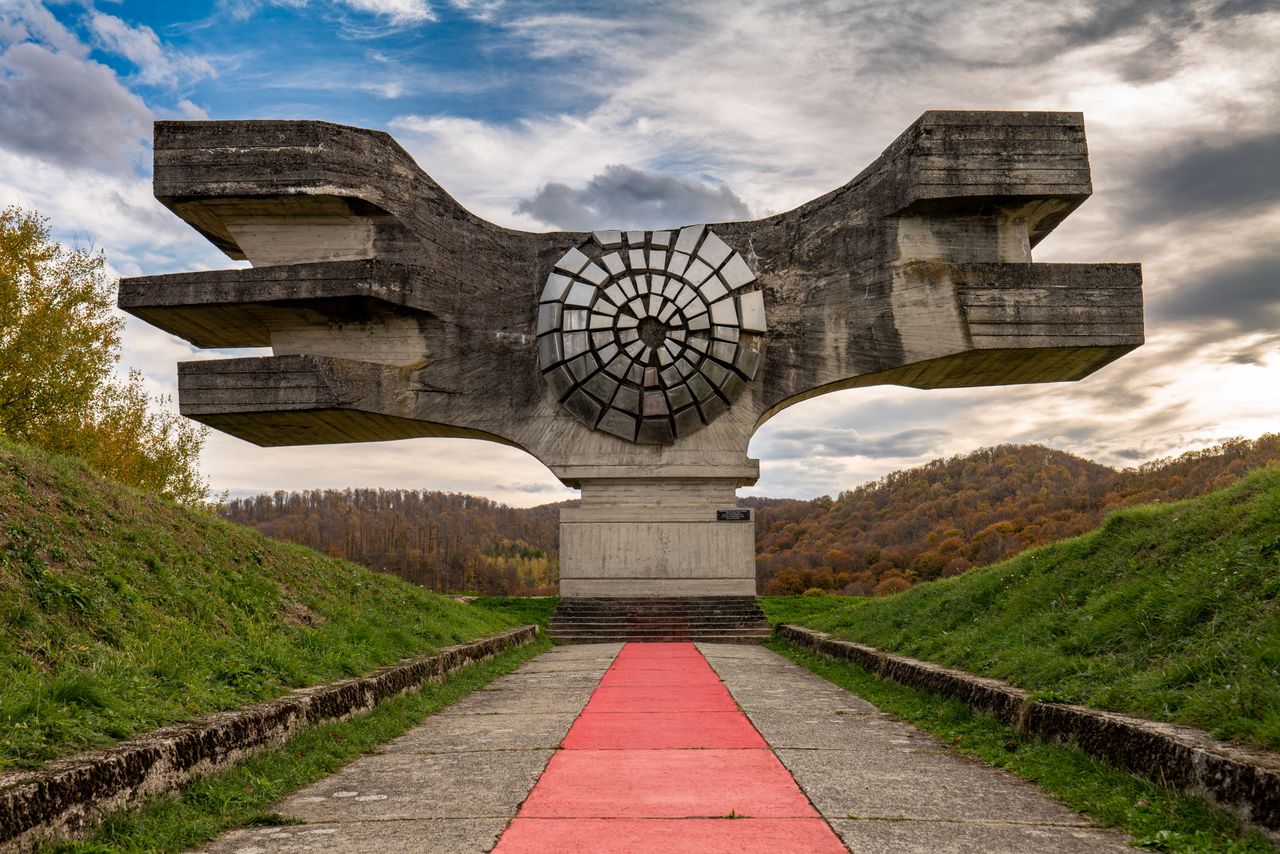
Towards a new Yugoslavism
Author: Ante Čuljak The civil war in Yugoslavia delegitimised the historical trajectory of the South Slavic peoples. In its wake petty ethnonationalist states arose, and claim that the “experiment” of socialist Yugoslavia must remain in the past. A collective sense of longing exists in every former Yugoslav country, one that cannot be washed away by nationalism. Illustration photo. Retrieved from Pexels (www.pexels.com) The petty nationalist projects of countries such as Croatia, Serbia, Bosnia and Herzegovina with its three main nationalities, all claim to be better off independent, yet their economies now are dependent on imports from other countries, and heavy subsidies by the European Union, at least in the case of Croatia and Bosnia and Herzegovina. Particularly the case of reconstruction of infrastructure, buildings and deserted industrial sectors is a serious problem for Bosnia and Herzegovina, which has remained in a state of limbo for well over 30 years, unable to figure out its internal governmental structure, and with the Dayton System still in place, it is unsure when and if Bosnia and Herzegovina will leave its post-war malaise. Nationalist politicians in Croatia stoke the fires against Serbs while making themselves rich with European funds, while the rest of the country and its industrial sectors fall into disrepair, they keep on making Croatia into a model ethnostate. Serbia sits at a crossroads; surrounded practically on all sides by NATO and the European Union, its precarious position and continued radicalisation of the young populace pose quite a threat to its establishment. The perpetrators of horrid crimes in the 90s are celebrated as national heroes in Serbia, while honest fighters for freedom during WWII, the partizans, are remembered as traitors to the national project of Greater Serbia. Serbia’s deeply controversial history marks her in profound ways, and glorification of war criminals does nothing but cloud the minds of the people. The petty nationalist projects arose from the failures of Yugoslavia, and one can imagine Yugoslavia as an evolution of small nations into one, unified identity. To cast off aside these tribal identities, these preoccupations with just your people, your nation, is a monumental task. That task may take a hundred years, but once the masses of their respective countries realise that their nationalism only breeds hate towards others, and in fact makes them weak, only then can we start to make strides into a new Yugoslavism, one that will wash away the tragedy of the past, and finally rid us our biases and hatreds. Only by dreaming of something greater can we be great.
Why is Commissioner Kos key to the stability of the Western Balkan countries?
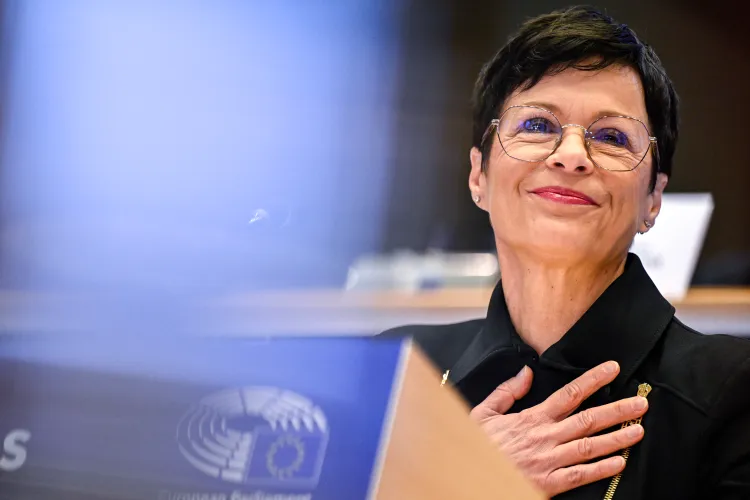
Author: Nina Anžič Članek v slovenskem jeziku je na voljo tukaj. This question may be provocative, but it is crucial if we want the Western Balkan countries to ever become members of the European Union. To begin with, I will highlight the fact that Marta Kos is the Commissioner responsible for Enlargement in the European Commission led by Ursula von der Leyen for the 2024–2029 term. Commissioner-designate for Enlargement Marta Kos at the confirmation hearing in the European Parliament (7 November 2024). Source: newunionpost.eu Commissioner Kos was born during the Yugoslav era, which means she has a deep understanding of the mentality, culture, and, not least, the language shared by the once-brotherly nations. The fact is that in 1991—then still the Socialist Republic of Slovenia—Slovenia was the first to leave Yugoslavia. Croatia followed, and that is when a bloody war began among the once-brotherly republics. Slovenia fared best at the time with its fourteen-day war for an independent state, if one can even measure such a thing during that bloody period among the once-brotherly nations of the former Socialist Federal Yugoslavia. Slovenia was the first to become a member of the European Union in 2004, with Croatia following in 2013. However, regardless of whether the government was left-wing or right-wing, Slovenia has consistently and vigorously advocated in its foreign policy for a stable Western Balkans and the membership of these countries in the European Union. But where did things go wrong for countries like Serbia, Bosnia and Herzegovina, and North Macedonia? The last country I mentioned even added the word “North” to its official name, yet is that still not enough for membership in the European Union? Serbia and Bosnia and Herzegovina, with their ongoing integration processes, still haven’t moved past the red light on the European integration traffic light. Both countries will urgently need to improve the state of democracy, freedom of speech, the rule of law, and, above all, the level of corruption. Yet in Serbia, we see a future in the students who refuse to give up and remain in the blockade with clear demands for the authorities. Why is this same political establishment unable to listen to its greatest potential, which lies within the country? While young people in Serbia still offer hope for change, we unfortunately do not see this in Bosnia and Herzegovina. Have all the young hopes of Bosnia and Herzegovina already left the country to become part of a diaspora that returns home only on holidays? Yet, let us return to the path of the European Union and Commissioner Kos. During her official visit, she met with both the authorities and the students at the blockade. So the EU clearly sees the efforts of young people in Serbia; I have no doubt about that at all. Members of the European Parliament are also active—here I can again highlight Slovenian MEP Irena Joveva, as well as Croatian MEP Gordan Bosanac. Likewise, the countries of the Western Balkans are already actively participating in the EU’s civil protection mechanism. When we experienced the worst floods in the history of independent Slovenia, every single country in the Western Balkans immediately came to our aid. This raises the question: is cooperation in saving lives and property the only common ground between the countries of the former Yugoslavia and the European Union? If we do not seize this opportunity, Marta Kos’s term will be a wasted one—especially for the aforementioned Western Balkan countries. I seriously doubt that a Slovenian—someone who actually knows and understands this region, perhaps even better than the national policies of these countries themselves—will ever be appointed to this position again. It is precisely in this understanding that the key lies: Commissioner Marta Kos.
Puzzle
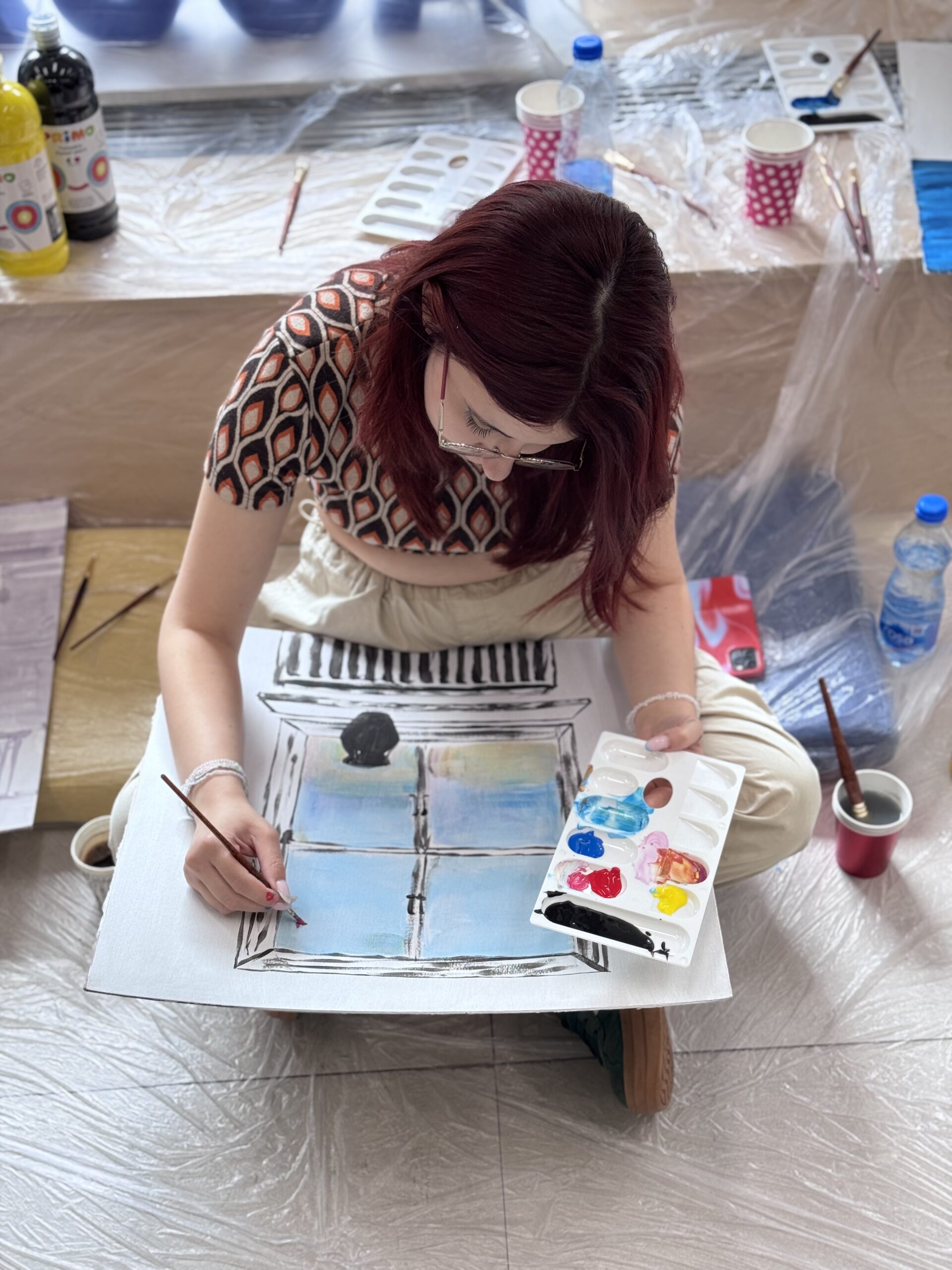
Ovde pročitajte ovaj članak na naškom jeziku. What happens when young artists are given the space to speak? The Puzzle, a collective exhibition organized by the Underground Initiative, offers one possible answer. Open from June 15 to June 26 at the European House in Niš, the exhibition brings together diverse artistic expressions that explore identity, climate justice, memory, and belonging, while reminding us why independent cultural spaces remain essential for young people and their communities. This exhibition was created in 2026 as a collective cry of Niš youth. It is called The Puzzle because each of us contributed a small piece of ourselves, and somehow those pieces came together into a larger story. There was no common theme, no agreed form, and no attempt to create a unified artistic vision. Each artist followed their own voice, choosing their own medium, symbols, and message. Yet when the works were brought together, we realized they were speaking to one another. Through illustrations, graphic design, oil paintings, and photography, visitors will encounter stories that may initially seem unrelated. But a closer look reveals recurring questions and shared concerns. The exhibition reflects a longing for climate justice through depiction of environmental destruction, endangered animals, and the tension between nature and the colourless aesthetics of contemporary life. It explores identity through music, memory, archetypes, the beauty of the human body, and symbols of home, belonging, and southern Serbia. The Puzzle is more than an exhibition. It is a space where young creators search for meaning, connection, and ways of understanding the world around them. It is also a reminder that art remains one of the most powerful languages through which young people express their hopes, fears, and visions for the future. Organized by the Underground Initiative with the support of the Critical Education Centre and the European House in Niš, the exhibition brings together emerging artists from Niš and invites visitors not only to look at the artworks, but to listen to what they are trying to say. At a time when cultural spaces are increasingly inaccessible to those at the beginning of their artistic journeys, initiatives such as Underground seek to open doors rather than close them. We believe that young people need places where they can exhibit their work, exchange ideas, challenge dominant narratives, and develop their voices without having to wait for institutional recognition. Whether through exhibitions, concerts, festivals, independent media, or public discussions, these spaces allow new generations to participate in shaping the cultural and social life of their communities. This is also why Underground exists alongside initiatives such as Balkan Talks. While one creates room for artistic expression and the other for critical dialogue, both are driven by the same conviction: that young people deserve platforms where they can think, question, imagine, and create. Critique does not belong to a single form. It can be found in an article, a photograph, a song, a painting, a performance, or a conversation. Art and critical thought are not separate spheres; they are often different languages through which we respond to the same social realities. We therefore invite you not only to visit this exhibition, but also to support the initiatives that make spaces like this possible. Support young artists. Support independent culture. Support platforms that encourage critical thinking, creativity, and dialogue. And if you want to experience even more of the creativity, energy, and critical spirit of Niš youth, join us at this year's Underground Festival, taking place from October 1–4 at the Niš Cultural Center. Follow Underground and kriti.cko on Instagram, stay connected, and become part of a community that believes culture is not something we simply consume - it is something we create together. We are the young creators of this city. We invite you to listen to our images. Here you can see the whole exhibition.

Flattery or Erasure: Recognizing Unhealthy Admiration
Author: Stamena Kozić, a high school student from Serbia In many areas of life, we unconsciously mirror the people we admire- a phenomenon psychologists often refer to as the Chameleon Effect. Over time, this imitation can be harmless, even flattering, and often helps us connect, or feel understood. But in relationships, the rules are quite different. When it happens too quickly, before you truly know each other, admiration can cross a line. What starts as flattery can almost imperceptibly turn into something else entirely, an erasure. Illustration photo. Retrieved from Pexels (www.pexels.com) Take, for example, someone you've just started dating- a new person entering your life. Weeks in, they begin changing themselves to mirror you, adopting your style, your tastes, even life decisions of great importance they once resisted or opposed. They may switch their hair color, modify their wardrobe, or suddenly embrace hobbies and opinions they previously dismissed. At first, it might seem flattering, like they're captivated by you, eager to connect, to be close. But when admiration moves faster than the relationship itself, the unease sets in. There's something disorienting about watching someone erase their own preferences and bend their identity around yours- especially when the choices they make now reflect you, and not the person you thought you were falling for. Admiration starts morphing into a warning sign, signaling that something deeper, more concerning, is unfolding. Many philosophers throughout history have emphasized the importance of individuality. Socrates once encouraged people to think for themselves rather than simply follow the crowd. In the context of relationships this advice becomes more relevant. To maintain connection without losing oneself, we must define our desires and resist the pull to mirror someone else blindly. And yet, the phenomenon persists. French anthropologist Rene Girard, famous for his work on desire and imitation, developed what he called the theory of mimetic desire: the idea that we often want people not for who they truly are, but because someone else desires them. Desire is contagious, and admiration can be less about the person and more about the reflection they inspire in us. In relationships, this can appear as someone bending themselves- intensely and unexpectedly- to match your preferences and life choices before the connection has had a chance to form naturally. So, why does this happen? Quite often, it stems from insecurity, fear of rejection, or even borderline tendencies, where validation from others feels essential to one's sense of self. Jealousy and a desire to keep up with perceived standards or to secure affection can accelerate this imitation, making admiration feel too urgent and overwhelming. In these cases, the person isn't connecting with you, instead they're seeking approval, safety, or identity in your reflection, erasing the boundaries between desire and obsession. The healthiest relationships don't demand transformation. They invite it, slowly, over time, with respect for boundaries and selfhood. True connection encourages curiosity, growth and exploration on both sides, rather than bending to fit someone's reflection. To navigate intimacy without losing yourself pay attention to subtle signs: Are boundaries respected, or quietly dissolved? Are choices made freely, or to please? Admiration feels uplifting, inspiring one to become their true self without fear or pressure. When desire becomes imitation, it's easy to mistake intensity for connection, but connection that truly matters doesn't erase identity. In the end, the most lasting connection, isn't the one that mirrors us perfectly, but the one that is built on contrast, the one that can fill the gaps without erasing individuality.

Overcoming ethno-nationalism
Author: Vladimir Stojković Although I am someone who was very small when the breakup of Yugoslavia began, I became aware of the importance of the idea of such a federation. The very idea of such a community was significantly progressive and went beyond the primitive narrow ethnic views of a multicultural society. In the idea of Yugoslavia, I saw at least an attempt at the formation of nations that happened after the French Revolution throughout Europe. It meant connecting people from different regions and different cultures. Like say in France and Italy. People created and adopted their new common identity over time. This is how societies of free people were formed, who voluntarily took part in such a community. However, something like that in the Balkans, i.e. former Yugoslavia was not possible. In other words, Yugoslavia was an attempt to achieve something like this here as well, but the nationalism of the ethnic groups interrupted that good idea. Mostar, city in Bosnia and Herzegovina. Author: Marcel Dominic, pixabay.com This is the climate of societies that base their existence on mythology. This constant need for societies to compete in who has a "richer" national history, etc. they cannot lead to progress and the survival of a social community. The aim of such "histories" is to glorify ethnic virtues and to somehow develop a sense of uniqueness of a certain ethnic group and supremacy in relation to its neighbors in the region. It is especially interesting to see this in the area of the former Yugoslavia, where peoples who speak the same language live and who are much closer to each other in terms of mentality than, say, Italians from southern and northern Italy. The wars of the 1990s on the territory of the former Yugoslavia set a lot of things back. People argue over territories and drawing borders. The dominance of a certain ethnic group and the suppression of minority groups is one of the main characteristics of such societies. That way of functioning of a society has been absolutely surpassed and reminds of some medieval times and the age of feudalism. It is difficult to expect the restoration of Yugoslavia as we knew it in the near future, but the idea of association and federalism certainly exists and that is what we should strive for. Perhaps the peoples of this area can once again be in some form of a common federation. The political and security situation in Europe and the world is such that the entry of all the countries of the former Yugoslavia, and the Balkans as a whole, into the EU would be a rational step forward. In this way, the idea of uniting into one union would be realized. It would be a stimulating injection for the Balkan countries, which would definitely push our societies into much more progressive trends in order to try to cross paths with the ghosts of the past.

What Did the Student Protests Bring Us?
Author: Vladimir Stojkovic The student protests that followed the fall of the canopy are certainly not the first protests to take place in the modern history of Serbia. In many aspects, they resemble the protests of previous decades. However, what distinguishes these student protests is the level of general mobilization that is, the awakening of the broader community. This awakening did not occur only in urban centers, but also extended to rural areas, which had long been politically marginalized. Sourced from https://protesti.pics For months, now more than a year, students have been walking proudly along their path of freedom. Many had considered this generation to be completely lost and apolitical, yet the students proved the opposite through their actions. Beyond the powerful and inspiring slogans reminiscent of the protests of the 1990s, these demonstrations have played a crucial role in raising social awareness across various spheres of life. They addressed issues ranging from respect for individual and minority rights to the importance of independent state institutions. Of course, activists, party members, NGOs, and individuals had been pointing out social problems long before these protests, and their persistence deserves recognition. However, students managed to find a formula that reached a much wider audience, including the rural parts of the country that had often been overlooked. As students moved across Serbia, from cities, across fields and meadows, to the smallest villages, they awakened hope and initiated a form of social catharsis. They jolted people out of long-standing apathy and fear. Decades of injustice, particularly intensified over the past thirteen years, had accumulated within society. The arrival of students in remote villages helped dismantle that fear. They restored people’s pride, encouraged them to stand upright once again, and revived a sense of solidarity that had been sorely lacking. Under the influence of the student movement, citizens began participating more actively in public life. Public assemblies and discussions emerged, and people became increasingly interested in social and political issues. The students managed to wake society from a prolonged state of political passivity. The long-term effect of this awakening will be greater civic engagement, especially through participation in democratic processes such as elections, whether as observers, controllers, or candidates. What matters most is the realization that citizens hold power in their own hands. Students have faced attacks from various ideological positions. Some label them clerofascists, while others accuse them of being Eurofanatics. Such criticism ignores the fact that students represent a heterogeneous community, and total homogeneity would be both unrealistic and dangerous. Their diversity has not hindered dialogue; on the contrary, it has fostered tolerance and mutual respect. The authorities in Serbia, along with similarly minded political actors, fear scenes of unity, people of different religions embracing one another, or showing solidarity regardless of sexual orientation. Such moments represent a defeat for politics built on division and hatred. Ultimately, the most significant outcomes of the student protests include the disappearance of fear, increased interest in social affairs, and greater awareness of individual rights. The students also delivered a powerful lesson on corruption, helping citizens better understand its direct impact on their lives. The flame of the student protests has spread throughout Serbia, and it is clear that nothing will be the same again. The spirit of freedom has escaped the bottle, the waves of change have been set in motion, and it is now up to all of us to sustain that energy and work toward improving our society.