

Call for Applications: Invisible University for Southeastern Europe
Central European University’s Global Invisible University Project Central European University has officially launched the Invisible University for Southeastern Europe (IUSEE) within its Global Invisible University program. This initiative builds upon decades of educational tradition established by the Flying Universities and the Alternative Academic Network, which historically aimed to fill formal education gaps in the region. The program is open to BA, MA, and PhD students residing in the Balkans, as well as those with a strong academic interest in the region. Starting in September 2026, IUSEE will offer two interdisciplinary courses: Introducing the Balkans (Dr Aleksandar Pavlovic and Dr Marija Mandic) and Wars for the Yugoslav Succession and their Contemporary Legacy in the Balkans and Beyond (Dr Vladimir Petrovic and Dr Sven Milekic). Introducing the Balkans focuses on the issue of perception and self-perception of this peninsula, and should be equally appealing to students from the region and those interested in it. Wars for the Yugoslav Succession and their Contemporary Legacy aims at examining not only the atrocious decade of warfare, but the way it shaped postwar realities in the region. We are aiming for advanced BA and ambitious MA students, primarily from universities in Southeastern Europe, but also beyond. Our courses are offered online, and the lecturers are coming from different academic disciplines and surroundings. Besides the courses on Southeastern Europe, the students can also enroll into an impressive range of courses offered by GIU’s Ukrainian and Georgian cluster. Full course descriptions are available here. The attendance is free of charge, and it offers additional opportunities: Student Benefits and Opportunities ECTS Certification: Participants can enroll in Balkan and other ECTS-certified courses offered by the Global Invisible University. Skill Development: The program provides intensive academic English training to enhance research proficiency. Financial Support: Students are eligible to apply for research grants valued up to 800 EUR. Academic Collaboration: Selected participants will contribute to the project's official website, Balkan Talks. In-Person Networking: Students are eligible to apply for a week-long, fully immersive winter school. Application Information Interested students are invited to submit their applications through the Global Invisible University Application Form. Application Deadline: September 9, 2026 For any question, you can contact us at [email protected]
Puzzle
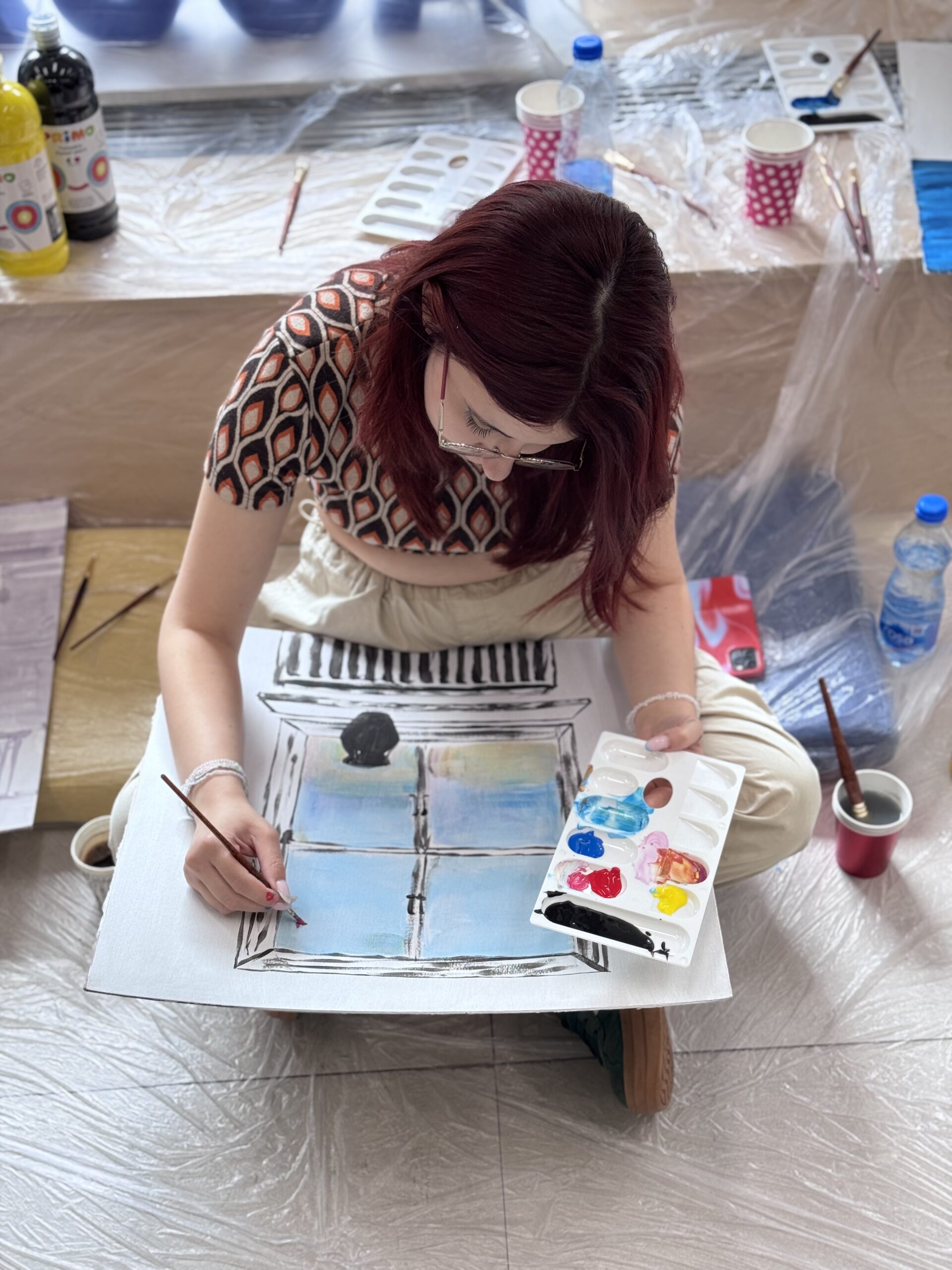
Ovde pročitajte ovaj članak na naškom jeziku. What happens when young artists are given the space to speak? The Puzzle, a collective exhibition organized by the Underground Initiative, offers one possible answer. Open from June 15 to June 26 at the European House in Niš, the exhibition brings together diverse artistic expressions that explore identity, climate justice, memory, and belonging, while reminding us why independent cultural spaces remain essential for young people and their communities. This exhibition was created in 2026 as a collective cry of Niš youth. It is called The Puzzle because each of us contributed a small piece of ourselves, and somehow those pieces came together into a larger story. There was no common theme, no agreed form, and no attempt to create a unified artistic vision. Each artist followed their own voice, choosing their own medium, symbols, and message. Yet when the works were brought together, we realized they were speaking to one another. Through illustrations, graphic design, oil paintings, and photography, visitors will encounter stories that may initially seem unrelated. But a closer look reveals recurring questions and shared concerns. The exhibition reflects a longing for climate justice through depiction of environmental destruction, endangered animals, and the tension between nature and the colourless aesthetics of contemporary life. It explores identity through music, memory, archetypes, the beauty of the human body, and symbols of home, belonging, and southern Serbia. The Puzzle is more than an exhibition. It is a space where young creators search for meaning, connection, and ways of understanding the world around them. It is also a reminder that art remains one of the most powerful languages through which young people express their hopes, fears, and visions for the future. Organized by the Underground Initiative with the support of the Critical Education Centre and the European House in Niš, the exhibition brings together emerging artists from Niš and invites visitors not only to look at the artworks, but to listen to what they are trying to say. At a time when cultural spaces are increasingly inaccessible to those at the beginning of their artistic journeys, initiatives such as Underground seek to open doors rather than close them. We believe that young people need places where they can exhibit their work, exchange ideas, challenge dominant narratives, and develop their voices without having to wait for institutional recognition. Whether through exhibitions, concerts, festivals, independent media, or public discussions, these spaces allow new generations to participate in shaping the cultural and social life of their communities. This is also why Underground exists alongside initiatives such as Balkan Talks. While one creates room for artistic expression and the other for critical dialogue, both are driven by the same conviction: that young people deserve platforms where they can think, question, imagine, and create. Critique does not belong to a single form. It can be found in an article, a photograph, a song, a painting, a performance, or a conversation. Art and critical thought are not separate spheres; they are often different languages through which we respond to the same social realities. We therefore invite you not only to visit this exhibition, but also to support the initiatives that make spaces like this possible. Support young artists. Support independent culture. Support platforms that encourage critical thinking, creativity, and dialogue. And if you want to experience even more of the creativity, energy, and critical spirit of Niš youth, join us at this year's Underground Festival, taking place from October 1–4 at the Niš Cultural Center. Follow Underground and kriti.cko on Instagram, stay connected, and become part of a community that believes culture is not something we simply consume - it is something we create together. We are the young creators of this city. We invite you to listen to our images. Here you can see the whole exhibition.
Religious education as a showcase of contemporary pedagogical challenges: a case study and proposals for changing teaching practice
Author: Danica Janković, a high school student from Serbia This paper will analyse the religious teaching in Serbian high schools as a case study through which broader problems of contemporary teaching are identified such as the weak interactivity and low motivation (Institute for Educational Research 2023). These issues reflect a wider pattern in modern education where teaching often remains teacher-centered and students are passive participants in their own learning process.The purpose is to show the role of the teacher as a guide who leads students to independent thought through questioning and coming to their own conclusions which would be connected to the class and the material they were supposed to cover. Photo: Unsplash/Vidar Nordli-Mathisen Through literature analysis, comparison, and a case study of selected religious education lessons in a Serbian high school, the paper demonstrates how a teacher can recreate lessons not by providing direct answers, but by guiding students to discover concepts themselves. This approach aligns with broader educational goals such as autonomy, critical thinking, and value-based learning, making it applicable beyond religious education and relevant across various subjects. During the period between 2021-2022 the online classes were carried out in two different high schools in Niš, Serbia, by the professor Ivica Živković during the years 2021-2022 which he conducted using the Socratic Majeutic method. This is the case study this paper will be focusing on. This paper argues that the Socratic (maieutic) method -teaching through guided questioning- offers one of the most effective pedagogical approaches for engaging students in reflective, meaningful learning. For example, during the period between 2021-2022 the Religious education classes were carried out online in two different high schools in Niš, Serbia, by the professor Ivica Živković which he conducted using the Socratic Majeutic method. Student Milica Marković responded to the professor in the google classroom, and at the end of the school year, a book was published in the form of dialogue between them that was created during their classes. Using this example I demonstrate how this method addresses key problems in contemporary teaching: lack of student engagement, insufficient critical thinking, and limited relevance of content. In many educational systems, including the Serbian one, teaching remains largely teacher-centered, emphasizing memorization and passive reception of knowledge. This creates an unconscious barrier between teachers and students, further discouraging active participation and curiosity. Religious education, as a relatively new yet controversial subject, reflects these broader pedagogical issues such as lessons often relying on narration rather than exploration. Within this context, reintroducing the Socratic approach represents an opportunity to reimagine the teacher’s role as a facilitator of thought. Improving the quality of religious education is not only pedagogically important but also socially significant. When students are taught to reflect and understand religion critically, they are less likely to adopt simplified or politicized interpretations of faith. Strengthening teaching methods in this subject contributes to fostering tolerance, empathy, and intercultural understanding. Main arguments: Religious education should be conducted using the Socratic method and similar interactive approaches applied by Professor Živković. ● This approach replaces passive memorization with dialogue and guided questioning, allowing students to actively construct their understanding instead of only repeating given information. ● Such teaching practices positively influence students by increasing their engagement, motivation, and participation. ● When lessons are structured around questions rather than lectures, students become co-creators of knowledge, which strengthens their critical thinking and sense of autonomy in learning. ● This pedagogical model also benefits the broader community by promoting a more informed and reflective understanding of religion. By fostering dialogue and empathy, it helps prevent the political misuse of religious ideas for spreading intolerance or hatred, encouraging instead the authentic ethical and humanistic values of faith. The teacher as a questioner – recreating knowledge rather than transmitting it Exploration of how questions can replace explanations, encouraging students to reconstruct meaning through guided inquiry (examples of how this could work within religious topics). How questioning leads to reflection and critical engagement – Analysis of the shift from rote learning to reflective thinking; examples of how guided dialogue fosters personal connection and moral reasoning. Model proposal: Applying the Socratic method across subjects – Practical implications: how a questioning-based approach could improve not only religious education but teaching practices in general; steps for implementation and teacher training. By examining religious education through the lens of the Socratic method, this paper shows that meaningful teaching depends not on the amount of information transmitted, but on the teacher’s ability to guide students toward independent thought. When applied to religious education, this approach transforms the classroom into a space of dialogue and critical reflection, helping students actively engage with ideas rather than passively accept them. Such methods not only improve student motivation and understanding but also strengthen the broader social role of education—encouraging tolerance, empathy, and resistance to the political misuse of religion. The teacher who questions rather than instructs does not merely convey knowledge, but cultivates reflective individuals capable of forming their own moral and intellectual judgments, which makes this model valuable far beyond the subject of religious education itself. Students just repeat the information Contemporary education across many countries faces problems that significantly complicate the learning process. Those problems are often not taken into account as they are highly normalised in today's teaching practices. Amongst the most common problems that appear in the classroom are the low motivation of the students, limited interactivity and a highly teacher-centered environment where the students are passive participants. These patterns are documented in recent pedagogical research, including work conducted in Serbia, where the Institute for Educational Research (2023) describes that students frequently experience lessons as passive and disconnected from their own reasoning processes. Instead of being encouraged to think, question, and explore ideas, students often remain silent observers while teachers hand over pre packaged information. Paulo Freire (1970) describes this approach as a “banking model” of education in which knowledge is treated as a deposit made by the teacher and given to the students, rather than as something that is co-constructed through dialogue and critical inquiry. Against this backdrop, this paper explores the potential of the Socratic maieutic method as an alternative pedagogical model for education. Rather than relying on repetition and the transmission of pre defined information, the Socratic method gives an emphasis to questioning, dialogue, and the guided development of ideas, encouraging students to make their own understanding through critical inquiry. This approach positions the teacher as a facilitator of learning, rather than a transmitter of knowledge (Plato, trans. 1997; Vlastos, 1991). The paper investigates this method through a case study of religious education classes conducted online by Professor Ivica Živković in two high schools in Niš, Serbia, during the 2021–2022 school year. These classes conducted during the COVID-19 pandemic, resulted in a year-long written dialogue between the teacher and student Milica Marković, later published as the book A to samo Bog zna (2022). This case presents an important example of a student-driven learning in a Serbian high school. New (old) practices in education In recent years, educational systems in many countries, especially in the European Union and the United States have been going through notable reforms and transformations as a reaction to technological, social, and economic pressures and changes. For example, the OECD’s Trends Shaping Education 2025 report brings out how global forces such as digitalisation, societal change and the COVID-19 pandemic are reshaping policies and practices in education across OECD member countries, driving changes in how learning, teaching, and assessment are conceived and delivered (OECD, 2025). At the same time, a great deal of national reforms in the U.S. have focused on expanded learning time, curriculum redesign and adaptation to emerging technologies as part of broader efforts to improve educational outcomes and equity (e.g., expanded learning initiatives in the U.S.). Yet still so many classrooms carry on in keeping traditional models of teaching and learning. Teacher centred pedagogy traditionally prioritises the transmission of knowledge over the development of skills, values, and independent reasoning. John Dewey’s theory of education critiques such approaches, arguing that learning turns out most effectively through active participation, experience, and reflective thinking, instead of passive reception of information (Dewey, 1938). Similarly, critical pedagogy emphasises that education should foster learners’ capacity for critical reasoning and meaningful engagement with knowledge, rather than positioning students as passive recipients (Freire, 1970). From this theoretical perspective, teacher centred instruction is not adequate for contemporary students who require active engagement in order to understand complex concepts and apply knowledge to real life contexts A 2023 study by the Institute for Educational Research highlights that Serbian high school students often describe classes as monotonous and lacking meaningful interaction. When lessons rely heavily on memorization, students struggle to understand the material and its significance. As a consequence students during the classes exhibit low motivation, limited curiosity, and minimal participation. Majeutics Socratic method emphasizes a shift from the teacher as a transmitter of knowledge to the teacher as a facilitator.The facilitators role is to guide students to analyse, reconstruct knowledge and come to the answers on their own rather than providing them. This encourages learners to form arguments, draw conclusions and actually connect to the material.(Plato, trans. 1997; Vlastos, 1991). In the context of religious education, facilitation is especially crucial, as teaching about religion requires sensitivity to students' diverse beliefs and experiences and emphasises dialogue, interpretation, and reflective understanding, rather than the transmission of fixed doctrinal knowledge (Jackson, 2004). A facilitator-oriented approach can help learners explore questions of meaning, morality, and identity. The Socratic maieutic method emphasizes drawing out knowledge through questions. As Wilberding (2019) explains, the method involves strategic questioning that leads students to uncover ideas themselves rather than passively receiving them. Maieutics (from the Greek word for “midwifery”) suggests that the teacher assists students in “giving birth” to their own understanding. Key characteristics of the Socratic method include: ● open-ended questions, ● dialogical interaction, ● reflection with self-correction, ● the development of personal meaning. Religious education, when taught through memorization risks reducing theological and ethical concepts to surface-level information. The Socratic method offers an alternative by encouraging students to question, interpret, and reflect, it supports: ●independent moral reasoning, ● empathy and tolerance, ● deeper understanding of religious texts, ● critical examination of personal and societal beliefs. Critical thinking Given the growing concerns regarding the politicisation of religion in contemporary societies, facilitative and dialogical pedagogical models are not only academically beneficial but also socially significant. Scholars argue that when religious education is reduced to the transmission of fixed or ideologically framed interpretations, it can reinforce polarisation and limit students’ capacity for critical reflection (Casanova, 2011). In contrast, dialogical approaches to religious education such as facilitation established on questioning and interpretation, promote critical engagement, tolerance, and the ability to tell apart personal belief from political manipulation of religion (Jackson, 2004; UNESCO, 2019). From this perspective, such pedagogical models contribute to the development of reflective and socially responsible citizens capable of engaging with religious diversity in pluralistic societies. The findings are compared to typical teacher-centered practices in Serbian religious education to highlight key differences and pedagogical implications. Empirical research on attitudes toward religious instruction in Serbia indicates that the existing confessional model, which tends to prioritise content transmission, has limitations in addressing religious diversity and meaningful engagement with material, pointing to pedagogical gaps in current practice (Šuvaković et al., 2023). Furthermore, comparative research in religious education literature identifies a clear distinction between traditional teacher-centred/content-centred approaches and more constructivist, student-centred models that actively involve learners in meaning-making processes (Religious Education in Transition, 2024). These differences underscore how teacher-centred practices may limit opportunities for critical thinking and deeper understanding, in contrast to approaches that emphasise learner engagement and dialogue The online lessons were fundamentally dialogical. Professor Živković rarely provided direct explanations; instead, he formed and asked a series of interconnected questions designed to guide the student toward discovering the underlying concepts. Responses were written, allowing time for reflection. Each question built upon the previous one, creating a developmental sequence that led the student toward deeper understanding. The Socratic method in these lessons relied on several types of questions: ● Descriptive questions (“What do you think this parable suggests?”) ● Analytical questions (“Why do you believe this interpretation makes sense?”) ● Reflective questions (“How does this relate to your own experience or values?”) Rather than correcting the student the teacher asked further questions that guided her toward answers. Even when her thoughts on the subject didn't quite meet his beliefs he didn't imply she was wrong but rather accepted her understanding and offered his own, making a safe environment for the student to come to the conclusion on her own. The dialogue demonstrates a high level of engagement. The student’s responses grew more complex over time, also increased her motivation and comfort with reflective reasoning. The written format also encouraged clarity, structure, and introspection and gave her the time to think through her answer, highlighting how questioning can stimulate deep learning even in an online environment. The case study directly addresses the problems outlined in the introduction. Unlike traditional classes where students are passive recipients of transmitted knowledge, critical and progressive educational theories argue that such passivity limits meaningful learning and critical engagement (Freire, 1970; Dewey, 1938). The Socratic method transforms them into active participants. The method appeals to curiosity rather than external pressure and so the engagement increases. The student is not merely listening but thinking, constructing, articulating, and defending ideas. A questioning-centered approach benefits subjects such as philosophy, sociology, literature, history, and even science. Any discipline that requires reasoning can be enriched by dialogical and reflective learning, which encourages learners to engage actively with ideas rather than receive them passively. Educational theorists argue that dialogic teaching promotes deep understanding, critical thinking, and the ability to articulate and justify one’s own views (Alexander, 2008; Mercer, 2000). One of the most significant social implications of this method is its contribution to social cohesion and democratic citizenship. Research suggests that when students are taught to think critically about religion and other contested topics, they are less likely to accept oversimplified or politicised narratives and more likely to develop nuanced, empathetic, and informed perspectives (UNESCO, 2015; Osler & Starkey, 2005). In multicultural societies, dialogical learning has been linked to the strengthening of democratic values, reduction of prejudice, and increased intercultural understanding, as students learn to respect difference, engage in reasoned dialogue, and consider diverse viewpoints (Banks, 2008; UNESCO, 2015). Implementation To implement a dialogical and facilitative pedagogical model there are some conditions that must be met, as suggested by educational theory and research. Teachers' classes that are focused on questioning and dialogical techniques are essential, since the efficiency of the Socratic and dialogical approach depends mostly on teachers’ ability to guide discussion rather than transmit information. Studies on dialogic teaching emphasise that teachers must be explicitly trained to use questioning strategies that promote reasoning and reflection (Alexander, 2008; Mercer, 2000). Curriculum adjustment is necessary in order to create space for dialogue and inquiry instead of pure memorisation. Dewey (1938) argues that meaningful learning requires time for reflection and interaction with ideas, which cannot occur in inflexible, content-heavy curricula focused solely on fact based reproduction. Assessment practices must be reformed to value reflection and critical thinking rather than simple reproduction of information. Research in classroom assessment demonstrates that learning is enhanced when evaluation focuses on students’ reasoning processes, self-reflection, and understanding rather than on memorisation alone (Black & Wiliam, 1998). This paper has demonstrated that the Socratic maieutic method offers a powerful and necessary response to the pedagogical challenges currently present in Serbian high schools. Through a detailed analysis of a real classroom example it demonstrates that questioning centered teaching crucially improves student engagement, enhances critical thinking, and deepens the internalization of religious and ethical concepts. In conclusion, the findings of this paper indicate that religious education due to its ethical and existential nature, is better understood if it uses dialogical and facilitative pedagogical approaches. The analysis demonstrates that when students are encouraged to think critically rather than memorise content, they are more likely to develop mature perspectives on religion. These findings suggest that such educational practices extend beyond academic outcomes and provide to broader societal goals such as the development of a more reflective and cohesive community. Furthermore, this study concludes that the teacher who guides inquiry rather than deliver pre determined answers strengthens both the deeper academic understanding but also the development of independent and critically minded students. From this perspective, pedagogical transformation emerges as essential for education systems devoted to preparing students for complex moral decision making, democratic participation, and responsible engagement in pluralistic societies. Bibliography Wilberding, Erick. Socratic Methods in the Classroom: Encouraging Critical Thinking and Problem Solving Through Dialogue. New York: Routledge, 2019. Taylor & Francis+1 Ivica Živković, Milica Marković,“A to samo Bog zna” Serbia, Niš 2022. Lalić-Vučetić, Nataša, Biljana Bodroški Spariosu, and Zvonimir Komar, editors. Motivation in Education: Challenges and Different Perspectives in Research. Institute for Educational Research, Belgrade, Serbia; Institute of Instructional and School Development, Alpen-Adria University of Klagenfurt, Austria; Faculty of Humanities and Social Sciences, University of Zagreb, Croatia, 2023. Koplston, Frederick Charles. History of PhylosophyI: Grecee and Belgrade. Belgrade: BIGZ, 1988 Freire, P. (1970). Pedagogy of the Oppressed. New York: Continuum.

Udžbenici moći: Ko ima pravo da opiše nacionalni identitet?
Šta se dešava kada država odluči kako istorija treba da izgleda? I kakvu budućnost to proizvodi? Ilustrativna fotografija. Preuzeto sa Pexelsa. Prethodnih meseci, rasprave o novim politikama udžbenika ponovo su otvorile jedno staro i neprijatno pitanje: ko kontroliše znanje i u koju svrhu? Iako su predstavljene kao administrativne ili obrazovne reforme, ove politike ne mogu biti neutralne. One često signaliziraju nešto dublje: pokušaj da se preoblikuju kolektivno sećanje i identitet, a samim tim i politička imaginacija jednog društva. Na prvi pogled, centralizovana kontrola nad udžbenicima može delovati kao pitanje efikasnosti ili osiguranja kvaliteta. Vlade tvrde da jedinstveni narativ obezbeđuje koherentnost obrazovnog sistema, ali nas istorija uči da budemo oprezni. Kada država monopolizuje proizvodnju znanja, obrazovanje prestaje da bude prostor kritičkog mišljenja i postaje sredstvo ideološke reprodukcije. I to nije nov fenomen. Čemu nas uči istorija? Tokom 20. veka, autoritarni i nacionalistički režimi više puta su se oslanjali na obrazovanje kao sredstvo konsolidacije moći. U nacističkoj Nemačkoj, udžbenici su sistematski prepravljani kako bi promovisali rasnu ideologiju i opravdali ekspanzionističku politiku. Slično tome, u Sovjetskom Savezu, istorijski narativi su kontinuirano revidirani kako bi se uskladili sa promenljivom političkom linijom vladajuće partije, često brišući "nepodobne" istine i pojedince iz javnog sećanja. U oba slučaja, obrazovanje nije bilo o učenju, već o poslušnosti. Bliže našem vremenu, slični obrasci pojavljuju se u delovima Evrope. Jedan od najrelevantnijih savremenih primera je Mađarska. Tokom poslednje decenije, Mađarska Vlada je uvela sve veću centralizaciju kontrole nad obrazovnim sadržajem, uključujući i nacionalizaciju udžbenika. Novi kurikulumi naglašavaju nacionalistička tumačenja istorije, sužavaju prostor za kritičke perspektive i promovišu homogenu viziju identiteta. Posledice nisu apstraktne. Istraživači/ce, prosvetni radnici i radnice i organizacije civilnog društva ukazuju da ove promene doprinose normalizaciji isključivih narativa. Istorijska složenost se pojednostavljuje, a perspektive manjina se marginalizuju ili brišu. A možda i najzabrinjavajuće, mladi se socijalizuju da svet posmatraju kroz prizmu „mi protiv njih“. Obrazovanje, u tom kontekstu, postaje suptilno, ali moćno sredstvo za proizvodnju nepoverenja, ogorčenosti, pa čak i neprijateljstva prema drugima. Zašto rasprava o udžbenicima nikada nije samo rasprava o udžbenicima? U društvima sa krhkim demokratskim institucijama, kontrola nad obrazovanjem lako može postati kontrola nad mišljenjem. Kada je dozvoljena samo jedna verzija istorije, kritičko promišljanje zamenjuje pasivno prihvatanje. Učenici i učenice se ne podstiču da postavljaju pitanja — učimo ih šta da misle. A kada se to dogodi, sama osnova demokratske kulture počinje da erodira. Zapadni Balkan, sa svojim složenim istorijama i nerazrešenim tenzijama, posebno je podložan takvim dinamikama. Iz iskustva znamo kako suprotstavljeni nacionalni narativi mogu podstaći podele i sukobe. Upravo zbog toga, obrazovanje bi trebalo da bude prostor u kojem se istražuju različite perspektive, postavljaju teška pitanja i razvija empatija. Uvođenje strogo kontrolisanih, državno odobrenih udžbenika koji favorizuju jedan narativ rizikuje da poništi ove napore. Rizikuje da reprodukuje upravo one obrasce koji su istorijski vodili ka isključenju, polarizaciji i nasilju. Ima li alternative? Nedavno uvođenje takozvanih „udžbenika od nacionalnog značaja“ u Srbiji izazvalo je ozbiljnu zabrinutost u stručnoj javnosti. Među njima, Centar za kritičko obrazovanje (CKO) podneo je sedam formalnih primedbi tokom procesa javne rasprave — primedbe koje na kraju nisu usvojene. Ovo nije samo proceduralno pitanje. Ovo je političko pitanje. U čemu je problem? U samoj srži reforme nalazi se jednostavna, ali opasna ideja: da određeni školski predmeti, posebno jezik, istorija i umetnost i kultura, treba da služe jačanju nacionalnog identiteta i kohezije. To je problematično samo po sebi, a u praksi još i više. CKO je u svojim primedbama upozorio da ovakav pristup predstavlja „sekuritizaciju obrazovanja“ — pomeranje u kojem se udžbenici više ne tretiraju kao pedagoški alati, već kao instrumenti nacionalne politike. Ovo formulisanje je važno, jer kada se obrazovanje poveže sa „nacionalnom bezbednošću“, postaje mnogo teže dovoditi ga u pitanje. Kritika se više ne posmatra kao deo demokratske debate, već kao pretnja. Na šta CKO upozorava?Primedbe CKO-a prevazilaze opšte zabrinutosti i ukazuju na vrlo konkretne rizike sadržane u samom zakonu: Politička kontrola nad proizvodnjom znanjaDajući prednost „nacionalnom interesu“ kao kriterijumu, zakon otvara prostor za izbor autora na osnovu ideološke podobnosti, a ne akademskog kvaliteta. Brisanje pluralnih perspektivaU predmetima poput istorije i kulture, jedan „zvanični“ narativ rizikuje da isključi glasove manjina i alternativna tumačenja. Slabljenje demokratskih proceduraČinjenica da primedbe podnete tokom javne rasprave nisu uvažene, niti je CKO dobio bilo kakav odgovor od nadležnih institucija, otvara ozbiljna pitanja o transparentnosti i participaciji. Ovo nisu apstraktni strahovi, već su utemeljeni u istorijskom iskustvu i u savremenim istraživanjima. Obrazovanje ili indoktrinacija?Ključno pitanje nije da li nacionalni identitet treba da bude deo obrazovanja, jer on to često i jeste, u nekom obliku. Pravo pitanje je: ko ga definiše i čiji se glasovi pritom isključuju? Intervencija CKO-a podseća nas da obrazovna politika nikada nije neutralna. Ona odražava političke izbore, a ti izbori oblikuju buduće generacije. Ignorisanje stručne i civilne javnosti nije samo loše upravljanje. To je upozorenje, jer kada obrazovanje postane zatvoren sistem, ono prestaje da stvara kritičke građane i počinje da proizvodi poslušne. Možete u celosti pročitati primedbe koje je CKO predao ovde.Rad koji su istraživačice CKO-a objavile o rizicima ovog zakona pročitajte ovde.

Textbooks of Power: Who Gets to Write the Nation?
Članak možeš pročitati na srpskom jeziku ovde. What happens when the state decides what history should look like? And what kind of future does that produce? Illustration photo. Retrieved from Pexels (www.pexels.com) In recent months, debates around new textbook policies have once again opened an old and uncomfortable question: who controls knowledge, and with what purpose? While presented as administrative or educational reforms, these policies are rarely neutral. They often signal something deeper: an attempt to reshape collective memory and identity, and ultimately, the political imagination of a society. At first glance, centralized control over textbooks might seem like a matter of efficiency or quality assurance. Governments argue that a unified narrative ensures coherence in education systems. But history teaches us to be cautious. When states monopolize the production of knowledge, education stops being a space for critical thinking and becomes a tool for ideological reproduction. And this is not a new phenomenon. What Does History Teach Us? Throughout the 20th century, authoritarian and nationalist regimes have repeatedly turned to education as a means of consolidating power. In Nazi Germany, textbooks were systematically rewritten to promote racial ideology and justify expansionist politics. Similarly, in the Soviet Union, historical narratives were continuously revised to align with the ruling party’s shifting political line, often erasing inconvenient truths and individuals from public memory. In both cases, education was not about learning, it was about obedience. Closer to our own time, we see similar patterns emerging in parts of Europe. One of the most relevant contemporary examples is Hungary. Over the past decade, the Hungarian government has introduced increasingly centralized control over educational content, including the nationalization of textbook publishing. New curricula have emphasized nationalist interpretations of history, reduced space for critical perspectives, and promoted a homogeneous vision of identity. The consequences are not abstract. Researchers, educators, and civil society organizations have pointed out that these changes contribute to the normalization of exclusionary narratives. Historical complexity is flattened. Minority perspectives are marginalized or erased. And perhaps most concerningly, young people are socialized into seeing the world through a lens of “us versus them.” Education, in this context, becomes a subtle but powerful vehicle for producing distrust, resentment, and even hostility toward others. Why the Debate on Textbooks Is Never Just About Textbooks? In societies with fragile democratic institutions, control over education can easily become control over thought. When only one version of history is allowed, critical engagement is replaced by passive acceptance. Students are not encouraged to ask questions, they are taught what to think. And once that happens, the very foundation of democratic culture begins to erode. The Western Balkans, with its complex histories and unresolved tensions, is particularly vulnerable to such dynamics. We know from experience how competing national narratives can fuel division and conflict. Precisely because of this, education should be the space where multiple perspectives are explored, where difficult questions are asked, and where empathy is cultivated. Introducing tightly controlled, state-approved textbooks that privilege a single narrative risks undoing these efforts. It risks reproducing the very patterns that have historically led to exclusion, polarization, and violence. Is There an Alternative? The recent introduction of so-called “nationally significant textbooks” in Serbia has sparked serious concern among educators, researchers, and civil society organizations. Among them, the Critical Education Centre (CKO) has submitted a set of formal objections during the public consultation process — objections that were ultimately not accepted. This is not just a procedural issue. It is a political one. What is the problem? At the core of the reform is a simple but dangerous idea: that certain school subjects, especially language, history, and arts and culture, should serve the purpose of strengthening national identity and cohesion. This idea is veery troubling as a concept, but even more so in practice. CKO, in its official submission, warned that this approach represents a “securitization of education”, a shift in which textbooks are no longer treated as pedagogical tools, but as instruments of national policy. This framing matters, because once education becomes tied to “national security,” it becomes much harder to question it. Criticism is no longer seen as part of democratic debate, but as a (national) threat. What CKO is Warning About? CKO’s objections go beyond general concerns. They point to very concrete risks embedded in the law itself: Political control over knowledge productionBy privileging “national interest” as a criterion, the law opens space for selecting authors based on ideological alignment rather than academic quality. Erasure of plural perspectivesIn subjects like history and culture, a single “official” narrative risks excluding minority voices and alternative interpretations. Weakening of democratic procedureThe fact that objections submitted during public consultation were not meaningfully incorporated raises serious questions about transparency and participation. These are not abstract fears. They are grounded in both historical experience and contemporary research. Education or indoctrination? The key question is not whether national identity should be part of education. It always is, in some form. The real question is: who defines this identity, and whose voices are excluded in the process? CKO’s intervention reminds us that education policy is never neutral. It reflects political choices and those choices shape future generations. Ignoring expert and civil society input is not just bad governance. It is a warning sign. Because once education becomes a closed system, controlled from the top, it stops producing critical citizens — and starts producing obedient ones. You can read the full set of comments submitted by CKO here.You can read the paper published by CKO researchers on the risks of this law here.

Functioning Is Not the Same as Being Well
Author: Stamena Kozić, a high school student from Serbia In the Balkans, mental health is often recognized only when it reaches an extreme. As long as a person continues to function-attending school, going to work, fulfilling responsibilities-this is treated as proof of stability. Functioning becomes evidence that everything is "fine", even when it's not. As a result, struggles such as anxiety, depression and burnout are rarely seen as legitimate unless they interfere with productivity. The ability to keep going is praised, while the cost of doing so remains invisible. Illustration photo. Retrieved from Pexels (www.pexels.com) However, data tells a different story. Research conducted in Serbia alone shows that approximately one-third of the population can be considered psychologically vulnerable. Around 15.6% of people report symptoms of depression, 7.2% experience symptoms of anxiety, and 1.6% are at high risk of suicide. These numbers exist alongside everyday functioning, challenging the idea that productivity equals well-being. Mental health in Balkan schools In the Balkans, seeing a psychologist is still not normalized within the school system and is often perceived as a last resort rather than a form of prevention or care. Students are typically referred to school psychologists only after being labeled as “problematic,” when their difficulties become visible through academic failure, behavioral issues, or a noticeable decline in productivity. These markers are treated as the primary indicators of distress, while emotional suffering does not necessarily disrupt performance and remains largely unaddressed. Well-performing students—those who maintain good grades, attend classes regularly, and meet institutional expectations—are rarely checked on or encouraged to seek support. This creates an environment in which psychological help is associated with dysfunction and punishment rather than well-being. As a result, schools unintentionally reinforce the idea that as long as a student continues to function, there is no need for help, even if that functioning comes at the cost of mental and emotional health. This mindset is especially dangerous because many mental health conditions do not immediately disrupt outward functioning. Disorders such as eating disorders often operate within this logic of "not being sick enough." Individuals may continue to perform well academically or socially, leading both themselves and others to believe there is no reason to seek help. This delay in recognition frequently allows the condition to worsen, increasing both psychological and physical risks. In extreme cases, the consequences of untreated mental illness can be fatal—underscoring the cost of a system that equates visible dysfunction with the legitimacy of suffering. Why Mental Health Remains a Taboo in the Balkans? Mental health continues to be a taboo in the Balkans largely because the region's recent history has been defined by survival rather than stability. Wars, political transitions, and prolonged economic insecurity have shaped societies in which endurance is valued more than emotional openness. In such environments, psychological distress was often viewed as luxury concern, something secondary to immediate survival. As a result suffering became normalized as an expected part of life, rather than recognized as a condition that deserves care and attention. Stigma surrounding professional mental health support further reinforces this mindset. Therapy and psychiatric care are frequently associated with severe illness or social failure, rather than prevention or self-understanding. As the aforementioned research shows, many people seek help only when their condition becomes unmanageable, if they seek it at all. This is compounded by structural barriers: mental health services across the region remain underfunded, unevenly distributed, and difficult to access, particularly for young people. Long waiting times, limited school-based support, and high costs in private care discourage early intervention. Over time, emotional restraint has been learned and passed down across generations. Parents and grandparents who endured hardship without psychological support often model silence as resilience. Phrases such as "others have it worse" or "you'll get over it" are commonly used, unintentionally minimizing emotional pain. Together, historical trauma, stigma, and systemic limitations have created a culture in which mental health struggles are only acknowledged when they become impossible to ignore- maintaining the same pattern of recognition through crisis rather than care. How Mental Health Is Approached in Other Countries? In many countries outside the Balkans, mental health is increasingly treated as an integral part of public conversation rather than a private issue. Discussions about anxiety, depression, and burnout are more visible in media, education, and policy, helping reduce sigma around seeking support. Asking for professional help is often framed as an act of responsibility and self-awareness, not weakness. Mental health education is frequently incorporated into school curricula, teaching students to recognize emotional distress early and encouraging them to seek help before problems escalate. Therapy is widely normalized, with school counselors and mental health professionals positioned as preventive resources rather than emergency responses. This emphasis on prevention- addressing mental health before it reaches a crisis point—stands in sharp contrast to systems that acknowledge psychological distress only after functioning begins to fall. How Can We Begin to Change This? Redefining strength is the first step: true resilience is not just endurance or silence, but the courage to acknowledge vulnerability and seek help when needed. Creating spaces for honest conversations—at home, in schools, and in public lifecan gradually break the stigma that has persisted for generations.