
Demographic Drain Meets Electoral Gain: Youth Emigration and Majorities
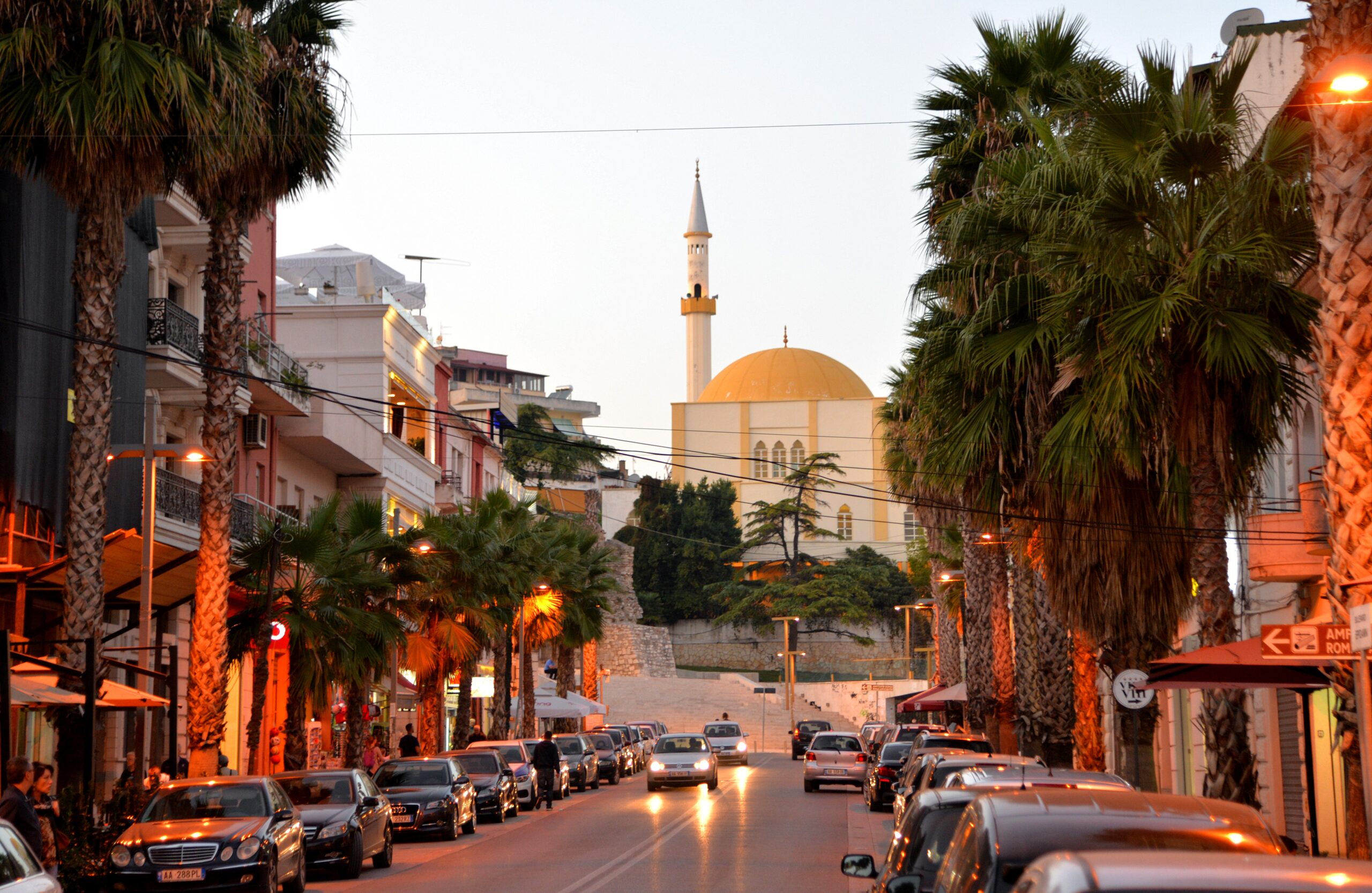
Author: Vilson Blloshmi This paper advances a clear claim: successive emigration & youth emigration waves have contributed to the increasing electoral support of Albania’s Socialist ruling party. The mechanism runs through electorate composition (older at home), turnout depression in youth-heavy areas, and selective mobilization of diaspora-origin voters. A key empirical puzzle is why diaspora-origin voting appears to favour incumbents (~61%) despite exit motives rooted in domestic shortcomings. This study will examine how demographic change, especially youth emigration, influences elections in Albania and why both resident voters and diaspora-origin voters often support the ruling Socialist Party. Photo: pixabay/wal_172619 Context and Background Albania’s age structure and migration balance have shifted markedly, while election observation repeatedly flags barriers that disproportionately burden younger voters, information gaps, procedural frictions, and low institutional trust. These trends intersect with party organization and media environments to sustain large majorities alongside uneven participation. Levitsky & Way use “competitive authoritarianism” to describe regimes where formal democratic institutions exist and opposition can compete, but the contest is systematically skewed because incumbents abuse state power, so elections are real, yet not fully free and fair. Such regimes are competitive, in that democratic institutions are not merely a façade: opposition parties use them to seriously contest for power; but they are authoritarian in that opposition forces are handicapped by a highly uneven—and sometimes dangerous—playing field. Competition is thus real but unfair.1In their framework, the key test is an uneven playing field across major battles (elections, media, and the state bureaucracy), where rules are applied selectively and public resources are used to entrench the governing party. Applied to Albania after the Socialist Party’s historic May 11, 2025 win (83/140 seats) with 53.3% of the vote, the outcome alone doesn’t “prove” competitive authoritarianism because landslides can happen in democracies too. But the conditions reported around the election align with Levitsky & Way’s warning signs: international observers and major outlets pointed to misuse of public resources, uneven media coverage, and allegations of pressure and intimidation, all classic mechanisms that can keep elections competitive while making them unfair. OSCE&ODIHR stated that: The ruling party benefitted from widespread use of administrative resources during the campaign, creating an undue advantage of incumbency. There were also numerous allegations of pressure on voters, especially public employees. Further, the electoral legislation and its narrow interpretation by the election administration did not prevent abusive practices.2 So the strongest argument is that Albania shows competitive-authoritarian tendencies: opposition parties exist and contest power, yet repeated dominant victories are reinforced by a state environment where incumbents appear to enjoy structural advantages such as resources, visibility or influence over institutions that weaken the possibility of genuine alternation. If these patterns persist, especially around media pluralism, enforcement against vote-buying and pressure, and institutional independence Levitsky & Way’s label becomes more applicable, not because the opposition is banned, but because competition remains meaningful while the field stays tilted. Albanian Electoral System The Parliament of the Republic of Albania consists of 140 members of parliament, who are elected for a 4-year term. The electoral system for the Assembly is a proportional representation system with multi-member electoral districts. For parliamentary elections, each electoral district corresponds to the administrative-territorial division of the qark (county). The total number of electoral districts is 12, and the number of parliamentary mandates per district ranges from 3 seats in Kukës County to 37 seats in Tirana County. Local government elections are held to elect 61 mayors and 1,603 members of municipal councils across the country. Mayors and municipal council members are directly elected for a 4-year term. For local elections, the electoral district corresponds to the administrative-territorial division of the municipality. Mayors are elected through a majoritarian system, while municipal council members are elected through a proportional system with closed lists. The number of municipal council seats in each municipality is determined based on population and ranges from 15 to 61 mandates. Council mandates are allocated among parties and coalitions using the d’Hondt method, while the distribution of seats among parties within a coalition is done using the Saint-Lague method. Freedom of movement or running from a reality? As of every time a government official, member of council of ministers, members of parliament from the Socialist Party, or expert supporting the government argues why Albanians are leaving the country at such massive and vast numbers they tend to reduce the importance of such a topic. The Prime Minister Rama states several times that youth emigration is a normal outcome of freedom of movement and individual choice, not a national tragedy. He argues that people have the right to test life abroad, and that portraying emigration as “the worst thing” is, in his view, an exaggerated political/media narrative. He also claims emigration has brought benefits to Albania (skills, experience, broader culture), and suggests the public debate becomes distorted because today everything is amplified “online.” In meetings with young people, he doubles down on3 the idea that if someone believes there is no future in Albania, they should be free to try leaving, but he insists that the “no future” claim is wrong, and that simple wage comparisons ignore living costs abroad. Rama argues that emigration should be treated 4 as a normal, long-running (“historical”) phenomenon tied to freedom of movement, and says the public debate in Albania often turns into hyperbole rather than a calm discussion based on facts.Rama even points to comparisons like 2017, when around 39,905 people left Albania versus 50,000 from EU-member Croatia, to claim the narrative is often exaggerated. From the other hand the emigration of youth and young people in the last5 decade are unimaginable. 1 milion Albanians have left the country during last 16 years according to Eurostat cited by Monitor.al6 From 2008 to 2024 about one million Albanian citizens received a first-time residence permit in a European Union country, according to Eurostat data. This increase, from around 97,780 permits in 2008 to nearly one million by 2024, shows a continuous and accelerating wave of people leaving Albania for the EU. These emigrants now represent a large share of the country’s working-age population, and the true number would be even higher if Albanians who moved to non-EU destinations such as the United Kingdom, the United States or Canada were also included. The figures point to a major demographic shift that is slowly changing the profile of those who remain in the country. Albania showed the highest annual expatriation rate of nationals to OECD countries in 2023 (22 per 1 000 inhabitants). Romania (13), Bulgaria (12), Bosnia and Herzegovina (11) and Cuba (11) were the other countries with two-digit figures. The reasons behind this trend 7 are linked to economic difficulties, limited job opportunities, high informality in the labour market and the lack of long-term security for many young people. Family8 reunification and chances for better education also play an important role. As emigration becomes widespread, its effects on Albania’s social and political life are becoming more visible, including a shrinking workforce, loss of skilled professionals, an ageing population and new electoral dynamics. The scale of the exodus shows that this is not only a demographic issue but a deeper structural change with serious implications for the country’s future. Emigrant Share of Total Population, Albania second after Bulgaria with 41.9% and projections show that the decline might go to 15.8% by the end of 2050.9 "Southeastern Europe is experiencing one of the sharpest depopulations in the world, led by Bulgaria, whose population is projected to drop nearly one-quarter by 2050. The most significant factor behind this trend is migration to Western Europe, which has remained widespread since the post-communist and post-conflict transition periods of the 1990s and 2000s. For example, half the total population in Bosnia and Herzegovina and 42 percent in Albania reside abroad, often in Western Europe."10 The demographic picture may be bleakest in Bulgaria, which is on course to face the world’s highest single-country depopulation rate over the next 30 years, according to the United Nations Population Division. Yet Serbia, Bosnia and Herzegovina, Croatia, Albania, and Romania are not far behind, each expecting declines of 15 percent or more over the next three decades (see Projections). This phenomenon is occurring even as the world’s population is expected to increase by 2 billion people, to 9.7 billion in 2050.11 Elections and turnout - is it a deadlock? The Socialist Party won the general elections in coalition with another left wing party "Socialist Movement for Integration on 2013 to never lose it up to date. After the first term in coalition with SMI, on the 2017 elections and onwards the Socialist Party won the elections and the majority in the Parliament as a sole party. In this section we will see how the turnout percentages changed through years and if the voters taking part in the general election declined or not. Youth Voting trends In Albania, the Youth Study points to a downward tendency in youth turnout. The share of eligible young respondents who say they voted in the last parliamentary elections fell from 76.8% in 2018 to 73.8% in 2024, while those who did not vote rose from 23.2% to 26.2%. The change is not dramatic, but it signals a clear direction: a gradual erosion of12 electoral participation among young Albanians, even as voting remains the most common form of political involvement. This decline looks even more significant when placed next to the broader engagement profile. In other words, as youth turnout shows signs of slipping, there is not a strong “backup” of other participation channels to compensate. The overall picture is of a generation that is becoming more distant from politics beyond election day, which risks turning a small drop in turnout today into deeper disengagement over time unless trust, representation, and everyday relevance of politics improve. General elections 25 april 2021 General elections of 2021 were held in a tense political climate as one person was assassinated during the last days of electoral campaign The turnout resulted to be13 46.33%. The official turnout data from the 2021 Albanian general elections shows significant variation across the twelve qarqe, with overall participation remaining relatively low at the national level. Out of 3,588,869 registered voters, only 1,662,274 cast a ballot, producing a nationwide turnout of 46.33 percent. Female participation was slightly lower, with 799,094 women voting out of 1,776,128 registered female voters, or 44.99 percent. Tirana recorded the highest number of voters, with 484,769 people participating, representing a turnout of 53.24 percent. Its female turnout rate was similarly strong at 52.01 percent. Dibër also stood above the national average with a participation rate of 52.68 percent, and women in this district voted at an even higher rate of 53.44 percent. Other districts that approached or exceeded the 50 percent threshold include Kukës, with 49.25 percent turnout, and Korçë, which reached 46.14 percent. By contrast, several regions displayed markedly lower participation. Vlorë recorded the weakest turnout in the country at just 33.56 percent, with women voting at an even lower rate of 31.67 percent. Gjirokastër also reported low engagement, with only 38.85 percent of voters and 37.31 percent of women casting ballots. Shkodër and Durrës likewise fell below the national average, standing at 41.86 percent and 44.96 percent respectively. Most districts showed turnout levels in the mid-40 percent range, such as Berat at 44.20 percent, Lezhë at 44.08 percent, Fier at 45.35 percent, and Elbasan at 47.86 percent. In nearly all regions, female turnout lagged slightly behind male turnout, though the gap varied by district. Overall, the 2021 elections confirmed persistent patterns of low participation, strong regional disparities, and noticeable gender differences. These dynamics are essential for understanding electoral behavior and for linking turnout patterns to broader demographic shifts, including youth emigration and population decline. The OSCE/ODIHR final report on the 2021 Albanian elections stated that voters were offered a genuine choice of candidates, campaigns took place freely, and fundamental rights were generally respected. However, the mission also identified several structural issues that created an uneven playing field. The ruling party benefited from its influence over local administrations and the misuse of state resources, while the overall campaign environment was affected by widespread allegations of vote-buying. Media coverage14 was heavily unbalanced in favour of incumbents, with frequent overlap between government activities and party messaging, which further strengthened the ruling party’s advantage. Despite the Central Election Commission administering the process in an organized and transparent manner, long-standing systemic problems remained unresolved. These included weak oversight of campaign financing, concerns about personal data protection, and legislative gaps that allow continued political manipulation. In response to these issues, OSCE/ODIHR issued twenty-three recommendations aimed at improving the integrity of future elections, with emphasis on securing the secrecy of the vote, strengthening investigations into vote-buying, protecting citizens’ data, and ensuring fair and independent media conditions for all contestants. Last General elections 2025 - an electoral anomaly? The official turnout figures show that participation in the most recent elections varied widely across Albania’s twelve districts. Out of more than 3.46 million registered voters nationwide, around 1.46 million cast a ballot, giving a general turnout rate of 42.25 percent. Tirana recorded the highest number of voters, with more than 450,000 people participating and a turnout rate of 49.29 percent. Dibër also performed strongly with 49.07 percent turnout, followed by Kukës at 45.56 percent. In contrast, Vlorë had the lowest participation in the country, where only 30.40 percent of registered voters took part. Shkodër and Gjirokastër also reported lower engagement, at 36.81 percent and 35.81 percent respectively. Most other districts, including Berat, Lezhë, Korçë, Fier and Elbasan, remained in the low-forties range. A comparison of the two election cycles shows a noticeable decline in voter participation across almost all districts. In the 2021 general elections, national turnout stood at 46.33 percent, with over 1.66 million voters participating. By contrast, in the later election the nationwide turnout fell to 42.25 percent, with about 1.46 million voters casting a ballot. This means participation dropped by more than four percentage points overall. Several districts that performed strongly in 2021, such as Korçë, Elbasan, Fier and Lezhë, recorded lower turnout in the more recent vote. Vlorë remained the weakest both times, but its turnout decreased even further, moving from 33.56 percent in 2021 to only 30.40 percent. Shkodër and Gjirokastër also showed continued low engagement, confirming a wider pattern of regional stagnation and decline. Voting trends of Serbian diaspora The dynamics of diaspora voting offer a revealing lens through which to examine how formally competitive elections can be subtly re-engineered in favor of incumbents. In line with Levitsky and Way’s framework, both Albania and Serbia illustrate how electoral openness can coexist with increasingly uneven playing fields shaped by participation patterns and organizational power. Dr. Dejan Bursać’s answers are useful because they point to a shared pattern Albania and Serbia can display in Levitsky & Way’s terms: elections remain formally open and opposition parties still run, yet incumbents can steadily stack the odds in their favor by shaping participation and building durable political machines. In Serbia, he recalls that 10–15 years ago diaspora voting was tiny (around 10,000 voters) and the bulk of those votes tended to go to liberal, pro-European parties. Later, once voting procedures became simpler and more accessible, diaspora turnout reportedly rose (around 30,000 about a decade ago), and the balance shifted today, he says, most diaspora votes go to the ruling party. Bursać offers two explanations that map onto Levitsky & Way’s “uneven playing field” logic. First, he links the new pro-government diaspora pattern to who participates: working-class, older, and less-qualified emigrants are described as more likely to back incumbents, often because they value stability, patronage, or tangible benefits. Second, he highlights a transnational party infrastructure: the SNS’s organizational networks, he argues, are well-funded and active even in neighboring countries and diaspora hubs, which can mobilize turnout and preference formation at scale. The combination of expanded access + targeted mobilization capacity can flip diaspora outcomes without needing to ban opponents, exactly the type of mechanism that keeps elections “competitive” but structurally advantages incumbents. Migration benefits the authorities Despite the clear decline in turnout between the two elections, the evidence shows that demographic change itself is a key driver of lower participation and that this shift helps explain the outcome. In the most recent election, the party secured 83 mandates and 53.29 percent of the vote, a level of dominance which is contradictory when facing huge demographic drain. Youth emigration reduces the size of the most turnout-volatile segment of the electorate and weakens the social networks that typically pull young voters into politics. As a result, the electorate that remains is older, more settled, and more likely to vote regularly. In other words, turnout falls not only because of “political apathy,” but because the country’s demographic structure is changing: fewer young people are physically present, and those who stay are a shrinking share of the voting-age population. The patterns in youth preferences and voting habits analyzed fit this logic: many young citizens do not vote because they see limited personal payoff from participation, feel underrepresented by party offerings, and increasingly treat migration as the main strategy for improving life chances. "Exit” over “voice”. Among those who do vote, choices tend to be shaped less by long-term partisan loyalty and more by short-term calculations like stability, access, and perceived effectiveness, while clientelistic or mobilization networks can further tilt participation toward groups that are easier to reach and motivate. Taken together, youth emigration and youth disengagement do not just lower turnout; they change who turns out by producing an electorate that is narrower and more predictable and thus, making it easier for an incumbent with strong organizational reach to maintain and even deepen dominance despite a shrinking overall voter pool. For Albania, this creates a useful comparative hypothesis: the Socialist Party’s dominant result can be interpreted not simply as popularity, but as potentially reinforced by incumbent-friendly mobilization channels (party networks, patronage linkages, messaging capacity, and administrative leverage) that operate at home and, possibly, through diaspora voting procedures and outreach. The comparative punchline is not “Albania = Serbia,” but that both cases may show how incumbents in hybrid regimes can convert expanding participation (including diaspora voting) into dominance, while maintaining the outward form of pluralist competition, one of Levitsky & Way’s core signatures of competitive authoritarianism.