
Flamingo Revolution Chronicles – How Rama’s position on protected areas changed
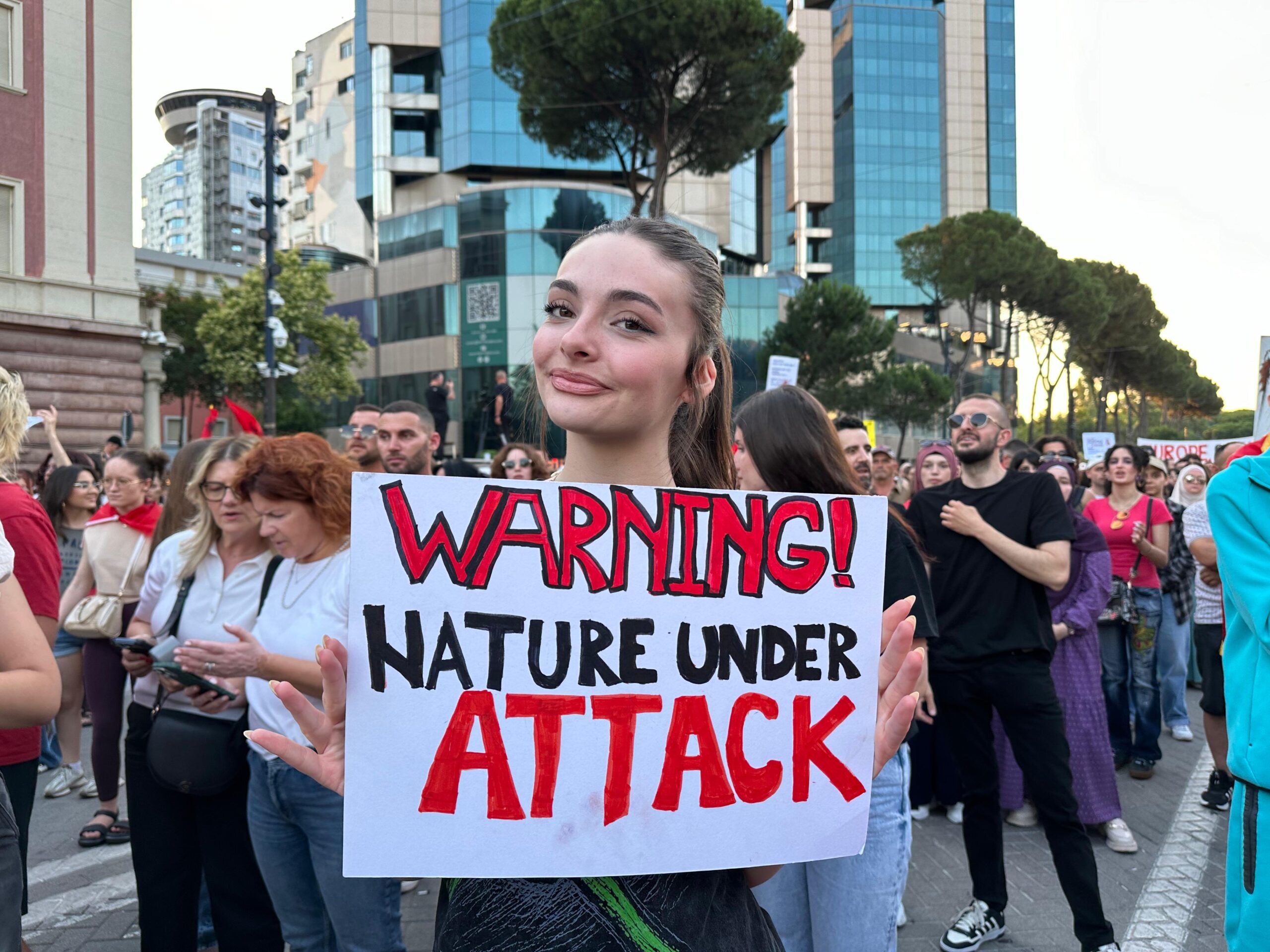
After the adoption of Law No. 21/2024, Rama said the amendments were “100% aligned with the European Union.” Today, his position has changed. Author: Jona Cenameri This article was originally posted on Faktoje, you can read it here. Photo: Jona Cenameri The Law on Protected Areas, which Prime Minister Edi Rama has defended for more than two years as an instrument for balancing nature conservation with economic development, will now be revised to bring it into line with European Union standards. The announcement was made on July 14 in Brussels, during the ninth Albania-EU Intergovernmental Conference, at a time when the repeal of the 2024 amendments had already been included among the five formalised demands of the protest that began on May 31. European Commissioner for Enlargement Marta Kos said that, before the protests began, the European Commission and the Albanian government had agreed that the 2024 amendments to the Law on Protected Areas would be repealed during 2026, along with the Law on Strategic Investments. According to Kos, the changes are necessary for the closure of negotiations on Chapter 27, which covers the environment and climate change. Rama intervened to draw a distinction between repealing the Law on Strategic Investments and revising the Law on Protected Areas. Regarding the latter, he insisted that there was “nothing to repeal,” describing it as one of the government’s best laws. At the same time, however, the prime minister acknowledged that anything within the law that does not comply with European standards would be changed, and that the law would be adjusted until it reached “100%” compliance with those standards. This wording contrasts with the statements made by Rama and then Minister of Tourism and Environment Mirela Kumbaro when the legal amendments were proposed and adopted. “We do not accept moral lectures” Rama’s defence of the amendments was already evident in December 2023, when the initiative was still under discussion. During an event dedicated to the Vjosa National Park in December 2023, Rama explained that the revision of the legal framework had been driven by requests from municipalities and by pressure for economic development. According to him, a “harmonious balance” had to be found between nature conservation and development. The prime minister also said that Albania needed luxury tourism, saying that such investments would generate higher revenues that would also benefit ordinary citizens. Faced with criticism from environmental experts, Rama said the government would not accept “moral lectures” on how it should treat nature. He repeated this position in March 2024, just weeks after the amendments had been adopted. Rama said that, considering what the government had done over the previous 10 years for nature and cultural heritage, no one was in a position to lecture it. He presented high-end tourism as a way to increase revenues without relying solely on a higher number of tourists, arguing that success depended on achieving a balance between protection and development. The law was “100% aligned with the EU” The amendments were adopted by Parliament on February 22, 2024, through Law No. 21/2024. Following a reaction from the Delegation of the European Union, which said it would closely monitor the implementation of the new provisions, Rama stated that the government was “100% aligned with the European Union.” According to him, the amendments strengthened the path towards sustainable development and would help Albania become a high-end tourism destination while simultaneously protecting biodiversity. Then Minister Mirela Kumbaro also defended the law. She said the amendments did not harm the environment and did not violate EU directives. According to her, there were “red lines” that would not be crossed, while any interventions allowed under the law would be ecological, environmentally friendly and controlled through strict rules. The official position in 2024 was, in essence, that the amendments did not weaken territorial protection and were in line with European obligations. Photo: Jona Cenameri The protest and the defence of the law The protest that began on May 31, 2026 brought the law back to the centre of public debate. Alongside opposition to the tourism project in the Pishë Poro-Nartë area, one of the first demands was the repeal of the amendments adopted in 2024. In his first reaction following the protest, Rama gave no indication that the government intended to step back from the law. On June 1, he said the government had not removed any territory from protected areas and that the protection categories had been brought into line with the highest international standards. According to him, Pishë Poro was a Category V protected landscape, where nature protection did not exclude development. His position became even firmer on June 9, during a meeting with journalists and media representatives from EU countries. Rama said that no one could lecture the government on the environment and described as a “lie” the claim that the law had been amended in order to pave the way for the project linked to Jared Kushner. According to him, the 2024 amendments were intended to clearly define the activities permitted within the different categories of protected areas. The prime minister insisted that, under European standards as well, a protected landscape is an area where construction may be permitted. He said the aim was for the project to serve as proof that nature and development could coexist. Rama did not present the law as an act that needed correction in order to comply with EU standards. On the contrary, he argued that both the amendments and the classification of the area were based on European standards, while dismissing as a “lie” the claim that the law had been changed specifically for the project. The Revision The first change in the language used by Rama appeared on June 18, following the adoption of a resolution by the European Parliament. Rama rejected the claim that the resolution represented the protest’s first victory. He said protesters had already had their “victory in their pocket” before the demonstrations began, because environmental protection was already a government priority. At the same time, however, he acknowledged that the amendments to the Law on Protected Areas were part of the EU negotiation agenda and that, during the analytical process with the European Commission, any provision that did not comply with European criteria and standards would be identified. The July 14 statement took this acknowledgement further. Rama publicly said that the law would be adjusted until it achieved full compliance with European standards. “As for the Law on Protected Areas, we have nothing to repeal, even though there has been a resolution in the European Parliament calling for this. In fact, we will revise this law on the basis of all European standards and we will change anything within it that is not in line with European standards…” Rama said. Rama continues to defend the law as one of the government’s best and rejects the term “repeal.” However, his acknowledgement that the law may contain provisions that are not compliant with EU standards marks a shift from the unequivocal defence he offered in 2024 and during the first days of the protest. The case of the Law on Strategic Investments is different. As early as February 2026, before the protest began, it had been announced that the current law would expire on December 31, 2026, and that the government was preparing a new legal framework.
Zakaj je komisarka Kos ključ za stabilnost držav Zahodnega Balkana?
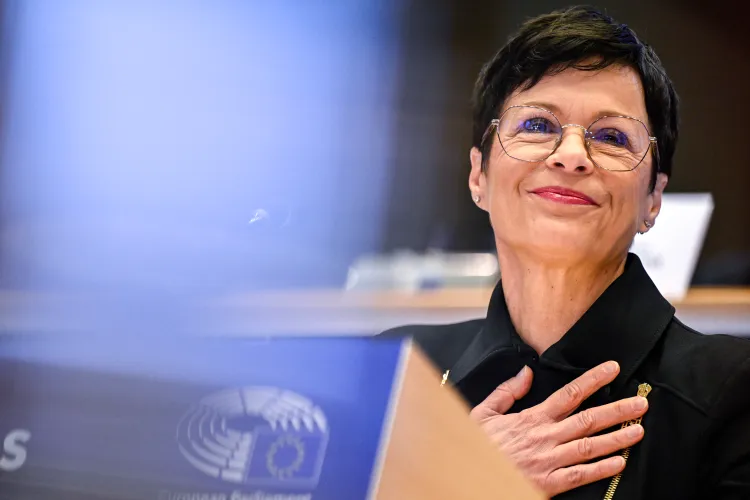
Avtorica: Nina Anžič To vprašanje je morda provokativno, a vendar ključno, če želimo, da države Zahodnega Balkana sploh kdaj postanejo članice Evropske unije. Za začetek bom izpostavila dejstvo, da je Marta Kos komisarka, pristojna za širitev v Evropski komisiji pod vodstvom Ursule von der Leyen v mandatu 2024–2029. Komisarska kandidatka za širitev Marta Kos na potrditvenem zaslišanju v Evropskem parlamentu (7. november 2024). Vir: newunionpost.eu Komisarka Kos je bila rojena še v času Jugoslavije, kar pomeni, da zelo dobro razume mentaliteto, kulturo in ne nazadnje tudi jezik med nekoč bratskimi državami. Dejstvo je, da je Slovenija leta 1991 – takrat še Socialistična republika Slovenija – prva zapustila Jugoslavijo. Sledila nam je Hrvaška in takrat se je začela krvava vojna na področju nekoč bratskih republik. Slovenija je takrat s štirinajstdnevno vojno za samostojno državo odnesla najbolje, če to sploh lahko merimo v tistem krvavem času med nekoč bratskimi narodi v bivši socialistični federativni Jugoslaviji. Slovenija je prva postala članica Evropske unije leta 2004, Hrvaška pa ji je sledila leta 2013. Vendar pa se je Slovenija ves čas, ne glede na levo ali desno vlado, v svoji zunanji politiki krčevito zavzemala za stabilen Zahodni Balkan in članstvo teh držav v Evropski uniji. Vendar, kje se je zalomilo pri državah, kot so Srbija, Bosna in Hercegovina ter Severna Makedonija? Zadnja država, ki sem jo omenila, si je uradnemu imenu celo dodala besedo "Severna", pa to še kar ni dovolj za članstvo v Evropski uniji? Srbija ter Bosna in Hercegovina se s svojim procesom približevanja še kar ne premakneta z rdeče luči na semaforju evrointegracij. Obe državi bosta morali nujno spremeniti stanje demokracije, svobode govora, vladavine prava in predvsem stopnjo korupcije.A vendar v Srbiji vidimo prihodnost v študentih, ki se ne dajo in ostajajo v blokadi z jasnimi zahtevami do oblasti. Zakaj ta ista politika ni sposobna prisluhniti svojemu največjemu potencialu, ki ga ima v državi? Če v Srbiji mladi sploh še dajejo upanje po spremembah, pa tega žal ne vidimo v Bosni in Hercegovini. Ali so v Bosni in Hercegovini že vsi mladi upi te države odšli v tujino in postali diaspora, ki se vrača domov le še ob praznikih? A vendar, vrnimo se nazaj na pot Evropske unije in komisarke Kos. Slednja je na svojem uradnem obisku srečala tako oblast kot tudi študente v blokadi. Torej EU jasno vidi prizadevanja mladih v Srbiji, v to sploh ne dvomim. Aktivni so tudi evropski poslanci – pri tem lahko zopet izpostavim slovensko poslanko Ireno Jovevo, pa tudi hrvaškega evropskega poslanca Gordana Bosanca. Prav tako države Zahodnega Balkana že danes aktivno sodelujejo v mehanizmu EU na področju civilne zaščite. Ko smo imeli v Sloveniji najhujše poplave v zgodovini samostojne države, so nam prav vse države Zahodnega Balkana takoj priskočile na pomoč. Ob tem se človek vpraša: ali je sodelovanje pri reševanju življenj in premoženja edina stična točka držav nekdanje Jugoslavije in Evropske unije?Če te priložnosti ne izkoristimo, bo mandat Marte Kos izgubljen mandat – predvsem za prej omenjene države Zahodnega Balkana. Močno namreč dvomim, da bo na to funkcijo še kdaj imenovan Slovenec ali Slovenka; nekdo, ki to regijo dejansko pozna in jo razume mogoče celo bolje kot nacionalna politika teh držav sama. Prav v tem razumevanju se skriva ključ, imenovan komisarka Marta Kos.
Why is Commissioner Kos key to the stability of the Western Balkan countries?
Author: Nina Anžič Članek v slovenskem jeziku je na voljo tukaj. This question may be provocative, but it is crucial if we want the Western Balkan countries to ever become members of the European Union. To begin with, I will highlight the fact that Marta Kos is the Commissioner responsible for Enlargement in the European Commission led by Ursula von der Leyen for the 2024–2029 term. Commissioner-designate for Enlargement Marta Kos at the confirmation hearing in the European Parliament (7 November 2024). Source: newunionpost.eu Commissioner Kos was born during the Yugoslav era, which means she has a deep understanding of the mentality, culture, and, not least, the language shared by the once-brotherly nations. The fact is that in 1991—then still the Socialist Republic of Slovenia—Slovenia was the first to leave Yugoslavia. Croatia followed, and that is when a bloody war began among the once-brotherly republics. Slovenia fared best at the time with its fourteen-day war for an independent state, if one can even measure such a thing during that bloody period among the once-brotherly nations of the former Socialist Federal Yugoslavia. Slovenia was the first to become a member of the European Union in 2004, with Croatia following in 2013. However, regardless of whether the government was left-wing or right-wing, Slovenia has consistently and vigorously advocated in its foreign policy for a stable Western Balkans and the membership of these countries in the European Union. But where did things go wrong for countries like Serbia, Bosnia and Herzegovina, and North Macedonia? The last country I mentioned even added the word “North” to its official name, yet is that still not enough for membership in the European Union? Serbia and Bosnia and Herzegovina, with their ongoing integration processes, still haven’t moved past the red light on the European integration traffic light. Both countries will urgently need to improve the state of democracy, freedom of speech, the rule of law, and, above all, the level of corruption. Yet in Serbia, we see a future in the students who refuse to give up and remain in the blockade with clear demands for the authorities. Why is this same political establishment unable to listen to its greatest potential, which lies within the country? While young people in Serbia still offer hope for change, we unfortunately do not see this in Bosnia and Herzegovina. Have all the young hopes of Bosnia and Herzegovina already left the country to become part of a diaspora that returns home only on holidays? Yet, let us return to the path of the European Union and Commissioner Kos. During her official visit, she met with both the authorities and the students at the blockade. So the EU clearly sees the efforts of young people in Serbia; I have no doubt about that at all. Members of the European Parliament are also active—here I can again highlight Slovenian MEP Irena Joveva, as well as Croatian MEP Gordan Bosanac. Likewise, the countries of the Western Balkans are already actively participating in the EU’s civil protection mechanism. When we experienced the worst floods in the history of independent Slovenia, every single country in the Western Balkans immediately came to our aid. This raises the question: is cooperation in saving lives and property the only common ground between the countries of the former Yugoslavia and the European Union? If we do not seize this opportunity, Marta Kos’s term will be a wasted one—especially for the aforementioned Western Balkan countries. I seriously doubt that a Slovenian—someone who actually knows and understands this region, perhaps even better than the national policies of these countries themselves—will ever be appointed to this position again. It is precisely in this understanding that the key lies: Commissioner Marta Kos.
Healing the Rupture: An Organic Critique of Regional Reintegration in the Post-Yugoslav Space
Author: Iva Kojić The collapse of the Socialist Federal Republic of Yugoslavia in the 1990s was far more than a local tragedy; it tore apart an intricately linked society and economy overnight. As new borders rose and political agreements hardened, ordinary people were left stranded within fragile new economies, unable to compete with the wider world. For the truck driver waiting endless hours at the Batrovci border, or the student from Bitola whose diploma is worthless in Belgrade, the breakup replaced old certainties with lost futures. For more than two decades, influential academic and policy voices have described reintegration as a set of assignments dictated by the EU’s Berlin Process, treating the Western Balkans as passive recipients and ignoring the region’s powerful, internal need for a homegrown recovery. Illustration photo. Retrieved from Pexels (www.pexels.com) The Berlin Process offers a clear roadmap, while the Open Balkan Initiative appears, at least on paper, to be a more nimble, practical answer to real-life needs. Of course, both are complicated by local politicians' ambitions. In the end, the best way forward is to blend the strengths of both: keep the high standards of the Berlin Process, but add the local ownership and flexibility of Open Balkan, so that these projects actually make a difference for regular people living under their shadow Theoretical Framework and the Live Reality At the heart of the argument for regional integration lies David Mitrany’s functionalist theory. Mitrany posited that technical and social needs (energy distribution, transport logistics, public health) naturally ignore political borders and force cooperation out of sheer necessity (Alexandrescu, 2007, 29) . In the post-Yugoslav context, this theory suggests that the shared power grids, railways, and supply chains left behind by the common state act as a silent pull, drawing the successor states back into a web of international activities. But the real work of regionalism cannot just be explained by academic theories. Mitrany's ideas help set the stage, but when you look at what is actually happening in the Balkans, things are much messier. While functionalism suggests cooperation emerges from practical necessity, critics argue that it overlooks complex socio-political realities and power dynamics. The Open Balkan initiative, for example, is not just a response to practical needs. It is also shaped by the ambitions of political leaders. Many of these same leaders have, at home, let the rule of law slide and often put showmanship ahead of actually solving problems. Similarly, other integration theories, such as neofunctionalism or intergovernmentalism, might offer insights into how political actors and state interests play crucial roles in integration efforts. Thus, although theories hold that working together on practical issues should lead to political peace, in reality, these efforts are often hijacked for political gain. There is a real grassroots desire for reintegration, but the tools used to get there are often twisted to serve political survival. To truly judge these efforts, we must examine how political leaders use (and sometimes misuse) these theories, sometimes helping people, sometimes just helping themselves. Academic models are helpful, but right now, it is the politicians at the wheel, steering through a landscape full of old tensions and personal power plays. The Berlin Process: The Outsourced Assignment Launched in 2014, the Berlin Process was intended to revitalize regional cooperation through high-level summits and the creation of a Common Regional Market. Its greatest strength and its most significant contribution to the lives of regular people is its inclusivity. It involves all six regional partners, ensuring regional integration remains aligned with the EU's strict standards and legal principles. This inclusivity is a vital democratic safeguard, as it prevents the “island” effect where certain states are left behind due to political exclusion. In practical terms, the Berlin Process has produced tangible, humanized successes that improve daily life, such as the “Roam Like at Home” agreement, which has significantly lowered communication costs for millions of people traveling for work or family across the divided region. By eliminating roaming charges, the process has moved the region one step closer to the standards of the EU’s internal market (Mitrovic 2025, 10). However, a deeper critique reveals that the Berlin Process often feels like an outsourced project managed by a distant bureaucracy. For the regular citizen, its results are often trapped in administrative stagnation or slowed by complex ratification processes across six different parliaments. As Kamberi (2021, 60) notes, the prospect of the EU joining now seems “too distant and uncertain”, leading to a loss of faith in reforms that feel like a never-ending series of homework assignments given by Brussels. The Open Balkan Initiative: Agility, Ego, and the Practical Reality In contrast, the Open Balkan initiative is a locally led project born of a perceived revolt against the status quo. Its greatest strength is its agility. By focusing on low-hanging fruit, it has achieved practical successes where the Berlin Process has historically struggled (Xhoxhaj 2024, 7). The 2024 Labor Market Access Agreement is the primary example of this practical work: it allows a citizen of North Macedonia to work in Serbia or Albania without the humiliating and expensive ordeal of obtaining a work permit (Mitrovic 2025, 8). This is a direct response to the brain drain crisis hollowing out the region. However, the Open Balkan initiative is also flawed, mainly because it excludes Kosovo, Montenegro, and Bosnia and Herzegovina, which risks further splitting the region. And, just like with other regional efforts, we cannot remain blind to the politicians in charge. Citizens worry that this initiative is a front, giving political leaders a bigger stage and more power, even as the rule of law back home deteriorates. Some critics even warn that it could end up putting Serbia at the forefront, mainly benefiting big companies and politicians instead of everyday people trying to get by. However, proponents of Open Balkan argue that the initiative prioritizes regional economic collaboration, aiming to bring tangible benefits quickly to those who need it the most. They assert that by simplifying labor mobility and reducing trade barriers, the initiative addresses real economic needs and can set a precedent for broader regional inclusion in the future. Bridging the Gap through Practical Reintegration The positive aspects inherent in both the Berlin Process and the Open Balkan initiative must be synthesized to move beyond political spectacle and toward a genuine improvement in the lives of regular people. Within the Berlin Process, the region must preserve the high standards of the EU acquis and ensure total regional inclusivity within the WB6. In the Open Balkan, the synthesis must foster a sense of regional ownership. The bridge between these two models lies in the Staged Accession model. This framework suggests the EU should stop treating the Balkans as a binary “in or out” choice and instead offer early, functional access to the Single Market as a reward for specific regional cooperation successes (Mitrovic 2025, 19). For the citizen, a synthesis of these models would move from grand declaration to practical work. For example, moving beyond simple roaming agreements to a unified regional energy grid and digital market might allow Balkan tech startups to scale regionally before competing globally, thereby fulfilling the need for a shared economic space that remains physically dependent on common infrastructure. Another example could be expanding the labor mobility protocols of the Open Balkan to the entire WB6 within the legitimate framework of the Berlin Process. This would ensure that a nurse from Sarajevo or a programmer from Pristina can move as easily as their counterparts in the Trio, while still benefiting from the legal protections and safety standards guaranteed by EU alignment. This is where the real work happens. It is not found in high-level summits but in regional harmonization that makes the border invisible to the person crossing it. By utilizing the political speed of the Open Balkan to fulfill the institutional promises of the Berlin Process, the region might finally begin to heal in a way that serves the people. Moving Beyond the Homework Assignment The reintegration of the post-Yugoslav space is a structural necessity- a response to the unsustainable fragmentations of the 1990s. While academic theories provide a useful map, they cannot account for the practical difficulty of navigating the political egos and catastrophic track records of regional elites who often use these platforms for domestic promotion. The disintegration of Yugoslavia created a rupture that cannot be healed by an outsourced project alone. It requires a reintegration that is both technically sound and locally owned. Ultimately, the promise of regional stability is in moving beyond the political theater of leaders and toward genuine technical cooperation that serves the citizens. Regionalism is not a homework assignment for Brussels. Rather, it is a survival strategy for the people of the Balkans. The promise of either model is hollow if it does not address the ten-hour wait at the border or the unrecognized diploma. By reclaiming regional ownership and synthesizing the practical successes of both models, the successor states can finally make the borders breathable again. Reintegration should not be a decision for politicians. Instead, it is a mandate dictated by geography and the shared needs of a population that refuses to be defined solely by its borders. Bibliography Alexandrescu, Mihai. 2007. “David Mitrany: From Federalism to Functionalism.” Transylvanian Review 16 (1): 19-33. Popoviciu, Adrian-Claudiu. 2010. “David Mitrany and Functionalism: The Beginnings of Functionalism”. Revista Romana de Geografie Politica 12, (1): 162-172 Jelisavac Trosic, Sanja, and Mitko Arnaudov. 2023. “What are the Realistic Capabilities of the Berlin Process and the Open Balkan Initiative?” Review of International Affairs 74 (1187): 59-85. Kamberi, Donika. 2021. “Open Balkan vs. Berlin Process- Same, Same but Different” Freedom: Journal for Peacebuilding and Transcultural Communication 2 (3/4): 60-71. Jelisavac Trošić, Sanja, and Mitko Arnaudov. "Open Balkans - Between Economic Opportunities and Political Reality." (2023). Mitrovic, Sava. 2025. Regional Cooperation Initiatives in the Western Balkans: Improving Countries’ Preparedness for Staged Accession to the European Union. Belgrade: European Policy Centre (CEP). Xhoxhaj, Veton. 2024. “Assessing Western Balkans Regional Integration Efforts: A Comparative Study of the Berlin Process and the Open Balkan Initiative". Multidisciplinary Science Journal 7: 2025248. Mitrany, David. 1975. The Functional Theory of Politics. London: Martin Robertson for the London School of Economics and Political Science.
EU and student protests in Serbia – A test of common values
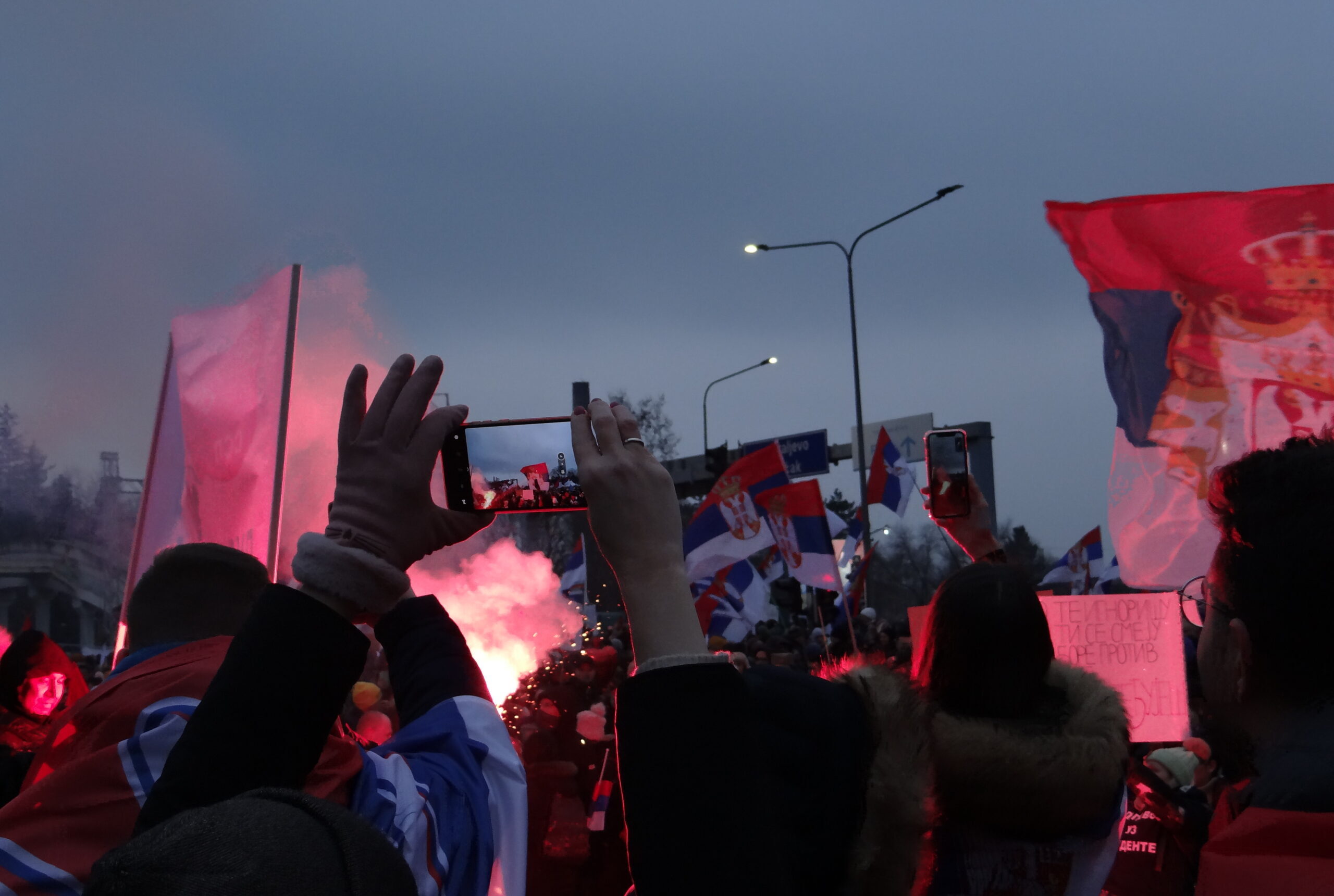
Author: Ivana Milićević, Research Assistant at the Institute for Philosophy and Social Theory, University of Belgrade On March 15, 2025, the largest protest in Serbia’s history was organised in Belgrade, seeking accountability for the collapse of the concrete canopy of the newly renovated railway station in Novi Sad, which killed 15 people. As illegalities and corruption in the reconstruction project started to reveal, this immense tragedy turned into a grim reminder that “the corruption kills”, leading to massive anti-corruption protests led by Serbian students. How did we get here? After the 15-minute silence in commemoration of the victims was broken by a physical assault on students in front of the Faculty of Dramatic Arts in Belgrade by people close to the ruling party, students across Serbia started blocking their faculties, with a seemingly simple demands for the rule of law and institutional response. What they ask for is transparency about the Novi Sad train station’s renovation, a dismissal of charges against activists arrested during the first anti-government protest in November, and criminal prosecution of those who attacked student protesters. Their demands have been supported by universities, teachers, lawyers, agriculture workers, artists and representatives of various industries. Around 80% of Serbian citizens supports most of the demands, while around third took part in the protests, which have been organised in more than 200 localities across Serbia. Having clearly distanced themselves from all political parties and consistently insisting on transparency and institutional accountability, it seems that the students succeeded in reaching an agreement on the fundamentals, which demonstrated a high potential for generating broader support for long-term political changes. As such, it seems that the demands deserve broad international support as well, particularly from the European Union, as they highly align with its fundamental values, insisting on democracy, rule of law and human rights protection. Where has the EU been along the way? So, why has then the EU remained so reluctant in addressing the protests, particularly as it claims to closely follow the current political situation in Serbia? While silence sometimes speaks the loudest, occasional statements from the Brussels spoke even louder in expressing its support to the government and lack of worry for the enlargement’s fundamentals. Gert Jan Koopman, the EU's Director-General for Neighbourhood and Enlargement Negotiations (DG NEAR) visiting Serbia in January 2025, failed to express his concerns regarding the lack of transparency and accountability for the collapse of the railway station canopy or any support to the peaceful protests which had already became historical. On the contrary, he noted Serbia’s “steady progress” towards the EU and was “eager to support Serbia in completing the necessary reforms”. It may come as no surprise if we remember that in October 2024, not long before the tragedy, in her visit to Serbia, President of the European Commission Ursula von der Leyen, praised Serbia’s progress and commitment to delivering on reforms, in particular on the fundamentals - rule of law and democracy. While von der Leyen has not hesitated to express support for “the Georgian people fighting for democracy", she has remained remarkably quiet about the events in Serbia. Indeed, the EU’s spokesperson Guillaume Mercier did express concerns about the reported attacks against protestors and called all key actors to engage in a constructive political dialogue. However, the EU failed to follow-up on the findings of its own progress reports which have for years urged Serbian authorities to step up their efforts to fight corruption, ensure the independence of the judiciary, and guarantee freedom of expression, even after it was confirmed that the European Public Prosecutor’s Office investigates the misuse of EU funds in the case of the railway station. The EU high representatives were addressed by Members of the European Parliament, Serbia’s professors and esteemed public figures from different spheres, scholars and expert groups, and EU research grantees, who all in their open letters asked for Union’s more active role and principled response to these events. The reaction of the European Commission was particularly expected looking ahead to the last protest in Belgrade, as the tensions ran high with contra-protesters supported by hooligans and war veterans gathered in front of the National Assembly and president Vučić using inflammatory rhetoric. The pro-EU citizens and organisations kept addressing it, to provoke its reaction to major protests in one of its candidate countries with a major democratic decline, but were mostly left without a proper response. What does the European Union stand for (?) The Commissioner for Enlargement Marta Kos responded to the received letters of concern by an open letter as well, with an aim to “recall what the European Union stands for”. Successfully avoiding to mention students and their demands, Kos did tackle a very important issue stating that “Serbia's path towards the European Union offers solutions to many of the issues that are at the heart of discussion today“. She stated that the process, if properly implemented, strengthens the fight against corruption, ensures the independence of the judiciary and accountability of institutions. But what happens if the process is not being implemented properly, but hindered by the lack of credibility, contested political interests and disregarding of the principle “fundamentals first”? In that case, “the path” may lead to legitimising the regimes with growing authoritarian tendencies, at the cost of promised stability or commercial interests. In order for the accession process to restore its “transformative power” it would first need to restore the credibility of both conditionality policy and the perspective of membership. Currently lacking both, the EU risks to lose its relevance in the light of the changing political reality in Serbia. Its strong support to the lithium extraction project in the Jadar valley remained steady despite serious concerns on the lack of environmental standards and rule of law and continuous attacks on environmental and human rights defenders, some of whom were even targeted as “eco-terrorists”. The EU praised the Memorandum of Understanding signed with Serbia on Strategic Partnership on sustainable raw materials, battery value chains and electric vehicles as a way to enhance integration process and “reaffirm Serbia’s EU path”. The former Minister of Traffic and Infrastructure Goran Vesić assessed that Serbia “essentially became an EU member” by the signing of the Memorandum. This has shown that there is a mutual understanding on both sides that the progress in the accession process is being evaluated somewhere far away from the prescribed conditions, progress reports and especially principles which prioritise fundamental reforms – democracy and the rule of law. This also shows that neither of the sides takes the integration process seriously, as they both agree to “take the most out of it” in the circumstances in which the enlargement “gained a new momentum" only nominally, and the old promises (of stability) seem to be enough. Experts and civil society have already expressed concerns about how this trend will affect the perception of the EU and citizens’ attitudes towards the enlargement. The support for the EU integration has lowered among youth in Serbia in the last five years, particularly among the youngest of the respondents, while, according to the Balkan Barometer, most of the Serbian citizens (35% of them) think that their country will never become a member of the EU. The same research shows a trend that youth of the region is becoming more uncertain or neutral about the EU accession. It is certain that this will also be the case with the youth in Serbia. The values that students stand for, although correspond to them, are not European values, but their own and they will firmly protect them regardless of the EU’s support, as they have for months now. This time, it is the EU that is on the test, to “step up and fulfil its self-proclaimed task of a democracy and rule of law promoter”. The “words of concern” and bureaucratic euphemisms may not be enough to restore not only the credibility of the accession process, but also its relevance among youth, who proved to be the guardians of its “core values”, without ever referring to it. In accordance with its own principles and enlargement methodology, the EU needs to systematically and clearly address the roots of the student’s demands, as their fulfilment may bring the reforms crucial for the integration process. But it cannot go the other way around. The EU should initiate a direct dialogue with Serbian citizens, including students, experts, workers, and civil society organisations, and provide unequivocal support to the fight for democracy and the rule of law, if it still has the ambition to act as a driver of reforms rather than a factor of status quo. After all, it seems that the EU is the one who should be reminded what it stands for.