
Towards a new Yugoslavism
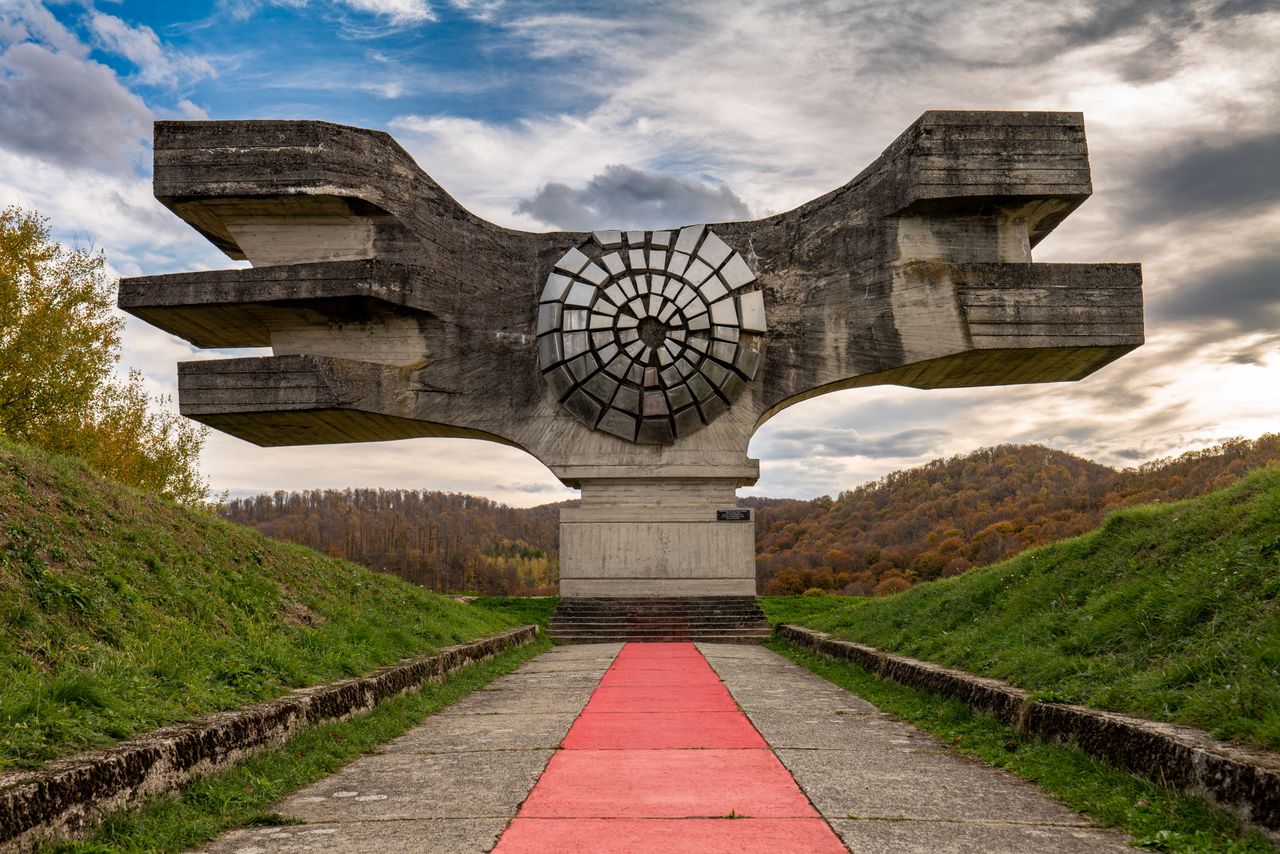
Author: Ante Čuljak The civil war in Yugoslavia delegitimised the historical trajectory of the South Slavic peoples. In its wake petty ethnonationalist states arose, and claim that the “experiment” of socialist Yugoslavia must remain in the past. A collective sense of longing exists in every former Yugoslav country, one that cannot be washed away by nationalism. Illustration photo. Retrieved from Pexels (www.pexels.com) The petty nationalist projects of countries such as Croatia, Serbia, Bosnia and Herzegovina with its three main nationalities, all claim to be better off independent, yet their economies now are dependent on imports from other countries, and heavy subsidies by the European Union, at least in the case of Croatia and Bosnia and Herzegovina. Particularly the case of reconstruction of infrastructure, buildings and deserted industrial sectors is a serious problem for Bosnia and Herzegovina, which has remained in a state of limbo for well over 30 years, unable to figure out its internal governmental structure, and with the Dayton System still in place, it is unsure when and if Bosnia and Herzegovina will leave its post-war malaise. Nationalist politicians in Croatia stoke the fires against Serbs while making themselves rich with European funds, while the rest of the country and its industrial sectors fall into disrepair, they keep on making Croatia into a model ethnostate. Serbia sits at a crossroads; surrounded practically on all sides by NATO and the European Union, its precarious position and continued radicalisation of the young populace pose quite a threat to its establishment. The perpetrators of horrid crimes in the 90s are celebrated as national heroes in Serbia, while honest fighters for freedom during WWII, the partizans, are remembered as traitors to the national project of Greater Serbia. Serbia’s deeply controversial history marks her in profound ways, and glorification of war criminals does nothing but cloud the minds of the people. The petty nationalist projects arose from the failures of Yugoslavia, and one can imagine Yugoslavia as an evolution of small nations into one, unified identity. To cast off aside these tribal identities, these preoccupations with just your people, your nation, is a monumental task. That task may take a hundred years, but once the masses of their respective countries realise that their nationalism only breeds hate towards others, and in fact makes them weak, only then can we start to make strides into a new Yugoslavism, one that will wash away the tragedy of the past, and finally rid us our biases and hatreds. Only by dreaming of something greater can we be great.

Zakaj je komisarka Kos ključ za stabilnost držav Zahodnega Balkana?
Avtorica: Nina Anžič To vprašanje je morda provokativno, a vendar ključno, če želimo, da države Zahodnega Balkana sploh kdaj postanejo članice Evropske unije. Za začetek bom izpostavila dejstvo, da je Marta Kos komisarka, pristojna za širitev v Evropski komisiji pod vodstvom Ursule von der Leyen v mandatu 2024–2029. Komisarska kandidatka za širitev Marta Kos na potrditvenem zaslišanju v Evropskem parlamentu (7. november 2024). Vir: newunionpost.eu Komisarka Kos je bila rojena še v času Jugoslavije, kar pomeni, da zelo dobro razume mentaliteto, kulturo in ne nazadnje tudi jezik med nekoč bratskimi državami. Dejstvo je, da je Slovenija leta 1991 – takrat še Socialistična republika Slovenija – prva zapustila Jugoslavijo. Sledila nam je Hrvaška in takrat se je začela krvava vojna na področju nekoč bratskih republik. Slovenija je takrat s štirinajstdnevno vojno za samostojno državo odnesla najbolje, če to sploh lahko merimo v tistem krvavem času med nekoč bratskimi narodi v bivši socialistični federativni Jugoslaviji. Slovenija je prva postala članica Evropske unije leta 2004, Hrvaška pa ji je sledila leta 2013. Vendar pa se je Slovenija ves čas, ne glede na levo ali desno vlado, v svoji zunanji politiki krčevito zavzemala za stabilen Zahodni Balkan in članstvo teh držav v Evropski uniji. Vendar, kje se je zalomilo pri državah, kot so Srbija, Bosna in Hercegovina ter Severna Makedonija? Zadnja država, ki sem jo omenila, si je uradnemu imenu celo dodala besedo "Severna", pa to še kar ni dovolj za članstvo v Evropski uniji? Srbija ter Bosna in Hercegovina se s svojim procesom približevanja še kar ne premakneta z rdeče luči na semaforju evrointegracij. Obe državi bosta morali nujno spremeniti stanje demokracije, svobode govora, vladavine prava in predvsem stopnjo korupcije.A vendar v Srbiji vidimo prihodnost v študentih, ki se ne dajo in ostajajo v blokadi z jasnimi zahtevami do oblasti. Zakaj ta ista politika ni sposobna prisluhniti svojemu največjemu potencialu, ki ga ima v državi? Če v Srbiji mladi sploh še dajejo upanje po spremembah, pa tega žal ne vidimo v Bosni in Hercegovini. Ali so v Bosni in Hercegovini že vsi mladi upi te države odšli v tujino in postali diaspora, ki se vrača domov le še ob praznikih? A vendar, vrnimo se nazaj na pot Evropske unije in komisarke Kos. Slednja je na svojem uradnem obisku srečala tako oblast kot tudi študente v blokadi. Torej EU jasno vidi prizadevanja mladih v Srbiji, v to sploh ne dvomim. Aktivni so tudi evropski poslanci – pri tem lahko zopet izpostavim slovensko poslanko Ireno Jovevo, pa tudi hrvaškega evropskega poslanca Gordana Bosanca. Prav tako države Zahodnega Balkana že danes aktivno sodelujejo v mehanizmu EU na področju civilne zaščite. Ko smo imeli v Sloveniji najhujše poplave v zgodovini samostojne države, so nam prav vse države Zahodnega Balkana takoj priskočile na pomoč. Ob tem se človek vpraša: ali je sodelovanje pri reševanju življenj in premoženja edina stična točka držav nekdanje Jugoslavije in Evropske unije?Če te priložnosti ne izkoristimo, bo mandat Marte Kos izgubljen mandat – predvsem za prej omenjene države Zahodnega Balkana. Močno namreč dvomim, da bo na to funkcijo še kdaj imenovan Slovenec ali Slovenka; nekdo, ki to regijo dejansko pozna in jo razume mogoče celo bolje kot nacionalna politika teh držav sama. Prav v tem razumevanju se skriva ključ, imenovan komisarka Marta Kos.
Why is Commissioner Kos key to the stability of the Western Balkan countries?
Author: Nina Anžič Članek v slovenskem jeziku je na voljo tukaj. This question may be provocative, but it is crucial if we want the Western Balkan countries to ever become members of the European Union. To begin with, I will highlight the fact that Marta Kos is the Commissioner responsible for Enlargement in the European Commission led by Ursula von der Leyen for the 2024–2029 term. Commissioner-designate for Enlargement Marta Kos at the confirmation hearing in the European Parliament (7 November 2024). Source: newunionpost.eu Commissioner Kos was born during the Yugoslav era, which means she has a deep understanding of the mentality, culture, and, not least, the language shared by the once-brotherly nations. The fact is that in 1991—then still the Socialist Republic of Slovenia—Slovenia was the first to leave Yugoslavia. Croatia followed, and that is when a bloody war began among the once-brotherly republics. Slovenia fared best at the time with its fourteen-day war for an independent state, if one can even measure such a thing during that bloody period among the once-brotherly nations of the former Socialist Federal Yugoslavia. Slovenia was the first to become a member of the European Union in 2004, with Croatia following in 2013. However, regardless of whether the government was left-wing or right-wing, Slovenia has consistently and vigorously advocated in its foreign policy for a stable Western Balkans and the membership of these countries in the European Union. But where did things go wrong for countries like Serbia, Bosnia and Herzegovina, and North Macedonia? The last country I mentioned even added the word “North” to its official name, yet is that still not enough for membership in the European Union? Serbia and Bosnia and Herzegovina, with their ongoing integration processes, still haven’t moved past the red light on the European integration traffic light. Both countries will urgently need to improve the state of democracy, freedom of speech, the rule of law, and, above all, the level of corruption. Yet in Serbia, we see a future in the students who refuse to give up and remain in the blockade with clear demands for the authorities. Why is this same political establishment unable to listen to its greatest potential, which lies within the country? While young people in Serbia still offer hope for change, we unfortunately do not see this in Bosnia and Herzegovina. Have all the young hopes of Bosnia and Herzegovina already left the country to become part of a diaspora that returns home only on holidays? Yet, let us return to the path of the European Union and Commissioner Kos. During her official visit, she met with both the authorities and the students at the blockade. So the EU clearly sees the efforts of young people in Serbia; I have no doubt about that at all. Members of the European Parliament are also active—here I can again highlight Slovenian MEP Irena Joveva, as well as Croatian MEP Gordan Bosanac. Likewise, the countries of the Western Balkans are already actively participating in the EU’s civil protection mechanism. When we experienced the worst floods in the history of independent Slovenia, every single country in the Western Balkans immediately came to our aid. This raises the question: is cooperation in saving lives and property the only common ground between the countries of the former Yugoslavia and the European Union? If we do not seize this opportunity, Marta Kos’s term will be a wasted one—especially for the aforementioned Western Balkan countries. I seriously doubt that a Slovenian—someone who actually knows and understands this region, perhaps even better than the national policies of these countries themselves—will ever be appointed to this position again. It is precisely in this understanding that the key lies: Commissioner Marta Kos.
Propaganda in Mostar graffiti
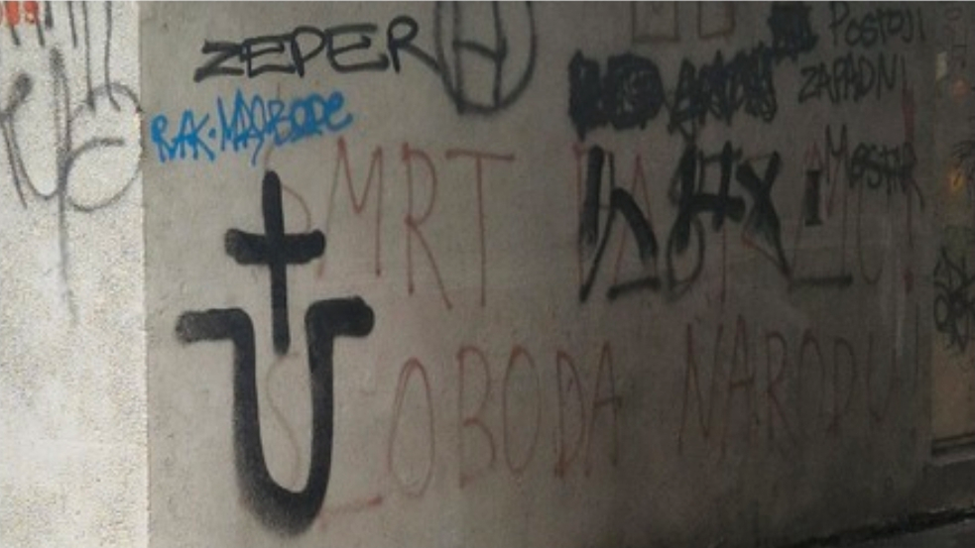
Author: Almin Šemić Ovaj članak možete pročitati na naškom ovde. On the wall of a building near the Glass Bank in Mostar, behind the Croatian National Theatre, in Knez Domagoj Street, there is a graffiti piece shown in the cover photograph that testifies to the long-standing presence of various messages in Mostar’s public space. Photo sourced from the Bljesak.info news portal As can be observed, the wall surface had previously been used for different inscriptions, including football supporter markings and other messages, indicating that this space functions as an open surface for informal visual communication. At the centre of attention is the graffiti bearing the message “Death to Fascism, Freedom to the People,” over which the symbol of the Ustasha “U” has been drawn. This creates a direct and clear ideological contrast within the same visual field between the anti-fascist slogan and a symbol that carries an opposing historical and political meaning. Furthermore, the message represents both a contrast and a reflection of Mostar’s society, where individuals express their affiliation with one ideology or multiple ideologies through such graffiti. On the same wall, there is also the inscription “There Is a Western Mostar,” which can be interpreted as a form of narrative concerning the division of Mostar. Such messages do not function merely as individual expressions but as recurring discourses that shape perceptions of the city and its boundaries in a symbolic sense. As Joseph Goebbels once stated, “A lie repeated a hundred times becomes the truth.” Just imagine how many times such a message, along with similar messages, had to be repeated in order to become normalized. In the context of children and propaganda, within ten years, sustained propagandistic influence may result in people no longer knowing whether Mostar was an anti-fascist city. Consider also how many times the phrase “Mostar Gymnasium” had to be repeated in order to erase the name of Aleksa Šantić. On a road in the suburban Mostar settlement of Vrapčići, near Mikulića Mahala, a graffiti inscription containing a message directed at a particular ethnic group was written. The inscription was sprayed in black paint directly onto the asphalt, without any additional visual elements, suggesting a rapid and informal intervention in public space. This is characteristic of graffiti intended to communicate a message quickly and directly. Photo sourced from the Večernji list news portal According to media reports, specifically from Raport and Večernji List, the graffiti was noticed in the early morning hours, after which the case was reported to the competent authorities, who conducted an investigation. Available information further suggests that similar inscriptions had previously been recorded in this area, indicating a continuity in the use of public surfaces for messages carrying political and identity-related connotations. Unlike graffiti that relies on symbolism or indirect messages, this inscription is characterized by its explicit and unambiguous formulation. What distinguishes it from the graffiti discussed in the previous section of this article is precisely the directness and explicitness of its message, which does not rely on symbolic conflict but instead communicates its content openly and unequivocally. Whereas the previous graffiti functioned through the overlapping of signs and the creation of ideological conflict within the same visual space, this one relies on a clear verbal formulation that requires no additional interpretation. From an analytical perspective, as previously noted, the message of the graffiti is clearly directed toward a specific ethnic group, as evidenced by the wording itself. Its structure and choice of words indicate an attempt at direct communication with a clearly defined “other,” while public space is used as a channel for transmitting such a message. At the same time, although it is impossible to determine with certainty who was responsible for creating the graffiti, the manner in which it is formulated points to a pattern characteristic of anonymous actors operating outside institutional frameworks. It is precisely this anonymity that allows the message to exist without the assumption of responsibility, while its public visibility ensures the dissemination of the message without intermediaries. In this context, the graffiti may be interpreted as a form of expression that does not seek dialogue but rather a one-sided assertion of presence and attitude within a particular space. Its function is not informative but performative: it does not merely communicate content, but also establishes a particular relationship toward the space and the community in which it appears. It is also possible to identify elements of propaganda within this graffiti, although it does not operate through an organized or institutional form. The message is formulated directly and without symbolic complexity, which is one of the fundamental characteristics of propaganda: clarity and ease of understanding without the need for additional interpretation. It is directed toward a specific group and employs emotionally charged language, thereby attracting attention and potentially influencing both the perceptions and emotions of passers-by. Although the identity of the author remains unknown, the manner in which the graffiti was created suggests an attempt to transmit a particular viewpoint through public space and reinforce the presence of that narrative, placing it within the broader framework of informal and decentralized propaganda. One may therefore consider how many times such a propagandistic message would need to be repeated before it becomes perceived as reality. On the wall of a residential building in Mostar, a graffiti inscription containing multiple messages written in black and red spray paint can be observed. The upper section consists of a sentence referring to territorial expansion and a historical context, accompanied by a symbol and a year, while the lower section contains the inscription “Ustaše Mostar: Fascism Lives!”. Photo sourced from the Mostarski.ba news portal The use of different colours and the arrangement of the messages suggest that the graffiti was not created at a single moment but rather represents a layered intervention produced by multiple authors or during different stages. The inclusion of geographical references and ideological terminology indicates an attempt to symbolically define the space and connect it with particular historical interpretations. The upper section of the graffiti, referring to historical context and territorial boundaries, demonstrates an awareness of historical narratives and their role in contemporary public discourse. From the perspective of propaganda studies, this graffiti illustrates how public space can become a site of competing messages that seek to influence the perceptions of passers-by. The upper inscription employs historical references and territorial allusions to suggest a particular political and identity-based framework, relying on recognizable symbols and narratives that already possess emotional and ideological significance within Mostar. Such an approach corresponds to several basic principles of propaganda, including the simplification of messages, reliance on familiar symbols, and attempts to associate a specific space with a particular collective identity. Furthermore, repetition represents one of the fundamental mechanisms of propaganda. Through the repeated appearance of similar messages and symbols in public space, certain narratives may gradually become normalized and integrated into collective perceptions. This raises broader questions regarding institutional responses to such messages and the extent to which public authorities address their presence within the urban environment. If viewed alongside recent incidents, such as attempts to remove graffiti depicting Slobodan Praljak in Ortiješ, as well as acts involving the placement of Ustaša stickers and symbols on monuments in Baćevići, the graffiti may be interpreted within a wider pattern of symbolic and ideological contestation in public space. In the context of propaganda, the graffiti can also be understood as an affirmation of a particular ideological narrative that relies on historical references and symbols associated with the legacy of fascism. Such messages do not operate in isolation. Rather, they often build upon existing social and political tensions, particularly in communities such as Mostar, where public space continues to bear the legacy of the conflicts of the 1990s. In this sense, the graffiti may be connected to narratives emerging from the war in Bosnia and Herzegovina, including the conflict between Bosniaks and Croats, with symbols and messages serving as mechanisms for the reinterpretation or preservation of specific forms of collective memory. Although the territorial divisions established during the war may no longer exist in a formal sense, symbolic boundaries continue to shape public discourse and spatial perceptions within the city. The repeated appearance of ideologically charged symbols, attacks on memorial sites, and disputes over historical narratives demonstrate how public space remains a field in which competing interpretations of the past are expressed and contested. The emotional dimension of propaganda is also evident in such messages, as they seek not only to communicate information but also to provoke emotional responses and influence attitudes toward coexistence, identity, and collective belonging. On an information board located in front of a building associated with the religious and cultural institutions of the Serbian community in Mostar, specifically in front of the Bishop’s Residence, a graffiti inscription was written in purple spray paint containing the markings “1981” and “4th Corps.” Photo sourced from the Top Portal news portal These references may be linked to local identity-based and historical contexts. The number “1981” is commonly associated with the Red Army (Football club Velež Mostar) supporters’ group, while “4th Corps” refers to a formation of the Army of the Republic of Bosnia and Herzegovina that operated in this area during the Bosnian War. The choice of location itself—an information board identifying a museum and religious site—further emphasizes the symbolic dimension of the intervention within this space. From an analytical perspective, the graffiti can be understood as a form of symbolic marking of space, through which a particular identity framework is communicated by means of brief and recognizable references. Such messages do not necessarily require explicit verbal formulations in order to be understood by the local community, as their meaning is constructed through existing social and historical references. In this context, the graffiti may function as a signal of the presence of a particular group or narrative within a given space, especially when it is displayed at a location associated with another community. Consequently, the message may be recognizable not only to members of the local community but also to a wider audience familiar with the historical and social significance of these references. Within the framework of propaganda studies, this graffiti may be viewed as a form of symbolic and identity-based territorial marking that relies not on direct statements but on recognizable signs embedded within the local context. The inscriptions “4th Corps” and “1981” evoke wartime and supporter-group symbolism, and through the combination of these references communicate a particular identity narrative. Their meaning is further shaped by the location, given that the graffiti appears on a board situated in front of a building associated with institutions of the Serbian community in Mostar, thereby giving the message a more specific and targeted dimension. In this sense, the graffiti may be interpreted as a signal of the presence of a particular social or ideological group within a space symbolically associated with another community. Similar inscriptions containing the same references have previously been documented at this and related locations, suggesting a pattern of repetition and the use of public space for the transmission of coded messages, a characteristic feature of informal forms of propagandistic communication. At first glance, the graffiti reading “KILL THE BALIJA” at the Bunica picnic site may appear to be just another act of vandalism in public space. However, its message extends beyond ordinary graffiti and enters the sphere of hate propaganda, ethnic intolerance, and symbolic violence. The location itself further amplifies the significance of the message. A natural recreational area, which should represent a space of leisure, social interaction, and escape from societal tensions, is transformed into a site of intimidation and a reminder of wartime narratives that have not completely disappeared from the public sphere of Bosnia and Herzegovina, even decades after the conflict. Photo sourced from the Blagaj Info Facebook page The message of the graffiti is direct, aggressive, and leaves little room for interpretation. The use of the term “balija,” which is employed within nationalist discourse as a derogatory label for Bosniaks, demonstrates a clear intention to dehumanize a particular ethnic group. Dehumanization has historically been one of the central elements of hate propaganda, involving the portrayal of the “other” as inferior, dangerous, or undesirable. When such language is combined with the imperative “kill,” the graffiti moves beyond hate speech and becomes an explicit call for violence. Visually, the graffiti is not artistically complex, yet its propagandistic power lies precisely in its brutal simplicity. The black lettering, roughly painted on a concrete surface, conveys a sense of urgency and raw aggression. There is no aesthetic ambition and no symbolism intended to obscure its meaning; the objective is not artistic expression but rather the dissemination of fear and the provocation of a reaction. Graffiti of this kind often functions as a territorial marker, representing an attempt to symbolically claim space through a nationalist message. It is particularly important to consider the context of Mostar and Herzegovina, regions that continue to bear the legacy of wartime divisions. Within such an environment, graffiti can serve as a means of prolonging conflict in symbolic form. Their impact extends beyond the individual reader, influencing the broader social atmosphere by creating feelings of insecurity and reinforcing distrust between communities. In this case, the propaganda does not seek to persuade through rational argumentation but through emotions, primarily hatred, fear, and anger. Such graffiti also performs a function of normalizing extremist discourse. When messages that advocate violence remain visible in public space for extended periods without a response from institutions or the wider community, they may create the impression of social tolerance toward such expressions. In this way, the graffiti becomes more than an isolated incident; it becomes part of a broader culture of silence and passivity regarding nationalist violence. From a propaganda perspective, the graffiti employs several key mechanisms: simplification of the message, identification of an “enemy,” emotional manipulation, and public visibility. For this reason, its influence can be particularly significant among younger generations who grow up surrounded by symbols of division. Rather than encouraging dialogue and shared public space, messages of this kind contribute to an atmosphere of conflict and serve as a reminder that public space in Bosnia and Herzegovina continues to function as a site of political and identity-based struggle.
Analiza propagande na Mostarskim zidovima
Autor: Almin Šemić Na zidu zgrade u blizini Staklene banke u Mostaru, iza Hrvatskog narodnog kazališta, u ulici Kneza Domagoja, nalazi se grafit iz naslovne fotografije koji svjedoči o dugotrajnoj prisutnosti različitih poruka u javnom prostoru Mostara. Fotografija preuzeta sa portala Bljesak.info Kako uočavamo, površina zida već je ranije korištena za ispisivanje raznih natpisa, uključujući navijačke oznake i druge poruke, što ukazuje na to da ovaj prostor funkcionira kao otvorena površina za neformalnu vizualnu komunikaciju. U središtu pažnje nalazi se grafit sa porukom „Smrt fašizmu, sloboda narodu“, preko koje je iscrtana simbolika ustaškog U. Time se unutar istog vizualnog polja uspostavlja direktan i jasan ideološki kontrast između antifašističke parole i simbola koji nosi suprotno historijsko i političko značenje. Osim toga, poruka je svojevrsni kontrast ali i ogledalo mostarskog društva, koje putem ovakvih grafita, izražavaju pripadnost jednoj ideologiji ili ideologijama. Na istom zidu nalazi se i natpis „Postoji zapadni Mostar“, koji se može čitati kao oblik narativa o podijeljenosti Mostara. Ovakve poruke ne funkcionišu samo kao individualni izrazi, već kao ponavljajući diskursi koji oblikuju percepciju grada i njegovih granica u simboličkom smislu. Kako i Joseph Goebbels kaže “svaka laž ponovljena stotinu puta, postaje istina”. Zamislite samo, koliko se puta morala ponoviti ovakva poruka kao i njoj slične poruke da postane normalna. U kontekstu djece i propagande, za desetak godina, propagandnim djelovanjem se više neće znati ni je li Mostar bio antifašistički grad. Zamislite i koliko se puta morala ponoviti začkoljica Gimnazija Mostar, kako bi se iskorijenilo ime Alekse Šantića. Na cesti u mostarskom prigradskom naselju Vrapčići, u blizini Mikulića mahale ispisan je grafit koji sadrži poruku usmjerenu prema jednoj etničkoj grupi. Natpis je napisan crnim sprejem direktno na asfaltu, bez dodatnih vizualnih elemenata, što upućuje na brzu neformalnu intervenciju u javnom prostoru. Kao što je to slučaj i kod svakog grafita kojim se želi nešto brzo poručiti. Fotografija preuzeta sa portala Večernji list Prema medijskim navodima, konkretno Raporta i Večernjeg lista, grafit je primijećen u jutarnjim satima, nakon čega je slučaj prijavljen nadležnim institucijama koje su izvršile uviđaj. Iz dostupnih informacija proizlazi da su slični natpisi i ranije zabilježeni na ovom području, što ukazuje na kontinuitet korištenja javnih površina za ispisivanje poruka sa političkim i identitetskim konotacijama. Za razliku od grafita koji koriste simboliku ili indirektne poruke, ovaj natpis karakterizira eksplicitna i nedvosmislena formulacija. Ono što ga razdvaja od grafita iz prethodne analize jeste direktnost i eksplicitnost poruke, koja ne koristi simbolički sukob već otvoreno i nedvosmisleno komunicira sadržaj. Dok je prethodni grafit funkcionirao kroz preklapanje znakova i stvaranje ideološkog konflikta unutar istog vizualnog prostora, ovaj se oslanja na jasnu verbalnu formulaciju bez potrebe za dodatnim tumačenjem. U analitičkom smislu, kao što smo već pomenuli, poruka grafita je jasno usmjerena prema konkretnoj etničkoj grupi, što proizlazi iz same formulacije teksta. Njena struktura i izbor riječi ukazuju na pokušaj direktne komunikacije sa jasno definiranim drugim i drugačijim, pri čemu se javni prostor koristi kao kanal za prenošenje takve poruke. Istovremeno, iako nije moguće sa sigurnošću utvrditi tko stoji iza ispisivanja grafita, način na koji je formuliran upućuje na obrazac karakterističan za anonimne aktere koji djeluju izvan institucionalnih okvira. Upravo ta anonimnost omogućava poruci da postoji bez preuzimanja bilo kakve odgovornosti, dok njena javna vidljivost osigurava širenje poruke bez posrednika. U navedenom kontekstu, grafit se može interpretirati kao oblik poruke koja ne teži dijalogu već jednostranom iskazu prisutnosti i stava u prostoru. Da prostite, kao kad lav izmokri teritoriju da je označi, tako slično možemo posmatrati i ovaj grafit. Njegova funkcija nije informativna, već performativna, on ne samo da prenosi sadržaj, nego i uspostavlja određeni odnos prema prostoru i zajednici u kojoj se pojavljuje. U ovom grafitu moguće je prepoznati i elemente propagandnog djelovanja, iako on ne djeluje kroz organiziranu ili institucionalnu formu. Poruka je formulirana direktno i bez simboličke složenosti, što je jedna od osnovnih karakteristika propagande, jasnoća i lakoća razumijevanja bez potrebe za dodatnim tumačenjem. Usmjerena je prema konkretnoj grupi i koristi snažan, emocionalno nabijen jezik čime se postiže efekt privlačenja pažnje i potencijalnog uticaja na percepciju prolaznika, ali i na samu emociju. Iako nije poznato tko stoji iza pisanja ovakvog grafita, način na koji je izvedena ukazuje na pokušaj da se kroz javni prostor prenese određeni stav i učvrsti prisutnost tog narativa, što grafit svrstava u širi okvir neformalne, decentralizirane propagande. A zamislite samo, koliko se puta ovakva propagandna poruka morala ponoviti da bi postala stvarnost. Na zidu stambene zgrade u Mostaru, ispisan je grafit koji sadrži više poruka pisanih crnim i crvenim sprejem. Gornji dio čini rečenica koja referira na teritorijalno širenje i historijski kontekst, uz dodatak simbola i godine, dok se u donjem dijelu nalazi natpis “Ustaše Mostar: fašizam živi!”. Fotografija preuzeta sa portala Mostarski.ba Različite boje i raspored sugeriraju da grafit nije nastao u jednom trenutku, već kao slojevita intervencija više autora ili u različitim fazama. Svakako da, spominjanje geografskih referenci i ideoloških termina ukazuje na pokušaj da se prostor simbolički definira i poveže sa određenim historijskim interpretacijama. Gornji dio grafita, onaj o povijenom kontekstu odnosno granicama, jasno prikazuje svijest okoline o proučavanju povijesti. Sto puta ponovljena laž je istina, a upravo tim putem se nastoji ići kroz pisanje ovakvih grafita, alaudirajući da je NDH tekovina još uvijek prisutna u Mostaru. Ona ista NDH koja svojata granice do Drine i zaziva crna odijela. Ako posmatramo kroz prizmu propagande, ovaj grafit pokazuje kako javni prostor može postati mjesto konkurentskih poruka koje nastoje oblikovati percepciju prolaznika. Gornji natpis koristi povijesne reference i teritorijalne aluzije kako bi sugerirao određeni politički i identitetski okvir, oslanjajući se na prepoznatljive simbole i narative koji već imaju emocionalno i ideološko značenje u Mostaru. Takav pristup odgovara osnovnim principima propagande, pojednostavljivanje poruke, oslanjanje na poznate simbole i pokušaj povezivanja prostora sa određenim kolektivnim identitetom. Nadalje, jedan od osnovnih principa propagande jest ponavljanje poruke, u ovom primjeru, poruke fašizma koja zapravo i već dugo odzvanja Mostarom. Pitanje ostaje, kako ovakve poruke ne bude akciju u predstavnicima vlasti u Mostaru? Da li su i oni taoci ovakvih politika? Ukoliko posmatramo nedavni pokušaj brisanja grafita Slobodana Praljka iz naselja Ortiješ, te upade u mjesto Baćevići gdje živi pretežno srpsko stanovništvo (slučaj lijepljenja ustaških stikera i pisanje ustaških simbola na spomeniku NOBa), onda dolazimo do svjesnog propagandnog djelovanja koje svoje utemeljenje pronalazi duboko u prošlosti. U kontekstu propagande, ovaj grafit može se i interpretirati kao oblik afirmacije ideološkog narativa koji se oslanja na historijske reference i simbole povezane s fašističkim nasljeđem. Odnosno, prihvatanje jedne ideologije. Takve poruke ne djeluju izolirano, već se često nadovezuju na postojeće društvene i političke tenzije, posebno u sredinama poput Mostara gdje je javni prostor i dalje obilježen posljedicama ratnih sukoba iz 1990ih. U tom smislu, grafit se može povezati s narativima koji proizlaze iz rata u Bosni i Hercegovini, uključujući i sukobe između Bošnjaka i Hrvata, pri čemu simboli i poruke služe kao način reinterpretacije ili održavanja određenih kolektivnih sjećanja. Drugim riječima, ratne granice su možda i pobrisane, no one teritorijalne nisu. Danas se u Mostaru fašizam slavi kao Nova godina. Svjedočili smo skrnavljenju Partizanskog spomen groblja i lupanju ploča. Osim toga, prisutan je i emocionalni princip djelovanja, pogotovo u dijelu suživota, gdje se emocionalnim putem nastoji postići akcija. Na informativnoj tabli ispred objekta povezanog sa vjerskim i kulturnim institucijama srpske zajednice u Mostaru, točnije ispred Vladičanskog dvora, ispisan je grafit ljubičastim sprejem koji uključuje oznake “1981” i “4. Korpus”. Fotografija preuzeta sa portala Top Portal Ove reference mogu se dovesti u vezu sa lokalnim identitetskim i historijskim kontekstom, “1981” se često povezuje sa navijačkom grupom Red Army, dok “4. Korpus” upućuje na formaciju Armije BiH koja je djelovala na ovom području tokom rata u Bosni i Hercegovini. Sam izbor lokacije, tabla koja označava muzej i vjerski objekt, dodatno naglašava simboličku dimenziju intervencije u ovom prostoru. U analitičkom smislu, grafit se može posmatrati kao oblik simboličkog označavanja prostora, gdje se kroz kratke i prepoznatljive oznake prenosi određeni identitetski okvir. Takve poruke ne moraju nužno imati eksplicitnu verbalnu formulaciju da bi bile razumljive lokalnoj zajednici, jer se njihovo značenje gradi kroz postojeće društvene i historijske reference. U tom kontekstu, grafit može djelovati kao signal prisutnosti jedne grupe ili narativa u prostoru, posebno kada je ispisan na mjestu koje se povezuje s drugom zajednicom. Dakle, poruka može biti poznata samo lokalnoj ili široj zajednici, a u ovom kontekstu poznata je i široj i lokalnoj zajednici. U okviru propagande, ovaj grafit može se posmatrati kao oblik simboličkog i identitetskog označavanja prostora, koji ne koristi direktne poruke, već prepoznatljive oznake unutar lokalnog konteksta. Natpisi “4. Korpus” i “1981” upućuju na ratnu i navijačku simboliku, čime se kroz kombinaciju tih referenci prenosi određeni identitetski okvir. Njegovo značenje dodatno se oblikuje kroz lokaciju, s obzirom na to da je ispisan na tabli ispred objekta povezanog s institucijama srpske zajednice u Mostar, čime poruka dobija konkretnu ciljanu dimenziju. U tom smislu, grafit se može interpretirati kao signal prisutnosti jedne društvene ili ideološke skupine u prostoru koji se simbolički povezuje s drugom. Slični natpisi sa istim oznakama već su ranije zabilježeni na ovom i srodnim lokalitetima, što ukazuje na obrazac ponavljanja i korištenja javnog prostora za prenošenje kodiranih poruka, karakterističan za neformalne oblike propagandnog djelovanja. Na prvi pogled, grafit “UBIJ BALIJU” na izletištu u Bunica djeluje kao još jedan čin vandalizma u javnom prostoru. Međutim, njegova poruka prevazilazi obični grafit i ulazi u sferu propagande mržnje, etničke netrpeljivosti i simboličkog nasilja. Sama lokacija dodatno pojačava težinu poruke – prirodno izletište koje bi trebalo predstavljati prostor odmora, zajedništva i bijega od društvenih tenzija pretvara se u mjesto zastrašivanja i podsjećanja na ratne narative koji ni decenijama nakon sukoba nisu u potpunosti nestali iz javnog prostora Bosne i Hercegovine. Fotografija preuzeta sa Facebook stranice Blagaj Info Poruka grafita je direktna, agresivna i ne ostavlja prostor za interpretaciju. Korištenje riječi “balija”, koja se u nacionalističkom diskursu koristi kao pogrdan naziv za Bošnjake, pokazuje jasnu namjeru dehumanizacije određene etničke skupine. Upravo je dehumanizacija jedan od ključnih elemenata propagande mržnje kroz historiju – stvaranje slike “drugog” kao manje vrijednog, opasnog ili nepoželjnog. Kada se takva poruka spoji s imperativom “ubij”, grafit prelazi iz govora mržnje u otvoreni poziv na nasilje. Vizualno, grafit nije umjetnički kompleksan, ali njegova propagandna snaga leži upravo u brutalnoj jednostavnosti. Crna boja slova, grubo ispisana na betonskoj površini, ostavlja dojam hitnosti i sirove agresije. Nema estetske ambicije, nema simbolike koja bi prikrivala značenje – cilj nije umjetnički izraz nego širenje straha i provociranje reakcije. Takvi grafiti često služe kao teritorijalne oznake, odnosno pokušaj simboličkog “prisvajanja” prostora kroz nacionalističku poruku. Posebno je značajno analizirati kontekst Mostara i Hercegovine, prostora koji i dalje nose snažno naslijeđe ratnih podjela. U takvom ambijentu grafiti postaju sredstvo produžavanja konflikta u simboličkoj formi. Oni ne djeluju samo na pojedinca koji ih pročita, već utiču i na kolektivnu atmosferu, stvarajući osjećaj nesigurnosti i produbljujući nepovjerenje među zajednicama. Propaganda u ovom slučaju ne pokušava uvjeriti argumentima, nego emocijama – prvenstveno mržnjom, strahom i bijesom. Ovakvi grafiti također imaju funkciju normalizacije ekstremnog govora. Kada poruke koje pozivaju na nasilje ostaju dugo prisutne u javnom prostoru bez reakcije institucija ili zajednice, stvara se utisak društvene tolerancije prema njima. Time grafit postaje više od pojedinačnog ispada; on postaje dio šire kulture šutnje i pasivnosti prema nacionalističkom nasilju. U propagandnom smislu, grafit koristi nekoliko ključnih mehanizama: pojednostavljivanje poruke, identifikaciju “neprijatelja”, emocionalnu manipulaciju i javnu vidljivost. Upravo zbog toga njegov uticaj može biti snažan, posebno među mlađim generacijama koje svakodnevno odrastaju okružene simbolima podjela. Umjesto dijaloga i zajedničkog prostora, ovakve poruke proizvode atmosferu konflikta i podsjećaju koliko je javni prostor u Bosni i Hercegovini i dalje mjesto političke i identitetske borbe.
Women’s function as change agents in nonviolent protests in Ukraine and the Balkan states
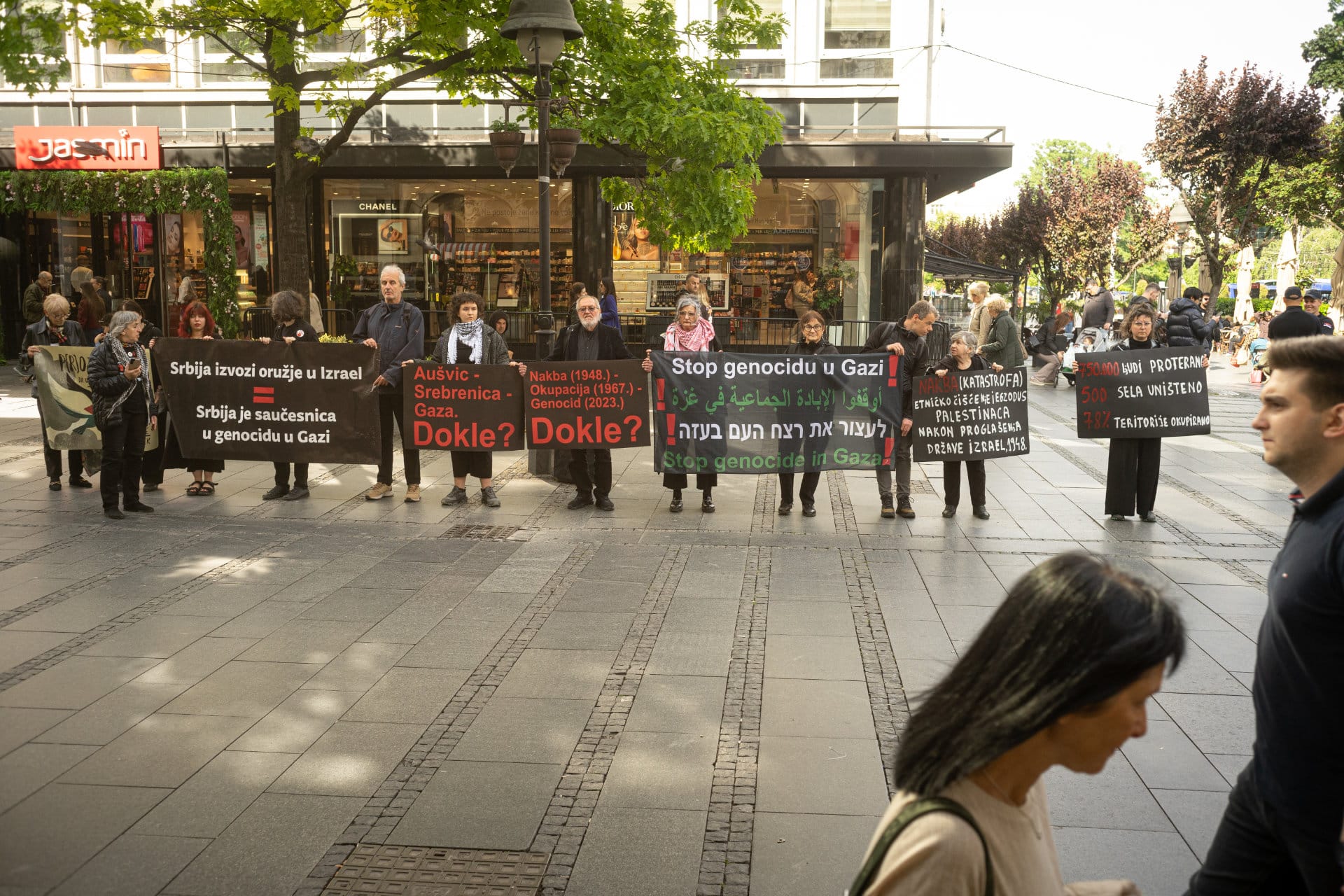
Author: Silvia Fabijanić Conflicts or rebellion against authority do not necessarily have to be violent. Nonviolent resistance does not seek victory over the enemy but the overcoming of injustice, thus a real solution and thereby the liberation of both those affected by the injustice and the opponents."1 It is about shaping actions that seek to stop wrong and harmful policies as they are being implemented, not an abstract idea that peace is "built" by the very act of resistance. Nonviolent movements throughout history have opened up space for reflection and the reshaping of social structures, often questioning relations between power, material inequalities, and dominant social norms. During the 1990s in Serbia, public space was dominated by fear, war propaganda, and the onset of armed conflicts. While much of society passively observed the events of the war, the organization Women in Black appeared on the streets of Belgrade. Their activism was based on the clear conviction that war is wrong and must be publicly and consistently opposed while it is happening. Women in Black had no institutional power or weapons, but they possessed a strong political stance and a visible, symbolically powerful presence in public spaces, which makes their activism particularly significant. This paper focuses on the work of Women in Black during the 1990s because of the specific historical and political context, marked by war, nationalism, and strong repression. Although armed conflicts did not take place on the territory of Serbia, the state was directly involved in the wars in the territory of the former Yugoslavia. A socio-political framework characterized by propaganda, militarization, and political control was established. Under such circumstances, nonviolent resistance takes on a special gravity and risk. Photograph from the Women in Black archive, documenting the “Stop the Genocide in Gaza” protest held in Belgrade in May 2026 Years later, during 2013 and 2014, in Ukraine, under conditions of peace and without armed conflict, the pro-democracy protest movement Euromaidan emerged. The protest movement began as a response by the people to the decision by the then-President of Ukraine not to sign an agreement with the European Union and to turn the country's policy toward Russia. The movement started as a peaceful protest but later escalated into a violent conflict. This paper focuses on the role of women during the nonviolent period of Euromaidan. During Euromaidan, women stepped out of socially imposed traditional roles and actively participated in political and social changes. Although the historical, political, and social contexts of the Women in Black and the women during Euromaidan differ, they are comparable in the way women enter the political sphere nonviolently through public activism during times of profound political and social change. Neither the Women in Black nor the women during the (nonviolent) part of Euromaidan were overshadowed by men; rather, they sought to be equal to men. We live in patriarchal social structures that systematically diminish or ignore women's overall contributions. Does women's activism in nonviolent movements serve as a corrective to social invisibility, rather than as an affirmation of difference? Based on this thesis, the paper focuses on the actions of Women in Black during the 1990s and on the participation of women in the nonviolent part of the Euromaidan protests. Although they operate in different historical and political contexts, this paper aims to present their nonviolent resistance, the motives that drive them to enter the public sphere, the risks they face, their level of visibility, and the contribution they have made to society through their nonviolent actions. This paper is based on a qualitative analysis of secondary sources. The analysis was conducted using thematic analysis of scientific, media, and audiovisual sources. NONVIOLENT RESISTANCE AND THE ROLE OF WOMEN IN SOCIAL MOVEMENT A passive attitude toward injustice in society is considered a greater problem than violence itself. Passivity represents implicit support for the violent structures of social power. Nonviolence is not a sign of weakness, but a conscious and deliberate abstention from violence while actively fighting against injustice. Nonviolent resistance does not seek victory over the enemy but the overcoming of injustice, thus a real solution and thereby the liberation of both those affected by the injustice and the opponents.2 It is useful to point out that nonviolent resistance is not the same as pacifism. Pacifism is a moral conviction, while nonviolent resistance is a strategic choice. People choose it because they think it will make it easier to win, not necessarily because they "love peace."3 Nonviolent movements offer various methods of action, from public protests and strikes, through boycotts and symbolic actions, to information campaigns. Their main characteristic is that they do not create moral constraints4 or other forms of obstacles.5 The accessibility for participation enables mass mobilization of citizens. Compared to violent methods, nonviolent resistance also demonstrates strategic effectiveness. Empirical data confirms that nonviolent campaigns are twice as likely to succeed (53%) compared to violent uprisings (26%), and they also leave behind more stable and democratic societies.6 The first key reason is the aforementioned mass participation, and the second is "political jiu-jitsu." It is a mechanism in which brutal repression of peaceful protesters backfires, destroying the authorities' reputation.7 It is precisely in these mechanisms of mass participation and strategic countereffect that women are a key strategic advantage. Since women make up approximately 50% of the total population, their active involvement in resistance movements is a crucial factor in achieving critical mass. Without women, a movement cannot reach the critical mass needed to exert effective pressure on the regime's "pillars of power." The presence of women on the front lines in 99% of cases directly undermines the regime's patriarchal authority and forces security forces to question their loyalties.8On the other hand, violence directed against unarmed women dramatically increases the moral and political cost of repression.9 That women's participation is not just a statistical figure but a reality is demonstrated by the Women in Black organization in Belgrade and the massive turnout of women at the Euromaidan in Ukraine. Although they may seem difficult to compare due to different political and social circumstances, the bridge connecting them is their entry into the public sphere through nonviolent resistance. WOMEN IN PEACE INITIATIVES IN THE BALKANS DURING THE 1990S: THE CASE OF SERBIA AND 'WOMEN IN BLACK' The political context of 1990s Serbia was marked by strong militarism and nationalist homogenization of society, as well as the breakup of SFRY10. Slobodan Milošević11used mass rallies to consolidate his power and create an atmosphere in which any voice of reason was branded "treasonous." Although the first multi-party elections were held, the system was not truly democratic. A strong retraditionalization of society occurred. The war discourse required men to be warriors and women to be "mothers of the nation" who would bear new soldiers and remain silent. 12 The political crisis of 1990 was merely a prelude to the armed conflicts that would follow on the territory of Croatia and Bosnia and Herzegovina. Serbia found itself in the paradoxical position of a state with no war on its own territory, yet simultaneously carrying out mass mobilization and sending resources to the battlefields. In such a specific context—where the war is waged 'in the name of the people,' but not on their territory—a strong internal resistance emerges in the form of the organization Women in Black. Women in Black is an activist group and network with a feminist-anti-militarist orientation, composed of women and men from different generations and ethnic backgrounds, with varying levels of education, social statuses, lifestyles, and sexual orientations. The organization grew out of earlier feminist initiatives, including Women's Studies and anti-war centers13, in response to the militaristic regime of Slobodan Milošević and the start of the war in Croatia and Bosnia. In Belgrade, on October 9, 1991, the organization began its weekly "vigil."14Every Wednesday on Republic Square in Belgrade, they stood in silence, dressed in black, holding banners. They used the traditional Eastern European/Christian custom of wearing black for the deceased, but gave it a new meaning: mourning the victims on "all three sides," which was a radical act because the regime only recognized Serbian victims. The silence served as a shield against the aggressive, male discourse of war. They chose silence as a rejection of speaking unnecessary words that prevent and hinder reflection on oneself and others. 15 They used black clothing as an "instrument of reason" and a method for their nonviolent entry into the social sphere. Through their engagement, they consciously distanced themselves from socially gender-imposed female roles and "sending sons to war," instead articulating their resistance as an independent political choice. This approach represented a radical critique of the very foundations of society, as they recognized militarism and war as direct extensions of patriarchal power structures. It was a direct blow to the very core of nationalist ideology. The members of the organization stated: We are a group of women who stand in silence and in black every week to express our disagreement with the war. We decided to show what the female side of this war is. Women in our countries wear black to express their sorrow for the deaths of their loved ones. We wear black for the deaths of all the victims of war. We wear black because people have been driven from their homes, because women have been raped, because towns and villages have been burned and destroyed."16 In addition to showing solidarity with the victims of war, the Women in Black also organized safe spaces for all men who refused military service. By practically protecting these men, they opposed the militaristic regime and shielded individuals from the state's repressive apparatus. "Women in Black also set up in a rented apartment that became a refuge for opponents of conscription and deserters. When the wars began, it is estimated that 300,000 Serb men of military age went into exile rather than fight. Providing emotional, moral, and political support to these men who refused to participate in the fighting was one of the practical ways the women acted on their feminist and anti-militarist ideas. Some of these men, in turn, became valued members of the organization." 17 Because of their views, Women in Black were subjected to various forms of attacks. The attacks included verbal and physical assaults on the streets, both during and outside of street actions, destruction of the organization's property, death threats against members, organized witch hunts and calls for lynching, and sexist outbursts. The use of sexist insults served to reduce their political message to "female hysteria" or moral depravity. Regime media called them "traitors," "foreign mercenaries," and other derogatory names and conducted media campaigns against the members. Almost no street action by Women in Black went by without physical and/or verbal attacks.18The attacks were not spontaneous actions or random incidents but were organized and systemic acts aimed at discrediting, isolating, and intimidating the members. In addition to random passersby, they were often attacked by organized groups such as members of paramilitary formations or far-right extremists. The sources of repression were society and the state apparatus. They were "traitors" because they rejected national homogenization and spoke publicly about the crimes being committed at the time by their own nation. One of the members stated: "We protested in the street and exposed our bodies [using the body as an integral part of the political message] against the regime…people would come up to us who spat on us, pushed us, pulled our hair, and yelled that we were traitors.." 19 Police officers would often stand by while passersbys attacked the women, intervening only when the situation escalated. Sometimes, the police officers themselves would hurl insults at the activists. The police's lack of reaction to these events indicated how complicit state authorities were in restricting the right to freedom of assembly.20 By standing in black, remaining silent, showing courage, and engaging in nonviolent action, they became highly visible in the public sphere of Serbian society in the 1990s. Women in Black were the first to show that it was possible to "take to the streets" in a strictly controlled regime. Their concept of long-term persistence (standing every week for years) is proof of the "possibility of nonviolent resistance" even under the harshest conditions. In doing so, they proved that a 'minority' movement can become the 'moral compass' of a society, ensuring that a critical voice is heard even in moments of greatest silence. They created a recipe for nonviolent resistance and perseverance. After the end of all the armed conflicts in which Serbia was involved, Women in Black did not stop their work. They shifted their focus to confronting the past, being in solidarity with all victims of war, honoring the victims by visiting war crime sites, and insisting that the crimes not be forgotten and that Serbia's institutions confront what was done.21 From the 1990s to today, the government in Serbia has changed, but the deep-seated mechanisms of the system have remained the same. After the collapse of the overhang at the Novi Sad train station (November 1, 2024), which killed 16 people, a new turning point was reached in Serbian society. A new wave of nonviolent resistance has begun, initiated by students demanding accountability for the deaths of 16 people and a change in political leadership. At the time of writing, the protests are still ongoing. The organization Women in Black has offered its full support to the students. In the new nonviolent resistance on the streets across Serbia, female students are not just participants; they actively take part in the blockades and are also targeted by police intimidation and physical and verbal attacks by the authorities. WOMEN AS AGENTS OF NONVIOLENT RESISTANCE DURING EUROMAIDAN On November 21, 2013, in Ukraine, protesters gathered on the main square in Kyiv to protest President Viktor Yanukovych.22 At that time, Ukraine was at a deeply divided crossroads between European integration and a renewed strong bond with Russia. Uncertainty about the country's future direction was caused by President Yanukovych's sudden withdrawal from Ukraine's Association Agreement with the European Union. For some Ukrainian citizens, membership in the European Union represented the only hope of bringing prosperity to Ukraine.23Aside from the latter reason, discontent among Ukrainian citizens had been smoldering for years. The causes lay in the oligarchic-clan system of power, corruption that permeated every sphere of society, and distrust in state institutions.24All of these were key drivers that brought the people of Ukraine onto the streets and sparked the Revolution of Dignity, better known as Euromaidan. Depending on the authors, the uprising can be divided into two phases: the first phase, which began in 2013 with peaceful student protests in Kyiv, and the second phase in 2014 when the protests spread across the entire country, and police repression turned them from peaceful demonstrations into mass violent protests.25This paper is based on the nonviolent part of Euromaidan and at a time when there is no immediate danger of war. Although Ukraine has experienced earlier revolutions, during Euromaidan women nonetheless transitioned from the role of "helpers" to that of "creators" of the revolution. "Women of Euromaidan" do not operate as an organization, like Women in Black, and therefore cannot be precisely defined. They are a generation of women who simultaneously navigated imposed traditional roles and actively participated in other protest roles, thereby permanently redefining public space in Ukraine. Their presence was multifaceted, and they occupied a space that was often under the strict supervision and regulation of male protesters. Although the media often emphasized the male aspects, women made up a huge part of the movement. At the very beginning of the protests, women made up as much as 44% of all participants.26According to the research, the motives for participating in the protest were multiple and often overlapping. The most common motive was opposition to corruption and human rights violations (60%), solidarity with the protesters (32%), the fight for a better future for their children (27%), and a sense of civic duty and helping society (24%).27 Many women embraced traditional female roles and were often seen by fellow protesters, as well as the broader public, as aides to the male protesters rather than as revolutionaries in their own right.28Their reproductive work—such as cooking, cleaning, laundry, and logistics—was often undervalued and considered less important than the "real" fighting on the barricades.29 In the post-Soviet context of Ukraine, such work in the private sphere (associated with women) is considered less prestigious and rarely receives public recognition compared to "real" work in the public sphere. However, although at the start of the protests women were pushed into traditional roles, they took on the roles which marked the beginning of their growing visibility within the patriarchal environment. Women began offering legal aid to protesters, organizing public lectures and documentary film screenings within the camp, patrolling barricades, distributing food and providing medical assistance, participating in negotiations, providing informational support, and handling logistics.30Ukrainian women thus fought for and occupied spaces traditionally reserved for men in the public sphere of a patriarchal society. Thanks to their participation in the Euromaidan protests, they became equal partners who shaped the protest and occupied male public spaces, unlike in earlier revolutions.31 The most prominent example of their organization was the founding of the Euromaidan SOS initiative.32The leaders of the initiative were women, most of whom were human rights activists.33Within the framework of the initiative, they coordinated activities, monitored cases of abuse, and ensured access to legal protection, thereby shielding individuals from the state's repressive apparatus. In addition to their involvement in mixed-gender collectives, they also operated through independently organized initiatives. They founded independent Women's Battalions ("Women's Sotnya") with the aim of making women's contributions visible and as a direct initiative by feminists appalled by the revolution's sexism. The most famous was the "Olga Kobylianska" Women's Battalion.34Although it was called a "battalion," it was not a military or violent formation, but rather an independent women's initiative focused on self-defense, guard duty, and organizational support within the nonviolent protest movement. The activists organized special actions like "Women's Solidarity Night" to draw attention to their contributions, marching through Euromaidan with instruments and chanting "Freedom, equality, women's solidarity!". Their actions provoked hostile reactions from some protesters; they were told, "You're provocateurs! What are you doing?" and their banners were torn down.35Examples of sexism and misogyny were common. In the kitchens, you could find signs like: "Dear women, if you see trash - clean it up, [male] revolutionaries will be pleased," and there were also ads looking for "young women to create a positive atmosphere."36There was also strong rhetoric among the male protesters and their "concern for women" that aimed to keep women away from "danger zones," not viewing them as capable of making decisions on their own.37 One of the more creative nonviolent actions by the protesters was the "Mirror Action." It was a powerful tactic in which protesters held torso-sized mirrors with the message "God, is that me!" as a counter-response to the police shields. The idea was for the police to see their reflections in the mirrors and confront their own actions. In addition, the protesters offered tea to the police officers, played their national anthem, and attached flowers to the officers' shields.38 Unfortunately, clashes with the police soon broke out, and Euromaidan became a violent protest. The police's violent crackdown on the protesters led to a large number of injuries and deaths, the radicalization of the protesters, and ultimately the flight of President Yanukovych. "I realized that this was serious, that the state had now turned against its own people."39It was precisely this realization of a state attacking its own citizens that was key to mobilizing women who had not previously considered themselves politically active. However, during Euromaidan, women in Ukraine had already shown how important they are in the public sphere through nonviolent engagement and participation, and how they can stand on equal footing with men. After Euromaidan in 2014, there was the Russian annexation of Crimea40and the war in Donbas.41Tensions continued over the following years, until the end of February 2022, when Russia launched a full-scale invasion of Ukraine, which remains an ongoing conflict. Unlike the Women in Black who were active in Serbia in the 1990s, a territory where no war was taking place, the women of Ukraine find themselves in a situation where an armed conflict is currently being waged on their territory. Thus, due to the newly emerged political and social circumstances, Ukrainian women have developed the view that defending the country is a prerequisite for preserving women's rights. They believe that a Russian victory means the end of human rights and feminist achievements in Ukraine, and therefore, defense (which includes both men and women) is necessary.42