
Flamingo Revolution Chronicles: The Protest Marathoners
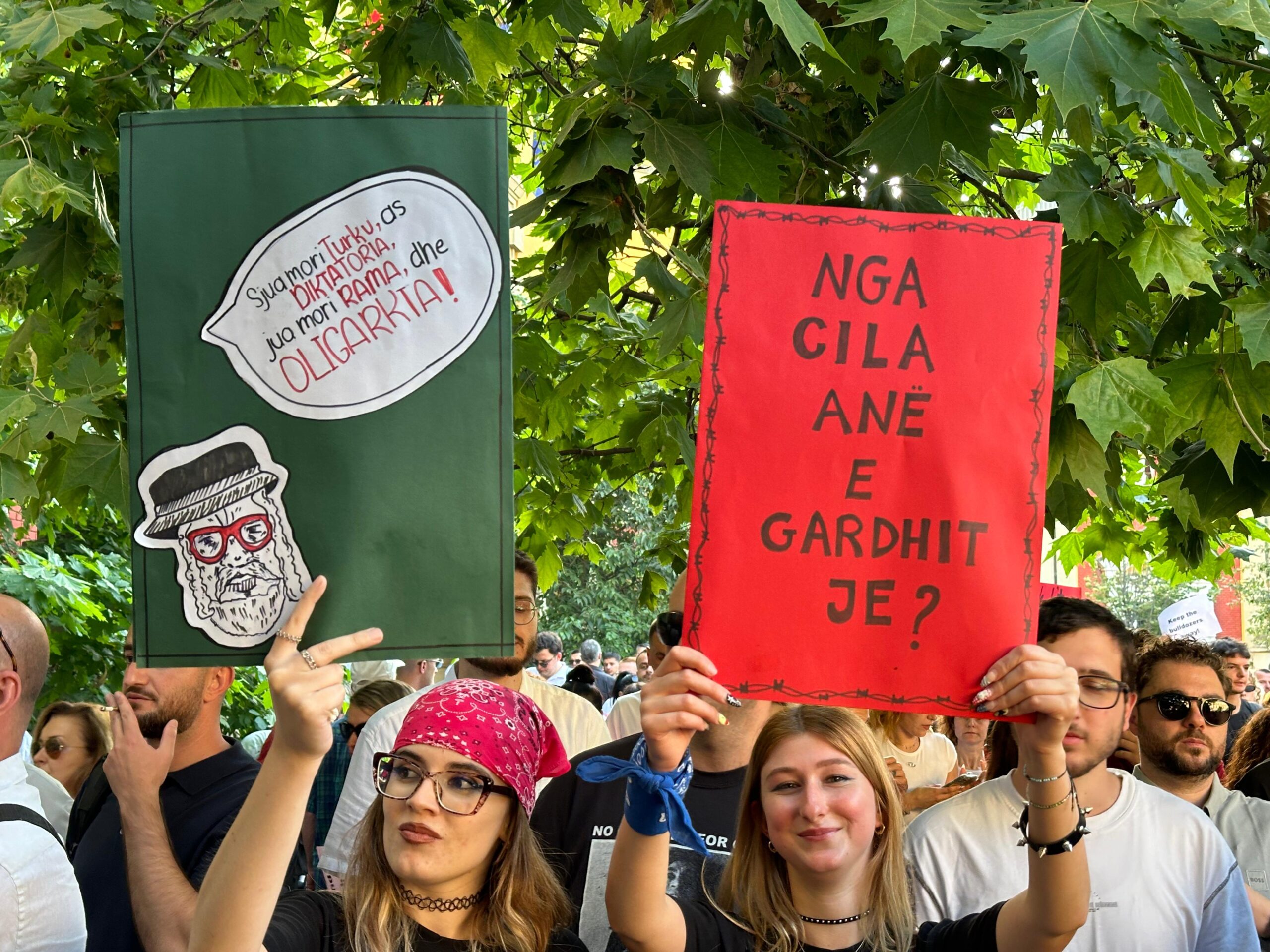
Author:Jona Cenameri The original article is published on Faktoje, you can read it here. Photo: Jona Cenameri When, on one of the days the self-proclaimed “Flamingo Revolution” protest made its way towards Rinas airport, many were asking: who led the protesters there? For an Albanian student living in France who returned specifically to join the protests in Tirana, the question goes deeper: what made hundreds of young people walk for hours, in the middle of the night, without feeling tired? “I came from France for this protest and bought a one-way ticket. Until something is achieved, I will stay here,” she says. Since May 31, the protest, which began in opposition to interventions in Pishë Poro-Nartë and out of concern for protected areas, has grown into a broader expression of civic discontent. People in the square talk about nature, but also about laws, institutions, corruption, young people leaving the country and the lack of confidence that Albania can change through conventional political ways. For the student living in France, the protest is no longer simply a daily event beginning at 7 p.m. It has become a state of mind that continues even after the crowd disperses. “I go home after the protest and I can’t sleep until the early hours of the morning because of the adrenaline: what should I do, what can I do? And the next day I wake up ready to go again,” she says. She describes the energy that has swept through the protesters as a “collective current”-a feeling that, according to her, makes people lose track of the hours, the exhaustion and the distance they have travelled. That, she says, also helps explain the long night towards Rinas. According to her account, the initial plan was for the march to continue as far as the area near the Rinas overpass and then turn back. But at some point, the crowd took on a different momentum. Some wanted to stop; others wanted to continue. Among the protesters were women, parents, 10-year-old children and many young people. “We sat down on the ground. There were women, children, parents and lots of young men. Then a group came up from behind saying, ‘Keep going, keep going,’” she recalls. That, she says, was when tensions began to rise-not necessarily out of a desire for violence, but through a mixture of adrenaline, exhaustion and anger. Several young women moved to the front in an effort to calm the situation and prevent a confrontation with the police. “We girls positioned ourselves at the front to manage the situation. We had no intention of physically confronting the police,” she says. According to her account, most protesters wanted to keep the demonstration peaceful. She says that at the end of every evening there are young people who feel an urge “to do something” because they “don’t want to end the protest without having done anything concrete.” But she adds that this is precisely where an internal effort has also emerged to keep the protest away from violence. “There are young men who, at the end of the protest, feel an urgency to do something. They don’t want to leave the protest feeling that nothing has been done, but the spirit we have is wonderful,” she says. Another young woman from Tirana measures that night in steps: 36,000. She says they walked there, while on the way back protesters returned by car, taxi, or with other participants who organised rides to pick people up. By the time her group reached its destination, she estimates that several hundred people were there. For some protesters, the march towards Rinas was not simply an unexpected change of route. It was a way of showing that their anger was no longer merely symbolic. “We simply want to show that we are angry, and our anger makes us walk a long way,” says another young woman who also took part in the march. Photo: Jona Cenameri The purpose That sentence shifts the focus away from the chronology of a road blockade and towards the psychology of the protest. The young protesters do not describe the walk as an adventure, but as a need to make their discontent visible. For them, the kilometres themselves become a form of political expression. The night at Rinas, however, also came at a cost. The blockade of the Tirana-Durrës motorway and later the road leading to the airport caused traffic congestion and frustration among citizens who were left stranded. Tirana Police announced that criminal proceedings had been initiated against 19 protesters, who were not detained. According to police, they had organised and encouraged the blocking of the road towards Tirana International Airport “Mother Teresa.” This development turned Sunday night’s march into a point of debate both within and outside the protest. Some saw it as a mistake. Some as a provocation. Some as a betrayal. Others as a sign of a lack of coordination. The student living in France says she does not know the people whose names have appeared in the media and that she has tried to stay away from debates about divisions within the movement or possible political interests. “I don’t know anyone. All these names people keep mentioning, all this talk about divisions and everything else-I’ve tried to stay away from it. I haven’t got involved in those discussions. I was simply one of those people who got swept up in it, so to speak,” she says. No stopping Despite the controversy, the protest did not stop. Young people returned to the square once again. For some of them, this is proof that the movement is sustained not only by organisation, but by a shared sense that something has to change. Angjelo, another protester, says the movement has restored a sense of hope among young people that many of them had already lost. “We had already packed our bags. In our minds, we had already accepted that we would leave the country to work abroad. It is precisely this protest that is giving us hope that this country can still be fixed,” he says. Soana, another young woman taking part in the protest, sees the movement’s strength in its continuity. “What keeps me going is the idea that change does not happen on its own. Something that requires long-term consistency also produces long-term consequences,” she says. For the student living in France, the end of the night at Rinas brought relief because there had been no confrontation. But it was not the end of the road. She says she is reading, staying informed and learning about laws, independent institutions, referendums and concrete ways of turning the revolt into tangible results. To some extent, that is what many of the protesters have been doing over these days. “For me, the key point is strengthening the law and independent institutions,” she says. The night at Rinas remains a contentious episode: for the police, a matter under investigation; for citizens caught in the blockade, a disruption; and for the protesters, a mixture of exhaustion, anger and the belief that physical sacrifice can itself become a political message. But for the student who travelled from France with a one-way ticket, that night is not measured only in kilometres. It is measured by the question that, according to her, many young people are asking themselves after every protest: “What else can I do?”
Things to Know About the Ongoing Revolution in Serbia: Our Resources on the University Rebellion
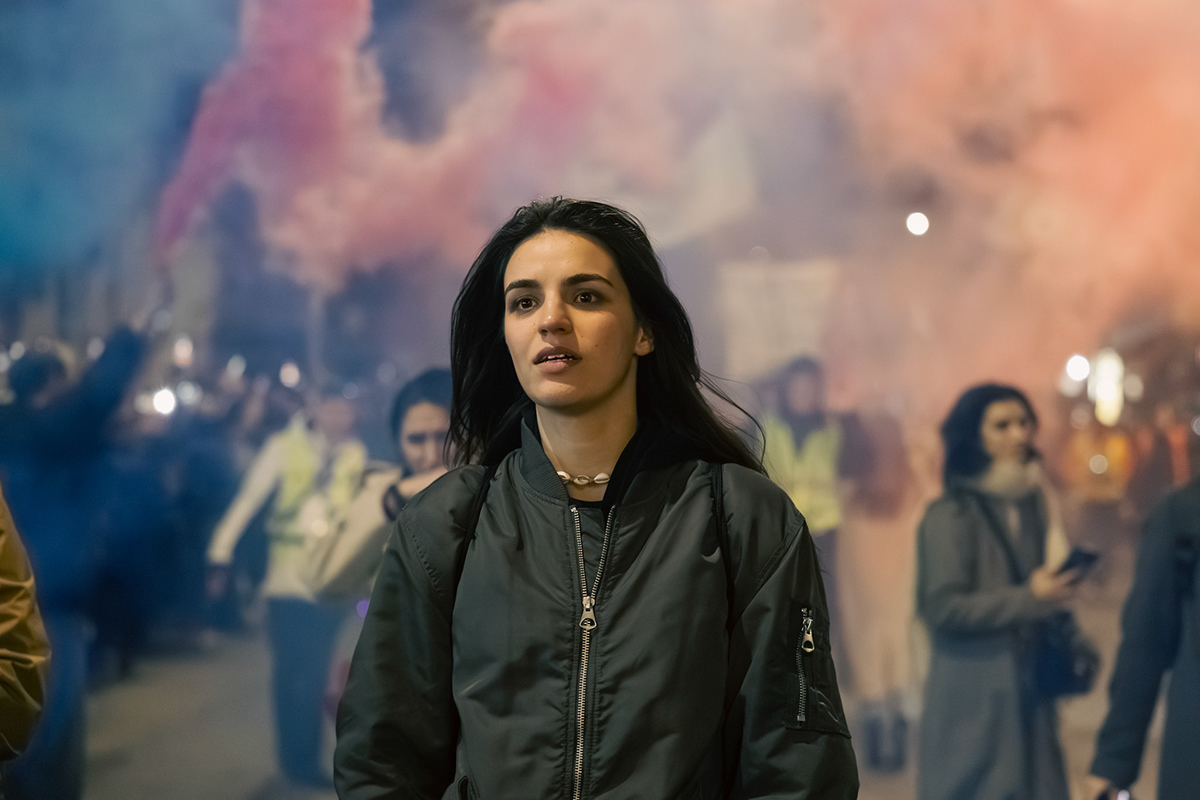
In November 2024, Serbia was rocked by protests triggered by the disastrous fall of the railway canopy in the city of Novi Sad. What is happening in Serbia? Hundreds of thousands of people, most notably entire public university system, are protesting for months, asking for accountability of their government, implementation of the rule of law and basic human decency, as Danilo Mandic summarizes. In the face of global democratic backsliding, this phenomenon stands out, especially as it seemingly comes from an unlikely place. Therefore, our associates did their best to shed light on this unusual phenomenon. As Slobodan Markovic reminds us, Serbia has a rich experience in struggling against authoritarianism. Its students were in the forefront of fighting against the Milosevic regime, and this legacy was examined by Katarina Besirevic and Luka Filipovic. They outline the continuities, but also emphasize novelties brought about by current protests, which are marked with remarkable endurance – public universities were blockaded for months, whereas the citizens are displaying reliable support toward rebellious youth, which redefines the very concept of civic resistance. As students keep marching, they are admired both by the EU institutions and Serbian diaspora, they are putting not only Serbian authorities, but indeed European values to true test. Vladimir Petrovic weighs in by pointing out to the stakes for Serbian higher education and our society as a whole, attempting to situate these protests in the context of global upheavals as well. Cherished from the heights of Harvard and LSE to a most forsaken village in Serbia, these protest are surely a gamechanger. You can find the timeline of events that led to the university uprising here. What can we learn from protest in Serbia? What will they bring, new hope or anarchy? Which impact do they have? How do they actually look? Stay tuned and follow our flying reporter. https://youtube.com/shorts/8jCtWAe7H50 https://youtube.com/shorts/m4MnEv7D-xE https://youtube.com/shorts/-QOdoV3YGOA?feature=share