

What Did the Student Protests Bring Us?
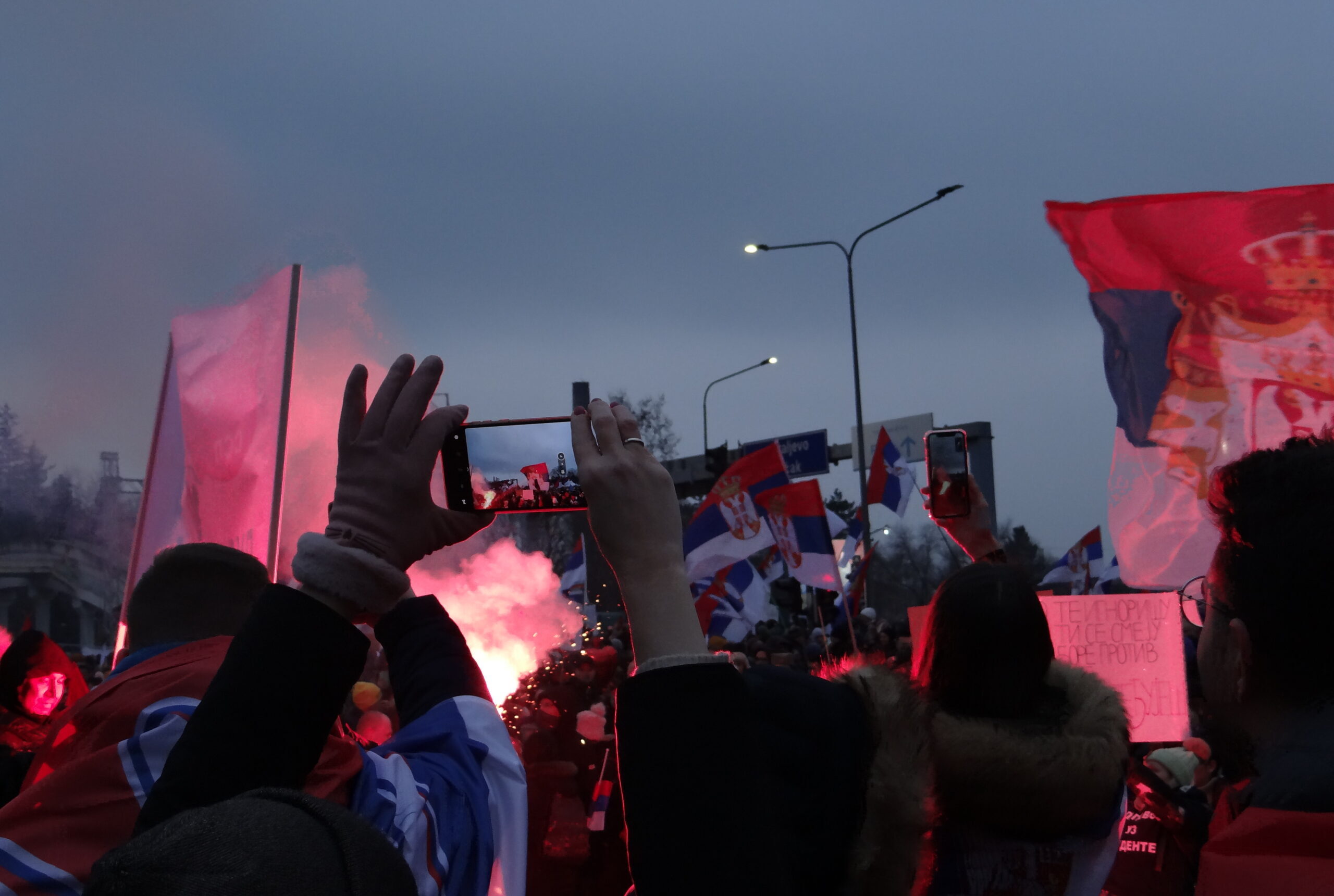
Author: Vladimir Stojkovic The student protests that followed the fall of the canopy are certainly not the first protests to take place in the modern history of Serbia. In many aspects, they resemble the protests of previous decades. However, what distinguishes these student protests is the level of general mobilization that is, the awakening of the broader community. This awakening did not occur only in urban centers, but also extended to rural areas, which had long been politically marginalized. Sourced from https://protesti.pics For months, now more than a year, students have been walking proudly along their path of freedom. Many had considered this generation to be completely lost and apolitical, yet the students proved the opposite through their actions. Beyond the powerful and inspiring slogans reminiscent of the protests of the 1990s, these demonstrations have played a crucial role in raising social awareness across various spheres of life. They addressed issues ranging from respect for individual and minority rights to the importance of independent state institutions. Of course, activists, party members, NGOs, and individuals had been pointing out social problems long before these protests, and their persistence deserves recognition. However, students managed to find a formula that reached a much wider audience, including the rural parts of the country that had often been overlooked. As students moved across Serbia, from cities, across fields and meadows, to the smallest villages, they awakened hope and initiated a form of social catharsis. They jolted people out of long-standing apathy and fear. Decades of injustice, particularly intensified over the past thirteen years, had accumulated within society. The arrival of students in remote villages helped dismantle that fear. They restored people’s pride, encouraged them to stand upright once again, and revived a sense of solidarity that had been sorely lacking. Under the influence of the student movement, citizens began participating more actively in public life. Public assemblies and discussions emerged, and people became increasingly interested in social and political issues. The students managed to wake society from a prolonged state of political passivity. The long-term effect of this awakening will be greater civic engagement, especially through participation in democratic processes such as elections, whether as observers, controllers, or candidates. What matters most is the realization that citizens hold power in their own hands. Students have faced attacks from various ideological positions. Some label them clerofascists, while others accuse them of being Eurofanatics. Such criticism ignores the fact that students represent a heterogeneous community, and total homogeneity would be both unrealistic and dangerous. Their diversity has not hindered dialogue; on the contrary, it has fostered tolerance and mutual respect. The authorities in Serbia, along with similarly minded political actors, fear scenes of unity, people of different religions embracing one another, or showing solidarity regardless of sexual orientation. Such moments represent a defeat for politics built on division and hatred. Ultimately, the most significant outcomes of the student protests include the disappearance of fear, increased interest in social affairs, and greater awareness of individual rights. The students also delivered a powerful lesson on corruption, helping citizens better understand its direct impact on their lives. The flame of the student protests has spread throughout Serbia, and it is clear that nothing will be the same again. The spirit of freedom has escaped the bottle, the waves of change have been set in motion, and it is now up to all of us to sustain that energy and work toward improving our society.

Falling Into the Underground: How Niš Youth Reclaims Culture Through Rebellion
While official cultural institutions in Serbia remain trapped in bureaucracy and underfunding, something else is growing beneath the surface — fragile, improvised, but stubbornly alive. In Niš, the country’s third-largest city, a generation of young artists and musicians is carving out its own spaces, reshaping culture beyond state control. Their most visible experiment is Underground, a music and art festival that, in just three years, has become a focal point for what many now call the “new new wave” of Niš rock and alternative culture. Photo by Strahinja Jovanovic From 2 to 5 October this year, Underground will take over the Niš Cultural Centre with twenty bands across four nights, ranging from punk and stoner rock to synth-pop. The program is eclectic but coherent, rooted in the belief that independent music is not just entertainment but a political gesture. The festival’s history reflects this stance: its first edition in 2023 was put together in just two weeks, without institutional support, sustained purely by community energy. Since then, it has grown — with compilations, benefit events, and a steadily expanding audience — while remaining true to its DIY roots. But what sets Underground apart is not only the sound. It is the image — quite literally. Each year, the festival develops a distinctive visual language designed by young artist Jelena Perić, who has become one of its central creative forces. Her posters are not promotional tools in the traditional sense; they are manifestos. “The visuals change every year, but I try to keep a recognisable identity — something people immediately associate with Underground,” Perić says. “It’s about reflecting the energy of the city and the scene into the artwork.” This year’s design depicts a young person in freefall. It is an unsettling but also strangely liberating image. For Perić, the fall is not about defeat. “It’s about descending into our underground — into a space of honesty, community, and resistance,” she explains. The poster overturns the usual meaning of falling: what might seem like a collapse becomes a deliberate choice to abandon the surface world of stagnation and enter a deeper, truer dimension. Underground poster The aesthetics carry unmistakable political undertones. Serbia’s cultural sector has been systematically neglected: for years, less than one percent of the national budget has been allocated to culture, leaving independent initiatives with little chance of survival. In this vacuum, the underground scene becomes more than a subculture — it is a necessity. The visual motif of falling into the underground crystallises that necessity: if official culture cannot sustain life, then life must create its own parallel ecosystem. The festival’s community-based financing reflects the same ethos. Underground relies on fundraising parties and donations, with local partners such as the Critical Education Centre providing support. This mode of survival is itself a form of critique — exposing the absence of public commitment to culture while demonstrating that art can thrive without state structures. “We don’t see Underground as a once-a-year event,” Perić notes. “It’s an ongoing process, a constant effort to hold space for something independent and real.” Jelena Perić, Underground promotion The atmosphere of rebellion also runs through the music. One of the most talked-about acts this year was Bunt — literally “Rebellion” — a young band that recently released Nisam sam (“I Am Not Alone”), a song inspired by student protests and blockades. Their presence on the festival stage directly links Underground to the wider social climate, where young people have turned cultural spaces like Belgrade’s Student Cultural Centre (SKC) into arenas of political and artistic expression. In such moments, art and activism cease to exist as separate spheres: a concert becomes a protest, and a poster becomes a call to action. Underground is therefore not merely a festival but a living archive of the struggles, hopes, and aesthetics of a generation. Its posters, music, and gatherings together form a counter-narrative to the dominant discourse that treats culture as expendable. The festival reveals that cultural production can still be a site of collective meaning, that rebellion can be joyful, and that falling into the underground is sometimes the only way to rise above the surface. To outsiders, Niš may not appear to be the capital of cultural innovation. Yet anyone who has witnessed a packed hall at Underground fest — where sound, image, and solidarity collide — understands that something more than a local festival is at stake. This is what culture looks like when it is reclaimed: messy, improvised, fragile, yet fiercely authentic! And in that authenticity lies its greatest strength.

From Istanbul to Belgrade: How Citizens Are Challenging Power
Protesters in Istanbul clash with riot police after the arrest of Mayor Ekrem İmamoğlu in March 2025.Turkey is witnessing its largest wave of protests in over a decade. Demonstrations exploded across the country starting March 19, 2025, after Istanbul’s popular mayor Ekrem İmamoğlu – a leading opposition figure – was detained and arrested along with over 100 others. Crowds swiftly poured into the streets of Istanbul, Ankara, İzmir and nearly every major city, rallying against what they see as a politically motivated crackdown by President Recep Tayyip Erdoğan’s government. The protests began as a show of solidarity with İmamoğlu but have grown into a broader outcry over Turkey’s direction. We will try to answer the questions – who, what, where, when, why, and how – and paint a picture of a nation at a crossroads. A drone view shows people gathering during a rally to protest against the arrest of Istanbul Mayor Ekrem Imamoglu as part of a corruption investigation, in Istanbul, Turkey, March 29, 2025. (Reuters) What Sparked the Unrest in Turkey? Who is involved: The protests involve hundreds of thousands of ordinary Turks from all walks of life. Opposition political parties, led by İmamoğlu’s Republican People’s Party (CHP), quickly threw their support behind the movement. University students have been at the forefront, and people spanning the political spectrum – right-wing and left-wing – have united under national symbols like Turkish flags and images of Atatürk, Turkey’s founding father. Even some expatriate Turks have rallied in solidarity, with demonstrations reported in places like Northern Cyprus, Ireland and Western Europe. On the other side, the government and security forces have mobilized heavily to contain the unrest, indicating how seriously Erdoğan’s administration views the challenge. What and Where: The movement erupted nationwide, with massive protests in Istanbul (home to the largest crowds), the capital Ankara, the Aegean city İzmir, and dozens of other provinces. Within hours of İmamoğlu’s arrest on March 19, crowds gathered outside Istanbul’s police headquarters, and by the next day large demonstrations had spread to cities and towns across Turkey. Protesters chant slogans like “İmamoğlu, you are not alone!” and “Erdogan, dictator!”, voicing anger not only at the arrest but at years of eroding democratic norms. The timing (When): Starting March 19, 2025, protests have continued through the spring and into the summer, with major weekend rallies. For instance, a late-March weekend saw what the CHP claimed were over 2 million people rallying in Istanbul, an unprecedented turnout since the Gezi Park protests of 2013. As of July 2025, demonstrations are still ongoing in various forms, sustaining momentum for over three months. Why – causes and grievances: The immediate trigger was the arrest of Ekrem İmamoğlu, who is widely seen as Erdoğan’s chief political rival and a potential future presidential candidate. The arrest – on charges of corruption and even aiding terrorism – is viewed by protesters as politically motivated to sideline a democratic opponent. “The day the government decides its opponents is the day democracy dies,” warned İmamoğlu’s wife, Dilek İmamoğlu, urging citizens to raise their voices. Beyond İmamoğlu’s case, broader frustrations fuel the unrest. Turkey has been mired in an economic crisis with soaring inflation (over 40% annually by early 2025) and a sharply devalued lira, leaving many struggling with high prices and rents. Protesters decry what they call growing autocracy under Erdoğan – citing authoritarianism, corruption, and democratic backsliding as core issues. In essence, “We’re fighting not just for Ekrem, but for Turkey,” as Dilek İmamoğlu told one crowd. Many see this as a fight for the future of the republic itself, demanding justice, rule of law, and a voice in how the country is governed. How are the protests unfolding: Largely through peaceful mass rallies, marches, and civil disobedience – though tensions have occasionally flared. Protesters have organized huge demonstrations and even strikes and boycotts; for example, CHP called for boycotting businesses seen as pro-government. In the streets, a festive yet defiant atmosphere prevails: people wave national flags, sing the national anthem, and carry banners with quotes like “Sovereignty belongs unconditionally to the nation”. University students and even pensioners march side by side, banging pots in cacerolazo protests and shining laser pointers – creative tactics to show dissent. Social media and messaging apps have been crucial for organizing, despite government efforts to restrict them. Notably, protests have cut across typical political divides – uniting secularists and conservatives, Turks and Kurds (flags of a pro-Kurdish party were seen in the crowds) – indicating widespread discontent beyond any one faction. Authorities Crack Down: Government Response and Public Reaction The Turkish authorities have responded with a mix of hardline measures and dismissive rhetoric. Erdoğan’s government moved quickly to ban public gatherings in Istanbul and later Ankara and Izmir, imposing a temporary prohibition on protests. Riot police with water cannon trucks and tear gas have been deployed in city centers. In Istanbul, police barricaded roads around the detention center holding İmamoğlu, and clashes erupted as officers used pepper spray on crowds outside institutions like Istanbul University. Over the first week of unrest, nearly 2,000 protesters were detained according to the Interior Ministry, including many students and even journalists (a visiting Swedish reporter and a BBC correspondent were briefly held). More than 300 students were reportedly arrested in nighttime raids on their homes for joining demonstrations or posting protest support online. While most have since been released pending trials, such tactics have been condemned by human rights observers as intimidation. Erdoğan has dismissed the protesters as “marginal groups” and accused the opposition of destabilizing Turkey. He even claimed the opposition was “sinking the economy” and vowed that “sabotage targeting the Turkish economy will be held accountable” – effectively blaming protesters for the country’s financial woes. This combative stance suggests the government is doubling down rather than yielding to protester demands. Thus far, key demands of the protesters include the release of Ekrem İmamoğlu, an end to what they call persecution of the opposition, and guarantees of free and fair elections in the future. Many are also boldly calling for the resignation of Erdoğan’s government (chants of “Hükümet istifa!” – “Government resign!” – echo at rallies). The CHP and allied opposition parties have shown rare unity, continuing to nominate İmamoğlu as their presidential candidate despite his imprisonment. Public reaction within Turkey is sharply divided. The protest movement enjoys broad support among urban populations, youth, and those frustrated with economic hardship and corruption. Crowds have remained energized even through Ramadan and into national holidays. On the other side, Erdoğan’s loyal base and pro-government media either minimize the protests or label them as unlawful. Major state-aligned TV channels have given scant coverage to the demonstrations, focusing instead on government events. In response, protesters have leveraged alternative channels – from independent news outlets to social media – to get their message out. (Notably, activists even staged a symbolic blockade of the state broadcaster’s offices to protest biased coverage) Internationally, Turkey’s turmoil has drawn concern: for example, U.S. and EU officials have cautiously urged respect for democratic rights. But Erdoğan, emboldened by a recent electoral win in 2023, has so far resisted any compromise, betting that his control over state institutions will outlast the street fury. Unrest in Serbia: A Parallel Wave of Protest Police detain a demonstrator during student-led road blockades in Belgrade, Serbia, July 3, 2025.Even as Turkey’s protests rage, a different but resonant movement has been unfolding in Serbia. For roughly eight months now, Serbians have held persistent anti-government protests, which intensified into 2025. The Serbian protests were sparked by tragedy: on November 1, 2024, a newly renovated train station canopy collapsed in the northern city of Novi Sad, killing 16 people. Public outrage erupted amid allegations that corruption and negligence were to blame for the disaster. By late November, students in Novi Sad began organizing silent vigils and class boycotts to honor the victims and demand accountability. This soon grew into a nationwide movement against what protesters call a culture of corruption, cronyism and authoritarian governance under President Aleksandar Vučić. Throughout late 2024 and into 2025, the Serbian protests gained momentum and spread to hundreds of towns and cities – over 400 locations by March 2025. This breadth is extraordinary for a country of Serbia’s size, reflecting deep frustration beyond the capital. The movement has been largely student-led and decentralized: university and high school students launched daily actions, including brief traffic blockades each day at the exact time of the Novi Sad collapse (11:52 a.m.), stopping traffic for 16 minutes in memory of the 16 lives lost. Over time, other segments of society joined in – teachers, professors, opposition activists, workers, even farmers. Major rallies in cities like Belgrade, Novi Sad, Niš, Kragujevac have drawn tens of thousands of people, sometimes in defiance of police roadblocks set up to prevent them from converging. An independent monitoring group estimated about 140,000 protesters gathered in Belgrade during a mid-March demonstration, making it one of the largest in recent Serbian history. The demands of Serbian protesters have evolved and broadened. Initially, they sought accountability for the Novi Sad tragedy – investigations and punishment for any officials or contractors whose corruption led to the collapse. When President Vučić’s government reshuffled but remained in power, protesters shifted focus to systemic change. They began calling for snap elections to be held well before the scheduled 2027 date, declaring Vučić’s regime “illegitimate”. To ensure any elections are truly democratic, they demand reforms: a cleanup of voter rolls, equal media access for opposition voices, and an end to alleged vote-buying. Students also insist on better funding and autonomy for universities, recognition of student bodies in decision-making, and education reforms after a decade of what they see as decline. In essence, Serbia’s protests target what they describe as authoritarian drift and state capture under Vučić – strikingly similar themes to those in Turkey’s unrest, albeit triggered by a different event. The response of Serbian authorities has grown increasingly forceful in recent weeks. For many months, weekly marches and campus sit-ins went peacefully, but by mid-2025 tensions escalated. In early July, riot police clashed with demonstrators in Belgrade and other cities, firing tear gas and pushing back crowds that had begun to blockade major intersections. During one large rally on July 1, scuffles broke out; by the next day, police detained 79 protesters in a crackdown, including students manning a blockade outside Belgrade’s law school. Officials reported dozens of injuries on both sides. President Vučić and his interior minister have taken a hard line – Vučić lashed out that protest organizers were “terrorists” trying to overthrow the state, and warned darkly of foreign instigators behind the unrest (though he offered no evidence). Pro-government media in Serbia have echoed this narrative, launching a smear campaign painting protesters as violent extremists or puppets of Western intelligence. These claims are strongly denied by protesters, who note that Serbians have a history of toppling strongmen (as they did with Slobodan Milošević in 2000) through people power. Human rights groups and the European Union have voiced concern over Belgrade’s heavy-handed tactics, with the U.N. human rights office urging Serbia to respect peaceful assembly after reports of “violence, harassment & arbitrary detention” of protesters. Parallels and Contrasts: Turkey’s Protests vs Serbia’s Protests Despite different spark points, the protest movements in Turkey and Serbia share notable similarities – and key differences – in their causes, organization, public reception, and media environments. Below is a breakdown: Causes and Triggers: Both uprisings began in response to a galvanizing incident that symbolized deeper grievances. In Turkey, the trigger was explicitly political – the jailing of an opposition leader (İmamoğlu) seen as a threat to an entrenched ruler. In Serbia, it was a deadly infrastructure failure – a collapsed station roof – viewed as a consequence of government corruption and incompetence. In both cases, what started as outrage over a specific event quickly evolved into a broader protest against the ruling regime’s misrule. Turks are decrying years of democratic backsliding, alleged politicization of the judiciary, and economic mismanagement. Serbians likewise are protesting corruption, lack of accountability, and what they see as authoritarian tendencies in Vučić’s 12-year rule. Essentially, demand for good governance and justice is at the heart of both movements, even if one was triggered by an opposition arrest and the other by a tragic accident. Organization and Leadership: The organizational dynamics differ. Turkey’s protests, while spontaneous in spirit, have the backing of established opposition parties and politicians – the CHP and other opposition parties actively mobilized supporters, and prominent figures like CHP leader Özgür Özel and Ankara’s mayor Mansur Yavaş have joined in or voiced support. A broad coalition of civil society groups, unions, and even rival political ideologies have united, using national unity symbols (e.g. portraits of Atatürk) to bridge divides. In Serbia, the protests have been notably grassroots and student-driven. There is no single charismatic leader; instead, student councils and ad-hoc committees have coordinated actions across universities. Opposition parties in Serbia did eventually lend support, but the momentum has largely come from young people and civic groups rather than top-down party rallies. Both countries’ movements have leveraged creative tactics (marches, road blockades, campus strikes), but Serbia’s are uniquely centered on academic institutions (many universities remain under student blockade as of April 2025), whereas Turkey’s are centered in city squares and municipal centers. In short, Turkey’s protests have visible leadership from opposition politicians, while Serbia’s are a more diffuse youth-led civic uprising. Public Response and Scale: Both movements have drawn massive turnouts, reflecting significant public backing. Turkey’s crowds reach into the hundreds of thousands nationally; at one Istanbul rally in late March, over 2 million people were claimed to be in attendance (opposition figures). Demonstrations have occurred in almost every province of Turkey, a scale not seen since at least 2013. Serbia’s protests, relative to its population, are similarly widespread – active in 400+ towns and cities by spring 2025. In Belgrade, independent estimates put recent crowds in the six figures, and even medium-sized cities have seen rallies of thousands. Both countries have seen multi-generational participation: young students and older citizens marching together, united by a feeling that the country is at a turning point. Notably, neither movement has been completely universal – the ruling parties still command a base that has largely stayed off the streets. But in both Turkey and Serbia, the protesting portion of the public is energized, creative, and sustained in a way that has clearly rattled those in power. The geographic spread (nationwide reach, not just capital-centric) and longevity of these protests mark a significant similarity. Media Coverage and Government Narrative: Both regimes have reacted by trying to control the narrative. In Turkey, where mainstream media is mostly pro-government, coverage of the protests has been limited or skewed – state TV largely echoed Erdoğan’s line that the protests are a “show” by marginal agitators. The government even temporarily restricted social media platforms like Twitter (X), YouTube, and Instagram to hamper protest organization and reporting. Independent Turkish journalists face intimidation; some foreign reporters were detained while covering rallies. Likewise in Serbia, state-friendly media have minimized the protests or depicted them as violent riots. President Vučić’s labeling of protesters as “terrorists” was amplified on certain TV channels, aiming to erode public sympathy. Protesters in Serbia have responded by directly challenging media bias – one dramatic act was the blockade of the national broadcaster RTS, disrupting its programming to demand fair reporting. International media, by contrast, have covered both Turkey’s and Serbia’s unrest extensively, framing them as battles for democracy. This external spotlight put pressure on authorities: for example, the UN and European officials criticized Serbia’s police crackdown and urged restraint, while Western diplomats quietly pressed Turkey to respect political pluralism. Overall, media freedom issues are central in both cases: protesters accuse their governments of propaganda and censorship, and in both countries independent journalism itself has become part of the story. In conclusion, Turkey and Serbia – though different in context, size, and political system – are experiencing converging currents of popular dissent. In both nations, citizens have been driven to the streets by a sense that their leaders have amassed too much power for too long, at the expense of accountability and everyday people’s well-being. The Turkish protests continue to demand a reversal of democratic backsliding and relief from economic pain, while Serbian protesters press for an end to corruption and a voice for the next generation in shaping the country’s future. How these movements unfold remains to be seen, but in both Istanbul and Belgrade the message ringing out is unmistakable: people have limits to their patience, and when those are crossed – whether by a political witch-hunt or a national tragedy – the public will stand up, speak out, and insist on change. Both Balkan and Anatolian streets now echo with calls for justice, proving that demands for democracy and accountability transcend borders in this turbulent moment for the region.
EU and student protests in Serbia – A test of common values
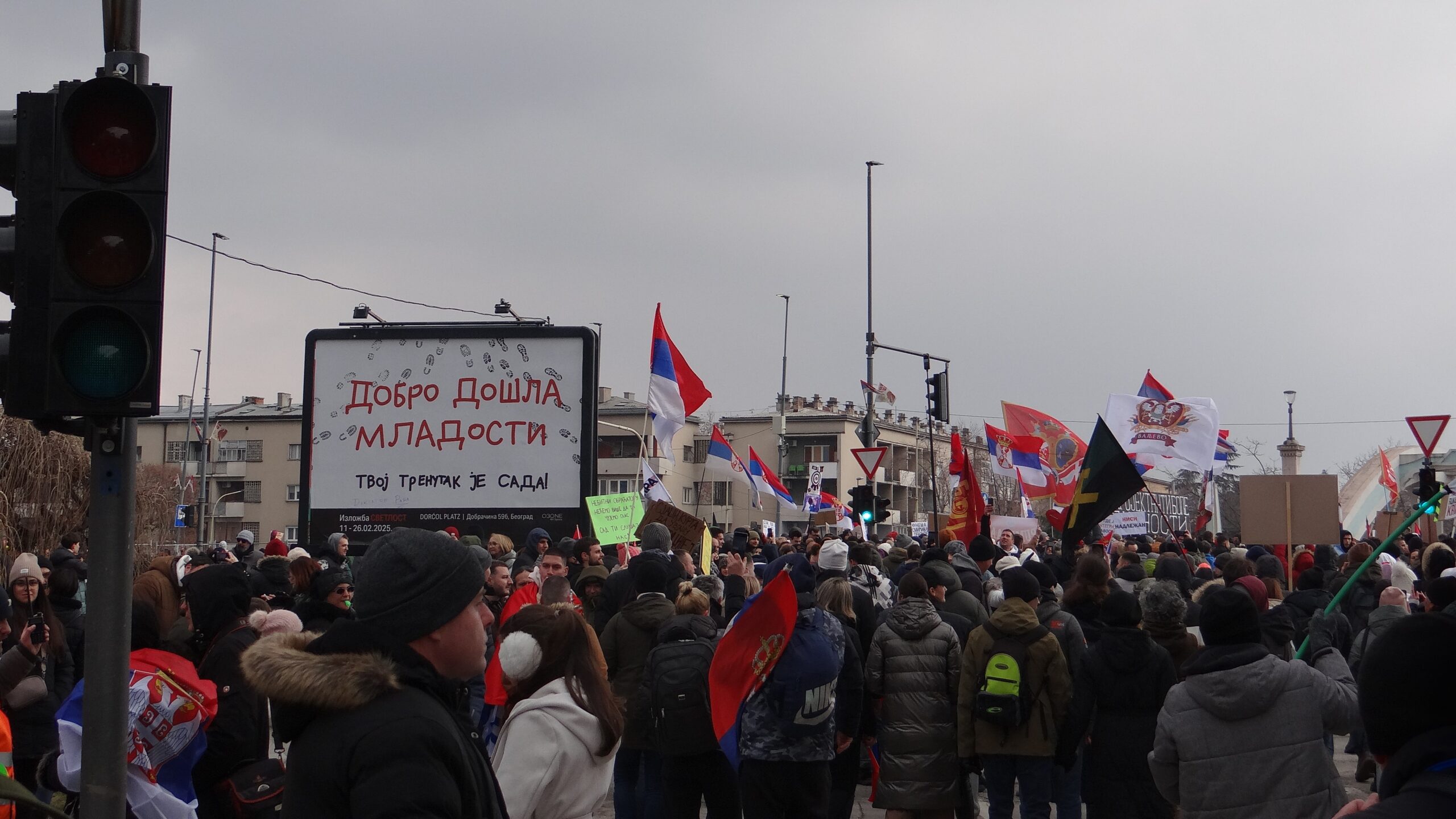
Author: Ivana Milićević, Research Assistant at the Institute for Philosophy and Social Theory, University of Belgrade On March 15, 2025, the largest protest in Serbia’s history was organised in Belgrade, seeking accountability for the collapse of the concrete canopy of the newly renovated railway station in Novi Sad, which killed 15 people. As illegalities and corruption in the reconstruction project started to reveal, this immense tragedy turned into a grim reminder that “the corruption kills”, leading to massive anti-corruption protests led by Serbian students. How did we get here? After the 15-minute silence in commemoration of the victims was broken by a physical assault on students in front of the Faculty of Dramatic Arts in Belgrade by people close to the ruling party, students across Serbia started blocking their faculties, with a seemingly simple demands for the rule of law and institutional response. What they ask for is transparency about the Novi Sad train station’s renovation, a dismissal of charges against activists arrested during the first anti-government protest in November, and criminal prosecution of those who attacked student protesters. Their demands have been supported by universities, teachers, lawyers, agriculture workers, artists and representatives of various industries. Around 80% of Serbian citizens supports most of the demands, while around third took part in the protests, which have been organised in more than 200 localities across Serbia. Having clearly distanced themselves from all political parties and consistently insisting on transparency and institutional accountability, it seems that the students succeeded in reaching an agreement on the fundamentals, which demonstrated a high potential for generating broader support for long-term political changes. As such, it seems that the demands deserve broad international support as well, particularly from the European Union, as they highly align with its fundamental values, insisting on democracy, rule of law and human rights protection. Where has the EU been along the way? So, why has then the EU remained so reluctant in addressing the protests, particularly as it claims to closely follow the current political situation in Serbia? While silence sometimes speaks the loudest, occasional statements from the Brussels spoke even louder in expressing its support to the government and lack of worry for the enlargement’s fundamentals. Gert Jan Koopman, the EU's Director-General for Neighbourhood and Enlargement Negotiations (DG NEAR) visiting Serbia in January 2025, failed to express his concerns regarding the lack of transparency and accountability for the collapse of the railway station canopy or any support to the peaceful protests which had already became historical. On the contrary, he noted Serbia’s “steady progress” towards the EU and was “eager to support Serbia in completing the necessary reforms”. It may come as no surprise if we remember that in October 2024, not long before the tragedy, in her visit to Serbia, President of the European Commission Ursula von der Leyen, praised Serbia’s progress and commitment to delivering on reforms, in particular on the fundamentals - rule of law and democracy. While von der Leyen has not hesitated to express support for “the Georgian people fighting for democracy", she has remained remarkably quiet about the events in Serbia. Indeed, the EU’s spokesperson Guillaume Mercier did express concerns about the reported attacks against protestors and called all key actors to engage in a constructive political dialogue. However, the EU failed to follow-up on the findings of its own progress reports which have for years urged Serbian authorities to step up their efforts to fight corruption, ensure the independence of the judiciary, and guarantee freedom of expression, even after it was confirmed that the European Public Prosecutor’s Office investigates the misuse of EU funds in the case of the railway station. The EU high representatives were addressed by Members of the European Parliament, Serbia’s professors and esteemed public figures from different spheres, scholars and expert groups, and EU research grantees, who all in their open letters asked for Union’s more active role and principled response to these events. The reaction of the European Commission was particularly expected looking ahead to the last protest in Belgrade, as the tensions ran high with contra-protesters supported by hooligans and war veterans gathered in front of the National Assembly and president Vučić using inflammatory rhetoric. The pro-EU citizens and organisations kept addressing it, to provoke its reaction to major protests in one of its candidate countries with a major democratic decline, but were mostly left without a proper response. What does the European Union stand for (?) The Commissioner for Enlargement Marta Kos responded to the received letters of concern by an open letter as well, with an aim to “recall what the European Union stands for”. Successfully avoiding to mention students and their demands, Kos did tackle a very important issue stating that “Serbia's path towards the European Union offers solutions to many of the issues that are at the heart of discussion today“. She stated that the process, if properly implemented, strengthens the fight against corruption, ensures the independence of the judiciary and accountability of institutions. But what happens if the process is not being implemented properly, but hindered by the lack of credibility, contested political interests and disregarding of the principle “fundamentals first”? In that case, “the path” may lead to legitimising the regimes with growing authoritarian tendencies, at the cost of promised stability or commercial interests. In order for the accession process to restore its “transformative power” it would first need to restore the credibility of both conditionality policy and the perspective of membership. Currently lacking both, the EU risks to lose its relevance in the light of the changing political reality in Serbia. Its strong support to the lithium extraction project in the Jadar valley remained steady despite serious concerns on the lack of environmental standards and rule of law and continuous attacks on environmental and human rights defenders, some of whom were even targeted as “eco-terrorists”. The EU praised the Memorandum of Understanding signed with Serbia on Strategic Partnership on sustainable raw materials, battery value chains and electric vehicles as a way to enhance integration process and “reaffirm Serbia’s EU path”. The former Minister of Traffic and Infrastructure Goran Vesić assessed that Serbia “essentially became an EU member” by the signing of the Memorandum. This has shown that there is a mutual understanding on both sides that the progress in the accession process is being evaluated somewhere far away from the prescribed conditions, progress reports and especially principles which prioritise fundamental reforms – democracy and the rule of law. This also shows that neither of the sides takes the integration process seriously, as they both agree to “take the most out of it” in the circumstances in which the enlargement “gained a new momentum" only nominally, and the old promises (of stability) seem to be enough. Experts and civil society have already expressed concerns about how this trend will affect the perception of the EU and citizens’ attitudes towards the enlargement. The support for the EU integration has lowered among youth in Serbia in the last five years, particularly among the youngest of the respondents, while, according to the Balkan Barometer, most of the Serbian citizens (35% of them) think that their country will never become a member of the EU. The same research shows a trend that youth of the region is becoming more uncertain or neutral about the EU accession. It is certain that this will also be the case with the youth in Serbia. The values that students stand for, although correspond to them, are not European values, but their own and they will firmly protect them regardless of the EU’s support, as they have for months now. This time, it is the EU that is on the test, to “step up and fulfil its self-proclaimed task of a democracy and rule of law promoter”. The “words of concern” and bureaucratic euphemisms may not be enough to restore not only the credibility of the accession process, but also its relevance among youth, who proved to be the guardians of its “core values”, without ever referring to it. In accordance with its own principles and enlargement methodology, the EU needs to systematically and clearly address the roots of the student’s demands, as their fulfilment may bring the reforms crucial for the integration process. But it cannot go the other way around. The EU should initiate a direct dialogue with Serbian citizens, including students, experts, workers, and civil society organisations, and provide unequivocal support to the fight for democracy and the rule of law, if it still has the ambition to act as a driver of reforms rather than a factor of status quo. After all, it seems that the EU is the one who should be reminded what it stands for.
What is happening in Serbia?
On November 1st at exactly 11.52 a concrete canopy on Novi Sad railway station collapsed instantly murdering 14 persons, while 3 were seriously injured. The number of victims rose to 15 when a young woman died in the hospital due to her injuries. Two injured victims still remain under severe hospital supervision, almost three months after the collapse. This sunny, peaceful day was one of the darkest in recent Serbian history, especially for Novi Sad. This multicultural town is known for its peace and quiet, its people being extremely polite and kind. However, in the past three months, even this has changed. Although government officials assured the public that all necessary measures will be taken and the responsible persons will be punished, the angry and hurt citizens did not believe the government whose corruption and lack of transparency have been an issue for several years. The citizens started spontaneously gathering on the streets at 11.52 almost every day, paying respect to the dead. At first, for 14 minutes of silence, and then 15, a minute for each life that was lost due to a corrupted reconstruction project of the railway station. At one of these 15-minute gatherings, students of the Faculty of dramatic arts in Belgrade blocked the street in front of their Faculty in order to pay respects to the Novi Sad victims. They were physically attacked, by what at first seemed, passers-by. However, soon after the incident, the public identified the attackers - local government officials from Belgrade. The students were determined to seek justice for their hospitalized peers and set together in order to discuss the next steps. Their collective decision was the blockade of the faculty, the institution they see as their own, in order for other institutions to listen to them and start working according to the law, in their own capacities and competencies. Soon after, in acts of solidarity and support, other faculties and universities across the country started their own blockades. From that moment on, each decision, including the decision about the blockade, was voted by the plenum (an assembly of all the members of a group or committee) organised by the students themselves. Now, four months after the tragic event in Novi Sad, more than 80 faculties (including Faculty of Theology in Belgrade and some private faculties) are in a blockade. The wave of violence spread towards the younger students, those who dared to raise voices in their highschools. But so did the wave of blockades and protests and the number of involved citizens increased. High school students started blocking the streets every day at exactly 11.52, university professors, high school teachers and principals stood behind their students and supported their requests. Soon the unions of miners, IT professionals, media and culture workers gave their support to the joint cause - requests for the institutions to prosecute the law breakers and protect the students during the peaceful protest. Besides the direct democracy that the students practice everyday on their plenum meetings, they have shown incredible knowledge and capability to organise, communicate with the public, to stand in solidarity with other peers, but most importantly, they showed that knowledge and determination they have is beyond any textbook lesson. They have gone through the cracked and weakened educational system, acquiring the core knowledge for critical thinking, direct democratic participation and hands-on solidarity. They sacrificed their lectures, exams and grades in order to demonstrate that a common goal is above the personal results and successes. In a country without media freedom, they managed to communicate their message so clearly and efficiently, that it reached even the most distant of towns and villages in Serbia. How did they succeed? On foot. This is not a metaphor—literally, on foot. It all started with a large gathering on February 1st in Novi Sad, marking 3 months from the tragedy. In order to pay their respects to the victims, students blocked 3 bridges together with the citizens. But what was even more moving and influential, was a two-day long march from Belgrade to Novi Sad when students walked through towns and villages carrying their message that justice must be met. Local people gathered, cooked meals for students and supplied them with anything they needed - from food and water to bandages and medical supplies. With tears in their eyes people of all ages greeted students like they were liberators. The next large gathering was on February 15th in Kragujevac, as this is where the first Serbian constitution was signed on this day in 1835, a date Serbia still celebrates as its Statehood Day. Students set off on foot from different towns toward Kragujevac in groups, passing through smaller places to inform people about what was happening and break through the media blackout. Some groups walked as much as 150 kilometers in just three days. In Kragujevac, they announced another gathering in Niš 15 days later, where an even larger number of people attended, and once again, students and young people marched on foot. The latest research shows that around 80% of the population now supports the students' demands. From the very beginning of the blockades to these massive protests, marches, and demonstrations, the movement has consistently upheld the same four demands. The first demand is for full disclosure of all documentation related to the reconstruction of the railway station canopy in Novi Sad. The second is for all those who committed violence against students during the blockades to be arrested and prosecuted. The third is for the release of all activists who were detained for supporting the blockades. And the fourth demand is for a 20% increase in the state budget allocation for higher education. The next major gathering is scheduled for March 15th in Belgrade. According to student groups, this will be the final gathering, marking the end of all protests. On the other hand, these same student groups continue to unequivocally and persistently inform the public that they will not give up on the blockades until all four demands are met. In other words, students are confident that on March 15th in Belgrade, they will secure the fulfillment of their demands. How? Follow our portal on March 15th to find out. PUMP IT UP!