

Discursive Veto. How Kosovo and Historical Narratives Enable Serbia to Maneuver Between East and West?
Author: Daria Vorobiova Serbia in the modern geopolitical situation is perceived as a country caught between two fires: the West and the East. Its indicative neutrality, not associating itself with any global organization and acting as a "third party," is telling. In reality, this political ambivalence has calculated mechanisms used by statesmen to preserve their political position and policy of "securing funding without additional obligations," while in return manipulating public opinion. Illustration photo. Retrieved from Pexels (www.pexels.com) Neither to the West, nor to the East Looking at survey results on the political preferences of Serbs reveals a deeply divided population: for instance, a telling example is the 2023 WFD survey. It showed that 43% of Serbs believe they should rely on Russia in international relations, and only 25.8% of respondents stated they should rely on the European Union. Also notable is the question of whether Serbia belongs to the West or the East: 42% of respondents answered that Serbia is not part of either, while the same proportion answered logically about belonging to the West or the East. Serbian society is extremely fragmented in its political preferences: this problem leads to a general instability of civic engagement in politics, as without consensus among the sides, it is impossible to exert strong civic influence on the political life of the state as a whole [1]. How much does the state influence the political preferences of Serbs? Following data from the same survey, it is evident that 59.2% of respondents note that they view political information about events in Serbia through television. The state exerts sufficient influence on television, considering channels like RTS, RTV Pink, Happy TV, which are known for publishing information deliberately portrayed in a light favorable to the state. Under such conditions, the question arises – if a large number of citizens receive such information, can their political preferences be genuinely logical and justified? [2] Also, television programs have been observed deliberately portraying the EU in a bad light, while Russia is presented in the moral image of a fraternal state. The key problem with this presentation of information is the excessive moralization of "good" Russia and "bad" European Union. Typically, this moral assessment is based solely on subjectivity, in no way appealing to rational reflections on the benefits of such "friendship" for Serbia [3]. And it is precisely the "moral" justification, as well as the "moral boundaries of the permissible," that allow Serbian politicians to maintain their position for as long as possible, instilling in citizens an unstable pluralism of opinions to weaken their civic stance. The problem of "moralizing" politics as a key factor of ambivalence This appeal to everything moral begins with historical origins and serves as the foundation for forming nationalist narratives. The narratives consist of three components: the "victim question," the "pride question," and the main unifying factor, the moral discursive veto point. By combining these components, it becomes possible to manipulate public opinion, set the boundaries of discourse to slow down potential civic activity, and at the necessary moment say: "here is the boundary you must not cross." The "victim question" is characterized by a moral appeal to grievance, primarily towards the West, which in the narratives is viewed as a military aggressor (following the events of 1999) protecting Kosovo (which is a sacred question of the origin of statehood), and also as an economic usurper (the European Union as an economic organization where, upon accession, Serbia would lose its informal independence). An image of an enemy is created, but also an image of a savior, a potential "fraternal state" that can selflessly help Serbia escape crude dependence on the "humiliating" West. Russia occupies this role, but in the case of investments and their positive influence, China can also be considered. The "pride question" is characterized by a centuries-long history of battles (for example, the Battle of Kosovo) and the preservation of the nation and its culture during long periods of statelessness. This factor is supposed to act as a unifying force ("we have only ourselves, and no one will help us except us") and one that reduces the factor of destabilization, since there are "enemies" against which Serbia must be ready to act as a united front in case of danger. The unifying factor is the Kosovo question – less as a territorial issue and more as a discursive veto point: it marks the limit beyond which reform, recognition, or alignment becomes politically illegible. Since many reforms for EU accession and funding require normalization of relations with Kosovo and its recognition as a separate state, Serbian politicians (for example, Aleksandar Vučić) support the aforementioned narratives precisely on this issue. A. Vučić's speech on 04.11.2025 in Brussels: «Neću da priznam Kosovo da bismo ušli u EU» ("I will not recognize Kosovo so that we enter the EU") [4]; In an address to the people of Kosovo: «ne postoji „dobro rešenje kosovskog problema za Srbe“ i da ga nikada neće biti» ("there is no 'good solution to the Kosovo problem for Serbs' and there never will be"), «Srbi bili najstradalniji narod na Kosovu» ("Serbs were the most suffering people in Kosovo") [5]; speech at the Palace of Serbia: «Vučić je rekao da je Kosovo (...) našom zemljom u skladu sa Ustavom Republike Srbije i Poveljom Ujedinjenih nacija i Rezolucijom 12.44» ("Vučić said that Kosovo (...) is our land in accordance with the Constitution of the Republic of Serbia and the Charter of the United Nations and Resolution 1244") [6]. These three factors help form a stable national narrative, which allows simultaneously maintaining the image of the EU as an "enemy" while preserving active economic relations. Naturally, it is assumed that when using this funding as outlined in the documentation, Serbia should join the European Union after meeting all conditions. Is such a policy feasible? Active neutrality Serbia's neutrality is not an absence of policy but its active form, maintained by state elites through media propaganda, fragmenting Serbian society and helping to brake at the right moments and shift the blame to the "enemy," not to Serbia. The European Commission has noted that Serbia is moving too slowly in implementing necessary reforms, especially those related to freedom of speech, eliminating corruption, and normalizing relations with Kosovo [7]. The question of slowness also became important in cases where the EU itself delayed necessary payments to Serbia, demanding additional guarantees that the funds would be spent in the intended direction [8]. Such neutrality helps Serbian political elites navigate relations with the European Union: maintaining the possibility of obtaining economic and political resources while keeping a political distance from it, simultaneously shifting responsibility for the stagnation of reforms onto "enemies" and unsolvable historical traumas inflicted by these same "enemies." The price of this strategy is the weakness of fragmented civic pressure, the slowdown of necessary reforms, and the dependence of the political course on a constantly perpetuated conflict that does not approach resolution if Serbia truly chooses a European path. In this context, the key question is not which side Serbia will join in the future, but how long civil society can exist in a state-managed ambivalence, how long it can survive without the reforms it tries to grasp through protests. Bibliography: “Opinion Poll Report: Socio-political Views of Serbian Citizens in 2023.” WFD. Westminster Foundation for Democracy (WFD), Serbia, 2023. https://www.wfd.org/sites/default/files/2023-04/wfd_nws_2023_eng_final.pdf. “Defunding Disinformation in the Balkans. How International Brands Support Russia’s Agenda.” by BFMI & CRTA, n.d. https://crta.rs/wp-content/uploads/2023/12/CRTA_BFMI_Defunding_Disinformation_in_the_Balkans_Report.pdf. “Media Monitoring of Foreign Actors.” CRTA. https://crta.rs/en/media-monitoring-of-foreign-actors-november-2024/. B92. “Vučić: Neću Da Priznam Kosovo Da Bismo Ušli U EU; Postoji Mogućnost Da Otvorimo Klaster 3 Pre Kraja Godine.” B92.net, November 4, 2025. https://www.b92.net/info/politika/178701/vucic-necu-da-priznam-kosovo-da-bismo-usli-u-eu-postoji-mogucnost-da-otvorimo-klaster-3-pre-kraja-godine/vest РТС. “Vučić Za Veltvohe: Potrebno Kompromisno Rešenje Za KiM, a Ne Da Albanci Dobiju Sve, a Srbi Ništa,” n.d. https://www.rts.rs/lat/vesti/politika/5462184/vucic-za-veltvohe-potrebno-kompromisno-resenje-za-kim-a-ne-da-albanci-dobiju-sve-a-srbi-nista.html. Urednik. “Vučić Odgovorio Evropskom Diplomati: Kosovo Je Dio Srbije - Top Portal.” Top Portal, November 6, 2025. https://topportal.info/vucic-odgovorio-evropskom-diplomati-kosovo-je-dio-srbije/. Belgrade, N1. “EC Report Says Serbia Slow on Credible Reforms.” N1 Info RS, November 4, 2025. https://n1info.rs/english/news/ec-report-says-serbia-slow-on-credible-reforms/. Rakic, Snezana. “Why Is Serbia Still Waiting for EU Funds That Its Neighbours Have Received?” Serbian Monitor, May 23, 2025. https://www.serbianmonitor.com/en/why-is-serbia-still-waiting-for-eu-funds-that-its-neighbours-have-received/.

Color Revolution between Protests and Media Narratives
How the term “color revolution” is misused in Serbian pro-government media to delegitimize student protests Author: Luka Murišić, PhD student of History at the University of Belgrade Railway station incident in Novi Sad deeply influenced public discourse in Serbia. Question of responsibility very quickly emerged as priority topic in media and allegations for corruption and non-transparent construction deals resulted in public outcry for prosecution of all officials responsible for death of sixteen people. Students’ protests which are still ongoing since December 2024 showed that government and politicians are not willing to respond on public calls and to fulfill demands. The media as a unique image of one society at a specific time reveals the dichotomy in reports and attitudes towards the protests and its participants. Some media related to government officials tended to report on protests in an unprofessional manner, followed by various etiquettes of political and historical connotations. This paper will try to shed light on one aspect of the negative presentation in issue of the usage of the term “colored revolution”. This research is based on news articles containing term “color revolution” and academic articles addressing the topic of protests at the end of the second and the beginning of the third millennium. Also, I used the articles from media outlets with critical attitude towards the policy of Serbian Progressive party. Sourced from https://protesti.pics What Exactly Is a “Color Revolution”? This particular question ought to reveal what is actually a “color revolution” and what is the meaning of the term. Understanding original meaning and insight in academic papers dealing with various examples of civic protests is essential for analysis and this article in general. Political and social changes in former socialist countries produced various consequences, where one of them is political instability. Collapse of Soviet Union and socialist regimes did not mean immediate democratization of state apparatus and society in general but left enough space for rise of authoritarian and semi-authoritarian regimes. Democratization therefore was not an instant outcome of the processes at the end of the twentieth and at the beginning of the twenty-first century. Change of governments, followed by elections and non-violent protests which aim was a democratization of society are called “color revolutions”. Peculiar name does not refer to their outcome, but to the symbol or color protesters had used. As different articles show, the most referred examples of these “revolutions” are from Serbia (2000), Georgia (2003) and Ukraine (2004, 2014). Mentioned term also comprises events in other cases such as Slovakia (1998), Kyrgyzstan (2005) and unsuccessful examples in cases of Russia and Belarus. Key characteristic in all mentioned cases is a non-violent protests. Semi-authoritarian and authoritarian regimes, in which elections are marked with various scandals and breachment of laws, create setting for the adoption of “electoral model” of protests, where citizens tend to defend their victory on elections and protect the voting results. Nonetheless, this model is often seen as appropriate due to its non-violent character. However, the studies reveal that “revolutions” are not happening following the identical pattern, neither they must be successful. Various cases show that success of the protests lies in multiple factors which, even though they are similar in all cases, are not key for accomplishment. Factors such as unity of oppositional parties, massive and non-violent protests, participation of youth movements and elections may not be decisive. Scholars and protest experience emphasize the importance of country’s economic situation, its position in international relations, government reliance on coercion apparatus as equally important for outcome of the protests. Examples from Serbia, Ukraine and Georgia clearly show the importance of the mentioned factors. While in Serbian case difficult economic situation and losses in war campaigns gave impetus for protests, in case of Ukraine’s Orange revolution (2004) and Revolution of Dignity (2014) war and economic situation were not relevant factors. Still, the Georgian and Serbian case stress the importance of country's relations to its neighbors and attitude of important police and security officials towards the current government. Demonstrations against Shevardnadze and Milošević more relied on mass mobilization of citizens and united political opposition with common leader, while in Ukrainian examples the same cannot be confirmed. However, three cases have similarities regarding the participation of youth movements, financial and logistical support for protesters and civil society organizations, and the role of oppositional, independent media. Moreover, it is evident that protesters from different countries used similar methods, keeping in mind that they were empirically proven to be successful, and activists and organizations maintained their mutual international connections. Photo by Jana Krstic, editorial board of Balkan Talks How the Term “Color Revolution” Is Used in Serbian Media Various newspapers and media outlets took part in the media campaign of labelling the students as “foreign mercenaries” and their struggle as “colored revolution”, but despite that, it must be examined how media used the mentioned term and what eventually they wanted to emphasize. Moreover, it is important to see how pro-government politicians understand the term “colored revolution” and on what they are alluding to while using the term. For this purpose, I analyzed 64 news articles from two daily online newspapers with pro-government stances, Večernje Novosti and Kurir. Used articles can be found under tag “obojena revolucija” and they are posted in period between January to May 2025. In all of them, “color revolution” is mentioned in either title or text itself. The articles show that term is mentioned at least once, very often can be seen only in headlines. Government politicians, including most notable ones such as president, prime minister and ministers used this term to describe the events on the streets. Their statements are marked with a call for attention, in which they tend to label protests as something dangerous and destructive. The development of a specific attitude towards the “color revolution” during a period of time can be traced. During the selected period, the attitude in statements varied from acknowledging potential threat to expression of victory. Both statements could be seen during the same month or short time period. Moreover, statements about “color revolution” also come from foreign politicians and state officials. The given statements are different depending on the actual real-time context. Politicians insist in statements that every big gathering of citizens is an attempt of color revolution and consequently that it will not bring any change. That was the case with protest on 15th of March which was labeled as the attempt of “color revolution”. Articles from this period show some typical notions in the regime’s attitude towards the mentioned term. For government representatives, the color revolution is always sponsored by external factors, acting through non-governmental organizations such as USAID or NED. External factors finance the oppositional parties and non-governmental organizations, and sponsor professional media. Protests follow clear patterns which are practiced in countries where protests have already taken place. Methods of civil disobedience are trained with the assistance of civil society organizations, who are seen as elements of foreign influence. “Revolution”, as we can conclude from statements, cannot bring any positive change. Revolution has a negative connotation and directly implies negative consequences such as poverty, instability and loss of national sovereignty on society and state in general. Statements show that “color revolutions” lead countries into poverty and destabilization. The rhetorics of government officials often tends to picture protests as backlash to development of Serbian economy and society in general. For them, the only consequence of “revolution” is “weak Serbia on its knees”. Students and citizens therefore are being manipulated and tricked while taking part in the destruction of their country. The revolution implies the usage of violence. In particular, the relation between protests in Eastern Europe and the whole government narrative of “color revolutions” can be followed. As something completely negative, the same can be related for Orange revolution and Revolution of Dignity which happened in Ukraine. Through the lens of these articles, there is a monolithic, black-white image of these events. They are externally supported, they had only negative consequences on Ukraine, they were represented as unwanted scenario of the protests. Ukraine is seen as geopolitical playground and unstable country. Also, these events represent a pattern for protests which will be used in Serbian case. The Political Context in Serbia Protests are inseparable from the social and political context in which they took place. Context is marked with the rule of Serbian Progressive party and its impacts on Serbian society in general. The canopy disaster was a strong impetus for protests and wider expression of popular dissatisfaction with the regime. Experts and analysts very often refer to Serbia as stabilitocracy, where the country and society lay somewhere in between democracy and autocracy, and European Union and Russia. Specific political background is shaped by clientelism, suspension of ordinary politics, undermined system of separation of power, and permanent campaign mode of ruling party. The past decade since 2012 was marked with democratic backsliding which severely impacted professional journalism and media rights. Moreover, various individuals who criticized the politics of government and Serbian Progressive Party have been object of media campaign of disinformation and abuse. The rule of Serbian Progressive party was also marked with historical revisionism used for propaganda purposes. Regime officials and intellectuals tended to promote revised, black-white image of the past, especially of the twentieth century. Sourced from https://protesti.pics Media Spin and Delegitimization of Student Protests In context of protests, pro-government media developed various media spins in their reports on students’ protests. Journalists already identified more than ten different media spins used to put off responsibility from the government for railway station disaster and to legitimize their media campaign against protests. Having that in mind, it is not unusual to see that students’ protests are followed with accusations from pro-government media of ongoing “colored revolution”. News outlets and media in general became instruments of political struggle for power and repression. The mentioned term is used to discredit the students and civil protests, but also to drive other citizens away from protests and therefore to suppress any kind of dissonant voice. Ultimately, the idea of ongoing “color revolution” is nothing more than a product from pro-government media, who are prone to lead negative media campaigns against any political actor who seems oppositional. News articles referring to the “colored revolution” including statements of politicians and analysts reveal how members of the ruling party perceive civic protests in general and how the term itself reflects peculiar moral and ideological values. Labeled as threat, “revolution” is seen as negative, moreover, the statements reveal that “revolution” is an attack on personality of the president and in general an attack on the Serbian country and nation. Consequently, the politicians from regime have moral obligation to protect Serbia by suppressing the dissonant voices. The protests are nothing more than expression for need for power, while demands represent paravane. For regime which legitimacy is being questioned, the popular voice of dissent is expected to be named as “color revolution”. As it was explained earlier, this accusation is an attempt to regain support and evade responsibility for corruption. Is the Threat Real? Mass protests led by students cannot be understood as “color revolution” at all. Their length (the protests began in December 2024, and they are still ongoing), student’s call for parliamentary elections and mass gatherings in combination with small protests around Serbia very clearly stand out from all protests who can be described as “revolution”. Even the initial four demands are something different from the events which happened in Ukraine and Georgia. Also, the whole political setting in Serbia is different from the circumstances which have led to fall of Milošević in 2000. While there is a non-democratic regime, there is no united political opposition in the country and no common candidate to replace the current regime. Political parties are fragmented on a series of questions, where one of which is support and attitude for student protests. Simultaneously, the students are declining any offer for cooperation with political parties, at the same time introducing local assemblies (zborovi) as a new method of social organization. Ultimately, it is debatable whether there is any international support for protests. While Russian politicians perceive the protests in the same manner as the government, European officials, even though acknowledging the civic need for effective institutions and rule of law in Serbia, remain reluctant to openly place on either of two sides and therefore still give recognition to the current regime. Conclusion: A Manufactured Narrative To conclude, narrative on the ongoing “color revolution” is part of the regime’s media campaign to discredit the protests and preserve its status while pointing to the danger of the national interests. The mentioned term is used to create false narratives about protests and to completely discredit the students. Media reports filled with historical connotations also must provide moral and historical legitimacy for government’s actions. At the same time, students and young people are represented as manipulated and instrumentalized. Articles show that examples from recent Ukrainian history - Orange revolution (2004) and Revolution of Dignity (2014) are used as scarecrow to mobilize citizens against ongoing protests and discredit the leaders of oppositional parties and students. In that sense, colored revolution, no matter when and where it happened, is seen as danger for any country and society and brings violent change of government, infiltration of foreign elements and their intelligence activity and ultimately the collapse of society. Protests are always followed with activities of foreign intelligence services, which represent one-sided narrative on complex historical events. At the same time, students were labeled and connected with historical figures and events which have negative connotation in revised history of the twentieth century in Serbia. The diversity of politicians and public figures whose statements about ongoing revolution are used in research must provide a sense of genuity and warn public opinion on potential threats.

What Did the Student Protests Bring Us?
Author: Vladimir Stojkovic The student protests that followed the fall of the canopy are certainly not the first protests to take place in the modern history of Serbia. In many aspects, they resemble the protests of previous decades. However, what distinguishes these student protests is the level of general mobilization that is, the awakening of the broader community. This awakening did not occur only in urban centers, but also extended to rural areas, which had long been politically marginalized. Sourced from https://protesti.pics For months, now more than a year, students have been walking proudly along their path of freedom. Many had considered this generation to be completely lost and apolitical, yet the students proved the opposite through their actions. Beyond the powerful and inspiring slogans reminiscent of the protests of the 1990s, these demonstrations have played a crucial role in raising social awareness across various spheres of life. They addressed issues ranging from respect for individual and minority rights to the importance of independent state institutions. Of course, activists, party members, NGOs, and individuals had been pointing out social problems long before these protests, and their persistence deserves recognition. However, students managed to find a formula that reached a much wider audience, including the rural parts of the country that had often been overlooked. As students moved across Serbia, from cities, across fields and meadows, to the smallest villages, they awakened hope and initiated a form of social catharsis. They jolted people out of long-standing apathy and fear. Decades of injustice, particularly intensified over the past thirteen years, had accumulated within society. The arrival of students in remote villages helped dismantle that fear. They restored people’s pride, encouraged them to stand upright once again, and revived a sense of solidarity that had been sorely lacking. Under the influence of the student movement, citizens began participating more actively in public life. Public assemblies and discussions emerged, and people became increasingly interested in social and political issues. The students managed to wake society from a prolonged state of political passivity. The long-term effect of this awakening will be greater civic engagement, especially through participation in democratic processes such as elections, whether as observers, controllers, or candidates. What matters most is the realization that citizens hold power in their own hands. Students have faced attacks from various ideological positions. Some label them clerofascists, while others accuse them of being Eurofanatics. Such criticism ignores the fact that students represent a heterogeneous community, and total homogeneity would be both unrealistic and dangerous. Their diversity has not hindered dialogue; on the contrary, it has fostered tolerance and mutual respect. The authorities in Serbia, along with similarly minded political actors, fear scenes of unity, people of different religions embracing one another, or showing solidarity regardless of sexual orientation. Such moments represent a defeat for politics built on division and hatred. Ultimately, the most significant outcomes of the student protests include the disappearance of fear, increased interest in social affairs, and greater awareness of individual rights. The students also delivered a powerful lesson on corruption, helping citizens better understand its direct impact on their lives. The flame of the student protests has spread throughout Serbia, and it is clear that nothing will be the same again. The spirit of freedom has escaped the bottle, the waves of change have been set in motion, and it is now up to all of us to sustain that energy and work toward improving our society.

Falling Into the Underground: How Niš Youth Reclaims Culture Through Rebellion
While official cultural institutions in Serbia remain trapped in bureaucracy and underfunding, something else is growing beneath the surface — fragile, improvised, but stubbornly alive. In Niš, the country’s third-largest city, a generation of young artists and musicians is carving out its own spaces, reshaping culture beyond state control. Their most visible experiment is Underground, a music and art festival that, in just three years, has become a focal point for what many now call the “new new wave” of Niš rock and alternative culture. Photo by Strahinja Jovanovic From 2 to 5 October this year, Underground will take over the Niš Cultural Centre with twenty bands across four nights, ranging from punk and stoner rock to synth-pop. The program is eclectic but coherent, rooted in the belief that independent music is not just entertainment but a political gesture. The festival’s history reflects this stance: its first edition in 2023 was put together in just two weeks, without institutional support, sustained purely by community energy. Since then, it has grown — with compilations, benefit events, and a steadily expanding audience — while remaining true to its DIY roots. But what sets Underground apart is not only the sound. It is the image — quite literally. Each year, the festival develops a distinctive visual language designed by young artist Jelena Perić, who has become one of its central creative forces. Her posters are not promotional tools in the traditional sense; they are manifestos. “The visuals change every year, but I try to keep a recognisable identity — something people immediately associate with Underground,” Perić says. “It’s about reflecting the energy of the city and the scene into the artwork.” This year’s design depicts a young person in freefall. It is an unsettling but also strangely liberating image. For Perić, the fall is not about defeat. “It’s about descending into our underground — into a space of honesty, community, and resistance,” she explains. The poster overturns the usual meaning of falling: what might seem like a collapse becomes a deliberate choice to abandon the surface world of stagnation and enter a deeper, truer dimension. Underground poster The aesthetics carry unmistakable political undertones. Serbia’s cultural sector has been systematically neglected: for years, less than one percent of the national budget has been allocated to culture, leaving independent initiatives with little chance of survival. In this vacuum, the underground scene becomes more than a subculture — it is a necessity. The visual motif of falling into the underground crystallises that necessity: if official culture cannot sustain life, then life must create its own parallel ecosystem. The festival’s community-based financing reflects the same ethos. Underground relies on fundraising parties and donations, with local partners such as the Critical Education Centre providing support. This mode of survival is itself a form of critique — exposing the absence of public commitment to culture while demonstrating that art can thrive without state structures. “We don’t see Underground as a once-a-year event,” Perić notes. “It’s an ongoing process, a constant effort to hold space for something independent and real.” Jelena Perić, Underground promotion The atmosphere of rebellion also runs through the music. One of the most talked-about acts this year was Bunt — literally “Rebellion” — a young band that recently released Nisam sam (“I Am Not Alone”), a song inspired by student protests and blockades. Their presence on the festival stage directly links Underground to the wider social climate, where young people have turned cultural spaces like Belgrade’s Student Cultural Centre (SKC) into arenas of political and artistic expression. In such moments, art and activism cease to exist as separate spheres: a concert becomes a protest, and a poster becomes a call to action. Underground is therefore not merely a festival but a living archive of the struggles, hopes, and aesthetics of a generation. Its posters, music, and gatherings together form a counter-narrative to the dominant discourse that treats culture as expendable. The festival reveals that cultural production can still be a site of collective meaning, that rebellion can be joyful, and that falling into the underground is sometimes the only way to rise above the surface. To outsiders, Niš may not appear to be the capital of cultural innovation. Yet anyone who has witnessed a packed hall at Underground fest — where sound, image, and solidarity collide — understands that something more than a local festival is at stake. This is what culture looks like when it is reclaimed: messy, improvised, fragile, yet fiercely authentic! And in that authenticity lies its greatest strength.
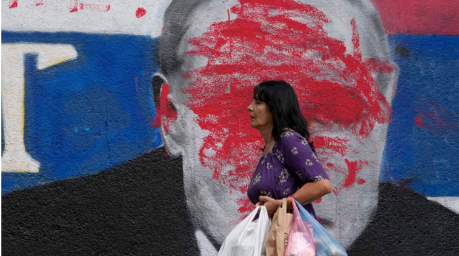
Graffiti as a Battlefield: War, Memory, and Power on the Walls of Belgrade
We are thrilled to publish a new thought-provoking piece by Vladimir Petrović and Novak Vučo from the Innovation Center of the Institute for Contemporary History, University of Belgrade. Their article, “Belgrade Graffiti & Murals: Continuation of War by Other Means? – Traces of War in Yugoslavia and Ukraine in Belgrade Street Art: Reflections on Connections”, offers a gripping tour through Belgrade's streets, where right-wing nationalism, war nostalgia, and geopolitical tensions are fought out in paint, stencils, and slogans. From Ratko Mladić murals to the letter “Z” and graffiti wars over Kosovo and Ukraine — this text explores how political walls in Belgrade are covered in more than just paint, they’re layered with history, ideology, and unresolved conflict. The article has been positively peer-reviewed by Dr. Vjeran Pavlaković, one of the leading experts on graffiti, memory, and transitional justice in Southeast Europe. 👇 Download and read the full article in PDF: N.Vučo, V.Petrović - Belgrade Graffiti & MuralsDownload
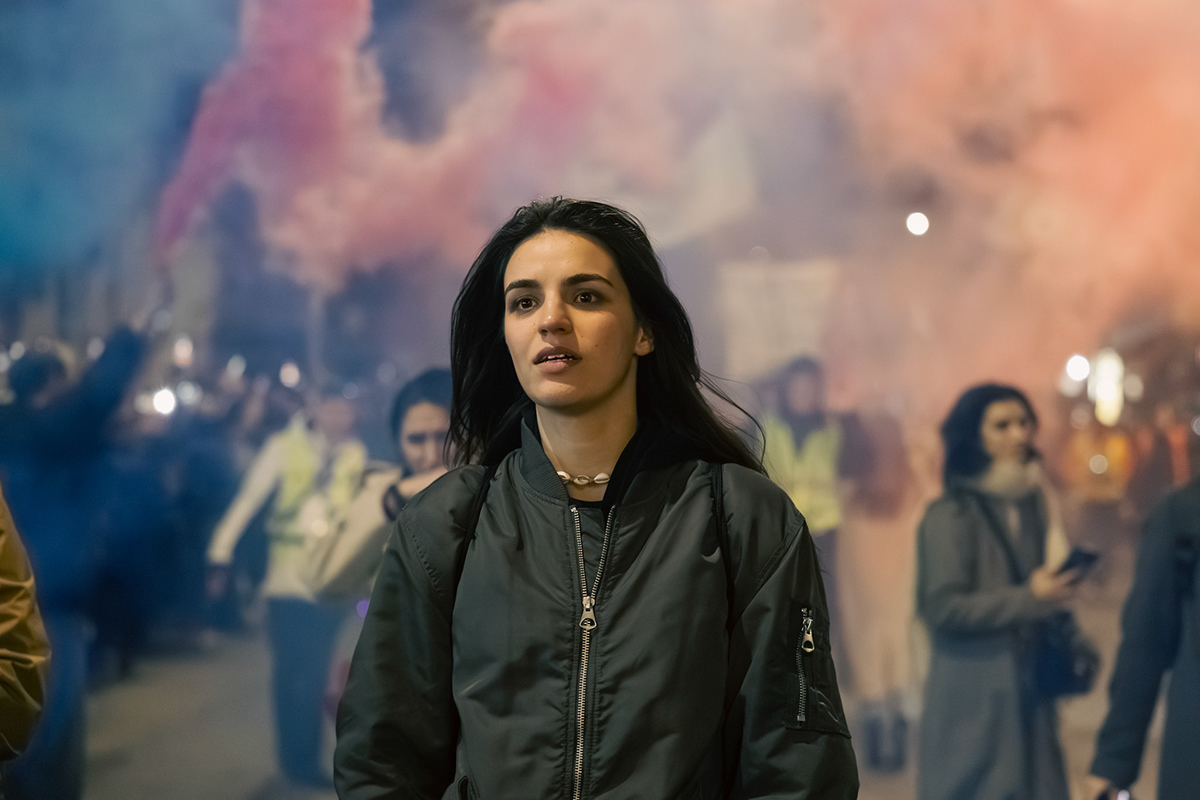
Things to Know About the Ongoing Revolution in Serbia: Our Resources on the University Rebellion
In November 2024, Serbia was rocked by protests triggered by the disastrous fall of the railway canopy in the city of Novi Sad. What is happening in Serbia? Hundreds of thousands of people, most notably entire public university system, are protesting for months, asking for accountability of their government, implementation of the rule of law and basic human decency, as Danilo Mandic summarizes. In the face of global democratic backsliding, this phenomenon stands out, especially as it seemingly comes from an unlikely place. Therefore, our associates did their best to shed light on this unusual phenomenon. As Slobodan Markovic reminds us, Serbia has a rich experience in struggling against authoritarianism. Its students were in the forefront of fighting against the Milosevic regime, and this legacy was examined by Katarina Besirevic and Luka Filipovic. They outline the continuities, but also emphasize novelties brought about by current protests, which are marked with remarkable endurance – public universities were blockaded for months, whereas the citizens are displaying reliable support toward rebellious youth, which redefines the very concept of civic resistance. As students keep marching, they are admired both by the EU institutions and Serbian diaspora, they are putting not only Serbian authorities, but indeed European values to true test. Vladimir Petrovic weighs in by pointing out to the stakes for Serbian higher education and our society as a whole, attempting to situate these protests in the context of global upheavals as well. Cherished from the heights of Harvard and LSE to a most forsaken village in Serbia, these protest are surely a gamechanger. You can find the timeline of events that led to the university uprising here. What can we learn from protest in Serbia? What will they bring, new hope or anarchy? Which impact do they have? How do they actually look? Stay tuned and follow our flying reporter. https://youtube.com/shorts/8jCtWAe7H50 https://youtube.com/shorts/m4MnEv7D-xE https://youtube.com/shorts/-QOdoV3YGOA?feature=share