
In recent years, the world has embraced a narrative of “green transition.” As the climate crisis accelerates, batteries and renewable technologies are widely promoted as a way out of fossil fuel dependency. Indeed, moving away from oil and gas is necessary and urgent. But the story of Rio Tinto’s planned lithium mining project in Serbia’s Jadar Valley shows that not every solution marketed as green is just, sustainable, or emancipatory.
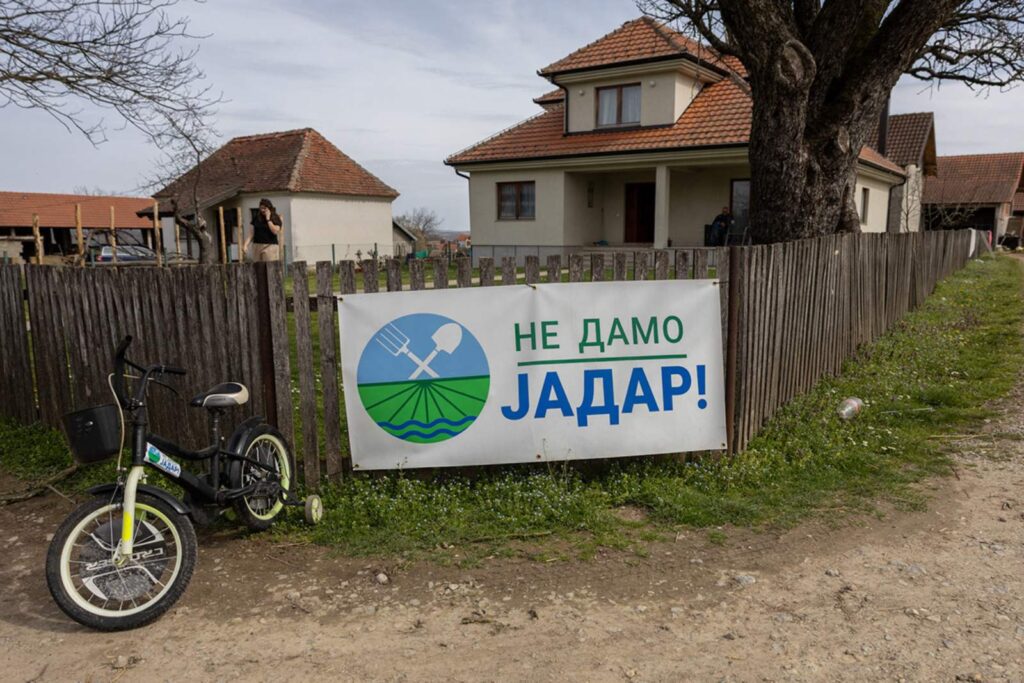
The logic behind the project is straightforward: Europe wants to electrify transport, store renewable energy, and reduce emissions. Lithium, the essential component for batteries, is in high demand. Serbia, with one of the largest lithium deposits in Europe, has become a prime target for extraction. And Rio Tinto—an Anglo-Australian mining giant notorious for environmental and human rights scandals worldwide—is leading the charge.
Yet, if we look more closely, this is not a break with the past. It is a continuation of the same colonial patterns that have governed the global economy for centuries: a wealthy industrial center exploiting a periphery, leaving behind toxic landscapes and broken communities.
A Familiar Pattern: From Oil to Lithium
While battery production is often framed as the opposite of oil—“clean,” “green,” “progressive”—the underlying dynamics are strikingly similar. During the petroleum boom of the 20th century, transnational corporations from richer states set up operations in poorer countries, promising prosperity. What they delivered was often environmental devastation, political corruption, and lasting social division.
Today, lithium is marketed as a savior. But extraction projects like the Jadar mine threaten to poison rivers, destroy arable land, and displace communities, all in the name of sustainability. In reality, this is what the French authors Servigne and Stevens, in How Everything Can Collapse, describe as the “green growth illusion”—the idea that we can maintain endless consumption by simply swapping one resource for another. It is a convenient ideology that avoids the deeper reckoning with how overproduction and extractivism drive ecological collapse.
Echoes of Bolivia: The Global Lithium Rush
Serbia is not alone in this struggle. Bolivia’s experience shows how lithium extraction, if driven by foreign capital and export agendas, can reproduce dependency and injustice rather than build sovereignty or sustainability.
In Bolivia, often called the “Saudi Arabia of lithium,” decades of neoliberal reforms and failed nationalization attempts have left the country struggling to secure fair terms for its own natural wealth. As Mašina reports, massive deposits in the Salar de Uyuni were meant to deliver prosperity to local communities. Instead, Bolivians have faced environmental damage, water depletion, and new forms of foreign dependence, despite initial promises of industrial development and ecological responsibility.
This comparison matters because Serbia is being told the same story: that lithium will bring jobs, modernization, and geopolitical relevance. But if Bolivia teaches us anything, it is that “resource nationalism” without democratic participation and strong environmental protection is just another variant of extractive colonialism.
Green Colonialism and Political Complicity
Many students and activists in Serbia argue that Rio Tinto’s project is possible not despite Aleksandar Vučić’s autocratic rule, but because of it. Over the past year, students have protested corruption, attacks on independent institutions, and repeated violations of civil liberties. Yet the European Union has been largely silent.
Why? According to many critics, it is because Brussels has a strategic interest in Serbia’s lithium deposits. For all its proclamations about democracy and rule of law, the EU is willing to look the other way when it comes to Vučić’s consolidation of power—so long as he remains a reliable supplier of raw materials. As one student protester put it: “The EU does not care about democracy if you can guarantee them cheap lithium.”
This is precisely how colonial economies were justified in the past: sacrifice zones in less developed regions, a steady flow of raw materials to the industrial core, and local populations reduced to labor pools and collateral damage. The only novelty today is that the extraction is branded as “green.”
What Future Are We Choosing?
If climate collapse is the defining crisis of our time, it is vital that the solutions we pursue are not only technologically effective but also socially just. Extractive megaprojects imposed from above reproduce the same patterns that have already devastated ecosystems and disempowered communities. They deepen inequalities and accelerate the destruction of life-support systems in the name of “progress.”
Rio Tinto’s project in Serbia is a case study in how the green transition can become a new front for exploitation, not an exit from it. To truly break with fossil fuel logics, we must reject both their material infrastructure and the ideological foundations that treat land and people as expendable.
If Europe wants to build an energy transition worthy of the name, it must stop outsourcing environmental damage to the peripheries of the continent. It must support local self-determination, invest in circular economies, and abandon the dogma of endless growth that has led us to this brink.
Anything less is not a solution—it is simply a new form of colonial extraction wearing a green mask.
