
Author: Ante Čuljak
The civil war in Yugoslavia delegitimised the historical trajectory of the South Slavic peoples. In its wake petty ethnonationalist states arose, and claim that the “experiment” of socialist Yugoslavia must remain in the past. A collective sense of longing exists in every former Yugoslav country, one that cannot be washed away by nationalism.
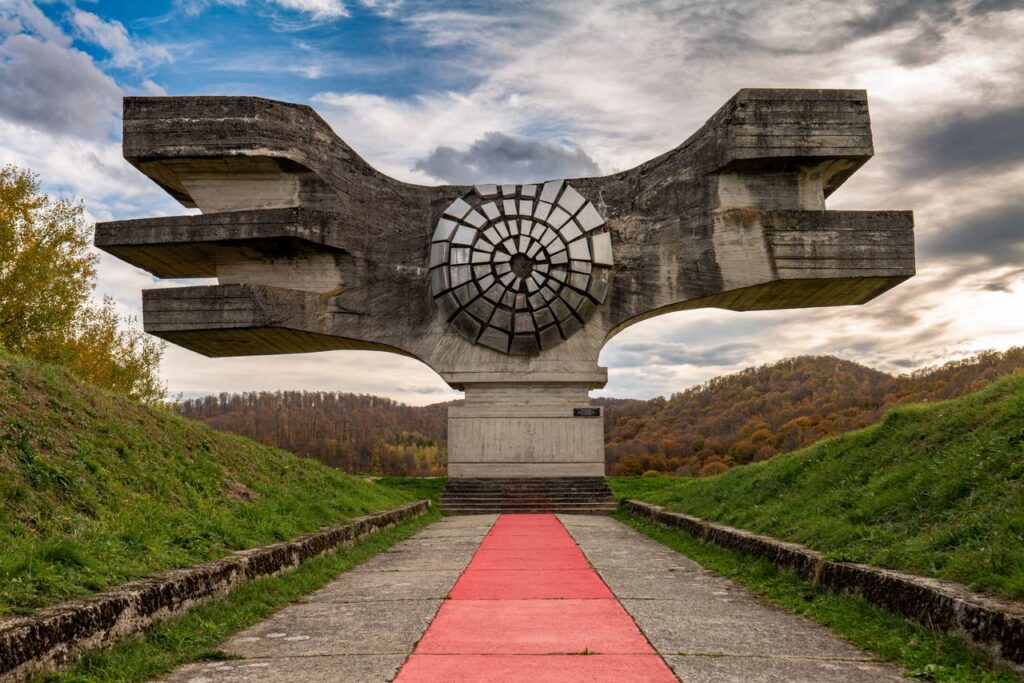
The petty nationalist projects of countries such as Croatia, Serbia, Bosnia and Herzegovina with its three main nationalities, all claim to be better off independent, yet their economies now are dependent on imports from other countries, and heavy subsidies by the European Union, at least in the case of Croatia and Bosnia and Herzegovina. Particularly the case of reconstruction of infrastructure, buildings and deserted industrial sectors is a serious problem for Bosnia and Herzegovina, which has remained in a state of limbo for well over 30 years, unable to figure out its internal governmental structure, and with the Dayton System still in place, it is unsure when and if Bosnia and Herzegovina will leave its post-war malaise. Nationalist politicians in Croatia stoke the fires against Serbs while making themselves rich with European funds, while the rest of the country and its industrial sectors fall into disrepair, they keep on making Croatia into a model ethnostate. Serbia sits at a crossroads; surrounded practically on all sides by NATO and the European Union, its precarious position and continued radicalisation of the young populace pose quite a threat to its establishment. The perpetrators of horrid crimes in the 90s are celebrated as national heroes in Serbia, while honest fighters for freedom during WWII, the partizans, are remembered as traitors to the national project of Greater Serbia. Serbia’s deeply controversial history marks her in profound ways, and glorification of war criminals does nothing but cloud the minds of the people.
The petty nationalist projects arose from the failures of Yugoslavia, and one can imagine Yugoslavia as an evolution of small nations into one, unified identity. To cast off aside these tribal identities, these preoccupations with just your people, your nation, is a monumental task. That task may take a hundred years, but once the masses of their respective countries realise that their nationalism only breeds hate towards others, and in fact makes them weak, only then can we start to make strides into a new Yugoslavism, one that will wash away the tragedy of the past, and finally rid us our biases and hatreds.
Only by dreaming of something greater can we be great.