
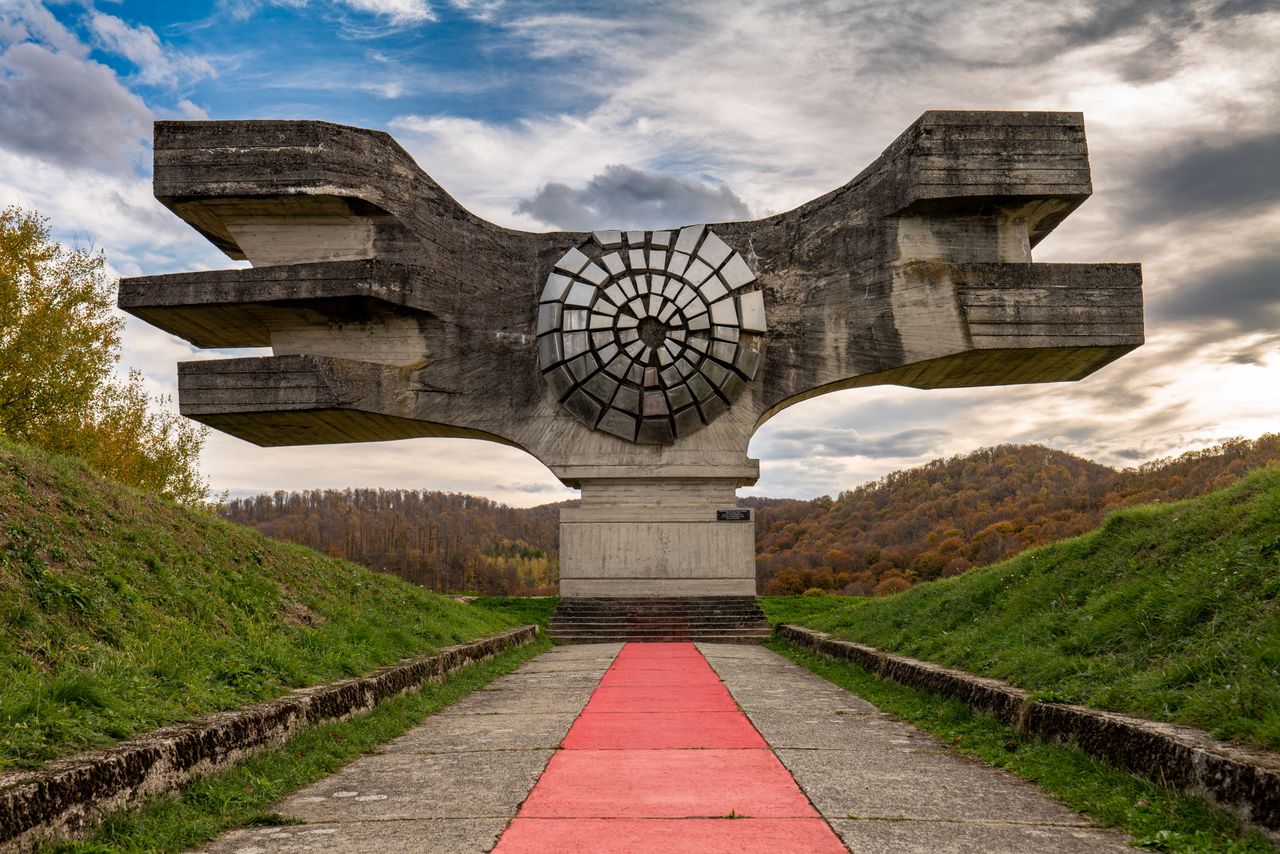
Towards a new Yugoslavism
Author: Ante Čuljak The civil war in Yugoslavia delegitimised the historical trajectory of the South Slavic peoples. In its wake petty ethnonationalist states arose, and claim that the “experiment” of socialist Yugoslavia must remain in the past. A collective sense of longing exists in every former Yugoslav country, one that cannot be washed away by nationalism. Illustration photo. Retrieved from Pexels (www.pexels.com) The petty nationalist projects of countries such as Croatia, Serbia, Bosnia and Herzegovina with its three main nationalities, all claim to be better off independent, yet their economies now are dependent on imports from other countries, and heavy subsidies by the European Union, at least in the case of Croatia and Bosnia and Herzegovina. Particularly the case of reconstruction of infrastructure, buildings and deserted industrial sectors is a serious problem for Bosnia and Herzegovina, which has remained in a state of limbo for well over 30 years, unable to figure out its internal governmental structure, and with the Dayton System still in place, it is unsure when and if Bosnia and Herzegovina will leave its post-war malaise. Nationalist politicians in Croatia stoke the fires against Serbs while making themselves rich with European funds, while the rest of the country and its industrial sectors fall into disrepair, they keep on making Croatia into a model ethnostate. Serbia sits at a crossroads; surrounded practically on all sides by NATO and the European Union, its precarious position and continued radicalisation of the young populace pose quite a threat to its establishment. The perpetrators of horrid crimes in the 90s are celebrated as national heroes in Serbia, while honest fighters for freedom during WWII, the partizans, are remembered as traitors to the national project of Greater Serbia. Serbia’s deeply controversial history marks her in profound ways, and glorification of war criminals does nothing but cloud the minds of the people. The petty nationalist projects arose from the failures of Yugoslavia, and one can imagine Yugoslavia as an evolution of small nations into one, unified identity. To cast off aside these tribal identities, these preoccupations with just your people, your nation, is a monumental task. That task may take a hundred years, but once the masses of their respective countries realise that their nationalism only breeds hate towards others, and in fact makes them weak, only then can we start to make strides into a new Yugoslavism, one that will wash away the tragedy of the past, and finally rid us our biases and hatreds. Only by dreaming of something greater can we be great.
Zakaj je komisarka Kos ključ za stabilnost držav Zahodnega Balkana?
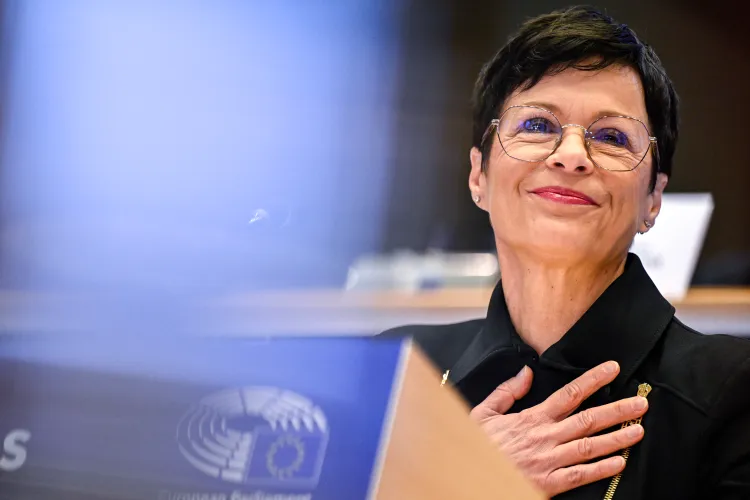
Avtorica: Nina Anžič To vprašanje je morda provokativno, a vendar ključno, če želimo, da države Zahodnega Balkana sploh kdaj postanejo članice Evropske unije. Za začetek bom izpostavila dejstvo, da je Marta Kos komisarka, pristojna za širitev v Evropski komisiji pod vodstvom Ursule von der Leyen v mandatu 2024–2029. Komisarska kandidatka za širitev Marta Kos na potrditvenem zaslišanju v Evropskem parlamentu (7. november 2024). Vir: newunionpost.eu Komisarka Kos je bila rojena še v času Jugoslavije, kar pomeni, da zelo dobro razume mentaliteto, kulturo in ne nazadnje tudi jezik med nekoč bratskimi državami. Dejstvo je, da je Slovenija leta 1991 – takrat še Socialistična republika Slovenija – prva zapustila Jugoslavijo. Sledila nam je Hrvaška in takrat se je začela krvava vojna na področju nekoč bratskih republik. Slovenija je takrat s štirinajstdnevno vojno za samostojno državo odnesla najbolje, če to sploh lahko merimo v tistem krvavem času med nekoč bratskimi narodi v bivši socialistični federativni Jugoslaviji. Slovenija je prva postala članica Evropske unije leta 2004, Hrvaška pa ji je sledila leta 2013. Vendar pa se je Slovenija ves čas, ne glede na levo ali desno vlado, v svoji zunanji politiki krčevito zavzemala za stabilen Zahodni Balkan in članstvo teh držav v Evropski uniji. Vendar, kje se je zalomilo pri državah, kot so Srbija, Bosna in Hercegovina ter Severna Makedonija? Zadnja država, ki sem jo omenila, si je uradnemu imenu celo dodala besedo "Severna", pa to še kar ni dovolj za članstvo v Evropski uniji? Srbija ter Bosna in Hercegovina se s svojim procesom približevanja še kar ne premakneta z rdeče luči na semaforju evrointegracij. Obe državi bosta morali nujno spremeniti stanje demokracije, svobode govora, vladavine prava in predvsem stopnjo korupcije.A vendar v Srbiji vidimo prihodnost v študentih, ki se ne dajo in ostajajo v blokadi z jasnimi zahtevami do oblasti. Zakaj ta ista politika ni sposobna prisluhniti svojemu največjemu potencialu, ki ga ima v državi? Če v Srbiji mladi sploh še dajejo upanje po spremembah, pa tega žal ne vidimo v Bosni in Hercegovini. Ali so v Bosni in Hercegovini že vsi mladi upi te države odšli v tujino in postali diaspora, ki se vrača domov le še ob praznikih? A vendar, vrnimo se nazaj na pot Evropske unije in komisarke Kos. Slednja je na svojem uradnem obisku srečala tako oblast kot tudi študente v blokadi. Torej EU jasno vidi prizadevanja mladih v Srbiji, v to sploh ne dvomim. Aktivni so tudi evropski poslanci – pri tem lahko zopet izpostavim slovensko poslanko Ireno Jovevo, pa tudi hrvaškega evropskega poslanca Gordana Bosanca. Prav tako države Zahodnega Balkana že danes aktivno sodelujejo v mehanizmu EU na področju civilne zaščite. Ko smo imeli v Sloveniji najhujše poplave v zgodovini samostojne države, so nam prav vse države Zahodnega Balkana takoj priskočile na pomoč. Ob tem se človek vpraša: ali je sodelovanje pri reševanju življenj in premoženja edina stična točka držav nekdanje Jugoslavije in Evropske unije?Če te priložnosti ne izkoristimo, bo mandat Marte Kos izgubljen mandat – predvsem za prej omenjene države Zahodnega Balkana. Močno namreč dvomim, da bo na to funkcijo še kdaj imenovan Slovenec ali Slovenka; nekdo, ki to regijo dejansko pozna in jo razume mogoče celo bolje kot nacionalna politika teh držav sama. Prav v tem razumevanju se skriva ključ, imenovan komisarka Marta Kos.
Why is Commissioner Kos key to the stability of the Western Balkan countries?
Author: Nina Anžič Članek v slovenskem jeziku je na voljo tukaj. This question may be provocative, but it is crucial if we want the Western Balkan countries to ever become members of the European Union. To begin with, I will highlight the fact that Marta Kos is the Commissioner responsible for Enlargement in the European Commission led by Ursula von der Leyen for the 2024–2029 term. Commissioner-designate for Enlargement Marta Kos at the confirmation hearing in the European Parliament (7 November 2024). Source: newunionpost.eu Commissioner Kos was born during the Yugoslav era, which means she has a deep understanding of the mentality, culture, and, not least, the language shared by the once-brotherly nations. The fact is that in 1991—then still the Socialist Republic of Slovenia—Slovenia was the first to leave Yugoslavia. Croatia followed, and that is when a bloody war began among the once-brotherly republics. Slovenia fared best at the time with its fourteen-day war for an independent state, if one can even measure such a thing during that bloody period among the once-brotherly nations of the former Socialist Federal Yugoslavia. Slovenia was the first to become a member of the European Union in 2004, with Croatia following in 2013. However, regardless of whether the government was left-wing or right-wing, Slovenia has consistently and vigorously advocated in its foreign policy for a stable Western Balkans and the membership of these countries in the European Union. But where did things go wrong for countries like Serbia, Bosnia and Herzegovina, and North Macedonia? The last country I mentioned even added the word “North” to its official name, yet is that still not enough for membership in the European Union? Serbia and Bosnia and Herzegovina, with their ongoing integration processes, still haven’t moved past the red light on the European integration traffic light. Both countries will urgently need to improve the state of democracy, freedom of speech, the rule of law, and, above all, the level of corruption. Yet in Serbia, we see a future in the students who refuse to give up and remain in the blockade with clear demands for the authorities. Why is this same political establishment unable to listen to its greatest potential, which lies within the country? While young people in Serbia still offer hope for change, we unfortunately do not see this in Bosnia and Herzegovina. Have all the young hopes of Bosnia and Herzegovina already left the country to become part of a diaspora that returns home only on holidays? Yet, let us return to the path of the European Union and Commissioner Kos. During her official visit, she met with both the authorities and the students at the blockade. So the EU clearly sees the efforts of young people in Serbia; I have no doubt about that at all. Members of the European Parliament are also active—here I can again highlight Slovenian MEP Irena Joveva, as well as Croatian MEP Gordan Bosanac. Likewise, the countries of the Western Balkans are already actively participating in the EU’s civil protection mechanism. When we experienced the worst floods in the history of independent Slovenia, every single country in the Western Balkans immediately came to our aid. This raises the question: is cooperation in saving lives and property the only common ground between the countries of the former Yugoslavia and the European Union? If we do not seize this opportunity, Marta Kos’s term will be a wasted one—especially for the aforementioned Western Balkan countries. I seriously doubt that a Slovenian—someone who actually knows and understands this region, perhaps even better than the national policies of these countries themselves—will ever be appointed to this position again. It is precisely in this understanding that the key lies: Commissioner Marta Kos.
Investigating the role of victimhood in the construction of contemporary Serbian national identity using the Generalštab as a case study
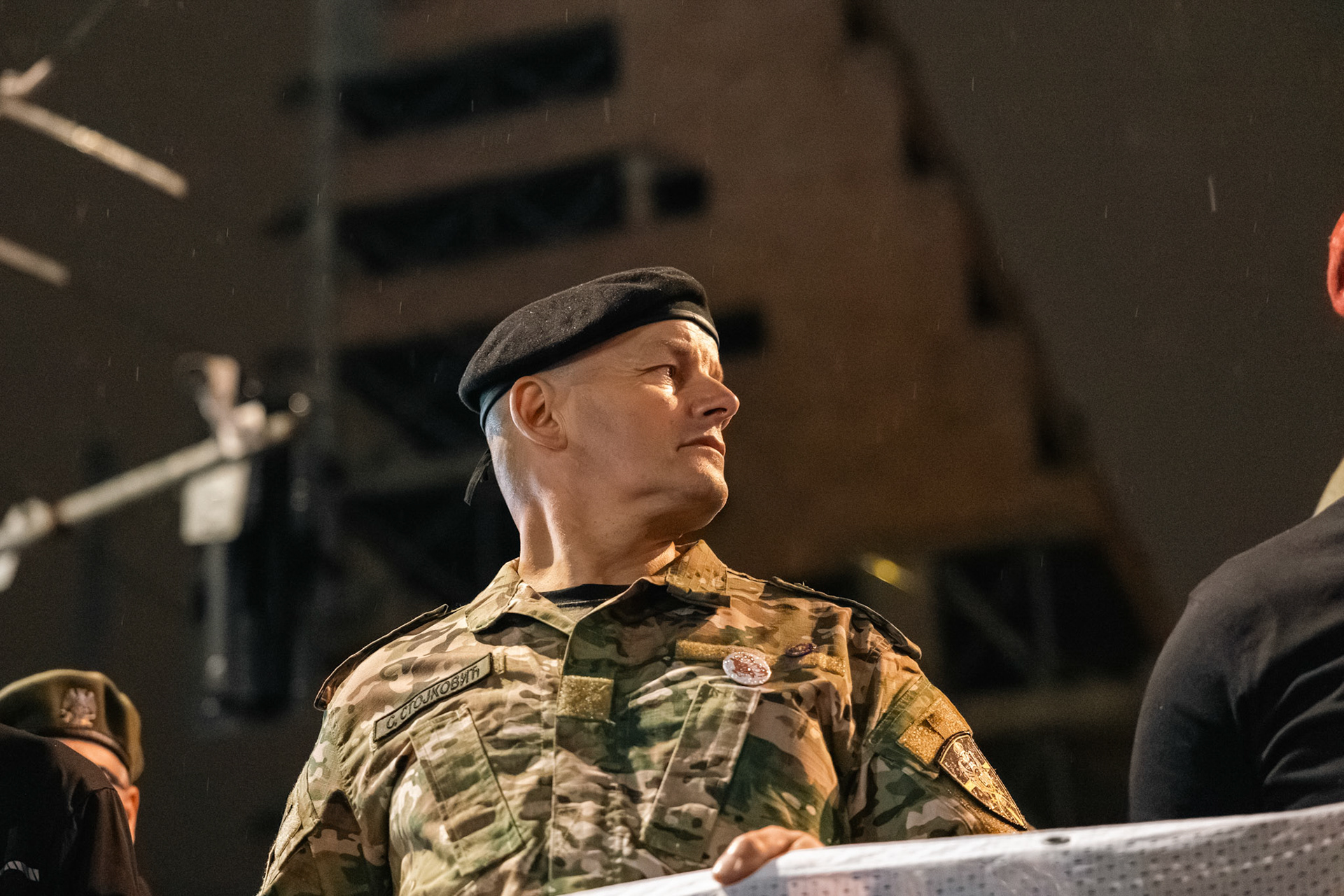
Author: Skye Warner-Mackintosh Centrally located on Kneza Miloša Street is the ruins of the former Yugoslav Generalštab building. Coming to the city for the first time in February 2023, it was the first thing I noticed upon arriving at the main train station. The building towers over you, occupying both sides of the street, and you are engulfed in the symbolic history of Yugoslavia and the contemporary struggle for a unanimous Serbian identity. The symbolic meanings of the building are not immediately apparent; you are invited to create your own meaning from the ruins before you. Unlike other remnants of the NATO bombing, such as the RTS bombing site, the Generalštab is impossible to miss; it is not subtle and located right in the heart of Belgrade. Photo: Gavrilo Andrić Furthermore, the remains of the Generalštab building are a unique example of the maintenance of architectural ruins. Often, post-conflict reconstruction takes place as a prelude to identity reformation and healing (Ortiz and Córdoba, 2023). The question of what to do with buildings in the aftermath of conflict is often dealt with promptly, and buildings are often restored to their original historic design, preserved as ruins (although this is uncommon), or removed completely. The post-war period of reconstruction across Europe saw many German cities rebuild, with historically significant buildings either being preserved (and used as a museum or monument) or removed and rebuilt. Thus, for many places, rebuilding and commemoration are essential aspects of national bonding in post-conflict reconciliation, and this rebuilding is crucial in the healing process (Ejdus, 2017: 25). Therefore, the Generalštab has “spontaneously grown into an inseparable part of the Belgrade cityscape and a de facto national monument of defiance and victimhood” (Ejdus, 2017: 36). It is laden with unambiguous meaning and, therefore, has been a crucial site of Serbian national-identity formation, specifically for people living in Belgrade, following the dissolution of Yugoslavia and remains to this day a highly controversial and puzzling symbolic urban space. This essay will critically examine the role of victimhood in Serbian national identity formation following the dissolution of Yugoslavia in 1991 and subsequent ethnic-conflicts across the Western Balkans. Using the Generalštab as an example, this essay analyses three central ‘readings’ of the building as advocated by Bădescu (2019): victimhood, injustice and resistance. Here, I make the distinction between state and societal victimhood, ultimately arguing that the building is a key signifier of the Serbian state's geopolitical and mnemonic identity, yet also highlights growing resentment and resistance to this regime. Historic Background On the 25th of June 1991, Croatia and Slovenia declared independence from the Socialist Federal Republic of Yugoslavia (SFRJ). This marked the end of a union of South Slavs that had spanned over much of the 20th century. The success of Yugoslavia is widely debated amongst historians, although there is consensus that, throughout the period of 1936-1990, it was relatively stable. The dissolution of Yugoslavia in 1991, therefore, was relatively surprising and, although many authors could have predicted an ‘inevitable’ collapse, the violent and bloody nature of the aftermath of the collapse was quite unpredictable. As discussed by Jovic (2001), the successive wars across the Western Balkans have numerous explanations, and it is impossible to pinpoint one ‘simple’ reason for the bloodshed that followed the dissolution. Whilst economic, socio-cultural, and political arguments have all been widely debated, it is clear that there was brewing discontent in the region throughout the 70s and 80s and Yugoslavia was largely tied to Tito. Therefore, following his death in 1980, the dissolution was not a matter of ‘if’ but, rather, ‘when’. It is impossible to give nuance to every argument on the dissolution of Yugoslavia when this essay’s purpose is to focus on the contemporary implications of these national dilemmas; however, it is important to understand the historical context that gave rise to different nationalist ideologies that dictated the nature of the breakup. However, for many historians, the question is not why Yugoslavia broke up, but, rather, why Yugoslavia broke up in the way that it did. With years of bloodshed and ethnic conflict, ending in 1999 with the NATO bombing of Belgrade. The brutal aftermath of the dissolution of Yugoslavia has been greatly influential in shaping contemporary national identities in the Western Balkans. With ethnic conflict spreading across the region following the dissolution and 100,000 lives lost, the scars of the 90s remain etched in the memories of people across the region, making it difficult to separate national identity from the collective memories of the 1990s. Thus, understanding the widespread bloodshed and victimhood of every ethnicity in the Western Balkans is important and gives insight into the contemporary geopolitical dynamics of the region. Theoretical Background Memory Assmann (2011) explores the relationship between the past and the self, arguing that the self would not exist without memories of the past. Here, “the human self is built from the stuff of time” (ibid.,15); we are products of stories, food, family histories, monuments, buildings and much more. Unlike traditional scholars of memory, Assmann argues that memory can often transgress the individual mind and can be promoted through inanimate objects (ibid.,17). Here, he makes the distinction between communicative and cultural memory. Whilst cultural memory is a collective preservation of the past (often through relics, monuments and symbols), communicative memory is much more subjective, often residing in the mundane tapestry of individual everyday life (ibid.,17). The city, therefore, is a site of both memory functions: in Belgrade, for example, one could walk through the city and reflect on the symbolism of the the Generalštab as a site of national bonding, whilst simultaneously reflecting individual symbolic histories interwoven in the urban fabric of the city. Bădescu (2019: 183) notes that “cities have long been arenas of political struggle”, Belgrade is no different. It has been at the centre of many historical events and empires, and has often been a city of conquest. Until the dissolution of Yugoslavia, Belgrade was the capital city of the republic and, therefore, a vessel of Yugoslav identity formation and nation-building. As such, Yugoslav territorial bonding was fixed in Belgrade, with Tito residing in the socialist heart of New Belgrade (Abram, 2014). Bădescu (2016; 2019) emphasises the active role of the city in constructing collective and cultural memories, as such, urban space becomes “a mediator for translating historic events into memory” and, within this, monuments are ‘selective aids’ in this process. Here, memory intersects with political experiences of urban space and a range of different actors are involved in interpreting sites of memory to make national symbolic meaning. Bernhard and Kubik (2014) refer to this as a ‘memory regime’ in which political elites, state institutions and civil society compete in defining historical interpretations as a strategy of legitimisation. As will be discussed later, the Generalštab building is symbolic of this power struggle, where different actors compete to assign a collective meaning to the building, either as a symbol of Western/NATO aggression, Serbian resilience, civil resistance or Yugonostalgia. Since 2014, when Vucic was elected, memory politics are ‘back’ in Serbia (Vukpalaj, 2025), representing a regime shift in how the 90s are commemorated and remembered in communicative and cultural memory. Victimhood Another central tenet that has anchored Serbian and wider post-Yugoslav national identity formation has been victimhood. Chouliaraki (2020: 8) defines victimhood as “a structure of affective communication that is deeply grounded in the past”. Thus, it marks an intersection of the past and present and requires subjective interpretation alongside political meaning-making to be useful. Hronešová (2025) states that victimhood has a strong unifying function and is often used to consolidate national identities and state narratives. Victimhood is, therefore, ontological and is defined based on a binary opposition of ‘us’ and ‘them’. This relational capacity of victimhood is particularly relevant in the Balkans, where there are different and competing experiences and interpretations of victimhood and history. Vukpalaj (2025) notes that victimhood can be mobilised by the state to achieve political aims and narratives. Specifically, narratives of Serbian victimhood, dating as far back as 1389, are used contempoaraily to justify the non-recognition of Kosovo as an independent state, particularly following Russia’s full-scale invasion of Ukraine. Moreover, victimhood is often top-down and state-led (Hronešová, 2025). Here, victimhood has a strong unifying function that can be monopolised by so-called memory regimes to serve the political elite. The pain and stories of the vulnerable can, therefore, be manipulated, creating an ‘ontological narrative framework’ that provides a basis for foreign policy, militarisation and the definition of the enemy. Hronešová explores how this has manifested in Serbia through so-called ‘strategic victimhood’. The concept of ‘strategic victimhood’ illustrates how elites propagate narratives of historical injustice and foreign hostility to mobilise a national identity based on a sense of collective suffering. Here, historical injustice is woven into the consolidation of national identity, particularly in relatively stable post-conflict societies, and the ‘us-them’ divide is solidified in policy. Moreover, elites can specifically harness the character of ‘victim’ through the notion of ‘hijacked victimhood’ (Hronešová and Kreiss, 2024). Hijacked victimhood is defined as a political strategy where already powerful groups or leaders claim victim status. Here, the typical narrative of victimhood is inverted to defend or expand their power, often by portraying themselves as oppressed by marginalised groups they then demonise, using this perceived threat to justify aggression, policies, or violence. However, as will be discussed later, there is a uniquely emancipatory potential within victimhood, which can be used to consolidate grievance against the elite and illuminate top-down memory regimes. Identity that contrasts Western values As discussed above, victimhood is often something that is ‘hijacked’ by political actors, anchoring national identity and translating history into new ontic narratives. The Generalštab represents a disputed site of national bonding, a site that is “craving unambiguous meaning” (Ejdus, 2017: 36). As a building, it is experienced subjectively by passersby, but it has also been mobilised by politicians and the state as a site of victimhood since Vučić came to power. In the aftermath of the dissolution of Yugoslavia, the topic of the 90s was mostly ignored by politicians, with conversations often dating back to WW2, or even further back to Ottoman and Habsburg occupation. It was only in 2014, when Vučić came to power, that victimhood from the NATO bombing began to reemerge into official state narratives, marking a political decision to mobilise victimhood. As argued by Ejdus (2017: 31), the building remains there in ruin because it is there to satisfy Serbia’s ontological security needs. It represents a “defiant and brave nation” and, through this, becomes a “de facto national monument of defiance and victimhood”. Thus, the Generalštab not only defines a new Serbian national identity, it also defines what this identity is not. It starkly contrasts Serbian identity with Western values, imbuing a sense of victimhood and struggle, which then determines foreign policy outcomes. A key way this has been achieved is through the involvement of the Serbian Orthodox church in commemoration. Although viewed as a ‘neutral vessel’ in Serbian politics, the Church has become increasingly influential, enjoying the highest levels of public trust intergenerationally and becoming one of the largest investors in Serbia (Marinović, 2025). As argued by Edina Bećirović, the Serbian Orthodox Church has become an important tool in state-driven narratives of a Greater Serbian project, providing “legitimacy under the guise of spirituality” (Marinović, 2025). Although the influence of the Church is a different conversation, this has had particular implications in the commemoration of the 1999 NATO bombings, and the Church has played a key role in discussions regarding the future of the Generalštab building. As stated by Patriarch Irinej, “those ruins which are located in the centre of Belgrade should never be repaired. Let there be a testimony of our time, a testimony of [the destruction brought by] cultured Europe, testimony of democratic Europe that cared about freedom and democracy” (found in Bădescu, 2019). Thus, the Church deems the existence of the ruins as a crucial component of national identity formation in opposition to Europe. The example of the SOC demonstrates how victimhood has been integrated as part of Serbian religious identity, which is inherently interlinked with new national identities. The existence of the building signifies resistance to Europeanism and represents a new Serbian national identity where historical memory is interpreted by the Church and the state. However, the framing of historical narratives of victimhood can also be mobilised for political gain. Vukpalaj (2025) argues that memory and victimhood can be used to justify foreign policy goals, and the existence of the Generalštab ruins can be used to negotiate new geopolitical relations for Serbia. In November 2025, the Serbian government passed a ‘lex specialis’ that allowed the redevelopment of the Generalštab building. This was a somewhat surprising shift in official memory rhetoric that has largely promoted the preservation of the ruins to promote a Serbian identity forged in victimhood, as discussed above. However, the government's lease of the building to Jared Kushner, Trump's son-in-law, who proposed to build luxury hotels and ‘Trump Towers’, showed a political divergence. However, some argue that this lease is geopolitically relevant, mobilising victimhood to improve Serbia’s political relations with a new right-wing administration in the US. Moreover, the framing of the bombing has been useful in developing closer ties with Russia and China, which historically opposed the bombing. Thus, victimhood has been hijacked to re-route Serbia’s political position in the international arena, yet there are areas of contention and resistance within these narratives, which will be discussed below. Bottom-up However, the ambiguous meaning of the building has also made it a site of public resistance where victimhood is interpreted differently. Here, the building's ontic meaning shifts from symbolic of European aggression and Serbian might to symbolic of a rich Yugoslav history and, more importantly, of continued government divergence from the desires of Serbian citizens. The architectural community of Belgrade have been a constant advocate for the reconstruction of the Generalštab to its original design. Importantly, the Generalštab was constructed as an ontic space in the 1960s as a symbol of Yugoslav unity against fascism. It was supposed to represent “features of a defiant and brave nation” (Ejdus, 2017) and is argued to be Serbia’s greatest feat of Socialist modernism, being architect Nikola Dobrović’s ‘magnum opus’. Thus, the alternatives of either destroying the building, leasing it, or keeping it in ruin all oppose the dramatic symbolism of Yugoslav unity that the building represents. Heritage watchdog DOCOMOMO stated that the destruction and lease of the building would be “erasure of a European masterpiece of modernist architecture and a symbol of Yugoslavia and Serbia’s post-war identity and creativity” (Docomomo, 2025). Furthermore, the decision would damage the relationship between Serbia and the European Union, which goes against 33% of the general public's support for integration. This shows that contemporary critical Serbian national identities often oppose state-led narratives, with parts of the population advocating for the country to embrace the original purpose and design of the building. In response to the government leasing the building to Jared Kushner, there were a series of protests outside the Generalštab building in 2025, led by the Student Blockade, uniting all people opposed to the lease under a ‘We are the Wall Protest’. Here, the argument was that history and memory cannot be erased by administrative measures or special laws passed urgently. Thus, the people stood unified against top-down narratives of victimhood and memory, calling for collective memories to reimagine Serbian identity through the preservation of these ruins. Finally, the Generalštab is a site of intergenerational resistance and represents resistance against the inequality created by the regime. For many, the symbolism is confusing and upsetting. Victimhood is still deployed here, but in more of a subtle way. As Bădescu (2019) argues, the Generalštab building represents a Western campaign against Belgrade that was paradoxical and unjust because the city also had the highest concentration of opposition to Milošević’s regime. Therefore, the building is symbolic of a historic regime that was somewhat opposed in the 90s, and acts as a reminder of this regime. However, whilst Serbian victimhood is still mostly operationalised in opposition to the West, the younger generation also feel a victimhood towards the regime itself. Hronešová (2025) examined victimhood in Serbian youth who had no experiences/direct memories of the 90s, finding that young people in Serbia feel that they are victims of the system more than they are victims of a concrete period in time. As one student stated: “We are victims of corruption rather than of wars” (Hronešová, 2025: 541). Despite this, they still emphasised the political elements of this. Serbia is seen as both a victim of domestic corruption and unjust international positioning, which is perhaps a legacy of the 90s. However, this example of positive victimhood has been mobilised throughout the student movements where, since 2024, students have become driving forces in fighting against top-down narratives of Serbian national identity, showing an optimism and promise for the future of national-identity where the memories and narratives can be made sense of in a rational way. Here, the Generalštab is representative of a new Serbia, led by a generation that is somewhat detached from the ontic reality of the 90s, that does not exist simply in opposition to the West, but also opposes hijacked narratives of victimhood that seek to exploit national-identity to pursue regimes of corruption. Generalštab still remains This essay has traced a historical evolution of Serbian national identity in relation to different victimhood narratives in contemporary Serbia. The Generalštab is widely agreed to be an ontic space symbolic of multiple ambiguous meanings, and this has demonstrated how these meanings are mobilised by different actors to achieve different goals. On one hand, it is symbolic of European and Western aggression against Serbia; its existence is a promise to a new Serbian national identity that is defined in opposition to the West, and it is a monument dedicated to defiance and victimhood. On the other hand, it is symbolic of Yugoslav identity and modernism, a European architectural wonder, and the current regime’s decision to collaborate with the American right-wing on a redevelopment of the space marks a betrayal of this past. Thus, it is a site of national re-bonding, where people can be encouraged to imagine different realities, harness creativity and resilience to corruption. However, one thing is clear: the Generalštab still remains, on Kneza Miloša Street, untouched. Everyday when people walk past new identities are constructed, different ideas of victimhood are projected, and different meanings are assigned to the ruin. It remains an important ontic site for the Serbian state, and the ambiguity of the building makes it somewhat impossible to imagine any future projects. Despite this, it is a crucial example in understanding how victimhood has framed national identity historically and contemporarily. Bibliography Abram, M. (2014). Building the Capital City of the Peoples of Yugoslavia: Representations of Socialist Yugoslavism in.... Politička misao, [online] 51(5), pp.36–57. Available at: https://www.researchgate.net/publication/349537039_Building_the_Capital_City_of_the_People s_of_Yugoslavia_Representations_of_Socialist_Yugoslavism_in_Belgrade [Accessed 2 Feb. 2026]. Assmann, J. (2008). Communicative and Cultural Memory. [online] Available at: https://archiv.ub.uni-heidelberg.de/propylaeumdok/1774/1/Assmann_Communicative_and_cultur al_memory_2008.pdf. Bădescu, G. (2016). ‘Achieved without Ambiguity?’ Memorializing Victimhood in Belgrade after the 1999 NATO Bombing. Comparative Southeast European Studies, [online] 64(4), pp.500–519. doi:https://doi.org/10.1515/soeu-2016-0044. Bădescu, G. (2019). Making Sense of Ruins: Architectural Reconstruction and Collective Memory in Belgrade. Nationalities Papers, 47(2), pp.182–197. doi:https://doi.org/10.1017/nps.2018.42. Chouliaraki, L. (2020). Victimhood: The affective politics of vulnerability. European Journal of Cultural Studies, 24(1), p.136754942097931. doi:https://doi.org/10.1177/1367549420979316. Docomomo.com. (2025). MoMo at Risk: Joint Statement on Generalštab – Docomomo International. [online] Available at: https://docomomo.com/joint-statement-generalstab-modernist-complex/ [Accessed 2 Feb. 2026]. Ejdus , F. (2017). ‘Not a heap of stones’: material environments and ontological security in international relations.. Cambridge Review of International Affairs , [online] 30(1), pp.23–43. Available at: https://www.tandfonline.com/doi/full/10.1080/09557571.2016.1271310. Hronešová, J.B. (2025). Why and how victimhood matters? Between strategic ontological narratives and intersectional injustice in contemporary Serbia. Media, War & Conflict. doi:https://doi.org/10.1177/17506352251350320. Hronešová, J.B. and Kreiss , D. (2024). Strategically Hijacking Victimhood: A Political Communication Strategy in the Discourse of Viktor Orbán and Donald Trump - The Center for Information, Technology, and Public Life (CITAP). [online] The Center for Information, Technology, and Public Life (CITAP). Available at: https://citap.unc.edu/publications/strategically-hijacking-victimhood-a-political-communication-str ategy-in-the-discourse-of-viktor-orban-and-donald-trump/ [Accessed 2 Feb. 2026]. Jovic, D. (2001). The Disintegration of Yugoslavia. European Journal of Social Theory, 4(1), pp.101–120. doi:https://doi.org/10.1177/13684310122225037. Marinović, M. (2025). The Church as a Political Actor in the Western Balkans. [online] Centre for Civic Education. Available at: https://cgo-cce.org/en/2025/06/22/the-church-as-a-political-actor-in-the-western-balkans/ [Accessed 2 Feb. 2026]. Ortiz, C. and Córdoba, O.G. (2023). Territorial healing: A spatial spiral weaving transformative reparation. Planning Theory, [online] 23(2), pp.110–130. doi:https://doi.org/10.1177/14730952231181129. Vukpalaj, A. (2025). From Memory Politics to Mnemonic Diplomacy: Serbia’s Strategic Use of the 1999 NATO Bombing to Challenge Kosovo’s Statehood before and after Russia’s Full-Scale Invasion of Ukraine. Comparative Southeast European Studies, 73(3), pp.261–290. doi:https://doi.org/10.1515/soeu-2025-0044.
Kosovo and the Dissolution of Yugoslavia: A Delayed Explosion
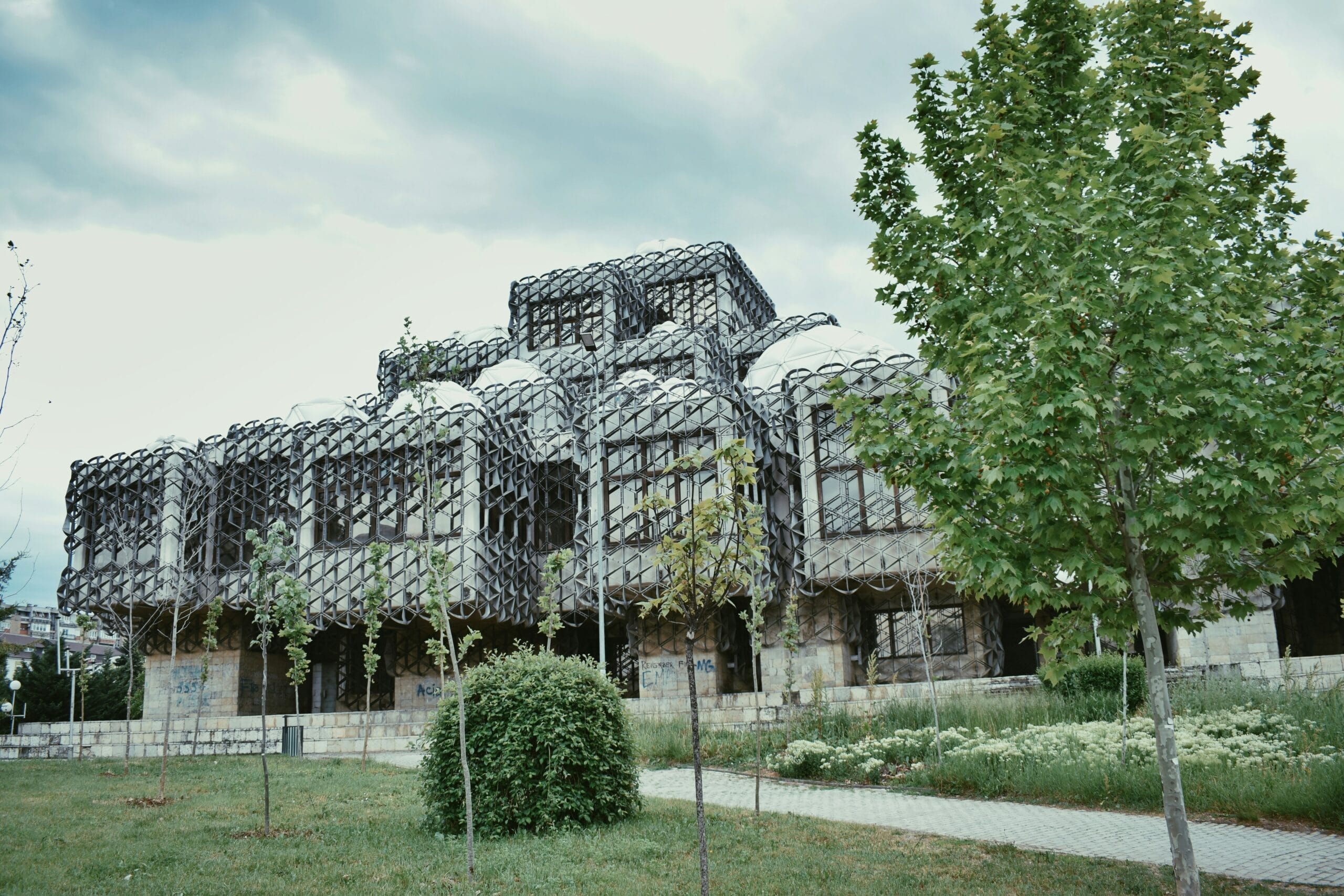
Author: Janka Júlia Csepregi A review of the rich scholarly literature on the dissolution of Yugoslavia and the wars of the 1990s published over the past few decades shows that the so-called “Kosovo question” often appears as a framing element in interpretations that, rightly so, approach the process of dissolution from a transnational and holistic perspective. Namely, the situation of Kosovo is typically discussed in the introductory sections where different scholars outline the dire situation unfolding from the complex crisis of the 1980s in Yugoslavia and the nationalist mobilization fueled by Milošević, which first escalated in Kosovo. As accounts follow the course of events and the development of armed conflicts and wars in the independent republics, it is not until 1998 that Kosovo returns to the narrative, as the „last in the line of conflicts” to be solved following the dissolution (see e.g. Baker 2015; Sundhaussen 2014). Photo: Unsplash/Xhiliana Nevertheless, the marginalization of the question of Kosovo in the 1990s is not only a phenomenon in scholarly interpretations. In fact, the situation in Kosovo was sidelined and largely neglected for a period in contemporary international discourse concerning developments in Yugoslavia, too. Although the human rights issue in Kosovo was in the center of both domestic and international attention during the economic and political crisis unfolding in the 1980s in Yugoslavia, armed conflict first escalated in the breakaway republics claiming independence, and the question of Kosovo remained marginalized until the late 1990s. Reason for the collapse of Yugoslavia Scholarly explanations of the dissolution of Yugoslavia can be broadly grouped into several strands that emerged from the early 1990s onward (Dragović-Soso 2007). The first body of arguments focused on longue durée causes of ethnic conflict. Be it the essentialist vision of “ancient hatred” among the “Balkan people,” promoted already during the Balkan Wars in the West, the highly contested theory of the clash of civilizations, or approaches of historical geography depicting Yugoslavia as a peripheral space shaped by former multinational empires, these explanations view the multinational and multiconfessional character of Yugoslavia as the main source of therefore unavoidable conflict. Similarly, another group of historians highlights the failure of the ideology of “Yugoslavism” to integrate inherently incompatible identities, most notably those of the two biggest state-building nations, the Serbs and the Croats. Whether attributed to Serbian hegemonism or Croatian and Slovenian separatism, interpretations focusing on the legacy of the first Yugoslav state portray the multinational state as an impossible idea doomed to failure. Shifting the focus from the roots of violence to the process of disintegration, a third body of scholarship examines the evolution of socialist Yugoslavia, with particular attention to the 1974 Constitution and the confederalization of the constitutional system. These institutionalist explanations emphasize how deep economic and political crises contested the socialist legacy and eventually led to state collapse, while leaving unanswered the question of whether political reinvention could have prevented it. More recent and now widespread approaches reject the predetermined nature of the collapse and instead stress the responsibility and agency of political and intellectual elites in promoting tensions and inducing fear, primarily through state controlled media. Without denying the significance of the systemic crisis that delegitimized socialism, scholars argue that it was the active dissemination of nationalist ideologies and hatred by elites that made disintegration inevitable, generating influential debates on elite-led versus grassroots dynamics and the processes of national mobilization. In contrast with these perspectives, scholars have also turned toward international factors, such as the role of international financial institutions or Western recognition policies in the early 1990s, with debates over the timing, extent, and moral value of international intervention continuing to shape both academic interpretations and the legacy of the 1990s wars. Methodological nationalism and transitional perspective In the past few years, the academic scholarship on Yugoslavia’s dissolution has increasingly been accused of essentializing the Yugoslav case and „reading history backwards”. This phenomenon does not only concern the „nationalizing” historiography of post-Yugoslav nation states that tendentially relies on a research agenda aimed at normalizing the successor states „backwards” and projecting its current reality back in history (called methodological nationalism). On the contrary, this methodological bias is also characteristic of international scholarship that until the present day has viewed the country’s dissolution „shaped by its end”, focusing on developments in Socialist Yugoslavia leading to its failure while neglecting evidence that suggests the opposite. In fact, this is also reflected in the general direction of this research, namely in the large number of works that focus on the ethnic nature of the conflict, in contrast to the common Yugoslav topoi that characterized historiography before the breakup (Bieber 2016:1–3). This approach therefore suggests a turn in new research directions such as e.g. a shift from political history to the Yugoslav Lebenswelt or a focus on the ’havenots’ rather than the ’haves’ of Yugoslav society in order to understand the existing social inequalities that could play a role in inidividuals’ response to nationalist mobilization (Archer 2016; Galijaš 2016). By applying a transnational perspective, the essay understands developments in Kosovo as an integral part of the broader process of Yugoslavia’s dissolution and the unfolding armed conflicts, which are treated as neither predetermined nor inevitable. Consequently, in order to avoid the trap of “reading history backwards,” the discussion concentrates on the initial phase of the conflict rather than on its more frequently analyzed escalation. The evolution of the international attitude towards the Kosovo issue Although Kosovo was initially perceived as a fundamental issue in the context of Yugoslavia’s dissolution, after the recognition of the Western republics it was excluded from the peace process and viewed as an internal matter of Serbia by the international community. How can one explain the neglection of the Kosovo issue in the early 1990s? In the following I will argue that the international assessment and handling of the Kosovo issue was overshadowed by the unfolding conflict in the Western republics and was therefore primarily dependent on the intentions concerning Yugoslavia’s survival. Firstly, observing the evolution of the international attitude towards the Kosovo question, it seems that it was only in the foreground of international attention as long as Western powers were insisting on the preservation of Yugoslavia. Early American and European initiatives, including sanctions imposed on the entire territory of the former Yugoslavia (such as the arms embargo), formed part of a broader strategy aimed at preserving Yugoslavia and treating Kosovo as a core issue to be resolved within the framework of the Yugoslav state (Bellamy 2002:18). However, the realisation that Yugoslavia could not be held together eventually led to the recognition of the member republics that declared their independence and therefore worked as a self-fulfilling prophecy, giving international legitimation for the breakup. Consequently, as Kosovo did not gain such recognition, it was no longer treated as a constituent part of Yugoslavia but an internal matter for Serbia, thus losing legal grounds for international engagement and what is more, becoming a victim of sanctions imposed at Serbia (Bellamy 2002:13, 16). In this way, with the abandonment of Yugoslavia's survival, the settlement of the Kosovo issue was also removed from the agenda, which is well symbolized by the fact that Rugova's 1991 letter to Lord Carrington advocating Kosovo's independence remained completely unanswered (Bellamy 2002:26). Secondly, when it comes to the handling of the Kosovo issue, namely the marginalization and delayed involvement in the resolution of the situation of Kosovo Albanians, was significantly influenced by the development of conflicts in Croatia and Bosnia and Herzegovina. This can be observed at different stages of the process of Yugoslavia’s dissolution. First of all, this interrelation already played a role in the non-recognition of Kosovo. Delayed escalation of the conflict Even though until 1989 it was a constituent part of the SFRY with legally defined borders layed down in the constitution, Kosovo did not gain international recognition together with other republics, one of the main reason of which was the Western powers’ fear of creating a precedent and thus legitimizing the claims of Serbs in Croatia and BiH (Bellamy 2002:24–26). However, this was not the only occasion when the issue in Kosovo was neglected in favor of the resolution of other, seemingly larger-scale conflicts. After a short period of limited international engagement in Kosovo characterised by the presence of the CSCE Mission of Long Duration and the ICFY, in their efforts to win Milosević over to Bosnia's cause, the international powers withdrew even this low level of their presence from Kosovo, thereby handing it over to Serbian autocracy (Bellamy 2002:65). Although peace in Bosnia was ultimately achieved and appears to have been worth the cost, it remains uncertain whether “sacrificing” Kosovo—and thereby postponing its resolution on the international agenda—ultimately contributed to the strengthening of the radical wing of the Albanian movement and to the delayed escalation of the conflict. In the context of the Kosovo conflict, both academic literature and public discourse often mention that a key factor in the involvement of international forces on such a scale (NATO airstrike) was the ’Bosnia syndrome’, i.e. the ‘never again’ conviction following the traumatic experience of the Bosnian war (Bellamy 2002:69). However, as can be seen from the above, even in the early stages of the conflict, the international handling of the Kosovo issue depended largely on events in other member states, rather than on internal political power relations and the extent of Serbian political repression. As we shall see below, this considerably limited the scope of the Albanian movement and greatly influenced the form and dynamics of the resistance. The dynamics of the resistance in Kosovo The multifaceted crisis that unfolded in Yugoslavia following Tito's death first erupted in Kosovo, where the malfunctions of the socio-economic system had already led to protests as early as in 1981. Although the protests can be interpreted as manifestations of the particularly acute consequences of economic and demographic transformation in Kosovo – then the poorest and most underdeveloped region in Yugoslavia –, by this time the unequal political and economic representation of ethnic groups had led to growing tensions and thus the 1981 riots were framed around the discourse of nationality policy and constitutional reform (Pula 2004:801–803). This trend continued to strengthen throughout the 1980s, so that by the 1989 two completely separate and isolated political blocs had emerged in Kosovo, divided along ethnic lines at both the institutional and social levels: the Serbian nationalizing regime, which mobilized against the 'Albanization' of Kosovo, and the Albanian national secessionist movement organizing against Serbian repression (Pula 2004:807). In the wake of the dissolution of the federal state, despite the particularly dire political and economic situation of Kosovo, Kosovo Albanians opted for non-violent resistance and started to build a parallel state rather than opening a new front against Serbia following the example of the Western republics. Even though the claim to independence was articulated as early as in 1991, it was only after the wars in BiH and Croatia ended that the UÇK and the support for armed resistance gained momentum in Kosovo, leading to armed conflict and the contested NATO intervention in 1998–1999. The first half of the 1990s in Kosovo was thus marked by the formation of a grassroots nonviolent resistance movement and the emergence of a parallel system, which received less attention in academic literature in light of the bloodshed that followed. It is assumed that both the social and institutional frame of the conflict and the emerging Albanian resistance can be rooted in the institutional structures and political identities inherited from the Yugoslav system (Pula 2004:797–798, 818). The segregated political and social frameworks that characterized the relation between Albanians and Serbs in Kosovo throughout the 1990s were results of the institutionalization of political repression organized by the state, excluding Albanians from the decision-making process and thereby forcing them to develop parallel structures. In addition, the educational and cultural institutions together with the public service system that was established and coordinated by the Democratic League of Kosovo (LDK) parallel to the one provided by the state were all in a sense, sucessors of the earlier existing autonomy-era institutions being resilient to political repression. Nevertheless, it is clear that the relative success of the Albanian movement was largely thanks to the political opportunities created by the international environment, primarily through the liberalization following the collapse of state socialist systems in Eastern Europe. Accordingly, similarly to the political transformation in Eastern bloc countries, the dynamics and chances of political movements were tied to international support, regardless of internal potential and the extent of popular support. It seems therefore that it was partly the lack of international recognition that led to the failure of non-violent resistance. In the following I argue that the marginalization of the Kosovo question by the international community limited the chances of a peaceful resolution and in the long run contributed to violent escalation. Parallel state As I argued above, the international recognition of the Western republics led to the marginalization of the Kosovo issue in the international discourse, treated as an internal matter of the Serbian republic. However, in the long term, the recognition of the newly independent republics and Kosovo's marginalization actually strengthened the separatist aspirations of the Kosovo Albanians rather than consolidating them. Even though the Albanian delegates of the provincial assembly in Kosovo already proclamied their claim for sovereignty in July 1990, this was not yet a shared initiative with the leading organization of the Albanian movement (LDK) at the time. It was only later and due to the growing political opression by the Serb state that the formal institutions in Kosovo and the Albanian movement joined forces and set the common goal of independence. In fact, the main demand of the Albanian movement in Kosovo even as late as May 1991 was only the republician status and the reversal of Serbia’s constitutional reforms. Yet by the summer of 1991, with the breakup of Yugoslavia becoming a realistic scenario, the LDK made the independence of Kosovo as its main political objective, which gained popular legitimation by the referendum held in September 1991 (Pula 2004:806). The Kosovar Albanians’ claim for self-determination was then engraved in the Kaçanik constitution amended in October 1991 by the regional Assembly, laying down the groundwork for the legitimate claim of independence and the basis of the parallel state of the 1990s. This process was further escalated and in a sense concluded with the EC and later US recognition of the independent republics, setting off an irreversible domino effect whereby the Albanian movement, fearing even greater Serbian oppression without the constitutional framework of Yugoslavia and counting on Western intervention, could no longer back down from its demand for independence (Pula 2004:816). Recognising of Kosovo Although the demand for independence was no longer challenged, the non-violent movement organized under Rugova's leadership in the 1990s nevertheless prevented violent escalation and maintained the possibility of a peaceful resolution, a chance that was dismissed by the international community. In other words, the lack of international (both political and economic) support for the parallel state and the missed opportunity to negotiate with Rugova eventually undermined the LDK’s legitimacy and reduced the popularity of its strategy of nonviolent resistance, contributing to the rise of the UÇK. On one hand, the sanctions imposed on Kosovo through Serbia, along with Kosovo’s exclusion from the negotiations, further intensified tensions between local Serbian and Albanian communities amid the ongoing economic and political crisis (Bellamy 2002:24–26). Furthermore, the region's economic decline further increased dissatisfaction, thereby boosting support for more radical forces. On the other hand, it seems that the international community missed a core opportunity for a peaceful settlement by failing to use their diplomatic leverage to negotiate and reach an agreement with the more consolidated wing of the Albanian movement led by Rugova. The nonviolent resistance led by the LDK operated on the basis of the principle of peaceful coexistence, which, in addition to monitoring and documenting cases of human rights violations, paid particular attention to preventing and sanctioning radical and violent forms of Albanian resistance, avoiding confrontations with the Serbian police. Even though the early 1990s were marked by public demonstrations, strikes, and guerrilla attacks in Kosovo, by 1992 the parallel state had taken institutional shape and gained broad popular support, marginalizing the position of clandestine groups and therefore the public support for armed resistance. In any case, the earlier disbandment of Kosovo’s Territorial Defense force and the removal of ethnic Albanians from the police units have heavily hampered the organization of a full-blown armed resistance, which, even more so in the absence of Rugova's political will to establish a defense force, remained off the agenda. Although Rugova's system was subject to criticism both within the LDK and among its opponents, e.g. within the student movement, partly learning from the political culture of peaceful transitions in Central Eastern Europe and partly in recognition of the given circumstances, the system of non-violent resistance enjoyed widespread support and was reinforced by the 1992 elections, completing the institutional framework of the parallel state (Pula 2004:808–812, 816–817; Hetemi 2020:212–214.) Although Rugova’s parallel system was firmly institutionalised and rooted in broad popular support, its credibility was gradually eroded by the absence of progress concerning Kosovo’s independent status and its international recognition, especially in light of the peace negotiations in Dayton. The international society missed the opportunity to engage with or include Rugova in diplomatic processes, which weakened the appeal of his nonviolent strategy among Kosovo Albanians and had led to his growing political marginalisation after 1995. This sustained non engagement, coupled with the implicit acceptance of Serbia’s claim over Kosovo, created space for more radical actors such as the UÇK to gain popular support after Dayton (Bellamy 2002:65–66; Sundhaussen 2014:368–369). Consequently, the emergence of armed resistance was not simply the result of internal dynamics but was closely linked to international policies reshaping the political landscape in Kosovo. Missed opportunity Even though it is clear that the escalation of conflict in Kosovo in 1998–1999 was not solely determined by international factors, in my essay I attempted to show how the prospects for a peaceful resolution were profoundly altered by the broader context of Yugoslavia’s dissolution and the selective recognition policies of the early 1990s. The international community’s marginalization of the Kosovo issue—its delayed engagement and failure to negotiate with the more consolidated and nonviolent wing of the Albanian movement led by Rugova—represents a critical missed opportunity to prevent escalation on the diplomatic level. By turning away from Kosovo, international powers did not resolve the conflict but merely postponed it, reducing the likelihood of a peaceful resolution and indirectly contributing to the later rise of armed resistance. As shown, the developments in Kosovo were deeply intertwined with both the dynamics of the Yugoslav wars in Croatia and Bosnia and the international handling of those crises and the Kosovo issue was subordinated to wider regional calculations rather than addressed on its own terms. Just as the “Bosnia syndrome” prompted NATO intervention during the escalation in Kosovo, the hope of securing peace in Dayton had earlier shaped the international approach to the Kosovo issue, and it was precisely this, i.e. Kosovo’s exclusion from the peace negotiations that undermined Rugova’s legitimacy and contributed to the radicalization of the Albanian movement. This interdependence underscores the necessity of analyzing the dissolution of Yugoslavia and the related conflicts as a single, interrelated process. Literature Archer, Rory. “Social Inequalities and the Study of Yugoslavia’s Dissolution.” In Debating theEnd of Yugoslavia, edited by Florian Bieber, Armina Galijaš, and Rory Archer, 135–151.Oxton/New York: Routledge, 2016.Baker, Catherine. The Yugoslav Wars of the 1990s. London: Macmillan Education UK, 2015.Bellamy, Alex J. “Kosovo and the Dissolution of Yugoslavia.” In Kosovo and InternationalSociety, edited by Alex J. Bellamy, 16–36. London: Palgrave Macmillan UK, 2002.Bieber, Florian. “Introduction.” In Debating the End of Yugoslavia, edited by Florian Bieber,Armina Galijaš, and Rory Archer, 1–7. Oxton/New York: Routledge, 2016.Dragović-Soso, Jasna. "Why did Yugoslavia disintegrate? An overview of contendingexplanations." In State collapse in South-Eastern Europe: New perspectives on Yugoslavia’sdisintegration, edited by Cohen, Lenard J., and Jasna Dragović-Soso, 1–40. West Lafayette,Indiana: Purdue University Press, 2007.Galijaš, Armina. “What Do We Know about the Lebenswelt of Yugoslavs?” In Debating theEnd of Yugoslavia, edited by Florian Bieber, Armina Galijaš, and Rory Archer, 155–174.Oxton/New York: Routledge, 2016.Hetemi, Atdhe. Student Movements for the Republic of Kosovo: 1968, 1981 and 1997. PalgraveStudies in the History of Social Movements. Cham: Springer International Publishing, 2020.Pula, Besnik. “The Emergence of the Kosovo ‘Parallel State,’ 1988–1992.” NationalitiesPapers 32, no. 4 (2004): 797–826.Sundhaussen, Holm. Jugoslawien und seine Nachfolgestaaten 1943–2011: eine ungewöhnlicheGeschichte des Gewöhnlichen. Wien: Böhlau Verlag, 2014.
Healing the Rupture: An Organic Critique of Regional Reintegration in the Post-Yugoslav Space
Author: Iva Kojić The collapse of the Socialist Federal Republic of Yugoslavia in the 1990s was far more than a local tragedy; it tore apart an intricately linked society and economy overnight. As new borders rose and political agreements hardened, ordinary people were left stranded within fragile new economies, unable to compete with the wider world. For the truck driver waiting endless hours at the Batrovci border, or the student from Bitola whose diploma is worthless in Belgrade, the breakup replaced old certainties with lost futures. For more than two decades, influential academic and policy voices have described reintegration as a set of assignments dictated by the EU’s Berlin Process, treating the Western Balkans as passive recipients and ignoring the region’s powerful, internal need for a homegrown recovery. Illustration photo. Retrieved from Pexels (www.pexels.com) The Berlin Process offers a clear roadmap, while the Open Balkan Initiative appears, at least on paper, to be a more nimble, practical answer to real-life needs. Of course, both are complicated by local politicians' ambitions. In the end, the best way forward is to blend the strengths of both: keep the high standards of the Berlin Process, but add the local ownership and flexibility of Open Balkan, so that these projects actually make a difference for regular people living under their shadow Theoretical Framework and the Live Reality At the heart of the argument for regional integration lies David Mitrany’s functionalist theory. Mitrany posited that technical and social needs (energy distribution, transport logistics, public health) naturally ignore political borders and force cooperation out of sheer necessity (Alexandrescu, 2007, 29) . In the post-Yugoslav context, this theory suggests that the shared power grids, railways, and supply chains left behind by the common state act as a silent pull, drawing the successor states back into a web of international activities. But the real work of regionalism cannot just be explained by academic theories. Mitrany's ideas help set the stage, but when you look at what is actually happening in the Balkans, things are much messier. While functionalism suggests cooperation emerges from practical necessity, critics argue that it overlooks complex socio-political realities and power dynamics. The Open Balkan initiative, for example, is not just a response to practical needs. It is also shaped by the ambitions of political leaders. Many of these same leaders have, at home, let the rule of law slide and often put showmanship ahead of actually solving problems. Similarly, other integration theories, such as neofunctionalism or intergovernmentalism, might offer insights into how political actors and state interests play crucial roles in integration efforts. Thus, although theories hold that working together on practical issues should lead to political peace, in reality, these efforts are often hijacked for political gain. There is a real grassroots desire for reintegration, but the tools used to get there are often twisted to serve political survival. To truly judge these efforts, we must examine how political leaders use (and sometimes misuse) these theories, sometimes helping people, sometimes just helping themselves. Academic models are helpful, but right now, it is the politicians at the wheel, steering through a landscape full of old tensions and personal power plays. The Berlin Process: The Outsourced Assignment Launched in 2014, the Berlin Process was intended to revitalize regional cooperation through high-level summits and the creation of a Common Regional Market. Its greatest strength and its most significant contribution to the lives of regular people is its inclusivity. It involves all six regional partners, ensuring regional integration remains aligned with the EU's strict standards and legal principles. This inclusivity is a vital democratic safeguard, as it prevents the “island” effect where certain states are left behind due to political exclusion. In practical terms, the Berlin Process has produced tangible, humanized successes that improve daily life, such as the “Roam Like at Home” agreement, which has significantly lowered communication costs for millions of people traveling for work or family across the divided region. By eliminating roaming charges, the process has moved the region one step closer to the standards of the EU’s internal market (Mitrovic 2025, 10). However, a deeper critique reveals that the Berlin Process often feels like an outsourced project managed by a distant bureaucracy. For the regular citizen, its results are often trapped in administrative stagnation or slowed by complex ratification processes across six different parliaments. As Kamberi (2021, 60) notes, the prospect of the EU joining now seems “too distant and uncertain”, leading to a loss of faith in reforms that feel like a never-ending series of homework assignments given by Brussels. The Open Balkan Initiative: Agility, Ego, and the Practical Reality In contrast, the Open Balkan initiative is a locally led project born of a perceived revolt against the status quo. Its greatest strength is its agility. By focusing on low-hanging fruit, it has achieved practical successes where the Berlin Process has historically struggled (Xhoxhaj 2024, 7). The 2024 Labor Market Access Agreement is the primary example of this practical work: it allows a citizen of North Macedonia to work in Serbia or Albania without the humiliating and expensive ordeal of obtaining a work permit (Mitrovic 2025, 8). This is a direct response to the brain drain crisis hollowing out the region. However, the Open Balkan initiative is also flawed, mainly because it excludes Kosovo, Montenegro, and Bosnia and Herzegovina, which risks further splitting the region. And, just like with other regional efforts, we cannot remain blind to the politicians in charge. Citizens worry that this initiative is a front, giving political leaders a bigger stage and more power, even as the rule of law back home deteriorates. Some critics even warn that it could end up putting Serbia at the forefront, mainly benefiting big companies and politicians instead of everyday people trying to get by. However, proponents of Open Balkan argue that the initiative prioritizes regional economic collaboration, aiming to bring tangible benefits quickly to those who need it the most. They assert that by simplifying labor mobility and reducing trade barriers, the initiative addresses real economic needs and can set a precedent for broader regional inclusion in the future. Bridging the Gap through Practical Reintegration The positive aspects inherent in both the Berlin Process and the Open Balkan initiative must be synthesized to move beyond political spectacle and toward a genuine improvement in the lives of regular people. Within the Berlin Process, the region must preserve the high standards of the EU acquis and ensure total regional inclusivity within the WB6. In the Open Balkan, the synthesis must foster a sense of regional ownership. The bridge between these two models lies in the Staged Accession model. This framework suggests the EU should stop treating the Balkans as a binary “in or out” choice and instead offer early, functional access to the Single Market as a reward for specific regional cooperation successes (Mitrovic 2025, 19). For the citizen, a synthesis of these models would move from grand declaration to practical work. For example, moving beyond simple roaming agreements to a unified regional energy grid and digital market might allow Balkan tech startups to scale regionally before competing globally, thereby fulfilling the need for a shared economic space that remains physically dependent on common infrastructure. Another example could be expanding the labor mobility protocols of the Open Balkan to the entire WB6 within the legitimate framework of the Berlin Process. This would ensure that a nurse from Sarajevo or a programmer from Pristina can move as easily as their counterparts in the Trio, while still benefiting from the legal protections and safety standards guaranteed by EU alignment. This is where the real work happens. It is not found in high-level summits but in regional harmonization that makes the border invisible to the person crossing it. By utilizing the political speed of the Open Balkan to fulfill the institutional promises of the Berlin Process, the region might finally begin to heal in a way that serves the people. Moving Beyond the Homework Assignment The reintegration of the post-Yugoslav space is a structural necessity- a response to the unsustainable fragmentations of the 1990s. While academic theories provide a useful map, they cannot account for the practical difficulty of navigating the political egos and catastrophic track records of regional elites who often use these platforms for domestic promotion. The disintegration of Yugoslavia created a rupture that cannot be healed by an outsourced project alone. It requires a reintegration that is both technically sound and locally owned. Ultimately, the promise of regional stability is in moving beyond the political theater of leaders and toward genuine technical cooperation that serves the citizens. Regionalism is not a homework assignment for Brussels. Rather, it is a survival strategy for the people of the Balkans. The promise of either model is hollow if it does not address the ten-hour wait at the border or the unrecognized diploma. By reclaiming regional ownership and synthesizing the practical successes of both models, the successor states can finally make the borders breathable again. Reintegration should not be a decision for politicians. Instead, it is a mandate dictated by geography and the shared needs of a population that refuses to be defined solely by its borders. Bibliography Alexandrescu, Mihai. 2007. “David Mitrany: From Federalism to Functionalism.” Transylvanian Review 16 (1): 19-33. Popoviciu, Adrian-Claudiu. 2010. “David Mitrany and Functionalism: The Beginnings of Functionalism”. Revista Romana de Geografie Politica 12, (1): 162-172 Jelisavac Trosic, Sanja, and Mitko Arnaudov. 2023. “What are the Realistic Capabilities of the Berlin Process and the Open Balkan Initiative?” Review of International Affairs 74 (1187): 59-85. Kamberi, Donika. 2021. “Open Balkan vs. Berlin Process- Same, Same but Different” Freedom: Journal for Peacebuilding and Transcultural Communication 2 (3/4): 60-71. Jelisavac Trošić, Sanja, and Mitko Arnaudov. "Open Balkans - Between Economic Opportunities and Political Reality." (2023). Mitrovic, Sava. 2025. Regional Cooperation Initiatives in the Western Balkans: Improving Countries’ Preparedness for Staged Accession to the European Union. Belgrade: European Policy Centre (CEP). Xhoxhaj, Veton. 2024. “Assessing Western Balkans Regional Integration Efforts: A Comparative Study of the Berlin Process and the Open Balkan Initiative". Multidisciplinary Science Journal 7: 2025248. Mitrany, David. 1975. The Functional Theory of Politics. London: Martin Robertson for the London School of Economics and Political Science.