
Latest from Jana Krstic
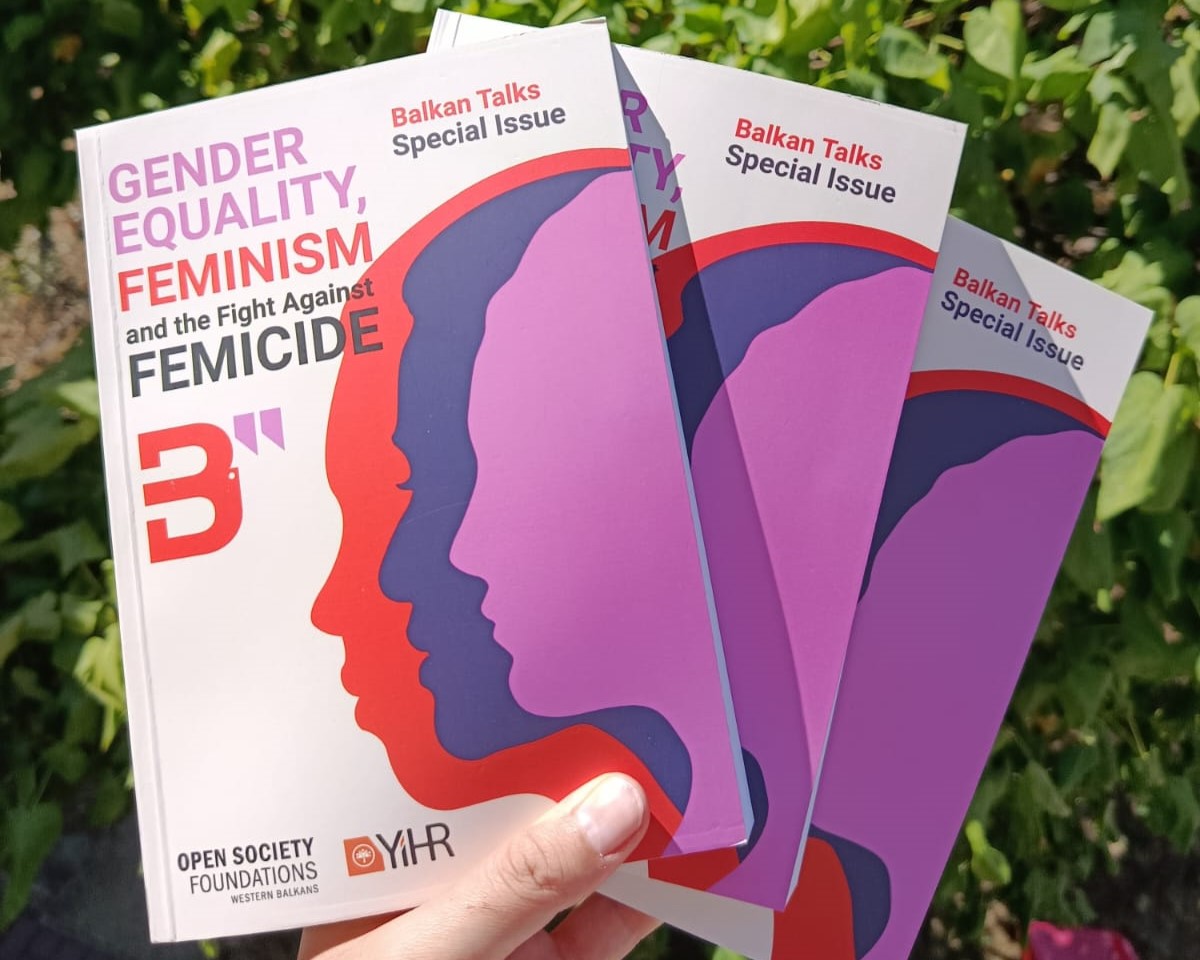
Balkan Talks Special Issue Is Here!
After more than a year of writing, researching, editing, discussing and working across borders, we are happy to share the Balkan Talks Special Issue: Gender Equality, Feminism and the Fight Against Femicide. Across more than 250 pages, the issue brings together 20 authors from 10 countries: Albania, Bosnia and Herzegovina, Bulgaria, Croatia, France, Greece, Montenegro, North Macedonia, Serbia and Slovenia. They are high school students, university students and young researchers, coming from different disciplines and experiences, but sharing a willingness to ask difficult questions about the societies in which we live. This publication grew from something that has been at the heart of Balkan Talks since its beginning: the conviction that young people across the Balkans should have a space to speak in their own voices and to speak to one another. That matters particularly in a region that is still so often described through its divisions. We come from different countries, speak different languages and carry different historical experiences. We do not need to erase those differences in order to work together. Balkan Talks has shown us that crossing them allows us to recognise how many questions we share about equality, safety, memory, discrimination, democracy and the institutions that shape our lives. The message coming from these pages is remarkably clear: young people across the Balkans do not want division to determine the limits of our conversations. Balkan Talks Special Issue Gender Equality, Feminism and the Fight Against FemicideDownload From research to the institutional arena Gender equality, feminism and femicide are the central concerns of this Special Issue, but they open the door to a much broader conversation. The texts address feminist anti-war activism, wartime sexual violence and its aftermath, motherhood and media pressure, sex-selective abortion, women in politics, LGBTQ+ solidarity, Roma women’s empowerment, artificial intelligence and misogyny, cultural representation and women’s resistance. And we wanted different forms of knowledge to have a place here. The issue therefore moves between policy work, research essays, opinion pieces, interviews, poetry and reviews. Some contributions are academic, others are personal. Some investigate institutions, while others turn to literature, film or lived experience. This diversity is deliberate: Balkan Talks gives young authors the freedom to decide which questions are urgent and how they want to approach them. There is, however, a reason why the first major chapter after the foreword is called “Balkan Talkers in the Institutional Arena.” At its centre is Recognising Femicide as a Standalone Crime: Policy and Advocacy Recommendations from Albania, North Macedonia and Serbia, written by Edit Babameto, Angela Dimovska and Jana Krstić. The paper examines legal and institutional responses to femicide in the three countries and develops country-specific recommendations intended for advocacy towards institutions, authorities and the wider public. Its place at the beginning of the publication reflects something important about how we understand Balkan Talks. Our texts are also part of our struggle. Our voices are a form of participation. Research can help us understand the societies around us, but understanding them is not where our responsibility ends. When young people document institutional failure, challenge the language through which violence is normalised, formulate policy recommendations or bring neglected experiences into public discussion, they are already intervening in the world they study. The policy paper itself emerged from the conclusion that another accumulation of data is insufficient when existing research already documents the problem: young researchers and youth leaders also need to bring that knowledge into visible, cross-border advocacy. That is what we mean by entering the institutional arena. We want our work to reach beyond our own pages. 20 authors, many forms, one conversation The Special Issue begins with the policy work of Edit Babameto, Angela Dimovska and Jana Krstić. In Balkan Talkers and the Socially Engaged Academia of the Future, Silvia Fabijanić examines women as agents of change in nonviolent protests in Ukraine and the Balkans; Ema Selimović explores feminist transnational counter-discourse through epistolary exchange during the dissolution of Yugoslavia; and Teodora Milovanović analyses media pressure surrounding motherhood in Serbia. The opinion section brings together Jana Krstić, Dunja Stojanović, Lora Zaharievska, Milica Marković, Almin Šemić, Nina Anžić, Tao Romevo, Stamena Kozić, Jovana Petković and Bojana Vuletić, writing from across the region about wartime sexual violence, sex-selective abortion, femicide and institutional responsibility, women in politics, gender and smoking, the erasure of women through seemingly positive stereotypes, generative AI and LGBTQ+ solidarity. Mary Drosopoulos speaks with Balkan women authors about solidarity with Palestine, while Orida Dajko tells the story of Brisilda Taço and Roma women’s empowerment in Albania. Poetry by Aleksandra Đorđević and Jana Krstić makes room for another language through which gender and lived experience can be expressed. Finally, Milica Jovanov, Almin Šemić and Eirini Tsordia turn to books, theatre and film, asking what culture can tell us about women’s lives and resistance. Together, these contributions refuse the idea that young people are simply waiting for their turn to participate. They are already researching injustice, creating knowledge, questioning inherited assumptions and building relationships across borders. Thank you, Balkan Talkers Above all, this publication belongs to the people who filled its pages. Our deepest thanks go to all of its authors: Edit Babameto, Angela Dimovska, Silvia Fabijanić, Ema Selimović, Teodora Milovanović, Dunja Stojanović, Lora Zaharievska, Milica Marković, Nina Anžić, Almin Šemić, Tao Romevo, Stamena Kozić, Bojana Vuletić, Jovana Petković, Mary Drosopoulos, Aleksandra Đorđević, Eirini Tsordia, Milica Jovanov, Orida Dajko and Jana Krstić. Special thanks go to Milica Jovanov, who created the illustrations and layout for this Special Issue, and Bojana Vuletić, responsible for proofreading and copy editing. The publication was edited by Jana Krstić and published by the Critical Education Centre (CKO), with a print run of 200 copies. Our gratitude also goes to the Balkan Talks editorial board: Jana Krstić, Bojana Vuletić, Eirini Tsordia and Tao Romevo, and to the people whose volunteer work keeps Balkan Talks alive throughout the year: Antonio Nojić, who maintains our website; Jelena Jaćimović and Emilija Krstić, for their design contributions; and Jovana Petković, whose social media work helps our authors and ideas reach young people across the region. We are also grateful to the professors of the CEU's Global Invisible University programme, within whose Balkan courses many of these texts, and Balkan Talks itself, first began to take shape. Balkan Talks remains a volunteer-driven initiative. Behind its articles, illustrations, website, social media and this publication are people who have decided that a regional space for young voices is worth their time and work. Now we want to hear your voice Publishing this Special Issue is a milestone, but it makes sense only if the conversation continues. We want more young people from across the Balkans to enter it. We want voices we have not heard yet, questions we have overlooked and disagreements that force us to think again. We want Balkan Talks to keep growing as a community where education and regional exchange meet. So read the Special Issue. Question it. Disagree with us. Continue an argument that one of our authors has started. Send us your research, essay, poem, review or an idea that does not fit neatly into any of those categories. Become a Balkan Talker. Because every time a young person from Sarajevo reads someone from Skopje, someone from Belgrade works with someone from Tirana, or a conversation begins between people who were taught to think of one another primarily through borders, something important happens. We do not become the same. We become better able to stand together while remaining different. And perhaps that is one of the clearest messages these 260 pages send: the young people of the Balkans are capable of crossing the divisions we inherited and speaking together about the societies we want to build. Follow our web journal and @talksbalkan to find upcoming calls, educational programmes and new opportunities to become part of the community. These are our voices. These are our struggles. And this is a community we are building across borders. Let’s keep Balkan talking! The publication of the Balkan Talks Special Issue and our advocacy for the recognition of femicide as a distinct criminal offence were made possible with the support of the Open Society Foundations (OSF) and the Youth Initiative for Human Rights Serbia (YIHR).

Call for Applications: Invisible University for Southeastern Europe
Central European University’s Global Invisible University Project Central European University has officially launched the Invisible University for Southeastern Europe (IUSEE) within its Global Invisible University program. This initiative builds upon decades of educational tradition established by the Flying Universities and the Alternative Academic Network, which historically aimed to fill formal education gaps in the region. The program is open to BA, MA, and PhD students residing in the Balkans, as well as those with a strong academic interest in the region. Starting in September 2026, IUSEE will offer two interdisciplinary courses: Introducing the Balkans (Dr Aleksandar Pavlovic and Dr Marija Mandic) and Wars for the Yugoslav Succession and their Contemporary Legacy in the Balkans and Beyond (Dr Vladimir Petrovic and Dr Sven Milekic). Introducing the Balkans focuses on the issue of perception and self-perception of this peninsula, and should be equally appealing to students from the region and those interested in it. Wars for the Yugoslav Succession and their Contemporary Legacy aims at examining not only the atrocious decade of warfare, but the way it shaped postwar realities in the region. We are aiming for advanced BA and ambitious MA students, primarily from universities in Southeastern Europe, but also beyond. Our courses are offered online, and the lecturers are coming from different academic disciplines and surroundings. Besides the courses on Southeastern Europe, the students can also enroll into an impressive range of courses offered by GIU’s Ukrainian and Georgian cluster. Full course descriptions are available here. The attendance is free of charge, and it offers additional opportunities: Student Benefits and Opportunities ECTS Certification: Participants can enroll in Balkan and other ECTS-certified courses offered by the Global Invisible University. Skill Development: The program provides intensive academic English training to enhance research proficiency. Financial Support: Students are eligible to apply for research grants valued up to 800 EUR. Academic Collaboration: Selected participants will contribute to the project's official website, Balkan Talks. In-Person Networking: Students are eligible to apply for a week-long, fully immersive winter school. Application Information Interested students are invited to submit their applications through the Global Invisible University Application Form. Application Deadline: September 9, 2026 For any question, you can contact us at [email protected]
Towards a new Yugoslavism
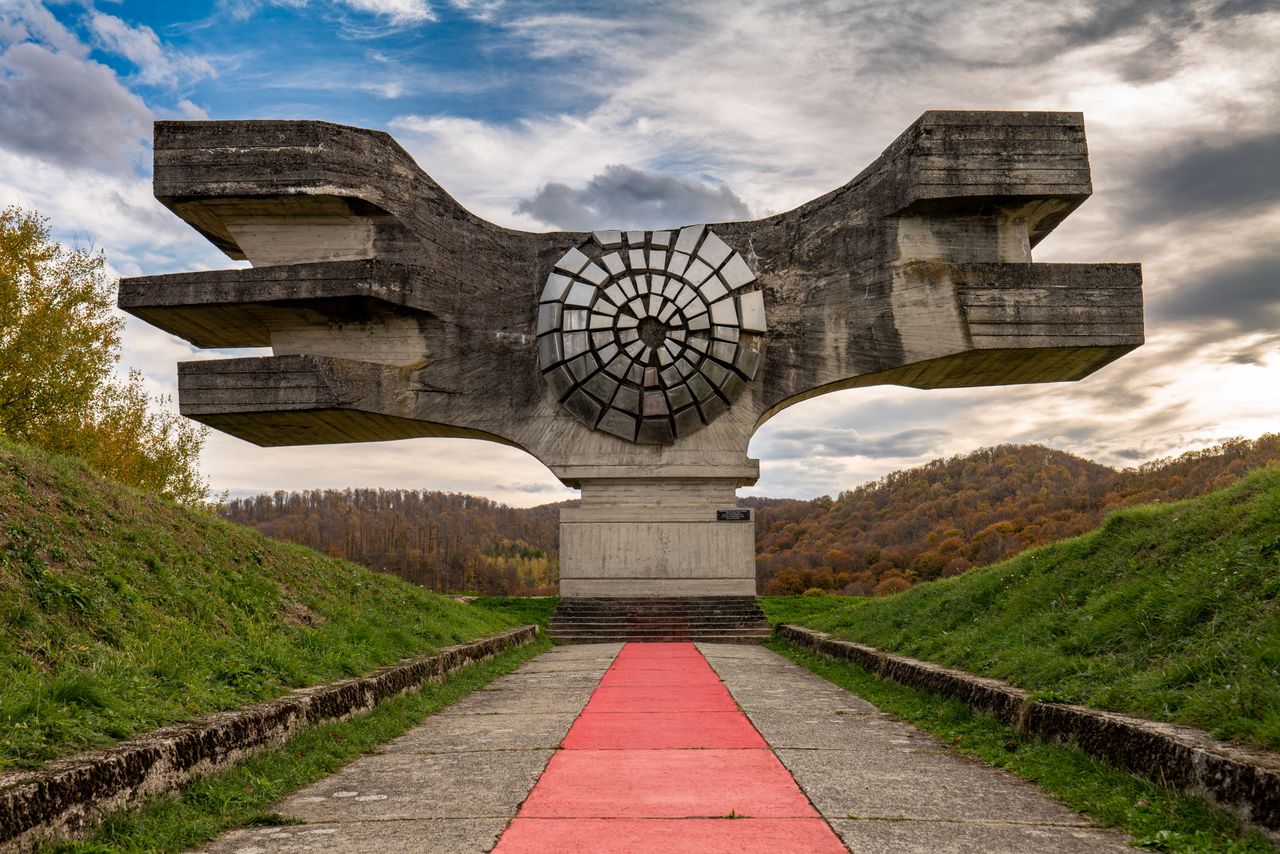
Author: Ante Čuljak The civil war in Yugoslavia delegitimised the historical trajectory of the South Slavic peoples. In its wake petty ethnonationalist states arose, and claim that the “experiment” of socialist Yugoslavia must remain in the past. A collective sense of longing exists in every former Yugoslav country, one that cannot be washed away by nationalism. Illustration photo. Retrieved from Pexels (www.pexels.com) The petty nationalist projects of countries such as Croatia, Serbia, Bosnia and Herzegovina with its three main nationalities, all claim to be better off independent, yet their economies now are dependent on imports from other countries, and heavy subsidies by the European Union, at least in the case of Croatia and Bosnia and Herzegovina. Particularly the case of reconstruction of infrastructure, buildings and deserted industrial sectors is a serious problem for Bosnia and Herzegovina, which has remained in a state of limbo for well over 30 years, unable to figure out its internal governmental structure, and with the Dayton System still in place, it is unsure when and if Bosnia and Herzegovina will leave its post-war malaise. Nationalist politicians in Croatia stoke the fires against Serbs while making themselves rich with European funds, while the rest of the country and its industrial sectors fall into disrepair, they keep on making Croatia into a model ethnostate. Serbia sits at a crossroads; surrounded practically on all sides by NATO and the European Union, its precarious position and continued radicalisation of the young populace pose quite a threat to its establishment. The perpetrators of horrid crimes in the 90s are celebrated as national heroes in Serbia, while honest fighters for freedom during WWII, the partizans, are remembered as traitors to the national project of Greater Serbia. Serbia’s deeply controversial history marks her in profound ways, and glorification of war criminals does nothing but cloud the minds of the people. The petty nationalist projects arose from the failures of Yugoslavia, and one can imagine Yugoslavia as an evolution of small nations into one, unified identity. To cast off aside these tribal identities, these preoccupations with just your people, your nation, is a monumental task. That task may take a hundred years, but once the masses of their respective countries realise that their nationalism only breeds hate towards others, and in fact makes them weak, only then can we start to make strides into a new Yugoslavism, one that will wash away the tragedy of the past, and finally rid us our biases and hatreds. Only by dreaming of something greater can we be great.
Srebrenica in the 90s, Gaza Today: How imperialism weaponizes humanitarian language to justify atrocity
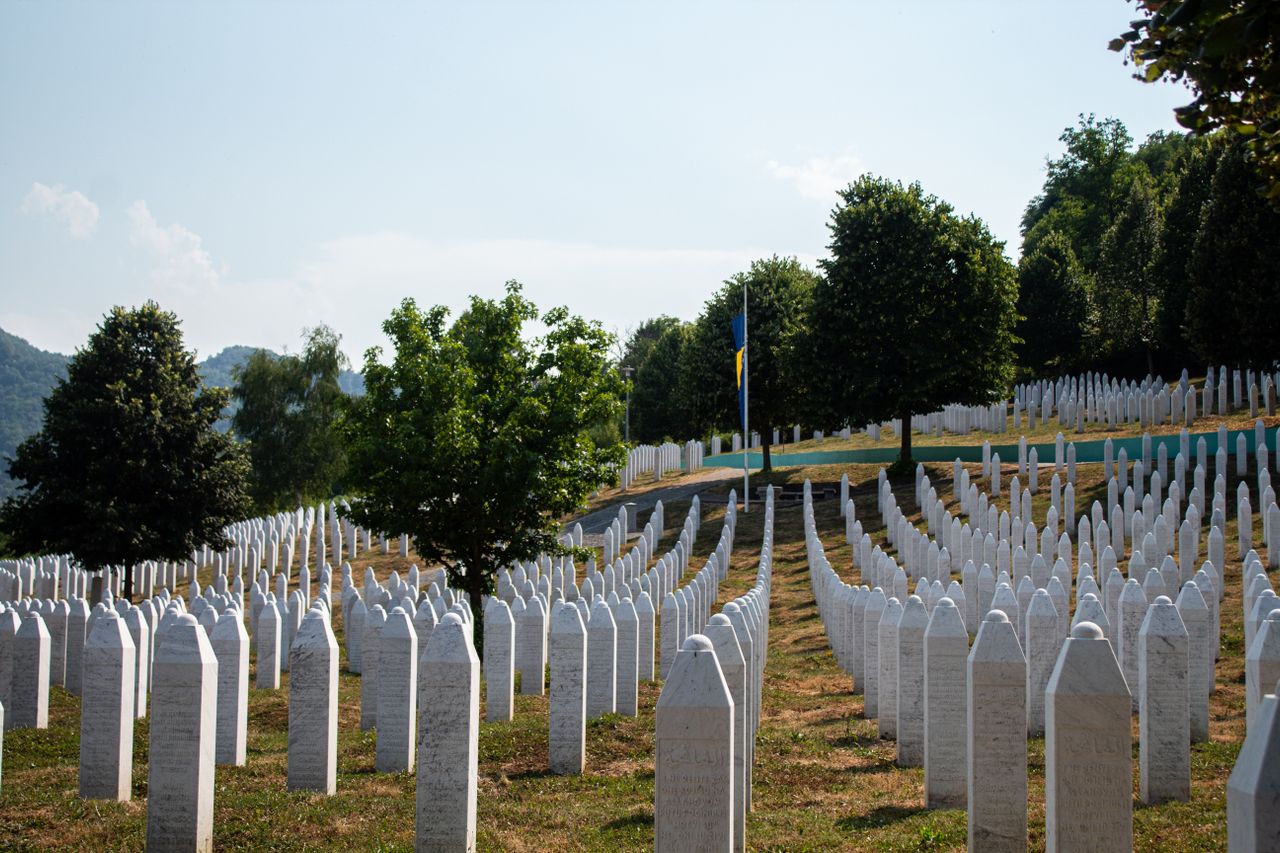
Authors: Ana Milosavljević Every year on July 11, Western ambassadors and dignitaries alike flock to the Potočari memorial center in eastern Bosnia to commemorate the Srebrenica genocide of 1995. 31 years ago, Bosnian Serb paramilitaries murdered more than 8,000 Bosniak men and boys en masse over the course of eight to ten days. In May 2024, the United Nations declared a day of remembrance for the victims of the Srebrenica genocide. But this year, more than any, the emptiness of the West’s “condemnation” of the Bosnian genocide was on full display, given its current support of Israel’s genocide of Palestinians in Gaza. However, the West’s hypocrisy regarding the Srebrenica genocide is much deeper than meets the eye. In fact, it was the US, Britain, and France that handed over the Srebrenica “safe zone” to its Bosnian Serb butchers in order to justify further intervention in the Balkan region. White gravestones at Srebrenica Memorial Cemetery, symbolizing remembrance and history. Photo by: Fatih Kopcal In 2005, the American diplomat Richard Holbrooke, who brokered the Dayton Accords to officially end the war, told Bosnian Hayat TV: “I was under initial instructions to sacrifice Srebrenica, Goražde and Žepa.” And that’s exactly what he did. Over the course of the three-year-long war, Bosniaks were ethnically cleansed from their villages by predominantly Serb paramilitaries but also Croat ones, to a lesser extent. Serbian President Milošević and Croatian President Tudjman had met before the war to devise a plan to partition the country for themselves. Bosniak refugees were funneled into what were assured to be the so-called “safe zones” of Srebrenica, Goražde, and Žepa. Once they arrived, they were disarmed completely and left with a meager Dutch peacekeeping force that was recently found guilty of willingly handing over many Bosniaks to their death. The US itself had intelligence and satellite imagery monitoring not only Serb troop movements in the lead-up to July 11 but throughout the duration of the massacre itself. Satellite imagery showed the bodies piling up in the killing fields, but no one did anything. But this year, more than any, the emptiness of the West’s “condemnation” of the Bosnian genocide was on full display, given its current support of Israel’s genocide of Palestinians in Gaza. In the wake of the massacre, the US garnered international support for its campaign to bomb Serb positions in Bosnia and lead the post-war process. This was the first time the so-called “defensive” North Atlantic Treaty Organization (NATO) launched an aggressive military campaign. As part of the so-called peace process, the Dayton Accords partitioned the country according to ethnicity: the Serb autonomous Republika Srpska and the Bosniak and Croat majority Federation of Bosnia and Herzegovina. Within that agreement, NATO troops were to be deployed to Bosnia, the first ever troop deployment outside of NATO member states. What was previously a nominally socialist, multi-ethnic country has since turned into a cesspool of neoliberalism, including austerity cuts, privatization of state-owned assets, environmental degradation, and misery for the masses of people. Now, Bosnia and all Balkan countries are encircled by the vultures of the world, including the US, China, and Russia, who are happy to profit from the bloodshed. That’s not to say that the Bosnian war was solely a Western creation, far from it. Yugoslavia’s internal divisions and inequality between nations laid the groundwork for armed conflict that was fostered, promoted, and waged by the ruling elite from the wealthiest republics. Yugoslavia’s History of Unity and Divisions In the decades since the wars related to the break-up of Yugoslavia ended, many have asked, perplexed: how could a country where various nations lived in relative peace end in such bloodshed—a country that was formed in the wake of and due to multi-national resistance to the Nazi occupation during World War II? The answer lies at the crossroads of economics and history. As Serbian forces took Srebrenica, the war criminal Ratko Mladić told cameras that “the time has come to take revenge on the Turks in this region.” The Turks he was supposedly referring to were Bosniaks, who he was intent on exterminating from the area to support Serbia’s territorial claims in Bosnia. During the 500+ year-long rule of the Ottoman Empire in the Balkans, both voluntary and involuntary conversion of the native populations to Islam was facilitated, including Christians, Catholics, and the Bogomils. Due to this history, Serbs and Croats both claim Bosniaks as belonging to their respective nation. Along this line of reasoning, many insist that Bosniaks simply do not exist as a separate nation. However, this logic ignores the historical development of nations and how they evolved over the transitory period between feudalism and capitalism. It is true that during Ottoman rule, Muslims enjoyed greater privileges than non-Muslims. Bosniak landowners were part and parcel of the Ottoman’s crushing rule in Bosnia, which oppressed not only poor Serb and Croat peasants but also Bosniaks. Multiple times, peasants of all these backgrounds rebelled against the empire of the day. From 1831 until 1875, poor peasants of all religions and backgrounds launched five different armed uprisings against the Ottoman Empire. With each rebellion, Bosniaks separated their national identity more and more from the ruling Turkish elite. In 1882, Serbs and Bosniaks also rebelled against the Habsburg military recruitment law, which would have conscripted young men. While Bosniak landowners were generally loyal to the Ottomans, peasants of all stripes had more in common with one another than the landowners. During the Habsburg rule in Bosnia, Bosniak landowners lost the political and economic power they had during the Ottoman Empire. Catholic and Orthodox landowners were seen as more reliable bulwarks against the Ottomans; thus, the feudal power dynamic was flipped on its head. The development of the Serbian nation was nurtured by the Russian Tsar, using Pan-Slavism as a smokescreen to extend its own influence in the region while the Catholic Habsburg empire coopted the Croatian national movement in an effort to defeat Hungarian pro-independence forces. In doing so, these powers helped develop the capitalist classes of both the Serbian and Croatian nations which both sought to convert and claim Bosniaks as their own. The oppression of Bosniaks further solidified under the First Yugoslavia from 1918 until 1941. At the beginning of the Yugoslavia monarchy, 2,000 Bosniaks were killed by Serb and Croatian paramilitaries in just two years. In 1919, land reforms nationalized eight million acres of Bosniak land, leaving 10% of Bosniak peasants without any means of production. Capitalist Yugoslavia with Socialist Trimmings Nazi Germany took advantage of this division in 1943 and promised Bosniaks a Muslim state if they cooperated. As such, a battalion of 21,000 Bosniak soldiers was formed to fortify the German occupation. The battalion was commanded by the SS officer, Himmler. Despite German support, the Bosniaks were still under attack from the other fascist forces of the region, including Serbian Chetniks and Croatian Ustasha. This caused many Bosniaks to join the multi-national Partisans led by the Communist Party of Yugoslavia. Under the motto of “Brotherhood and Unity,” Yugoslavia made some surface-level efforts to address the national oppression of Bosniaks. In 1963, the Socialist Federal Republic of Yugoslavia recognized a “Muslim nation” (referring to Bosniaks) as a constituent nation. Secularism was widely promoted; however, there was not a concerted campaign to break down reactionary ideologies that claimed Bosniaks as “merely” Islamized Serbs or Croats. In particular, chauvinism reigned supreme and reinforced economic inequalities between the wealthier nations (Serbs, Croats, and Slovenians) as compared with the poorer ones, including the Muslim Bosniak and Kosovar-Albanian populations. During the lifespan of Yugoslavia, there was an economic inequality between republics and nations that ultimately helped bring about the country’s demise. From 1953 to 1989, Bosnia’s gross domestic product (GDP) per capita decreased by 20 percent while GDP either remained the same or grew in the three wealthiest republics: Serbia, Slovenia, and Croatia. Statistical Yearbook, Belgrade, 1991. Institute of Economics – Zagreb, Center for Economic Informatics and Statistics. The impoverishment of oppressed nationalities like Bosniaks was further facilitated through the divisions in production. Raw materials were largely extracted from poorer republics and transported to wealthier ones to be refined. While many on the left still laud “Tito’s socialism,” a few additional facts illuminate the fact that Yugoslavia was simply a state-capitalist society with more social welfare programs. Over the lifetime of Yugoslavia, wage inequality increased instead of decreased; early on, wages between managers and workers were 1:3.5. By 1967, the ratio was 1:20. This was facilitated by so-called workers self-management councils, which bestowed managers, engineers, and white-collar workers with more power than the workers performing manual labor. As such, the Yugoslav “socialist” system, in effect, reproduced capitalist relations. Between 1972 and 1982, Yugoslavia’s foreign debt increased ninefold from $2.4 billion to $20.3 billion. In the 1980s, the World Bank and International Monetary Fund (IMF) used this debt to propose structural adjustment loans meant to privatize as much of Yugoslavia’s economy as possible. The austerity program was initially struggled against by a movement that crossed ethnic lines but was ultimately exploited by the reactionary nationalist elite. Throughout the late eighties and early nineties, half a million people took part in labor strikes against wage freezes, layoffs, increases in food and fuel prices, and the decadence of the ruling class. Reports about a strike in Slovenia noted that in addition to the economic demands, “The workers also demanded that the government slash the number of factory administrators, limit the number of limousines used by factory executives, and restrict their business travel.” Due to the corruption of the self-management committees and the bankruptcy of the Communist Party, workers became disillusioned with the establishment leadership. And thus, an opportunity emerged for reactionary nationalist groups to pit various ethnic groups against each other instead of blaming the multi-national, capitalist elite. For example, the right-wing Croatian Democratic Union political party blamed Serbs for the strikes in Croatia. The local party chapter said of one CEO that “he and other Serbs were to blame for the bad condition the company is in.” The Serbian elite claimed the “Serbs wanted to work, while the Croats didn’t.” At a session of the workers’ council, a female worker ominously warned against the strategy of the ruling elite, asking, “Will we swallow the bait of such tricks and misguided information, used by the most lazy among us to create divisions, when all of us will be equally hungry tomorrow: Croats, Serbs and Muslims alike!” Foreign Involvement in Bosnia Such was the reactionary nationalism that ultimately led to the state-supported Serb forces pillaging, looting, and exterminating Bosniak villages in Bosnia. Such was the reactionary nationalism that led to the Croatian government forcibly displacing its Serbian population at gunpoint, leading to the ethnic cleansing of 200,000 Serbs from eastern Croatia. The main reason why the West did not support Serbia’s attempts to keep the union together at will was to expel Russian influence from the region. It would be easier for the US to counter Russian influence if it was sequestered to Serbia as opposed to spread across six republics. In addition to representing the Ottoman Empire, the Serbian and Croat ruling classes justified their territorial ambitions as fighting “radical Islam.” They characterize Bosniaks as Islamic fundamentalists who sought to implement sharia law and oppress non-Muslims in an Islamic state. Bosniaks are generally secular, but there were members of their own ruling elite who promoted such ideology. For example, Alia Izetbegović, who became a member of the Presidency of Bosnia, had in the 1970s written an Islamic Declaration with hopes for Bosnia’s future as an Islamic state, which stated, “There can be neither peace nor coexistence between the Islamic religion and non-Islamic social and political institutions.” During the war in Bosnia, Saudi Arabia and Iran both sent mujahideen to fight on behalf of Bosniaks. While Serb and Croat-led paramilitaries did most of the plunder of Bosnia, it is reported that these fighters and Bosniak war criminals participated in ethnically cleansing Serbs and Croats in central Bosnia as well. In addition, Saudi-funded Wahhabi groups have funded mosques throughout the country and recruited members of the poor working-class youth to advance Wahhabism. In short, as the US Army War College paper says: “Bosnian Serbs and Croats may exaggerate the threat of Islamism or potential Islamic dominance, but the Bosniak leadership certainly provides them with plenty of ammunition.” In addition to Saudi Arabian Wahhabi forces, Turkey uses its historical and religious ties with Bosniaks to disguise its own self-interest in the region. In the 1990s, Turkey became part of the UN wartime peacekeeping mission. After the end of the war, it joined the NATO occupation of the country and had the second-largest number of troops in Bosnia. Turkey’s economic ambitions in the country became clear in a speech by Turkish politician Davutoğlu in Sarajevo in 2009. At an event titled “Ottoman Heritage and Muslim Communities in the Balkans Today,” he proclaimed, “Now is the time for reunification” by “reestablishing ownership in the region, through reestablishing multicultural coexistence, and through establishing a new economic zone.” Since then, Turkey has steadily increased its influence in Bosnia via investments in telecommunication, energy, transportation, health, tourism, construction, and banking. Today, Bosniaks see Turkey as their most significant and reliable ally. The most surprising player during the Bosnian war, however, is Israel. During the wars of the 1990s, Israel exported arms to the Serbian army, which were almost certainly used in the Bosnian genocide. In 2016, Israel’s State Attorney deemed that disclosure of Israel’s role in the Bosnian genocide posed a threat to Israel’s national security and foreign relations: a de facto admission of guilt. The butcher of Srebrenica and Bosnia, Ratko Mladić, wrote in his journal, “From Israel – they proposed joint struggle against Islamist extremists. They offered to train our men in Greece and a free supply of sniper rifles.” More recently, Israel abstained from a United Nations vote designating July 11 as the International Day of Reflection and Commemoration of the 1995 Genocide in Srebrenica. Bosnian War Repercussions When all was said and done, more than 200,000 people were killed in Bosnia, the vast majority (160,000) Bosniaks, 30,000 Croats, and 25,000 Serbs. 20,000 Bosniak women and children were raped in concentration camps while villages were looted and plundered by Serb and Croat forces. Two million people, mostly Bosniaks, were driven from their ancestral homes, and the economic cost of the war is estimated to be approximately $80 billion. Today, Bosnia and Herzegovina (along with other Balkan countries) ranks amongst the highest in terms of poverty and emigration in Europe. While the war has ended, the ideas and tensions that gave rise to it live on. Most Serbs do not recognize the systematic killing in Srebrenica as a genocide, as they are convinced by their own ruling elite that admission of this massacre makes Serbs a “genocidal nation.” In this way, the ruling elites of the Balkan countries continue the tradition of masking class differences with reactionary nationalist fervor. They do this skillfully to avoid scrutiny of their own exploitation of the masses and to divert attention from their culpability in war crimes of the 1990s. Such is the case with Serbian President Aleksandar Vučić, who in the 1990s famously proclaimed, “For every Serb you kill, we will kill 100 Muslims.” In the West, US intervention in Bosnia is widely seen as a successful “humanitarian mission.” For those on the left, it can be regarded as an effective way to bring a disobedient country to its knees. As soon as the Soviet Union collapsed, the US used its position as the most powerful imperialist to allow for and then coopt the massacre of Bosniaks for its own geopolitical interests. The US was happy to carve up the region for itself. However, it cannot be seen as the sole reason for Yugoslavia’s demise. In order to divide and conquer, there must be divisions to exploit. Until the people of the Balkans come to terms with this, the US, Turkey, Russia, and now China will continue to steal the wealth of the masses of each and every country in the Balkans, paying no mind to their religion or ethnicity.This article written by Ana Milosavljevic was first published in July 22, 2024 on red.media.

Balkan Talks Stands with Jona Cenameri
The editorial team of Balkan Talks stands in full solidarity with our colleague and friend Jona Cenameri, who has become the target of a smear campaign by Serbian pro-government tabloids. We strongly condemn the actions of Informer and other regime-aligned media outlets that continue to target young people from Serbia and across the Western Balkans who are working to build peace, regional cooperation, and democratic societies. These campaigns do not simply attack individuals; they seek to intimidate an entire generation determined to imagine a different future for our region. Photo: Jona Cenameri, private archive Jona is a journalist at Faktoje.al, one of the leading fact-checking media organizations in Albania and the Western Balkans. Her commitment to evidence-based journalism, accountability, and public interest reporting is precisely what makes her a target for media that thrive on disinformation and political polarization. Over the past few days, Jona participated in the Youth Summit in Novi Pazar, organized by the Youth Initiative for Human Rights, together with students and young activists from across the region. Speaking to Balkan Talks, Jona questioned why media reports attacking the summit featured images of Albin Kurti when he had neither attended nor been mentioned during the event. Her remark illustrates how quickly facts can give way to manufactured narratives whenever independent voices challenge the stories that certain media seek to promote. Unfortunately, this kind of targeting has become increasingly common in Serbia. Since the beginning of the student protests, pro-government tabloids have repeatedly attempted to portray students, journalists, academics, and activists as enemies rather than citizens exercising their democratic rights. Such campaigns foster hostility, encourage harassment, and place real people at risk. What stands out in this latest wave of attacks is the attempt to link the Serbian student movement with Albania's Flamingo Revolution as though regional solidarity itself were something suspicious. In reality, these movements emerged independently, responding to different local circumstances. Yet they share many of the same democratic aspirations: demanding transparency, accountability, protection of public goods, and institutions that serve citizens rather than political elites. They also reflect a generation that refuses to accept corruption, state capture, and the privatization of resources that belong to everyone. Across the region, young people have increasingly recognized that many of the challenges they face are interconnected. Debates around public land, urban development, environmental protection, democratic participation, and the influence of powerful political and business interests do not stop at national borders. Whether discussing the Albanian coastline or public assets in Serbia, these conversations are rooted in a broader struggle over who has the right to shape the future of their communities. This growing regional dialogue is precisely what makes initiatives such as the Youth Summit in Novi Pazar so important. They create spaces where young people from different countries can meet not as enemies defined by the past, but as partners committed to justice, democracy, and a more peaceful future. At Balkan Talks, we witness this every single day. Our platform exists because young people throughout the Western Balkans want dialogue instead of hatred, cooperation instead of nationalism, and reconciliation instead of division. Every article we publish, every conversation we host, and every story we amplify demonstrates that another Balkans is not only possible, but it is already being built by those who refuse to inherit old conflicts. Attempts to divide us through fear, smear campaigns, and media harassment will not succeed. To those who spread hatred, we answer with solidarity. To those who try to isolate courageous young voices, we answer by standing closer together. And to Jona, as well as to every young journalist, student, activist, and researcher who faces intimidation for speaking the truth: you are not standing alone. Balkan Talks stands with Jona Cenameri. Today and always.
Zakaj je komisarka Kos ključ za stabilnost držav Zahodnega Balkana?
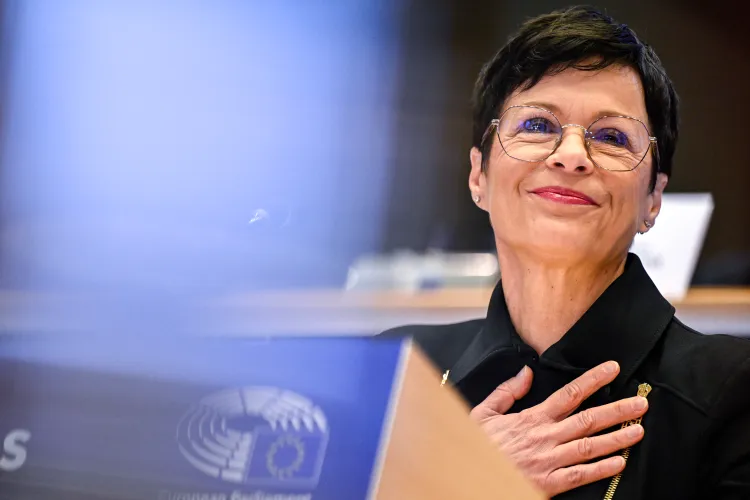
Avtorica: Nina Anžič To vprašanje je morda provokativno, a vendar ključno, če želimo, da države Zahodnega Balkana sploh kdaj postanejo članice Evropske unije. Za začetek bom izpostavila dejstvo, da je Marta Kos komisarka, pristojna za širitev v Evropski komisiji pod vodstvom Ursule von der Leyen v mandatu 2024–2029. Komisarska kandidatka za širitev Marta Kos na potrditvenem zaslišanju v Evropskem parlamentu (7. november 2024). Vir: newunionpost.eu Komisarka Kos je bila rojena še v času Jugoslavije, kar pomeni, da zelo dobro razume mentaliteto, kulturo in ne nazadnje tudi jezik med nekoč bratskimi državami. Dejstvo je, da je Slovenija leta 1991 – takrat še Socialistična republika Slovenija – prva zapustila Jugoslavijo. Sledila nam je Hrvaška in takrat se je začela krvava vojna na področju nekoč bratskih republik. Slovenija je takrat s štirinajstdnevno vojno za samostojno državo odnesla najbolje, če to sploh lahko merimo v tistem krvavem času med nekoč bratskimi narodi v bivši socialistični federativni Jugoslaviji. Slovenija je prva postala članica Evropske unije leta 2004, Hrvaška pa ji je sledila leta 2013. Vendar pa se je Slovenija ves čas, ne glede na levo ali desno vlado, v svoji zunanji politiki krčevito zavzemala za stabilen Zahodni Balkan in članstvo teh držav v Evropski uniji. Vendar, kje se je zalomilo pri državah, kot so Srbija, Bosna in Hercegovina ter Severna Makedonija? Zadnja država, ki sem jo omenila, si je uradnemu imenu celo dodala besedo "Severna", pa to še kar ni dovolj za članstvo v Evropski uniji? Srbija ter Bosna in Hercegovina se s svojim procesom približevanja še kar ne premakneta z rdeče luči na semaforju evrointegracij. Obe državi bosta morali nujno spremeniti stanje demokracije, svobode govora, vladavine prava in predvsem stopnjo korupcije.A vendar v Srbiji vidimo prihodnost v študentih, ki se ne dajo in ostajajo v blokadi z jasnimi zahtevami do oblasti. Zakaj ta ista politika ni sposobna prisluhniti svojemu največjemu potencialu, ki ga ima v državi? Če v Srbiji mladi sploh še dajejo upanje po spremembah, pa tega žal ne vidimo v Bosni in Hercegovini. Ali so v Bosni in Hercegovini že vsi mladi upi te države odšli v tujino in postali diaspora, ki se vrača domov le še ob praznikih? A vendar, vrnimo se nazaj na pot Evropske unije in komisarke Kos. Slednja je na svojem uradnem obisku srečala tako oblast kot tudi študente v blokadi. Torej EU jasno vidi prizadevanja mladih v Srbiji, v to sploh ne dvomim. Aktivni so tudi evropski poslanci – pri tem lahko zopet izpostavim slovensko poslanko Ireno Jovevo, pa tudi hrvaškega evropskega poslanca Gordana Bosanca. Prav tako države Zahodnega Balkana že danes aktivno sodelujejo v mehanizmu EU na področju civilne zaščite. Ko smo imeli v Sloveniji najhujše poplave v zgodovini samostojne države, so nam prav vse države Zahodnega Balkana takoj priskočile na pomoč. Ob tem se človek vpraša: ali je sodelovanje pri reševanju življenj in premoženja edina stična točka držav nekdanje Jugoslavije in Evropske unije?Če te priložnosti ne izkoristimo, bo mandat Marte Kos izgubljen mandat – predvsem za prej omenjene države Zahodnega Balkana. Močno namreč dvomim, da bo na to funkcijo še kdaj imenovan Slovenec ali Slovenka; nekdo, ki to regijo dejansko pozna in jo razume mogoče celo bolje kot nacionalna politika teh držav sama. Prav v tem razumevanju se skriva ključ, imenovan komisarka Marta Kos.