
Author: Stamena Kozić, a high school student from Serbia
In the Balkans, mental health is often recognized only when it reaches an extreme. As long as a person continues to function-attending school, going to work, fulfilling responsibilities-this is treated as proof of stability. Functioning becomes evidence that everything is “fine”, even when it’s not. As a result, struggles such as anxiety, depression and burnout are rarely seen as legitimate unless they interfere with productivity. The ability to keep going is praised, while the cost of doing so remains invisible.
However, data tells a different story. Research conducted in Serbia alone shows that approximately one-third of the population can be considered psychologically vulnerable. Around 15.6% of people report symptoms of depression, 7.2% experience symptoms of anxiety, and 1.6% are at high risk of suicide. These numbers exist alongside everyday functioning, challenging the idea that productivity equals well-being.
Mental health in Balkan schools
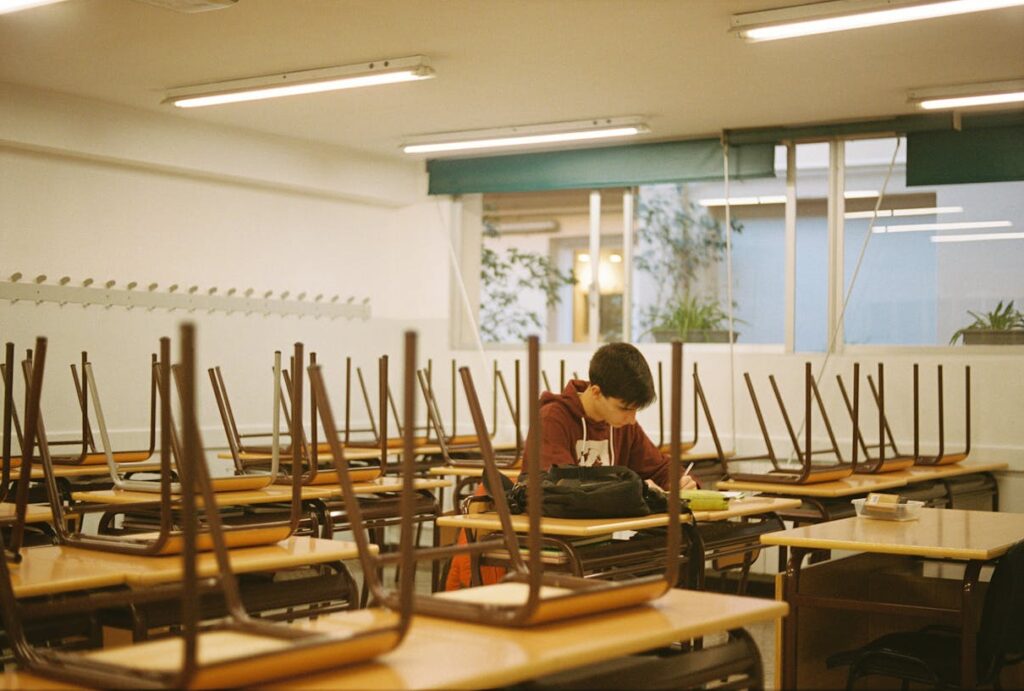
In the Balkans, seeing a psychologist is still not normalized within the school system and is often perceived as a last resort rather than a form of prevention or care. Students are typically referred to school psychologists only after being labeled as “problematic,” when their difficulties become visible through academic failure, behavioral issues, or a noticeable decline in productivity. These markers are treated as the primary indicators of distress, while emotional suffering does not necessarily disrupt performance and remains largely unaddressed.
Well-performing students—those who maintain good grades, attend classes regularly, and meet institutional expectations—are rarely checked on or encouraged to seek support. This creates an environment in which psychological help is associated with dysfunction and punishment rather than well-being. As a result, schools unintentionally reinforce the idea that as long as a student continues to function, there is no need for help, even if that functioning comes at the cost of mental and emotional health.
This mindset is especially dangerous because many mental health conditions do not immediately disrupt outward functioning. Disorders such as eating disorders often operate within this logic of “not being sick enough.” Individuals may continue to perform well academically or socially, leading both themselves and others to believe there is no reason to seek help. This delay in recognition frequently allows the condition to worsen, increasing both psychological and physical risks. In extreme cases, the consequences of untreated mental illness can be fatal—underscoring the cost of a system that equates visible dysfunction with the legitimacy of suffering.
Why Mental Health Remains a Taboo in the Balkans?
Mental health continues to be a taboo in the Balkans largely because the region’s recent history has been defined by survival rather than stability. Wars, political transitions, and prolonged economic insecurity have shaped societies in which endurance is valued more than emotional openness. In such environments, psychological distress was often viewed as luxury concern, something secondary to immediate survival. As a result suffering became normalized as an expected part of life, rather than recognized as a condition that deserves care and attention.
Stigma surrounding professional mental health support further reinforces this mindset. Therapy and psychiatric care are frequently associated with severe illness or social failure, rather than prevention or self-understanding. As the aforementioned research shows, many people seek help only when their condition becomes unmanageable, if they seek it at all. This is compounded by structural barriers: mental health services across the region remain underfunded, unevenly distributed, and difficult to access, particularly for young people. Long waiting times, limited school-based support, and high costs in private care discourage early intervention.
Over time, emotional restraint has been learned and passed down across generations. Parents and grandparents who endured hardship without psychological support often model silence as resilience. Phrases such as “others have it worse” or “you’ll get over it” are commonly used, unintentionally minimizing emotional pain. Together, historical trauma, stigma, and systemic limitations have created a culture in which mental health struggles are only acknowledged when they become impossible to ignore- maintaining the same pattern of recognition through crisis rather than care.
How Mental Health Is Approached in Other Countries?
In many countries outside the Balkans, mental health is increasingly treated as an integral part of public conversation rather than a private issue. Discussions about anxiety, depression, and burnout are more visible in media, education, and policy, helping reduce sigma around seeking support. Asking for professional help is often framed as an act of responsibility and self-awareness, not weakness.
Mental health education is frequently incorporated into school curricula, teaching students to recognize emotional distress early and encouraging them to seek help before problems escalate. Therapy is widely normalized, with school counselors and mental health professionals positioned as preventive resources rather than emergency responses. This emphasis on prevention- addressing mental health before it reaches a crisis point—stands in sharp contrast to systems that acknowledge psychological distress only after functioning begins to fall.
How Can We Begin to Change This?
Redefining strength is the first step: true resilience is not just endurance or silence, but the courage to acknowledge vulnerability and seek help when needed. Creating spaces for honest conversations—at home, in schools, and in public lifecan gradually break the stigma that has persisted for generations.