
Kosovo and the Dissolution of Yugoslavia: A Delayed Explosion
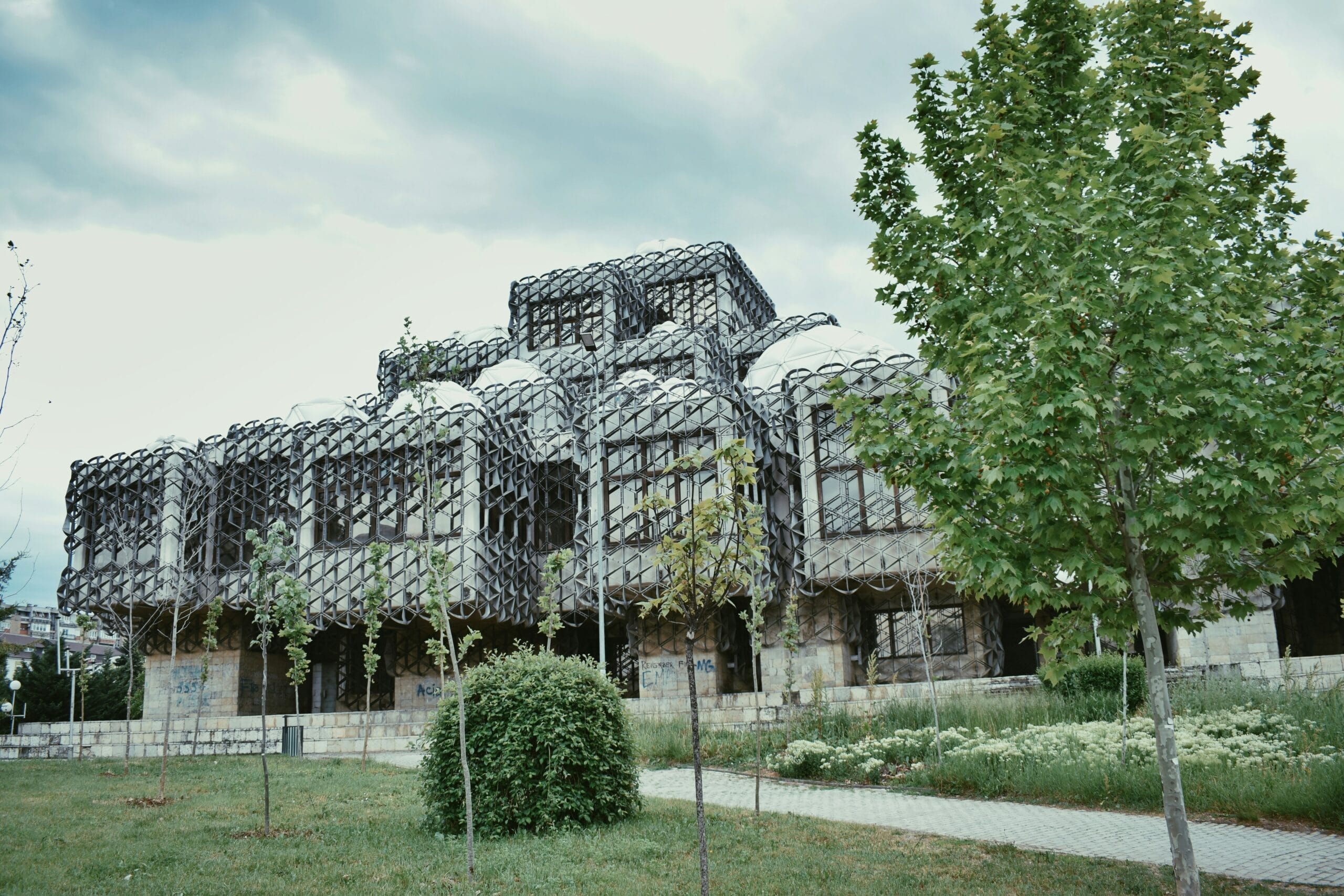
Author: Janka Júlia Csepregi A review of the rich scholarly literature on the dissolution of Yugoslavia and the wars of the 1990s published over the past few decades shows that the so-called “Kosovo question” often appears as a framing element in interpretations that, rightly so, approach the process of dissolution from a transnational and holistic perspective. Namely, the situation of Kosovo is typically discussed in the introductory sections where different scholars outline the dire situation unfolding from the complex crisis of the 1980s in Yugoslavia and the nationalist mobilization fueled by Milošević, which first escalated in Kosovo. As accounts follow the course of events and the development of armed conflicts and wars in the independent republics, it is not until 1998 that Kosovo returns to the narrative, as the „last in the line of conflicts” to be solved following the dissolution (see e.g. Baker 2015; Sundhaussen 2014). Photo: Unsplash/Xhiliana Nevertheless, the marginalization of the question of Kosovo in the 1990s is not only a phenomenon in scholarly interpretations. In fact, the situation in Kosovo was sidelined and largely neglected for a period in contemporary international discourse concerning developments in Yugoslavia, too. Although the human rights issue in Kosovo was in the center of both domestic and international attention during the economic and political crisis unfolding in the 1980s in Yugoslavia, armed conflict first escalated in the breakaway republics claiming independence, and the question of Kosovo remained marginalized until the late 1990s. Reason for the collapse of Yugoslavia Scholarly explanations of the dissolution of Yugoslavia can be broadly grouped into several strands that emerged from the early 1990s onward (Dragović-Soso 2007). The first body of arguments focused on longue durée causes of ethnic conflict. Be it the essentialist vision of “ancient hatred” among the “Balkan people,” promoted already during the Balkan Wars in the West, the highly contested theory of the clash of civilizations, or approaches of historical geography depicting Yugoslavia as a peripheral space shaped by former multinational empires, these explanations view the multinational and multiconfessional character of Yugoslavia as the main source of therefore unavoidable conflict. Similarly, another group of historians highlights the failure of the ideology of “Yugoslavism” to integrate inherently incompatible identities, most notably those of the two biggest state-building nations, the Serbs and the Croats. Whether attributed to Serbian hegemonism or Croatian and Slovenian separatism, interpretations focusing on the legacy of the first Yugoslav state portray the multinational state as an impossible idea doomed to failure. Shifting the focus from the roots of violence to the process of disintegration, a third body of scholarship examines the evolution of socialist Yugoslavia, with particular attention to the 1974 Constitution and the confederalization of the constitutional system. These institutionalist explanations emphasize how deep economic and political crises contested the socialist legacy and eventually led to state collapse, while leaving unanswered the question of whether political reinvention could have prevented it. More recent and now widespread approaches reject the predetermined nature of the collapse and instead stress the responsibility and agency of political and intellectual elites in promoting tensions and inducing fear, primarily through state controlled media. Without denying the significance of the systemic crisis that delegitimized socialism, scholars argue that it was the active dissemination of nationalist ideologies and hatred by elites that made disintegration inevitable, generating influential debates on elite-led versus grassroots dynamics and the processes of national mobilization. In contrast with these perspectives, scholars have also turned toward international factors, such as the role of international financial institutions or Western recognition policies in the early 1990s, with debates over the timing, extent, and moral value of international intervention continuing to shape both academic interpretations and the legacy of the 1990s wars. Methodological nationalism and transitional perspective In the past few years, the academic scholarship on Yugoslavia’s dissolution has increasingly been accused of essentializing the Yugoslav case and „reading history backwards”. This phenomenon does not only concern the „nationalizing” historiography of post-Yugoslav nation states that tendentially relies on a research agenda aimed at normalizing the successor states „backwards” and projecting its current reality back in history (called methodological nationalism). On the contrary, this methodological bias is also characteristic of international scholarship that until the present day has viewed the country’s dissolution „shaped by its end”, focusing on developments in Socialist Yugoslavia leading to its failure while neglecting evidence that suggests the opposite. In fact, this is also reflected in the general direction of this research, namely in the large number of works that focus on the ethnic nature of the conflict, in contrast to the common Yugoslav topoi that characterized historiography before the breakup (Bieber 2016:1–3). This approach therefore suggests a turn in new research directions such as e.g. a shift from political history to the Yugoslav Lebenswelt or a focus on the ’havenots’ rather than the ’haves’ of Yugoslav society in order to understand the existing social inequalities that could play a role in inidividuals’ response to nationalist mobilization (Archer 2016; Galijaš 2016). By applying a transnational perspective, the essay understands developments in Kosovo as an integral part of the broader process of Yugoslavia’s dissolution and the unfolding armed conflicts, which are treated as neither predetermined nor inevitable. Consequently, in order to avoid the trap of “reading history backwards,” the discussion concentrates on the initial phase of the conflict rather than on its more frequently analyzed escalation. The evolution of the international attitude towards the Kosovo issue Although Kosovo was initially perceived as a fundamental issue in the context of Yugoslavia’s dissolution, after the recognition of the Western republics it was excluded from the peace process and viewed as an internal matter of Serbia by the international community. How can one explain the neglection of the Kosovo issue in the early 1990s? In the following I will argue that the international assessment and handling of the Kosovo issue was overshadowed by the unfolding conflict in the Western republics and was therefore primarily dependent on the intentions concerning Yugoslavia’s survival. Firstly, observing the evolution of the international attitude towards the Kosovo question, it seems that it was only in the foreground of international attention as long as Western powers were insisting on the preservation of Yugoslavia. Early American and European initiatives, including sanctions imposed on the entire territory of the former Yugoslavia (such as the arms embargo), formed part of a broader strategy aimed at preserving Yugoslavia and treating Kosovo as a core issue to be resolved within the framework of the Yugoslav state (Bellamy 2002:18). However, the realisation that Yugoslavia could not be held together eventually led to the recognition of the member republics that declared their independence and therefore worked as a self-fulfilling prophecy, giving international legitimation for the breakup. Consequently, as Kosovo did not gain such recognition, it was no longer treated as a constituent part of Yugoslavia but an internal matter for Serbia, thus losing legal grounds for international engagement and what is more, becoming a victim of sanctions imposed at Serbia (Bellamy 2002:13, 16). In this way, with the abandonment of Yugoslavia's survival, the settlement of the Kosovo issue was also removed from the agenda, which is well symbolized by the fact that Rugova's 1991 letter to Lord Carrington advocating Kosovo's independence remained completely unanswered (Bellamy 2002:26). Secondly, when it comes to the handling of the Kosovo issue, namely the marginalization and delayed involvement in the resolution of the situation of Kosovo Albanians, was significantly influenced by the development of conflicts in Croatia and Bosnia and Herzegovina. This can be observed at different stages of the process of Yugoslavia’s dissolution. First of all, this interrelation already played a role in the non-recognition of Kosovo. Delayed escalation of the conflict Even though until 1989 it was a constituent part of the SFRY with legally defined borders layed down in the constitution, Kosovo did not gain international recognition together with other republics, one of the main reason of which was the Western powers’ fear of creating a precedent and thus legitimizing the claims of Serbs in Croatia and BiH (Bellamy 2002:24–26). However, this was not the only occasion when the issue in Kosovo was neglected in favor of the resolution of other, seemingly larger-scale conflicts. After a short period of limited international engagement in Kosovo characterised by the presence of the CSCE Mission of Long Duration and the ICFY, in their efforts to win Milosević over to Bosnia's cause, the international powers withdrew even this low level of their presence from Kosovo, thereby handing it over to Serbian autocracy (Bellamy 2002:65). Although peace in Bosnia was ultimately achieved and appears to have been worth the cost, it remains uncertain whether “sacrificing” Kosovo—and thereby postponing its resolution on the international agenda—ultimately contributed to the strengthening of the radical wing of the Albanian movement and to the delayed escalation of the conflict. In the context of the Kosovo conflict, both academic literature and public discourse often mention that a key factor in the involvement of international forces on such a scale (NATO airstrike) was the ’Bosnia syndrome’, i.e. the ‘never again’ conviction following the traumatic experience of the Bosnian war (Bellamy 2002:69). However, as can be seen from the above, even in the early stages of the conflict, the international handling of the Kosovo issue depended largely on events in other member states, rather than on internal political power relations and the extent of Serbian political repression. As we shall see below, this considerably limited the scope of the Albanian movement and greatly influenced the form and dynamics of the resistance. The dynamics of the resistance in Kosovo The multifaceted crisis that unfolded in Yugoslavia following Tito's death first erupted in Kosovo, where the malfunctions of the socio-economic system had already led to protests as early as in 1981. Although the protests can be interpreted as manifestations of the particularly acute consequences of economic and demographic transformation in Kosovo – then the poorest and most underdeveloped region in Yugoslavia –, by this time the unequal political and economic representation of ethnic groups had led to growing tensions and thus the 1981 riots were framed around the discourse of nationality policy and constitutional reform (Pula 2004:801–803). This trend continued to strengthen throughout the 1980s, so that by the 1989 two completely separate and isolated political blocs had emerged in Kosovo, divided along ethnic lines at both the institutional and social levels: the Serbian nationalizing regime, which mobilized against the 'Albanization' of Kosovo, and the Albanian national secessionist movement organizing against Serbian repression (Pula 2004:807). In the wake of the dissolution of the federal state, despite the particularly dire political and economic situation of Kosovo, Kosovo Albanians opted for non-violent resistance and started to build a parallel state rather than opening a new front against Serbia following the example of the Western republics. Even though the claim to independence was articulated as early as in 1991, it was only after the wars in BiH and Croatia ended that the UÇK and the support for armed resistance gained momentum in Kosovo, leading to armed conflict and the contested NATO intervention in 1998–1999. The first half of the 1990s in Kosovo was thus marked by the formation of a grassroots nonviolent resistance movement and the emergence of a parallel system, which received less attention in academic literature in light of the bloodshed that followed. It is assumed that both the social and institutional frame of the conflict and the emerging Albanian resistance can be rooted in the institutional structures and political identities inherited from the Yugoslav system (Pula 2004:797–798, 818). The segregated political and social frameworks that characterized the relation between Albanians and Serbs in Kosovo throughout the 1990s were results of the institutionalization of political repression organized by the state, excluding Albanians from the decision-making process and thereby forcing them to develop parallel structures. In addition, the educational and cultural institutions together with the public service system that was established and coordinated by the Democratic League of Kosovo (LDK) parallel to the one provided by the state were all in a sense, sucessors of the earlier existing autonomy-era institutions being resilient to political repression. Nevertheless, it is clear that the relative success of the Albanian movement was largely thanks to the political opportunities created by the international environment, primarily through the liberalization following the collapse of state socialist systems in Eastern Europe. Accordingly, similarly to the political transformation in Eastern bloc countries, the dynamics and chances of political movements were tied to international support, regardless of internal potential and the extent of popular support. It seems therefore that it was partly the lack of international recognition that led to the failure of non-violent resistance. In the following I argue that the marginalization of the Kosovo question by the international community limited the chances of a peaceful resolution and in the long run contributed to violent escalation. Parallel state As I argued above, the international recognition of the Western republics led to the marginalization of the Kosovo issue in the international discourse, treated as an internal matter of the Serbian republic. However, in the long term, the recognition of the newly independent republics and Kosovo's marginalization actually strengthened the separatist aspirations of the Kosovo Albanians rather than consolidating them. Even though the Albanian delegates of the provincial assembly in Kosovo already proclamied their claim for sovereignty in July 1990, this was not yet a shared initiative with the leading organization of the Albanian movement (LDK) at the time. It was only later and due to the growing political opression by the Serb state that the formal institutions in Kosovo and the Albanian movement joined forces and set the common goal of independence. In fact, the main demand of the Albanian movement in Kosovo even as late as May 1991 was only the republician status and the reversal of Serbia’s constitutional reforms. Yet by the summer of 1991, with the breakup of Yugoslavia becoming a realistic scenario, the LDK made the independence of Kosovo as its main political objective, which gained popular legitimation by the referendum held in September 1991 (Pula 2004:806). The Kosovar Albanians’ claim for self-determination was then engraved in the Kaçanik constitution amended in October 1991 by the regional Assembly, laying down the groundwork for the legitimate claim of independence and the basis of the parallel state of the 1990s. This process was further escalated and in a sense concluded with the EC and later US recognition of the independent republics, setting off an irreversible domino effect whereby the Albanian movement, fearing even greater Serbian oppression without the constitutional framework of Yugoslavia and counting on Western intervention, could no longer back down from its demand for independence (Pula 2004:816). Recognising of Kosovo Although the demand for independence was no longer challenged, the non-violent movement organized under Rugova's leadership in the 1990s nevertheless prevented violent escalation and maintained the possibility of a peaceful resolution, a chance that was dismissed by the international community. In other words, the lack of international (both political and economic) support for the parallel state and the missed opportunity to negotiate with Rugova eventually undermined the LDK’s legitimacy and reduced the popularity of its strategy of nonviolent resistance, contributing to the rise of the UÇK. On one hand, the sanctions imposed on Kosovo through Serbia, along with Kosovo’s exclusion from the negotiations, further intensified tensions between local Serbian and Albanian communities amid the ongoing economic and political crisis (Bellamy 2002:24–26). Furthermore, the region's economic decline further increased dissatisfaction, thereby boosting support for more radical forces. On the other hand, it seems that the international community missed a core opportunity for a peaceful settlement by failing to use their diplomatic leverage to negotiate and reach an agreement with the more consolidated wing of the Albanian movement led by Rugova. The nonviolent resistance led by the LDK operated on the basis of the principle of peaceful coexistence, which, in addition to monitoring and documenting cases of human rights violations, paid particular attention to preventing and sanctioning radical and violent forms of Albanian resistance, avoiding confrontations with the Serbian police. Even though the early 1990s were marked by public demonstrations, strikes, and guerrilla attacks in Kosovo, by 1992 the parallel state had taken institutional shape and gained broad popular support, marginalizing the position of clandestine groups and therefore the public support for armed resistance. In any case, the earlier disbandment of Kosovo’s Territorial Defense force and the removal of ethnic Albanians from the police units have heavily hampered the organization of a full-blown armed resistance, which, even more so in the absence of Rugova's political will to establish a defense force, remained off the agenda. Although Rugova's system was subject to criticism both within the LDK and among its opponents, e.g. within the student movement, partly learning from the political culture of peaceful transitions in Central Eastern Europe and partly in recognition of the given circumstances, the system of non-violent resistance enjoyed widespread support and was reinforced by the 1992 elections, completing the institutional framework of the parallel state (Pula 2004:808–812, 816–817; Hetemi 2020:212–214.) Although Rugova’s parallel system was firmly institutionalised and rooted in broad popular support, its credibility was gradually eroded by the absence of progress concerning Kosovo’s independent status and its international recognition, especially in light of the peace negotiations in Dayton. The international society missed the opportunity to engage with or include Rugova in diplomatic processes, which weakened the appeal of his nonviolent strategy among Kosovo Albanians and had led to his growing political marginalisation after 1995. This sustained non engagement, coupled with the implicit acceptance of Serbia’s claim over Kosovo, created space for more radical actors such as the UÇK to gain popular support after Dayton (Bellamy 2002:65–66; Sundhaussen 2014:368–369). Consequently, the emergence of armed resistance was not simply the result of internal dynamics but was closely linked to international policies reshaping the political landscape in Kosovo. Missed opportunity Even though it is clear that the escalation of conflict in Kosovo in 1998–1999 was not solely determined by international factors, in my essay I attempted to show how the prospects for a peaceful resolution were profoundly altered by the broader context of Yugoslavia’s dissolution and the selective recognition policies of the early 1990s. The international community’s marginalization of the Kosovo issue—its delayed engagement and failure to negotiate with the more consolidated and nonviolent wing of the Albanian movement led by Rugova—represents a critical missed opportunity to prevent escalation on the diplomatic level. By turning away from Kosovo, international powers did not resolve the conflict but merely postponed it, reducing the likelihood of a peaceful resolution and indirectly contributing to the later rise of armed resistance. As shown, the developments in Kosovo were deeply intertwined with both the dynamics of the Yugoslav wars in Croatia and Bosnia and the international handling of those crises and the Kosovo issue was subordinated to wider regional calculations rather than addressed on its own terms. Just as the “Bosnia syndrome” prompted NATO intervention during the escalation in Kosovo, the hope of securing peace in Dayton had earlier shaped the international approach to the Kosovo issue, and it was precisely this, i.e. Kosovo’s exclusion from the peace negotiations that undermined Rugova’s legitimacy and contributed to the radicalization of the Albanian movement. This interdependence underscores the necessity of analyzing the dissolution of Yugoslavia and the related conflicts as a single, interrelated process. Literature Archer, Rory. “Social Inequalities and the Study of Yugoslavia’s Dissolution.” In Debating theEnd of Yugoslavia, edited by Florian Bieber, Armina Galijaš, and Rory Archer, 135–151.Oxton/New York: Routledge, 2016.Baker, Catherine. The Yugoslav Wars of the 1990s. London: Macmillan Education UK, 2015.Bellamy, Alex J. “Kosovo and the Dissolution of Yugoslavia.” In Kosovo and InternationalSociety, edited by Alex J. Bellamy, 16–36. London: Palgrave Macmillan UK, 2002.Bieber, Florian. “Introduction.” In Debating the End of Yugoslavia, edited by Florian Bieber,Armina Galijaš, and Rory Archer, 1–7. Oxton/New York: Routledge, 2016.Dragović-Soso, Jasna. "Why did Yugoslavia disintegrate? An overview of contendingexplanations." In State collapse in South-Eastern Europe: New perspectives on Yugoslavia’sdisintegration, edited by Cohen, Lenard J., and Jasna Dragović-Soso, 1–40. West Lafayette,Indiana: Purdue University Press, 2007.Galijaš, Armina. “What Do We Know about the Lebenswelt of Yugoslavs?” In Debating theEnd of Yugoslavia, edited by Florian Bieber, Armina Galijaš, and Rory Archer, 155–174.Oxton/New York: Routledge, 2016.Hetemi, Atdhe. Student Movements for the Republic of Kosovo: 1968, 1981 and 1997. PalgraveStudies in the History of Social Movements. Cham: Springer International Publishing, 2020.Pula, Besnik. “The Emergence of the Kosovo ‘Parallel State,’ 1988–1992.” NationalitiesPapers 32, no. 4 (2004): 797–826.Sundhaussen, Holm. Jugoslawien und seine Nachfolgestaaten 1943–2011: eine ungewöhnlicheGeschichte des Gewöhnlichen. Wien: Böhlau Verlag, 2014.
Istorija nije počela 1999.
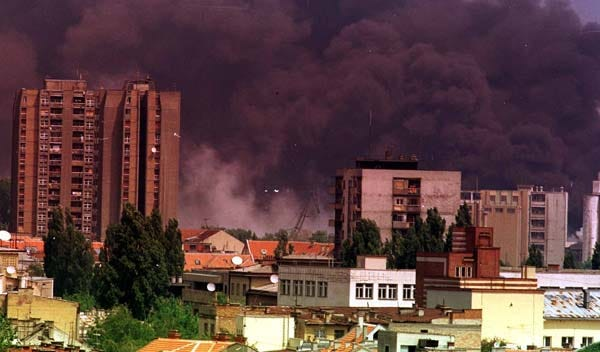
Autorka: Ana Milosavljević Na godišnjicu NATO bombardovanja Srbije — pogled na to šta javni diskurs pamti, a šta briše. Transparent ispred Skupštine Srbije koji osuđuje ubijanje dece od strane NATO-a. Svake godine 24. marta, isti narativ dominira javnim diskursom u Srbiji: više od 2.000 civila ubijenih u ilegalnoj, neosnovanoj NATO agresiji pod izgovorom spasavanja kosovskih Albanaca. Političari, mediji, i nažalost, mnogi iz takozvane levice u Srbiji fokusiraju se na vrlo konkretnu štetu koju je bombardovanje nanelo, ali to čine bez ikakvog priznanja onoga što je srpska vlast radila na Kosovu u godinama koje su prethodile bombardovanju. Razgovarala sam sa dvoje kosovskih Albanaca i jednom kosovskom Srpkinjom o njihovom tumačenju današnjeg obeležavanja, njihovim stavovima o NATO-u i nasilju srpske vlasti, i o tome šta je potrebno da bi se Srbi i Albanci ujedinili u zajedničkoj borbi. Danas političari i mediji (i režimski i opozicioni) predstavljaju događaje od pre 27 godina kao situaciju u kojoj je Srbija bila jedina žrtva. Često prikazuju stradanje Albanaca od strane Srbije kao zaveru koju je Zapad osmislio kako bi opravdao intervenciju. Činjenice govore sasvim drugačiju priču. NATO bombardovanje Novog Sada, Srbija, 1999. godine. Između 1998. i 1999. godine, srpske snage su nasilno proterale oko 850.000 Albanaca iz njihovih domova na Kosovu. Do kraja rata, ubijeno je više od 10.000 Albanaca, a hiljade su silovane ili mučene. Masovne grobnice Albanaca kasnije su pronađene na više lokacija u Srbiji, sa gotovo 1.000 tela koja su prebačena i tajno sahranjena. Mnogi se i danas vode kao nestali. Svedočenja vojnika se takođe zanemaruju u srpskom javnom diskursu. Jedan komandant tenkovske jedinice zabeležen je kako kaže: „Za sve vreme dok sam bio na Kosovu, nikada nisam video nijednog neprijateljskog vojnika i moja jedinica nijednom nije gađala vojne ciljeve. Tenkovi koji koštaju 2,5 miliona dolara korišćeni su za masakriranje albanske dece… Stid me je.“ Povodom sistematskog izostavljanja ovih istorijskih činjenica iz današnjeg diskursa, razgovarala sam sa kosovskim Albancima: sa Leom1, koja živi u Prištini, i Arberom, koji je deo kosovsko-albanske dijaspore u Londonu. Lea je primetila da način na koji se predstavlja NATO bombardovanje, bez ikakvog priznanja kroz šta su Albanci prošli, u njoj izaziva osećaj da je „izluđena“ i „dehumanizovana“. „To nije polazna tačka sa koje možemo da razgovaramo, posebno imajući u vidu da je sa naše strane uložen značajan trud da se priznaju i srpske žrtve rata“, dodaje ona. Arber je slično komentarisao da on takav narativ doživljava kao „šamar u lice“, navodeći da takav narativ odražava širi trend brisanja iskustava kroz koja su Albanci na Kosovu prolazili, ne samo tokom 1998–1999, već kroz čitav 20. vek. To brisanje nije počelo 1999. godine. Za Albance, ono predstavlja dužu istoriju represije, od jugoslovenskih kolonizacionih kampanja početkom 20. veka do institucionalne diskriminacije i nasilja tokom 1990-ih. Mapa iz 20. veka koja prikazuje jugoslovensku kolonizaciju na Kosovu i u Severnoj Makedoniji. Ovaj diskurs ne kritikuju samo Albanci. Marija Savić iz Gnjilana opisala je dominantni srpski prikaz bombardovanja kao primer „selektivnog sećanja“ koje „služi reprodukciji nacionalističkog narativa“. „Fokus je isključivo na Srbiji kao žrtvi spoljne agresije, dok ne postoji sistemsko suočavanje sa kontinuiranom represijom albanskog naroda na Kosovu: od kolonijalnih politika i nasilja početkom 20. veka, preko institucionalne diskriminacije u Jugoslaviji, do otvorenog sistema aparthejda i represije nad Albancima tokom 1990-ih“, rekla je. Upravo taj kontekst pomaže da se razume zašto su mnogi kosovski Albanci podržali NATO intervenciju, koja je okončala srpsku kontrolu nad Kosovom. Kako Lea objašnjava: „Intervencija 1999. zaustavila je rat i omogućila nam da se vratimo svojim životima, domovima, institucijama. Može biti istina da je intervencija bila kolonijalne prirode i da je izazvala civilne žrtve i druge negativne posledice, ali je takođe istina da je period nakon rata i nakon proglašenja nezavisnosti 2008. doneo mnogo nade mnogim ljudima ovde, koji su samo deceniju ranije živeli svakodnevni život u stalnom strahu.“ Arber je slično opisao svoja kontradiktorna osećanja prema NATO-u: „Iako priznajem da je NATO prisustvo na Kosovu uklonilo Srbiju, koja je bila regionalni kolonizator naše zajednice, takođe priznajem i probleme NATO-a kao upravljačkog tela… Neću do kraja života osećati dug njima, niti ću dozvoliti da budem moralno manipulisán od strane NATO-a kako bih izbrisao realnosti i problematične stvari koje rade kao institucija.“ Kosovske novine koje izveštavaju o proglašenju nezavisnosti Kosova 17. februara 2008. godine. Marija je takođe naglasila da je neophodno kritički sagledati i NATO i srpsku državu, te da te dve stvari nisu međusobno isključive. „Diskurs u Srbiji o ovom pitanju je potpuno binaran; ako kritikujete ulogu Srbije, označeni ste kao izdajnik iz nevladinog sektora, dok ako kritikujete NATO agresiju, označeni ste kao srpski nacionalista — a nijedno od toga nije tačno. NATO i srpska vlast su vrlo slični u svojim represivnim i kolonijalnim politikama.“ Izjave američkih zvaničnika dodatno potkrepljuju argument da NATO intervencija nije bila humanitarne prirode. Kako je napisao Stroub Talbot, zamenik američkog državnog sekretara od 1994. do 2001: „Otpor Jugoslavije širim trendovima političkih i ekonomskih reformi — a ne sudbina kosovskih Albanaca — najbolje objašnjava NATO rat.“ Lea i Arber su oboje izrazili spremnost da kritički preispitaju ulogu NATO-a na Kosovu — pod uslovom da se srpsko društvo suoči sa sopstvenim revizionističkim narativima. „Spremna sam da učestvujem u svakom razgovoru koji kritikuje postojanje NATO-a, ali osećam odgovornost da se prvo suočimo sa predrasudama koje nas sprečavaju da budemo ravnopravni učesnici u tim razgovorima“, rekla je Lea. Kako Arber kaže, „na osnovnom nivou, ne možeš biti u solidarnosti sa ljudima koji ne žele da imaš jednaka prava kao oni.“ Percepcija da Srbi ne žele da žive u jednakosti sa Albancima može se videti u brojnim primerima, a najskorije u upotrebi pogrdnog naziva za Albance u skandiranjima protiv predsednika Srbije Aleksandra Vučića na protestima tokom protekle godine. Marija opisuje sopstveni put suočavanja sa tim realnostima: „Bilo je potrebno mnogo odvikavanja da bih se oslobodila anti-albanskog sentimenta i nacionalizma… Verujem da su internacionalizam i klasno jedinstvo u borbi protiv kapitalizma jedini put ka oslobođenju svih balkanskih naroda.“ Nedostatak informacija o represivnoj ulozi srpske vlasti nad Albancima otežava prevazilaženje ovih predrasuda. Nakon što je video da mnogi Srbi ne znaju osnovne istorijske činjenice o Kosovu, Arber je 2020. osnovao edukativno-kulturnu platformu „Balkanism”. Balkanism teži dekonstrukciji etnonacionalističkih narativa širom regiona kroz slavljenje sličnosti i razlika, uz priznanje istorijske represije različitih zajednica. „Razumem da smo u okviru nacionalnih država svi sebe povezali sa državom kao produžetkom sebe. Ali mislim da onog trenutka kada počnemo to da dekonstruišemo i da sebe vidimo više kao nosioce kulture, istorije i identiteta koji se preklapaju, možemo da komuniciramo na mnogo humaniji način“, kaže on. Naslovna strana prvog broja časopisa „Balkanism“, objavljenog u septembru 2024. godine. Dok je Marija kroz obrazovanje i suočavanje sa sopstvenim predrasudama doživela transformaciju, smatra da se stvarna promena ne može svesti na pojedinca. „Anti-albanski sentiment i odbijanje suočavanja sa prošlošću duboko su ukorenjeni u ideološkim aparatima srpske države.“ Da bi se srpsko društvo adekvatno transformisalo, potrebno je promeniti njegove političke i ekonomske sisteme, kaže ona. Za nju to podrazumeva klasnu analizu koja prepoznaje da radnici u Srbiji i na Kosovu imaju zajedničke interese protiv vladajuće kapitalističke elite u obe zemlje. Smatra da pristup treba da bude dvostruk: Srbi bi trebalo bezuslovno da priznaju pravo Kosova na samoopredeljenje, razgrade mit o Kosovu kao „srcu Srbije“, i obnove klasnu politiku i internacionalizam. S druge strane, radnička klasa na Kosovu treba da odbaci sopstvenu vladajuću elitu i radi na proterivanju imperijalističkih sila sa svoje teritorije. Da li je takvo jedinstvo moguće — Lea i Arber se razilaze. „S obzirom na duboko nepoverenje koje postoji, toliko bola i nedostatka odgovornosti, teško je zamisliti kako se to može prevazići. I vidimo kako se Albanci tretiraju u Srbiji 2026. godine, kroz iredentističke grafite o Kosovu i anti-albanske povike, da se ništa nije promenilo. Sa naše strane takođe postoji mnogo neprijateljstva koje deluje nepremostivo. Zbog toga kako su rat i naša politička situacija oblikovali mene, deo mene se već neko vreme mentalno priprema za novi rat. I to mi daje motivaciju da se uključim u ovu diskusiju“, rekla je Lea. Za Arbera, rad na zajedničkoj budućnosti počinje građenjem stvarnih veza preko etničkih linija. „Ja sam veoma optimistična osoba. Deo moje životne prakse je izgradnja odnosa sa zajednicama sa takozvane ‘druge strane’. To je suštinski deo mog života. Vidim to kao ispravljanje istorijskih nepravdi i poništavanje kolonijalnog nasilja koje je nametnuto Kosovu, kao i uspostavljanje odnosa sa zajednicama sa kojima delimo mnogo toga istorijski i kulturno“, kaže on. U različitim kontekstima, istorija se prikazuje kao da počinje u politički pogodnom trenutku. U Palestini, zapadni mejnstrim mediji i političke elite žele da verujete da istorija počinje 7. oktobra 2023. U Srbiji, slični akteri tvrde da istorija počinje 24. marta 1999, čineći sve što je prethodilo nevažnim. Ovakav pristup instrumentalizuje nedostatak obrazovanja kako bi opravdao sistemske predrasude koje u konačnici ne služe interesima običnih ljudi. Kao što razgovori u ovom tekstu sugerišu, suočavanje sa ovim narativima zahteva više od samih informacija. Potrebna je spremnost da se sluša, da se preispituju nasleđene pretpostavke i da se suočimo sa neprijatnim istinama. Put ka trajnom miru na Balkanu ne uključuje selektivno sećanje, već se zasniva na iskrenom i objektivnom pogledu na prošlost — onom koji ostavlja prostor za sve čija su iskustva dugo bila negirana. Ovaj članak je u originalu objavljen na autorkinom blogu Substack, gde možete čitati još njenih članaka.

History Did Not Begin in 1999
Ovaj članak možeš pročitati na naškom ovde. Author: Ana Milosavljević On the anniversary of NATO’s bombing of Serbia, a look at what public discourse remembers — and what it erases. A banner outside the Serbian parliament condemning NATO’s killing of children Every year on March 24, the same narrative dominates public discourse in Serbia: over 2,000 civilians killed in an illegal, unprovoked NATO aggression under the pretext of saving Kosovar Albanians. Politicians, the media, and unfortunately, many part of the so-called left in Serbia focus on the very real damage that the bombing inflicted, but do so without any recognition of what the Serbian state was doing in Kosovo in the years preceding the bombing. I spoke with two Albanian Kosovars and one Kosovar Serb about their interpretation of today’s commemoration, their thoughts on NATO and Serbian state violence, and what it will take for Serbs and Albanians to unite in a common struggle. Today, politicians and media outlets (both regime and opposition) frame the events of 27 years ago as one wherein Serbia was the sole victim. They frequently convey Albanian suffering at the hands of the Serbian state as a conspiracy conjured up by the West in order to justify intervention. The facts tell a very different story. NATO bombing of Novi Sad, Serbia in 1999 Between 1998 and 1999, Serbian forces displaced around 850,000 Albanians from their homes in Kosovo. By the end of the war, over 10,000 Albanians were killed and thousands were raped or tortured. Mass graves of Albanians were later found in multiple locations in Serbia, with nearly 1,000 bodies transferred and buried in secret. Many people are still missing to this day. Soldier testimonies are similarly disregarded in Serbian public discourse. One Serbian commander of a tank unit was recorded stating, “For the entire time I was in Kosovo, I never saw a single enemy soldier and my unit was never once involved in firing at military targets. The tanks which cost $2.5 million each were used to slaughter Albanian children… I am ashamed.” Regarding the systematic exclusion of these historical realities from today’s discourse, I spoke with Kosovar Albanians: Lea1, living in Prishtina, and Arbër, part of the Kosovar Albanian diaspora in London. Lea remarked that the presentation of the NATO bombing without any recognition of the suffering Albanians went through leaves her feeling “gaslit” and “dehumanized.” “It’s not a starting point that we can engage with…Because on our side there has also been a lot of work done to recognize victims of the war who were Serbs” she adds. Arbër similarly commented that “it feels like a slap in the face in many ways,” saying that such a narrative reflects a broader trend of erasure of the experiences Albanians in Kosovo have faced, not only during 1998–1999, but throughout the 20th century. This erasure did not begin in 1999. For Albanians, it reflects a longer history of repression, from early 20th century Yugoslav colonization campaigns to institutional discrimination and violence in the 1990s. A map from the 20th century that reads “Post-war colonization in southern Serbia” and includes Kosovo and North Macedonia. It’s not only Albanians who criticize this discourse. Marija Savić, from Gnjilana, Kosovo described the Serbian mainstream portrayal of the bombing as one of “selective memory” which “serves to reproduce a nationalist narrative.” “The focus is exclusively on Serbia as a victim of external aggression, while there is no systemic reckoning with the continuous repression of the Albanian people in Kosovo: from colonial policies and violence in the early 20th century, through institutional discrimination in Yugoslavia, to the open system of apartheid and repression against Albanians during the 1990s,” she said. It is precisely that context which helps explain why many Kosovar Albanians welcomed NATO’s intervention, which brought an end to Serbian rule in Kosovo. As Lea explains: “The intervention in 1999 stopped the war and enabled us to go back to our lives, homes, institutions. It can be true that the intervention was colonial in nature and caused civilian casualties and had other negative effects, and also that the period after the war and after the declaration of independence in 2008 brought a lot of hope to a lot of people here, who just a decade before were living their everyday lives in constant fear.” Arbër similarly described his own contradictory feelings about NATO: “Although I acknowledge NATO’s presence in Kosovo removed Serbia, which was a regional colonizer of us as a community, I also acknowledge the problems of NATO as a governing body as well… I’m not going to feel indebted for the rest of my life, and I’m not going to be morally manipulated by NATO as a governing body to erase the realities and the problematic things that they do as an institution.” Newspapers in Kosovo reporting the declaration of Kosovo Independence on February 17, 2008. Marija similarly stressed that it was necessary to critically assess both NATO and the Serbian state and that the two are not mutually exclusive. “The discourse in Serbia on this issue is entirely binary; if you criticize the role of the Serbian state, you are labeled an NGO traitor, while if you criticize NATO aggression, you are labeled a Serbian nationalist - yet neither of these is true. NATO and the Serbian state are very similar in their repressive and colonial policies.” Statements by US officials reinforce the argument that NATO’s intervention was not humanitarian in nature. As Strobe Talbott, US Deputy Secretary of State from 1994 to 2001, wrote: “It was Yugoslavia’s resistance to the broader trends of political and economic reform — not the plight of Kosovar Albanians — that best explains NATO’s war.” Lea and Arbër both expressed a willingness to critically examine NATO’s role in Kosovo — on the condition that Serbian society confronts its own revisionist narratives. “I’m open to participating in any conversation that critiques the existence of NATO, but I feel a responsibility to first contend with the prejudices that prevent us from being equal participants in such conversations,” Lea said. As Arbër puts it, “on a fundamental basis, you can’t be in solidarity with people who don’t want you to have the same level of equality that they do.” The perception that Serbs do not want to live in equality with Albanians can be seen in many instances, most recently with the use of the pejorative word for Albanian used in chants against Serbian President Vučić at anti-government protests in the past year. Marija describes her own journey in confronting these realities: “It took a great deal of unlearning to free myself from anti-Albanian sentiment and nationalism… I believe that internationalism and class unity in the struggle against capitalism are the only path to the liberation of all Balkan peoples.” A lack of information about the oppressive role of the Serbian state against Albanians makes overcoming such biases difficult. After witnessing Serb after Serb not know basic historical facts about Kosovo, Arbër founded the educational and cultural platform Balkanism in 2020. Balkanism strives to deconstruct ethno-nationalist narratives from across the region through celebrating similarities and differences, while acknowledging historical oppression of various communities. “I understand that within a nation-state framework, all of us have associated ourselves with our state as an extension of ourselves. But I feel like the moment we start deconstructing that and see ourselves more as vessels of culture, history, and identity that overlap, we’re able to communicate in a way that feels much more human-centered” he says. Cover of Balkanism magazine’s first issue, published in September 2024. While Marija transformed through education and a reckoning of her own anti-Albanian biases, she believes that meaningful transformation cannot be reduced to the individual. “Anti-Albanian sentiment and the refusal to confront the past are deeply rooted in the ideological apparatuses of the Serbian state.” To adequately transform Serbian society, its political and economic systems must be changed, she says. For her, that necessitates a class-based analysis which sees that workers in Serbia and Kosovo have common interests against the ruling capitalist elite in both countries. She believes the approach should be two-fold: Serbians should unconditionally recognize Kosovo’s right to self-determination, dismantle the myth of Kosovo as the “heart of Serbia”, and rebuild class politics and internationalism. On the other end, the working class in Kosovo should reject their own ruling elite and work to expel imperialist forces from its territory, she says. Whether such unity is possible, Lea and Arbër are split. “Considering the deep distrust that exists, and so much pain and lack of accountability, it is hard to imagine how that can be overcome. And we see with how Albanians are being treated in Serbia in 2026, the irredentist Kosovo graffiti and anti-Albanian chants, that nothing has changed. On our side there is a lot of what feels like insurmountable enmity as well. Due to how the war and our political situation shaped me, there’s a part of me that for a while now has been mentally preparing for another war. And that is what gives me urgency to get involved with this conversation” Lea revealed. For Arbër, working towards a common future begins with forging genuine connections across ethnic lines. “I’m a very hopeful individual. A part of my own practice in my life is all about forging relations with communities from supposedly “the other side.” This has been a core aspect of my life and my practice. I see it as righting historical wrongs and undoing the colonial violence that was imposed on Kosovo, and establishing relations with communities that we share so much with historically and culturally,” he said. In various contexts, history is presented as beginning at a politically convenient moment. In Palestine, Western mainstream media and political elites would have you believe history began on October 7, 2023. In Serbia, a similar establishment class claims history began on March 24, 1999, rendering what came before irrelevant. This approach weaponizes a lack of education to justify systemic prejudices that ultimately do not serve the interests of ordinary people. As the conversations in this piece suggest, confronting these narratives requires more than information alone. It demands a willingness to listen, to question inherited assumptions, and to engage with uncomfortable truths. The path towards lasting peace in the Balkans does not include selective memory, but is instead based on an honest, objective look at the past: one which makes space for all those whose experiences have long been denied. This article was originally published on author's Substack, where more of her critical writing is available.

Discursive Veto. How Kosovo and Historical Narratives Enable Serbia to Maneuver Between East and West?
Author: Daria Vorobiova Serbia in the modern geopolitical situation is perceived as a country caught between two fires: the West and the East. Its indicative neutrality, not associating itself with any global organization and acting as a "third party," is telling. In reality, this political ambivalence has calculated mechanisms used by statesmen to preserve their political position and policy of "securing funding without additional obligations," while in return manipulating public opinion. Illustration photo. Retrieved from Pexels (www.pexels.com) Neither to the West, nor to the East Looking at survey results on the political preferences of Serbs reveals a deeply divided population: for instance, a telling example is the 2023 WFD survey. It showed that 43% of Serbs believe they should rely on Russia in international relations, and only 25.8% of respondents stated they should rely on the European Union. Also notable is the question of whether Serbia belongs to the West or the East: 42% of respondents answered that Serbia is not part of either, while the same proportion answered logically about belonging to the West or the East. Serbian society is extremely fragmented in its political preferences: this problem leads to a general instability of civic engagement in politics, as without consensus among the sides, it is impossible to exert strong civic influence on the political life of the state as a whole [1]. How much does the state influence the political preferences of Serbs? Following data from the same survey, it is evident that 59.2% of respondents note that they view political information about events in Serbia through television. The state exerts sufficient influence on television, considering channels like RTS, RTV Pink, Happy TV, which are known for publishing information deliberately portrayed in a light favorable to the state. Under such conditions, the question arises – if a large number of citizens receive such information, can their political preferences be genuinely logical and justified? [2] Also, television programs have been observed deliberately portraying the EU in a bad light, while Russia is presented in the moral image of a fraternal state. The key problem with this presentation of information is the excessive moralization of "good" Russia and "bad" European Union. Typically, this moral assessment is based solely on subjectivity, in no way appealing to rational reflections on the benefits of such "friendship" for Serbia [3]. And it is precisely the "moral" justification, as well as the "moral boundaries of the permissible," that allow Serbian politicians to maintain their position for as long as possible, instilling in citizens an unstable pluralism of opinions to weaken their civic stance. The problem of "moralizing" politics as a key factor of ambivalence This appeal to everything moral begins with historical origins and serves as the foundation for forming nationalist narratives. The narratives consist of three components: the "victim question," the "pride question," and the main unifying factor, the moral discursive veto point. By combining these components, it becomes possible to manipulate public opinion, set the boundaries of discourse to slow down potential civic activity, and at the necessary moment say: "here is the boundary you must not cross." The "victim question" is characterized by a moral appeal to grievance, primarily towards the West, which in the narratives is viewed as a military aggressor (following the events of 1999) protecting Kosovo (which is a sacred question of the origin of statehood), and also as an economic usurper (the European Union as an economic organization where, upon accession, Serbia would lose its informal independence). An image of an enemy is created, but also an image of a savior, a potential "fraternal state" that can selflessly help Serbia escape crude dependence on the "humiliating" West. Russia occupies this role, but in the case of investments and their positive influence, China can also be considered. The "pride question" is characterized by a centuries-long history of battles (for example, the Battle of Kosovo) and the preservation of the nation and its culture during long periods of statelessness. This factor is supposed to act as a unifying force ("we have only ourselves, and no one will help us except us") and one that reduces the factor of destabilization, since there are "enemies" against which Serbia must be ready to act as a united front in case of danger. The unifying factor is the Kosovo question – less as a territorial issue and more as a discursive veto point: it marks the limit beyond which reform, recognition, or alignment becomes politically illegible. Since many reforms for EU accession and funding require normalization of relations with Kosovo and its recognition as a separate state, Serbian politicians (for example, Aleksandar Vučić) support the aforementioned narratives precisely on this issue. A. Vučić's speech on 04.11.2025 in Brussels: «Neću da priznam Kosovo da bismo ušli u EU» ("I will not recognize Kosovo so that we enter the EU") [4]; In an address to the people of Kosovo: «ne postoji „dobro rešenje kosovskog problema za Srbe“ i da ga nikada neće biti» ("there is no 'good solution to the Kosovo problem for Serbs' and there never will be"), «Srbi bili najstradalniji narod na Kosovu» ("Serbs were the most suffering people in Kosovo") [5]; speech at the Palace of Serbia: «Vučić je rekao da je Kosovo (...) našom zemljom u skladu sa Ustavom Republike Srbije i Poveljom Ujedinjenih nacija i Rezolucijom 12.44» ("Vučić said that Kosovo (...) is our land in accordance with the Constitution of the Republic of Serbia and the Charter of the United Nations and Resolution 1244") [6]. These three factors help form a stable national narrative, which allows simultaneously maintaining the image of the EU as an "enemy" while preserving active economic relations. Naturally, it is assumed that when using this funding as outlined in the documentation, Serbia should join the European Union after meeting all conditions. Is such a policy feasible? Active neutrality Serbia's neutrality is not an absence of policy but its active form, maintained by state elites through media propaganda, fragmenting Serbian society and helping to brake at the right moments and shift the blame to the "enemy," not to Serbia. The European Commission has noted that Serbia is moving too slowly in implementing necessary reforms, especially those related to freedom of speech, eliminating corruption, and normalizing relations with Kosovo [7]. The question of slowness also became important in cases where the EU itself delayed necessary payments to Serbia, demanding additional guarantees that the funds would be spent in the intended direction [8]. Such neutrality helps Serbian political elites navigate relations with the European Union: maintaining the possibility of obtaining economic and political resources while keeping a political distance from it, simultaneously shifting responsibility for the stagnation of reforms onto "enemies" and unsolvable historical traumas inflicted by these same "enemies." The price of this strategy is the weakness of fragmented civic pressure, the slowdown of necessary reforms, and the dependence of the political course on a constantly perpetuated conflict that does not approach resolution if Serbia truly chooses a European path. In this context, the key question is not which side Serbia will join in the future, but how long civil society can exist in a state-managed ambivalence, how long it can survive without the reforms it tries to grasp through protests. Bibliography: “Opinion Poll Report: Socio-political Views of Serbian Citizens in 2023.” WFD. Westminster Foundation for Democracy (WFD), Serbia, 2023. https://www.wfd.org/sites/default/files/2023-04/wfd_nws_2023_eng_final.pdf. “Defunding Disinformation in the Balkans. How International Brands Support Russia’s Agenda.” by BFMI & CRTA, n.d. https://crta.rs/wp-content/uploads/2023/12/CRTA_BFMI_Defunding_Disinformation_in_the_Balkans_Report.pdf. “Media Monitoring of Foreign Actors.” CRTA. https://crta.rs/en/media-monitoring-of-foreign-actors-november-2024/. B92. “Vučić: Neću Da Priznam Kosovo Da Bismo Ušli U EU; Postoji Mogućnost Da Otvorimo Klaster 3 Pre Kraja Godine.” B92.net, November 4, 2025. https://www.b92.net/info/politika/178701/vucic-necu-da-priznam-kosovo-da-bismo-usli-u-eu-postoji-mogucnost-da-otvorimo-klaster-3-pre-kraja-godine/vest РТС. “Vučić Za Veltvohe: Potrebno Kompromisno Rešenje Za KiM, a Ne Da Albanci Dobiju Sve, a Srbi Ništa,” n.d. https://www.rts.rs/lat/vesti/politika/5462184/vucic-za-veltvohe-potrebno-kompromisno-resenje-za-kim-a-ne-da-albanci-dobiju-sve-a-srbi-nista.html. Urednik. “Vučić Odgovorio Evropskom Diplomati: Kosovo Je Dio Srbije - Top Portal.” Top Portal, November 6, 2025. https://topportal.info/vucic-odgovorio-evropskom-diplomati-kosovo-je-dio-srbije/. Belgrade, N1. “EC Report Says Serbia Slow on Credible Reforms.” N1 Info RS, November 4, 2025. https://n1info.rs/english/news/ec-report-says-serbia-slow-on-credible-reforms/. Rakic, Snezana. “Why Is Serbia Still Waiting for EU Funds That Its Neighbours Have Received?” Serbian Monitor, May 23, 2025. https://www.serbianmonitor.com/en/why-is-serbia-still-waiting-for-eu-funds-that-its-neighbours-have-received/.
Hive (2021): A Powerful Tale of Resilience and Empowerment in Kosovo Cinema
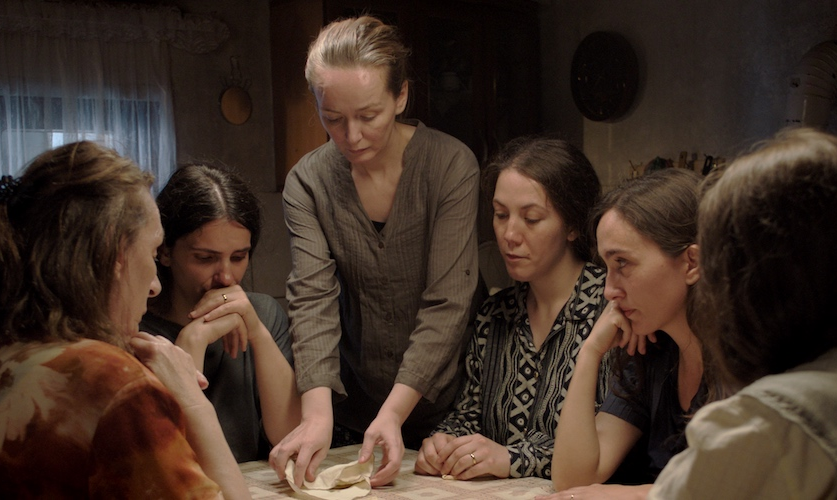
Since Serbian militias entered villages in the Kosovar province in 1999, many boys and men have been missing, including Fahrije’s husband—a single parent who had been caring for their two children and her disabled father-in-law. Left to ensure her family’s survival, Fahrije takes matters into her own hands. She first obtains a driver’s license, then starts a small business, actions that provoke the wrath of the conservative, patriarchal local society. The director, Blerta Basholli, originally from Kosovo, first encountered Fahrije Hoti’s story during an interview she gave on American television, in which she discussed the backlash she faced for seeking independence and proposing a cooperative to provide work for other widows in her community. At the time, the director was living in New York on a scholarship. Initially, she mistook the story for a joke due to her emotional and geographical distance from Kosovo. However, upon realizing the seriousness of Fahrije’s situation, she was inspired to delve deeper. Captivated by the story, the director began writing and directing what would eventually become Hive in 2011. A decade later, the film made history by winning all three major awards in the World Cinema section at the Sundance Film Festival—the only film to ever achieve this feat. Basholli approaches the story with restraint and confidence, avoiding unnecessary melodrama or overemphasis. This is a tale of humanity and resistance, framed by a clear feminist perspective. In Hive, patriarchy is represented not only through visible actions—such as stones smashing Fahrije’s car windows, her father-in-law’s objections or an attempted assault by a supplier—but also through the absence of a male protector. The ghost of patriarchy lingers in the perception that Fahrije’s efforts to support herself dishonor her missing husband. Her grief is entangled with guilt: if her husband is dead, her actions are seen as a confirmation of his death, dissolving their marriage, and rejecting her eternal dependence on him. If, by some miracle, he were alive, many believe he would feel ashamed of her. Fahrije’s husband thus becomes like Schrödinger’s cat—both alive and dead—while society seeks to confine her autonomy. The backdrop of numerous missing persons and the ongoing search for their remains adds an emotionally charged layer to the narrative, making Hive reminiscent of Parallel Mothers by Pedro Almodóvar. However, unlike Almodóvar’s melodramatic approach to historical tragedy, Basholli masterfully integrates the collective trauma of a community with one woman’s personal journey toward emancipation. Fahrije’s struggle becomes an example for the other widows in her village, who rally around her. Central to Fahrije’s transformation is her evolving relationship with her late husband’s beehive, which gives the film its title. Initially, she is a foreign presence, vulnerable to stings despite protective gear, and haunted by the notion that her husband had "never been stung." However, as she confronts societal obstacles and normalized misogyny disguised as tradition, she finds her strength. She emerges as the queen of the hive, uniting the worker bees to create an independent, resilient ecosystem that requires no male master. This symbolism underscores the real-life success of Fahrije and her colleagues, celebrated in the film’s credits. This way, Hive highlights the critical importance of women’s solidarity in challenging male dominance. Fahrije’s story is one of hope in a nation still haunted by the ghosts of a brutal war. The fact that the narrative is based on true events and a real woman makes its impact even more profound.