
Ovaj članak možeš pročitati na naškom ovde.
Author: Ana Milosavljević
On the anniversary of NATO’s bombing of Serbia, a look at what public discourse remembers — and what it erases.
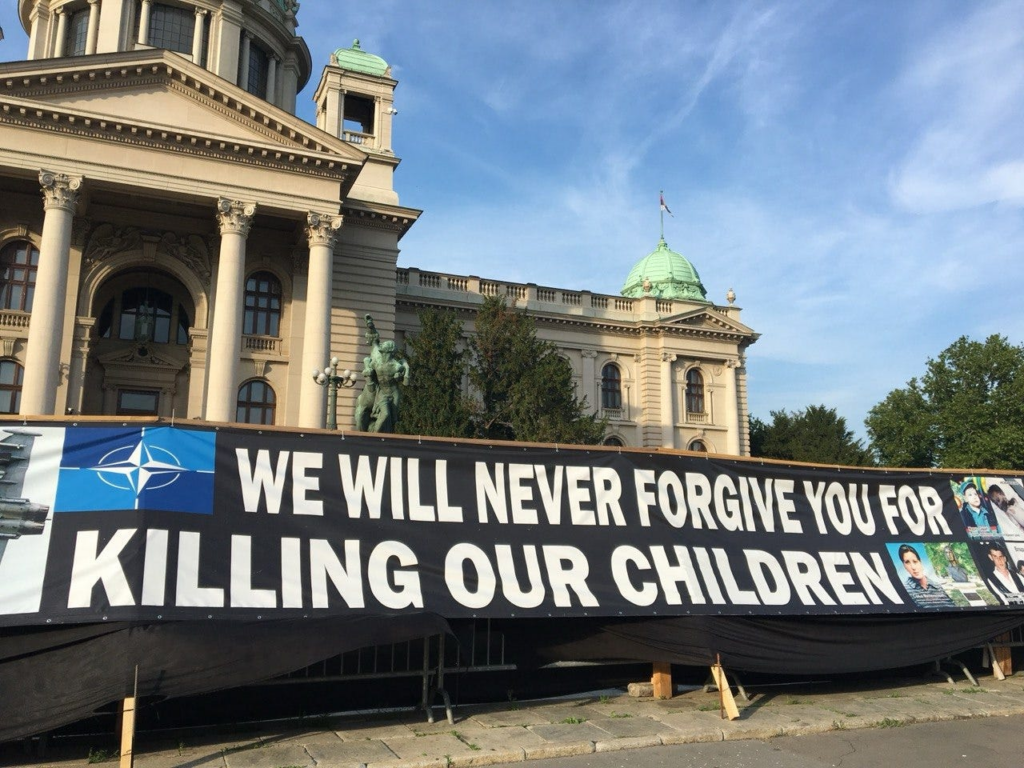
Every year on March 24, the same narrative dominates public discourse in Serbia: over 2,000 civilians killed in an illegal, unprovoked NATO aggression under the pretext of saving Kosovar Albanians. Politicians, the media, and unfortunately, many part of the so-called left in Serbia focus on the very real damage that the bombing inflicted, but do so without any recognition of what the Serbian state was doing in Kosovo in the years preceding the bombing. I spoke with two Albanian Kosovars and one Kosovar Serb about their interpretation of today’s commemoration, their thoughts on NATO and Serbian state violence, and what it will take for Serbs and Albanians to unite in a common struggle.
Today, politicians and media outlets (both regime and opposition) frame the events of 27 years ago as one wherein Serbia was the sole victim. They frequently convey Albanian suffering at the hands of the Serbian state as a conspiracy conjured up by the West in order to justify intervention.
The facts tell a very different story.

Between 1998 and 1999, Serbian forces displaced around 850,000 Albanians from their homes in Kosovo. By the end of the war, over 10,000 Albanians were killed and thousands were raped or tortured. Mass graves of Albanians were later found in multiple locations in Serbia, with nearly 1,000 bodies transferred and buried in secret. Many people are still missing to this day.
Soldier testimonies are similarly disregarded in Serbian public discourse. One Serbian commander of a tank unit was recorded stating, “For the entire time I was in Kosovo, I never saw a single enemy soldier and my unit was never once involved in firing at military targets. The tanks which cost $2.5 million each were used to slaughter Albanian children… I am ashamed.”
Regarding the systematic exclusion of these historical realities from today’s discourse, I spoke with Kosovar Albanians: Lea1, living in Prishtina, and Arbër, part of the Kosovar Albanian diaspora in London.
Lea remarked that the presentation of the NATO bombing without any recognition of the suffering Albanians went through leaves her feeling “gaslit” and “dehumanized.” “It’s not a starting point that we can engage with…Because on our side there has also been a lot of work done to recognize victims of the war who were Serbs” she adds.
Arbër similarly commented that “it feels like a slap in the face in many ways,” saying that such a narrative reflects a broader trend of erasure of the experiences Albanians in Kosovo have faced, not only during 1998–1999, but throughout the 20th century.
This erasure did not begin in 1999. For Albanians, it reflects a longer history of repression, from early 20th century Yugoslav colonization campaigns to institutional discrimination and violence in the 1990s.
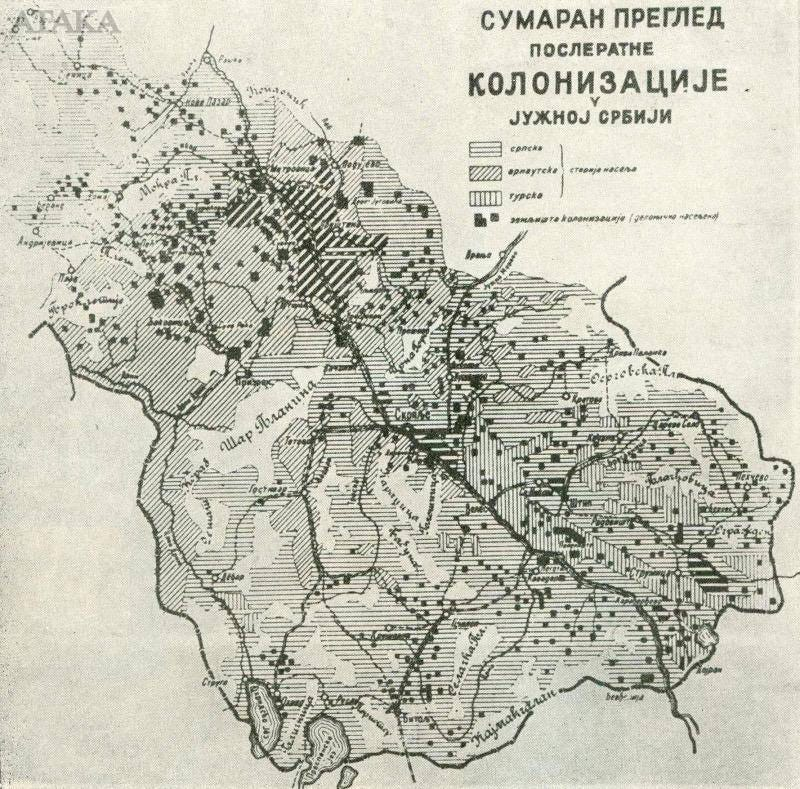
It’s not only Albanians who criticize this discourse. Marija Savić, from Gnjilana, Kosovo described the Serbian mainstream portrayal of the bombing as one of “selective memory” which “serves to reproduce a nationalist narrative.”
“The focus is exclusively on Serbia as a victim of external aggression, while there is no systemic reckoning with the continuous repression of the Albanian people in Kosovo: from colonial policies and violence in the early 20th century, through institutional discrimination in Yugoslavia, to the open system of apartheid and repression against Albanians during the 1990s,” she said.
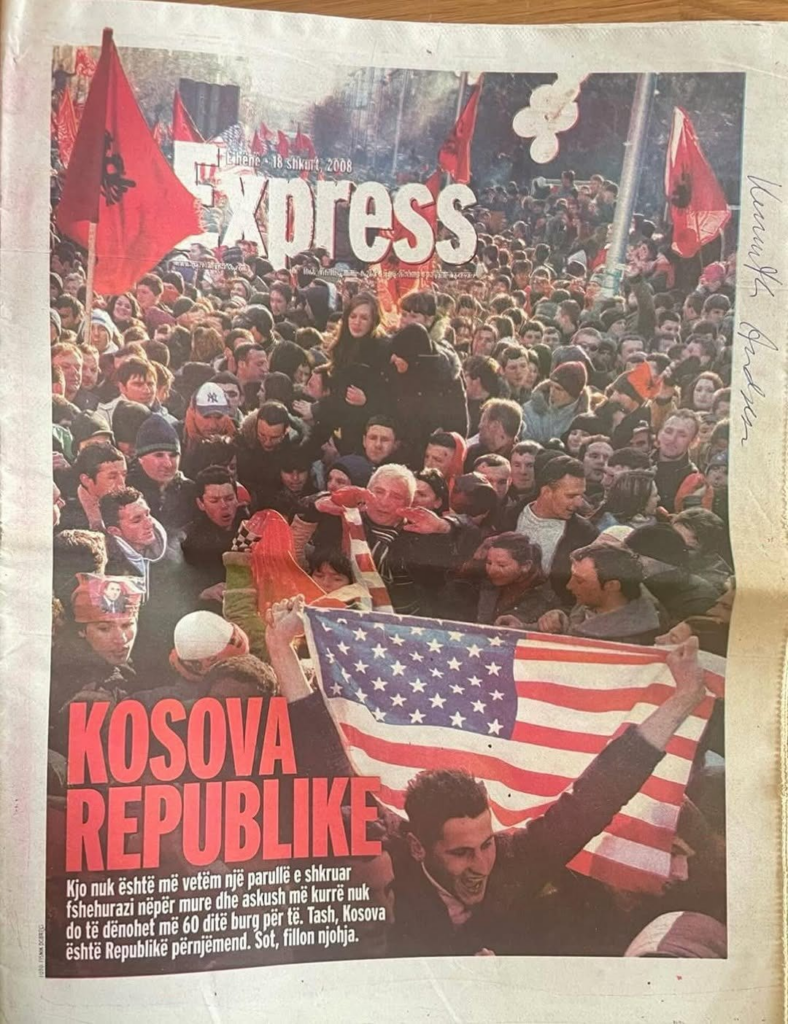
It is precisely that context which helps explain why many Kosovar Albanians welcomed NATO’s intervention, which brought an end to Serbian rule in Kosovo. As Lea explains: “The intervention in 1999 stopped the war and enabled us to go back to our lives, homes, institutions. It can be true that the intervention was colonial in nature and caused civilian casualties and had other negative effects, and also that the period after the war and after the declaration of independence in 2008 brought a lot of hope to a lot of people here, who just a decade before were living their everyday lives in constant fear.”
Arbër similarly described his own contradictory feelings about NATO: “Although I acknowledge NATO’s presence in Kosovo removed Serbia, which was a regional colonizer of us as a community, I also acknowledge the problems of NATO as a governing body as well… I’m not going to feel indebted for the rest of my life, and I’m not going to be morally manipulated by NATO as a governing body to erase the realities and the problematic things that they do as an institution.”
Marija similarly stressed that it was necessary to critically assess both NATO and the Serbian state and that the two are not mutually exclusive.
“The discourse in Serbia on this issue is entirely binary; if you criticize the role of the Serbian state, you are labeled an NGO traitor, while if you criticize NATO aggression, you are labeled a Serbian nationalist – yet neither of these is true. NATO and the Serbian state are very similar in their repressive and colonial policies.”
Statements by US officials reinforce the argument that NATO’s intervention was not humanitarian in nature. As Strobe Talbott, US Deputy Secretary of State from 1994 to 2001, wrote: “It was Yugoslavia’s resistance to the broader trends of political and economic reform — not the plight of Kosovar Albanians — that best explains NATO’s war.”
Lea and Arbër both expressed a willingness to critically examine NATO’s role in Kosovo — on the condition that Serbian society confronts its own revisionist narratives.
“I’m open to participating in any conversation that critiques the existence of NATO, but I feel a responsibility to first contend with the prejudices that prevent us from being equal participants in such conversations,” Lea said.
As Arbër puts it, “on a fundamental basis, you can’t be in solidarity with people who don’t want you to have the same level of equality that they do.” The perception that Serbs do not want to live in equality with Albanians can be seen in many instances, most recently with the use of the pejorative word for Albanian used in chants against Serbian President Vučić at anti-government protests in the past year.
Marija describes her own journey in confronting these realities: “It took a great deal of unlearning to free myself from anti-Albanian sentiment and nationalism… I believe that internationalism and class unity in the struggle against capitalism are the only path to the liberation of all Balkan peoples.”
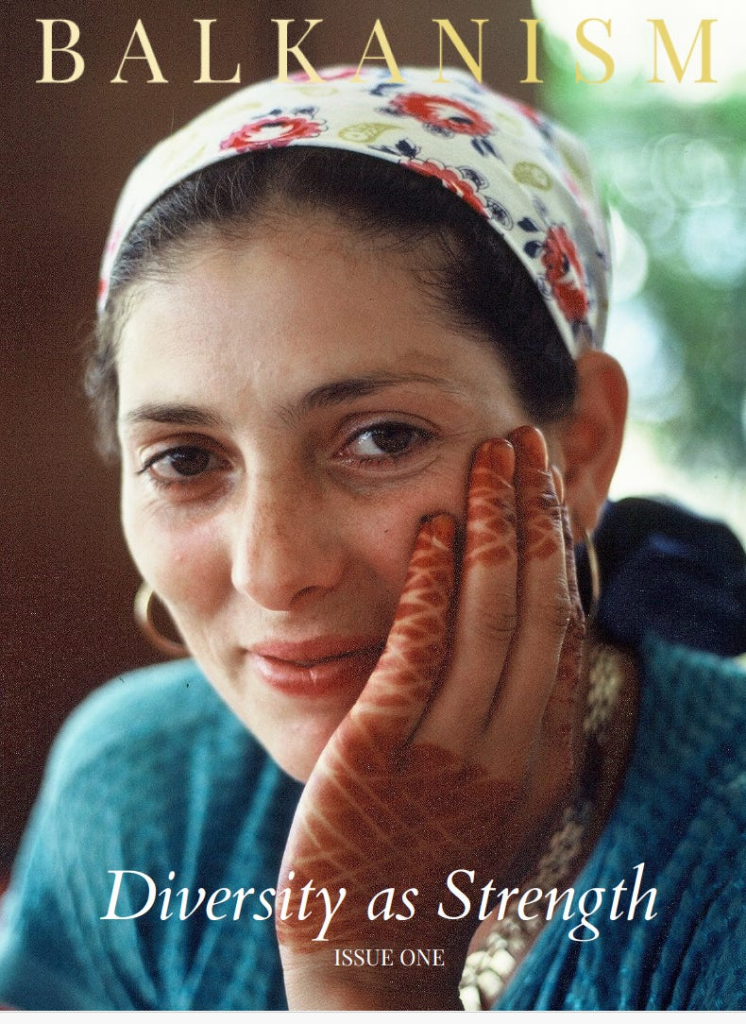
A lack of information about the oppressive role of the Serbian state against Albanians makes overcoming such biases difficult. After witnessing Serb after Serb not know basic historical facts about Kosovo, Arbër founded the educational and cultural platform Balkanism in 2020. Balkanism strives to deconstruct ethno-nationalist narratives from across the region through celebrating similarities and differences, while acknowledging historical oppression of various communities. “I understand that within a nation-state framework, all of us have associated ourselves with our state as an extension of ourselves. But I feel like the moment we start deconstructing that and see ourselves more as vessels of culture, history, and identity that overlap, we’re able to communicate in a way that feels much more human-centered” he says.
While Marija transformed through education and a reckoning of her own anti-Albanian biases, she believes that meaningful transformation cannot be reduced to the individual. “Anti-Albanian sentiment and the refusal to confront the past are deeply rooted in the ideological apparatuses of the Serbian state.” To adequately transform Serbian society, its political and economic systems must be changed, she says.
For her, that necessitates a class-based analysis which sees that workers in Serbia and Kosovo have common interests against the ruling capitalist elite in both countries. She believes the approach should be two-fold: Serbians should unconditionally recognize Kosovo’s right to self-determination, dismantle the myth of Kosovo as the “heart of Serbia”, and rebuild class politics and internationalism. On the other end, the working class in Kosovo should reject their own ruling elite and work to expel imperialist forces from its territory, she says.
Whether such unity is possible, Lea and Arbër are split.
“Considering the deep distrust that exists, and so much pain and lack of accountability, it is hard to imagine how that can be overcome. And we see with how Albanians are being treated in Serbia in 2026, the irredentist Kosovo graffiti and anti-Albanian chants, that nothing has changed. On our side there is a lot of what feels like insurmountable enmity as well. Due to how the war and our political situation shaped me, there’s a part of me that for a while now has been mentally preparing for another war. And that is what gives me urgency to get involved with this conversation” Lea revealed.
For Arbër, working towards a common future begins with forging genuine connections across ethnic lines. “I’m a very hopeful individual. A part of my own practice in my life is all about forging relations with communities from supposedly “the other side.” This has been a core aspect of my life and my practice. I see it as righting historical wrongs and undoing the colonial violence that was imposed on Kosovo, and establishing relations with communities that we share so much with historically and culturally,” he said.
In various contexts, history is presented as beginning at a politically convenient moment. In Palestine, Western mainstream media and political elites would have you believe history began on October 7, 2023. In Serbia, a similar establishment class claims history began on March 24, 1999, rendering what came before irrelevant.
This approach weaponizes a lack of education to justify systemic prejudices that ultimately do not serve the interests of ordinary people. As the conversations in this piece suggest, confronting these narratives requires more than information alone. It demands a willingness to listen, to question inherited assumptions, and to engage with uncomfortable truths.
The path towards lasting peace in the Balkans does not include selective memory, but is instead based on an honest, objective look at the past: one which makes space for all those whose experiences have long been denied.
- Name was changed due to safety and harassment concerns. ↩︎
This article was originally published on author’s Substack, where more of her critical writing is available.
[…] Name was changed due to safety and harassment concerns. ↩︎ […]