
Women’s function as change agents in nonviolent protests in Ukraine and the Balkan states
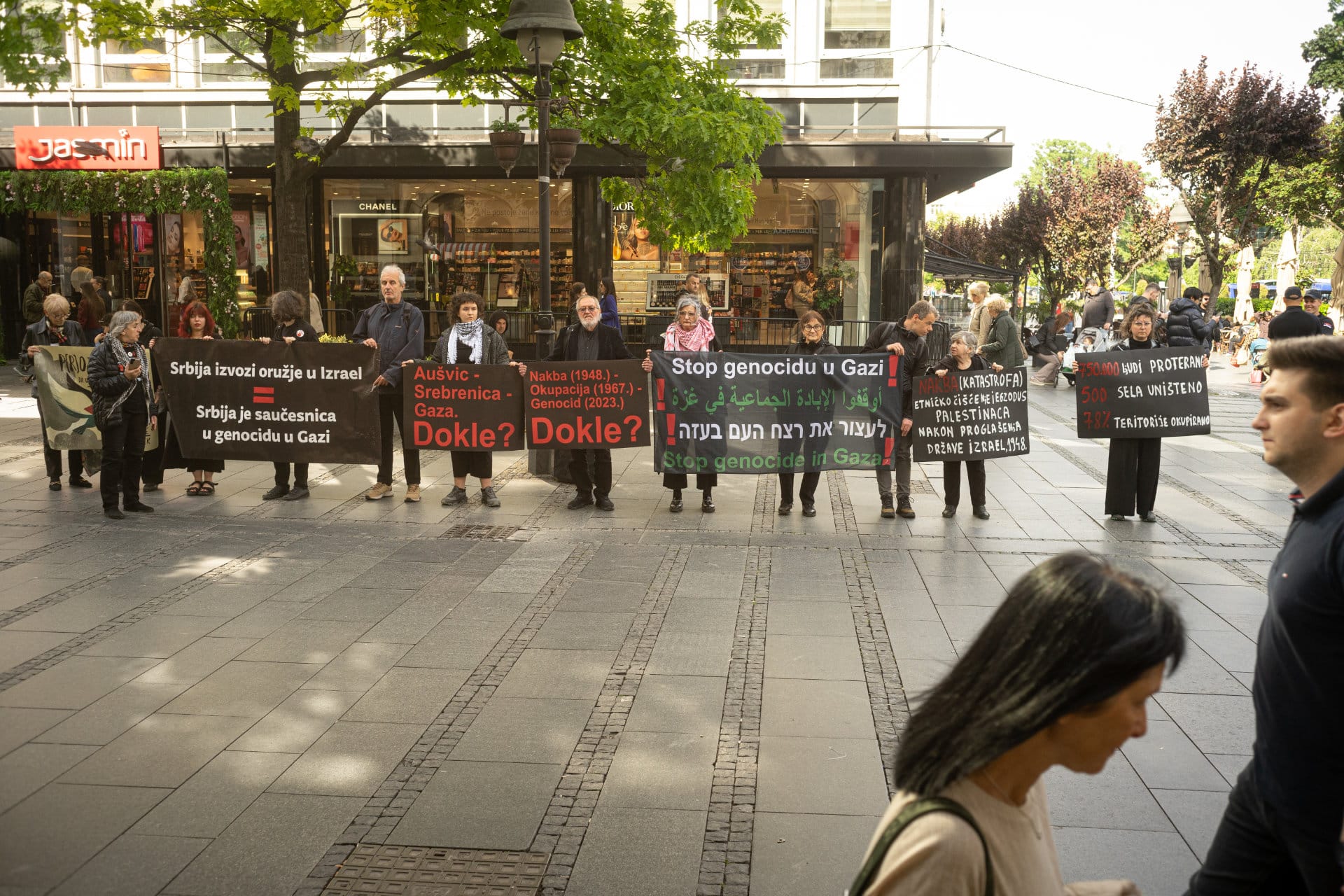
Author: Silvia Fabijanić Conflicts or rebellion against authority do not necessarily have to be violent. Nonviolent resistance does not seek victory over the enemy but the overcoming of injustice, thus a real solution and thereby the liberation of both those affected by the injustice and the opponents."1 It is about shaping actions that seek to stop wrong and harmful policies as they are being implemented, not an abstract idea that peace is "built" by the very act of resistance. Nonviolent movements throughout history have opened up space for reflection and the reshaping of social structures, often questioning relations between power, material inequalities, and dominant social norms. During the 1990s in Serbia, public space was dominated by fear, war propaganda, and the onset of armed conflicts. While much of society passively observed the events of the war, the organization Women in Black appeared on the streets of Belgrade. Their activism was based on the clear conviction that war is wrong and must be publicly and consistently opposed while it is happening. Women in Black had no institutional power or weapons, but they possessed a strong political stance and a visible, symbolically powerful presence in public spaces, which makes their activism particularly significant. This paper focuses on the work of Women in Black during the 1990s because of the specific historical and political context, marked by war, nationalism, and strong repression. Although armed conflicts did not take place on the territory of Serbia, the state was directly involved in the wars in the territory of the former Yugoslavia. A socio-political framework characterized by propaganda, militarization, and political control was established. Under such circumstances, nonviolent resistance takes on a special gravity and risk. Photograph from the Women in Black archive, documenting the “Stop the Genocide in Gaza” protest held in Belgrade in May 2026 Years later, during 2013 and 2014, in Ukraine, under conditions of peace and without armed conflict, the pro-democracy protest movement Euromaidan emerged. The protest movement began as a response by the people to the decision by the then-President of Ukraine not to sign an agreement with the European Union and to turn the country's policy toward Russia. The movement started as a peaceful protest but later escalated into a violent conflict. This paper focuses on the role of women during the nonviolent period of Euromaidan. During Euromaidan, women stepped out of socially imposed traditional roles and actively participated in political and social changes. Although the historical, political, and social contexts of the Women in Black and the women during Euromaidan differ, they are comparable in the way women enter the political sphere nonviolently through public activism during times of profound political and social change. Neither the Women in Black nor the women during the (nonviolent) part of Euromaidan were overshadowed by men; rather, they sought to be equal to men. We live in patriarchal social structures that systematically diminish or ignore women's overall contributions. Does women's activism in nonviolent movements serve as a corrective to social invisibility, rather than as an affirmation of difference? Based on this thesis, the paper focuses on the actions of Women in Black during the 1990s and on the participation of women in the nonviolent part of the Euromaidan protests. Although they operate in different historical and political contexts, this paper aims to present their nonviolent resistance, the motives that drive them to enter the public sphere, the risks they face, their level of visibility, and the contribution they have made to society through their nonviolent actions. This paper is based on a qualitative analysis of secondary sources. The analysis was conducted using thematic analysis of scientific, media, and audiovisual sources. NONVIOLENT RESISTANCE AND THE ROLE OF WOMEN IN SOCIAL MOVEMENT A passive attitude toward injustice in society is considered a greater problem than violence itself. Passivity represents implicit support for the violent structures of social power. Nonviolence is not a sign of weakness, but a conscious and deliberate abstention from violence while actively fighting against injustice. Nonviolent resistance does not seek victory over the enemy but the overcoming of injustice, thus a real solution and thereby the liberation of both those affected by the injustice and the opponents.2 It is useful to point out that nonviolent resistance is not the same as pacifism. Pacifism is a moral conviction, while nonviolent resistance is a strategic choice. People choose it because they think it will make it easier to win, not necessarily because they "love peace."3 Nonviolent movements offer various methods of action, from public protests and strikes, through boycotts and symbolic actions, to information campaigns. Their main characteristic is that they do not create moral constraints4 or other forms of obstacles.5 The accessibility for participation enables mass mobilization of citizens. Compared to violent methods, nonviolent resistance also demonstrates strategic effectiveness. Empirical data confirms that nonviolent campaigns are twice as likely to succeed (53%) compared to violent uprisings (26%), and they also leave behind more stable and democratic societies.6 The first key reason is the aforementioned mass participation, and the second is "political jiu-jitsu." It is a mechanism in which brutal repression of peaceful protesters backfires, destroying the authorities' reputation.7 It is precisely in these mechanisms of mass participation and strategic countereffect that women are a key strategic advantage. Since women make up approximately 50% of the total population, their active involvement in resistance movements is a crucial factor in achieving critical mass. Without women, a movement cannot reach the critical mass needed to exert effective pressure on the regime's "pillars of power." The presence of women on the front lines in 99% of cases directly undermines the regime's patriarchal authority and forces security forces to question their loyalties.8On the other hand, violence directed against unarmed women dramatically increases the moral and political cost of repression.9 That women's participation is not just a statistical figure but a reality is demonstrated by the Women in Black organization in Belgrade and the massive turnout of women at the Euromaidan in Ukraine. Although they may seem difficult to compare due to different political and social circumstances, the bridge connecting them is their entry into the public sphere through nonviolent resistance. WOMEN IN PEACE INITIATIVES IN THE BALKANS DURING THE 1990S: THE CASE OF SERBIA AND 'WOMEN IN BLACK' The political context of 1990s Serbia was marked by strong militarism and nationalist homogenization of society, as well as the breakup of SFRY10. Slobodan Milošević11used mass rallies to consolidate his power and create an atmosphere in which any voice of reason was branded "treasonous." Although the first multi-party elections were held, the system was not truly democratic. A strong retraditionalization of society occurred. The war discourse required men to be warriors and women to be "mothers of the nation" who would bear new soldiers and remain silent. 12 The political crisis of 1990 was merely a prelude to the armed conflicts that would follow on the territory of Croatia and Bosnia and Herzegovina. Serbia found itself in the paradoxical position of a state with no war on its own territory, yet simultaneously carrying out mass mobilization and sending resources to the battlefields. In such a specific context—where the war is waged 'in the name of the people,' but not on their territory—a strong internal resistance emerges in the form of the organization Women in Black. Women in Black is an activist group and network with a feminist-anti-militarist orientation, composed of women and men from different generations and ethnic backgrounds, with varying levels of education, social statuses, lifestyles, and sexual orientations. The organization grew out of earlier feminist initiatives, including Women's Studies and anti-war centers13, in response to the militaristic regime of Slobodan Milošević and the start of the war in Croatia and Bosnia. In Belgrade, on October 9, 1991, the organization began its weekly "vigil."14Every Wednesday on Republic Square in Belgrade, they stood in silence, dressed in black, holding banners. They used the traditional Eastern European/Christian custom of wearing black for the deceased, but gave it a new meaning: mourning the victims on "all three sides," which was a radical act because the regime only recognized Serbian victims. The silence served as a shield against the aggressive, male discourse of war. They chose silence as a rejection of speaking unnecessary words that prevent and hinder reflection on oneself and others. 15 They used black clothing as an "instrument of reason" and a method for their nonviolent entry into the social sphere. Through their engagement, they consciously distanced themselves from socially gender-imposed female roles and "sending sons to war," instead articulating their resistance as an independent political choice. This approach represented a radical critique of the very foundations of society, as they recognized militarism and war as direct extensions of patriarchal power structures. It was a direct blow to the very core of nationalist ideology. The members of the organization stated: We are a group of women who stand in silence and in black every week to express our disagreement with the war. We decided to show what the female side of this war is. Women in our countries wear black to express their sorrow for the deaths of their loved ones. We wear black for the deaths of all the victims of war. We wear black because people have been driven from their homes, because women have been raped, because towns and villages have been burned and destroyed."16 In addition to showing solidarity with the victims of war, the Women in Black also organized safe spaces for all men who refused military service. By practically protecting these men, they opposed the militaristic regime and shielded individuals from the state's repressive apparatus. "Women in Black also set up in a rented apartment that became a refuge for opponents of conscription and deserters. When the wars began, it is estimated that 300,000 Serb men of military age went into exile rather than fight. Providing emotional, moral, and political support to these men who refused to participate in the fighting was one of the practical ways the women acted on their feminist and anti-militarist ideas. Some of these men, in turn, became valued members of the organization." 17 Because of their views, Women in Black were subjected to various forms of attacks. The attacks included verbal and physical assaults on the streets, both during and outside of street actions, destruction of the organization's property, death threats against members, organized witch hunts and calls for lynching, and sexist outbursts. The use of sexist insults served to reduce their political message to "female hysteria" or moral depravity. Regime media called them "traitors," "foreign mercenaries," and other derogatory names and conducted media campaigns against the members. Almost no street action by Women in Black went by without physical and/or verbal attacks.18The attacks were not spontaneous actions or random incidents but were organized and systemic acts aimed at discrediting, isolating, and intimidating the members. In addition to random passersby, they were often attacked by organized groups such as members of paramilitary formations or far-right extremists. The sources of repression were society and the state apparatus. They were "traitors" because they rejected national homogenization and spoke publicly about the crimes being committed at the time by their own nation. One of the members stated: "We protested in the street and exposed our bodies [using the body as an integral part of the political message] against the regime…people would come up to us who spat on us, pushed us, pulled our hair, and yelled that we were traitors.." 19 Police officers would often stand by while passersbys attacked the women, intervening only when the situation escalated. Sometimes, the police officers themselves would hurl insults at the activists. The police's lack of reaction to these events indicated how complicit state authorities were in restricting the right to freedom of assembly.20 By standing in black, remaining silent, showing courage, and engaging in nonviolent action, they became highly visible in the public sphere of Serbian society in the 1990s. Women in Black were the first to show that it was possible to "take to the streets" in a strictly controlled regime. Their concept of long-term persistence (standing every week for years) is proof of the "possibility of nonviolent resistance" even under the harshest conditions. In doing so, they proved that a 'minority' movement can become the 'moral compass' of a society, ensuring that a critical voice is heard even in moments of greatest silence. They created a recipe for nonviolent resistance and perseverance. After the end of all the armed conflicts in which Serbia was involved, Women in Black did not stop their work. They shifted their focus to confronting the past, being in solidarity with all victims of war, honoring the victims by visiting war crime sites, and insisting that the crimes not be forgotten and that Serbia's institutions confront what was done.21 From the 1990s to today, the government in Serbia has changed, but the deep-seated mechanisms of the system have remained the same. After the collapse of the overhang at the Novi Sad train station (November 1, 2024), which killed 16 people, a new turning point was reached in Serbian society. A new wave of nonviolent resistance has begun, initiated by students demanding accountability for the deaths of 16 people and a change in political leadership. At the time of writing, the protests are still ongoing. The organization Women in Black has offered its full support to the students. In the new nonviolent resistance on the streets across Serbia, female students are not just participants; they actively take part in the blockades and are also targeted by police intimidation and physical and verbal attacks by the authorities. WOMEN AS AGENTS OF NONVIOLENT RESISTANCE DURING EUROMAIDAN On November 21, 2013, in Ukraine, protesters gathered on the main square in Kyiv to protest President Viktor Yanukovych.22 At that time, Ukraine was at a deeply divided crossroads between European integration and a renewed strong bond with Russia. Uncertainty about the country's future direction was caused by President Yanukovych's sudden withdrawal from Ukraine's Association Agreement with the European Union. For some Ukrainian citizens, membership in the European Union represented the only hope of bringing prosperity to Ukraine.23Aside from the latter reason, discontent among Ukrainian citizens had been smoldering for years. The causes lay in the oligarchic-clan system of power, corruption that permeated every sphere of society, and distrust in state institutions.24All of these were key drivers that brought the people of Ukraine onto the streets and sparked the Revolution of Dignity, better known as Euromaidan. Depending on the authors, the uprising can be divided into two phases: the first phase, which began in 2013 with peaceful student protests in Kyiv, and the second phase in 2014 when the protests spread across the entire country, and police repression turned them from peaceful demonstrations into mass violent protests.25This paper is based on the nonviolent part of Euromaidan and at a time when there is no immediate danger of war. Although Ukraine has experienced earlier revolutions, during Euromaidan women nonetheless transitioned from the role of "helpers" to that of "creators" of the revolution. "Women of Euromaidan" do not operate as an organization, like Women in Black, and therefore cannot be precisely defined. They are a generation of women who simultaneously navigated imposed traditional roles and actively participated in other protest roles, thereby permanently redefining public space in Ukraine. Their presence was multifaceted, and they occupied a space that was often under the strict supervision and regulation of male protesters. Although the media often emphasized the male aspects, women made up a huge part of the movement. At the very beginning of the protests, women made up as much as 44% of all participants.26According to the research, the motives for participating in the protest were multiple and often overlapping. The most common motive was opposition to corruption and human rights violations (60%), solidarity with the protesters (32%), the fight for a better future for their children (27%), and a sense of civic duty and helping society (24%).27 Many women embraced traditional female roles and were often seen by fellow protesters, as well as the broader public, as aides to the male protesters rather than as revolutionaries in their own right.28Their reproductive work—such as cooking, cleaning, laundry, and logistics—was often undervalued and considered less important than the "real" fighting on the barricades.29 In the post-Soviet context of Ukraine, such work in the private sphere (associated with women) is considered less prestigious and rarely receives public recognition compared to "real" work in the public sphere. However, although at the start of the protests women were pushed into traditional roles, they took on the roles which marked the beginning of their growing visibility within the patriarchal environment. Women began offering legal aid to protesters, organizing public lectures and documentary film screenings within the camp, patrolling barricades, distributing food and providing medical assistance, participating in negotiations, providing informational support, and handling logistics.30Ukrainian women thus fought for and occupied spaces traditionally reserved for men in the public sphere of a patriarchal society. Thanks to their participation in the Euromaidan protests, they became equal partners who shaped the protest and occupied male public spaces, unlike in earlier revolutions.31 The most prominent example of their organization was the founding of the Euromaidan SOS initiative.32The leaders of the initiative were women, most of whom were human rights activists.33Within the framework of the initiative, they coordinated activities, monitored cases of abuse, and ensured access to legal protection, thereby shielding individuals from the state's repressive apparatus. In addition to their involvement in mixed-gender collectives, they also operated through independently organized initiatives. They founded independent Women's Battalions ("Women's Sotnya") with the aim of making women's contributions visible and as a direct initiative by feminists appalled by the revolution's sexism. The most famous was the "Olga Kobylianska" Women's Battalion.34Although it was called a "battalion," it was not a military or violent formation, but rather an independent women's initiative focused on self-defense, guard duty, and organizational support within the nonviolent protest movement. The activists organized special actions like "Women's Solidarity Night" to draw attention to their contributions, marching through Euromaidan with instruments and chanting "Freedom, equality, women's solidarity!". Their actions provoked hostile reactions from some protesters; they were told, "You're provocateurs! What are you doing?" and their banners were torn down.35Examples of sexism and misogyny were common. In the kitchens, you could find signs like: "Dear women, if you see trash - clean it up, [male] revolutionaries will be pleased," and there were also ads looking for "young women to create a positive atmosphere."36There was also strong rhetoric among the male protesters and their "concern for women" that aimed to keep women away from "danger zones," not viewing them as capable of making decisions on their own.37 One of the more creative nonviolent actions by the protesters was the "Mirror Action." It was a powerful tactic in which protesters held torso-sized mirrors with the message "God, is that me!" as a counter-response to the police shields. The idea was for the police to see their reflections in the mirrors and confront their own actions. In addition, the protesters offered tea to the police officers, played their national anthem, and attached flowers to the officers' shields.38 Unfortunately, clashes with the police soon broke out, and Euromaidan became a violent protest. The police's violent crackdown on the protesters led to a large number of injuries and deaths, the radicalization of the protesters, and ultimately the flight of President Yanukovych. "I realized that this was serious, that the state had now turned against its own people."39It was precisely this realization of a state attacking its own citizens that was key to mobilizing women who had not previously considered themselves politically active. However, during Euromaidan, women in Ukraine had already shown how important they are in the public sphere through nonviolent engagement and participation, and how they can stand on equal footing with men. After Euromaidan in 2014, there was the Russian annexation of Crimea40and the war in Donbas.41Tensions continued over the following years, until the end of February 2022, when Russia launched a full-scale invasion of Ukraine, which remains an ongoing conflict. Unlike the Women in Black who were active in Serbia in the 1990s, a territory where no war was taking place, the women of Ukraine find themselves in a situation where an armed conflict is currently being waged on their territory. Thus, due to the newly emerged political and social circumstances, Ukrainian women have developed the view that defending the country is a prerequisite for preserving women's rights. They believe that a Russian victory means the end of human rights and feminist achievements in Ukraine, and therefore, defense (which includes both men and women) is necessary.42
Puzzle
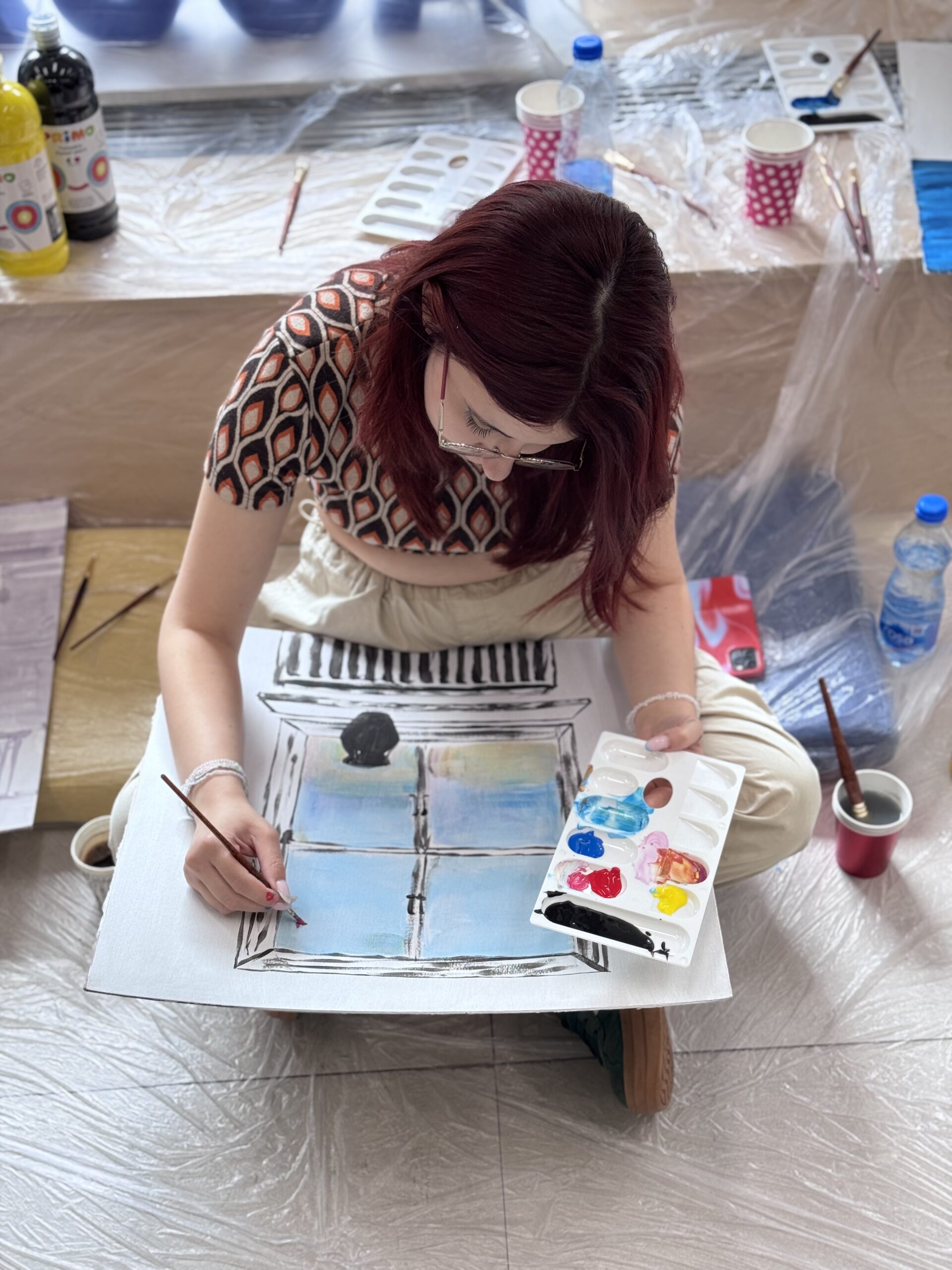
Ovde pročitajte ovaj članak na naškom jeziku. What happens when young artists are given the space to speak? The Puzzle, a collective exhibition organized by the Underground Initiative, offers one possible answer. Open from June 15 to June 26 at the European House in Niš, the exhibition brings together diverse artistic expressions that explore identity, climate justice, memory, and belonging, while reminding us why independent cultural spaces remain essential for young people and their communities. This exhibition was created in 2026 as a collective cry of Niš youth. It is called The Puzzle because each of us contributed a small piece of ourselves, and somehow those pieces came together into a larger story. There was no common theme, no agreed form, and no attempt to create a unified artistic vision. Each artist followed their own voice, choosing their own medium, symbols, and message. Yet when the works were brought together, we realized they were speaking to one another. Through illustrations, graphic design, oil paintings, and photography, visitors will encounter stories that may initially seem unrelated. But a closer look reveals recurring questions and shared concerns. The exhibition reflects a longing for climate justice through depiction of environmental destruction, endangered animals, and the tension between nature and the colourless aesthetics of contemporary life. It explores identity through music, memory, archetypes, the beauty of the human body, and symbols of home, belonging, and southern Serbia. The Puzzle is more than an exhibition. It is a space where young creators search for meaning, connection, and ways of understanding the world around them. It is also a reminder that art remains one of the most powerful languages through which young people express their hopes, fears, and visions for the future. Organized by the Underground Initiative with the support of the Critical Education Centre and the European House in Niš, the exhibition brings together emerging artists from Niš and invites visitors not only to look at the artworks, but to listen to what they are trying to say. At a time when cultural spaces are increasingly inaccessible to those at the beginning of their artistic journeys, initiatives such as Underground seek to open doors rather than close them. We believe that young people need places where they can exhibit their work, exchange ideas, challenge dominant narratives, and develop their voices without having to wait for institutional recognition. Whether through exhibitions, concerts, festivals, independent media, or public discussions, these spaces allow new generations to participate in shaping the cultural and social life of their communities. This is also why Underground exists alongside initiatives such as Balkan Talks. While one creates room for artistic expression and the other for critical dialogue, both are driven by the same conviction: that young people deserve platforms where they can think, question, imagine, and create. Critique does not belong to a single form. It can be found in an article, a photograph, a song, a painting, a performance, or a conversation. Art and critical thought are not separate spheres; they are often different languages through which we respond to the same social realities. We therefore invite you not only to visit this exhibition, but also to support the initiatives that make spaces like this possible. Support young artists. Support independent culture. Support platforms that encourage critical thinking, creativity, and dialogue. And if you want to experience even more of the creativity, energy, and critical spirit of Niš youth, join us at this year's Underground Festival, taking place from October 1–4 at the Niš Cultural Center. Follow Underground and kriti.cko on Instagram, stay connected, and become part of a community that believes culture is not something we simply consume - it is something we create together. We are the young creators of this city. We invite you to listen to our images. Here you can see the whole exhibition.

Udžbenici moći: Ko ima pravo da opiše nacionalni identitet?
Šta se dešava kada država odluči kako istorija treba da izgleda? I kakvu budućnost to proizvodi? Ilustrativna fotografija. Preuzeto sa Pexelsa. Prethodnih meseci, rasprave o novim politikama udžbenika ponovo su otvorile jedno staro i neprijatno pitanje: ko kontroliše znanje i u koju svrhu? Iako su predstavljene kao administrativne ili obrazovne reforme, ove politike ne mogu biti neutralne. One često signaliziraju nešto dublje: pokušaj da se preoblikuju kolektivno sećanje i identitet, a samim tim i politička imaginacija jednog društva. Na prvi pogled, centralizovana kontrola nad udžbenicima može delovati kao pitanje efikasnosti ili osiguranja kvaliteta. Vlade tvrde da jedinstveni narativ obezbeđuje koherentnost obrazovnog sistema, ali nas istorija uči da budemo oprezni. Kada država monopolizuje proizvodnju znanja, obrazovanje prestaje da bude prostor kritičkog mišljenja i postaje sredstvo ideološke reprodukcije. I to nije nov fenomen. Čemu nas uči istorija? Tokom 20. veka, autoritarni i nacionalistički režimi više puta su se oslanjali na obrazovanje kao sredstvo konsolidacije moći. U nacističkoj Nemačkoj, udžbenici su sistematski prepravljani kako bi promovisali rasnu ideologiju i opravdali ekspanzionističku politiku. Slično tome, u Sovjetskom Savezu, istorijski narativi su kontinuirano revidirani kako bi se uskladili sa promenljivom političkom linijom vladajuće partije, često brišući "nepodobne" istine i pojedince iz javnog sećanja. U oba slučaja, obrazovanje nije bilo o učenju, već o poslušnosti. Bliže našem vremenu, slični obrasci pojavljuju se u delovima Evrope. Jedan od najrelevantnijih savremenih primera je Mađarska. Tokom poslednje decenije, Mađarska Vlada je uvela sve veću centralizaciju kontrole nad obrazovnim sadržajem, uključujući i nacionalizaciju udžbenika. Novi kurikulumi naglašavaju nacionalistička tumačenja istorije, sužavaju prostor za kritičke perspektive i promovišu homogenu viziju identiteta. Posledice nisu apstraktne. Istraživači/ce, prosvetni radnici i radnice i organizacije civilnog društva ukazuju da ove promene doprinose normalizaciji isključivih narativa. Istorijska složenost se pojednostavljuje, a perspektive manjina se marginalizuju ili brišu. A možda i najzabrinjavajuće, mladi se socijalizuju da svet posmatraju kroz prizmu „mi protiv njih“. Obrazovanje, u tom kontekstu, postaje suptilno, ali moćno sredstvo za proizvodnju nepoverenja, ogorčenosti, pa čak i neprijateljstva prema drugima. Zašto rasprava o udžbenicima nikada nije samo rasprava o udžbenicima? U društvima sa krhkim demokratskim institucijama, kontrola nad obrazovanjem lako može postati kontrola nad mišljenjem. Kada je dozvoljena samo jedna verzija istorije, kritičko promišljanje zamenjuje pasivno prihvatanje. Učenici i učenice se ne podstiču da postavljaju pitanja — učimo ih šta da misle. A kada se to dogodi, sama osnova demokratske kulture počinje da erodira. Zapadni Balkan, sa svojim složenim istorijama i nerazrešenim tenzijama, posebno je podložan takvim dinamikama. Iz iskustva znamo kako suprotstavljeni nacionalni narativi mogu podstaći podele i sukobe. Upravo zbog toga, obrazovanje bi trebalo da bude prostor u kojem se istražuju različite perspektive, postavljaju teška pitanja i razvija empatija. Uvođenje strogo kontrolisanih, državno odobrenih udžbenika koji favorizuju jedan narativ rizikuje da poništi ove napore. Rizikuje da reprodukuje upravo one obrasce koji su istorijski vodili ka isključenju, polarizaciji i nasilju. Ima li alternative? Nedavno uvođenje takozvanih „udžbenika od nacionalnog značaja“ u Srbiji izazvalo je ozbiljnu zabrinutost u stručnoj javnosti. Među njima, Centar za kritičko obrazovanje (CKO) podneo je sedam formalnih primedbi tokom procesa javne rasprave — primedbe koje na kraju nisu usvojene. Ovo nije samo proceduralno pitanje. Ovo je političko pitanje. U čemu je problem? U samoj srži reforme nalazi se jednostavna, ali opasna ideja: da određeni školski predmeti, posebno jezik, istorija i umetnost i kultura, treba da služe jačanju nacionalnog identiteta i kohezije. To je problematično samo po sebi, a u praksi još i više. CKO je u svojim primedbama upozorio da ovakav pristup predstavlja „sekuritizaciju obrazovanja“ — pomeranje u kojem se udžbenici više ne tretiraju kao pedagoški alati, već kao instrumenti nacionalne politike. Ovo formulisanje je važno, jer kada se obrazovanje poveže sa „nacionalnom bezbednošću“, postaje mnogo teže dovoditi ga u pitanje. Kritika se više ne posmatra kao deo demokratske debate, već kao pretnja. Na šta CKO upozorava?Primedbe CKO-a prevazilaze opšte zabrinutosti i ukazuju na vrlo konkretne rizike sadržane u samom zakonu: Politička kontrola nad proizvodnjom znanjaDajući prednost „nacionalnom interesu“ kao kriterijumu, zakon otvara prostor za izbor autora na osnovu ideološke podobnosti, a ne akademskog kvaliteta. Brisanje pluralnih perspektivaU predmetima poput istorije i kulture, jedan „zvanični“ narativ rizikuje da isključi glasove manjina i alternativna tumačenja. Slabljenje demokratskih proceduraČinjenica da primedbe podnete tokom javne rasprave nisu uvažene, niti je CKO dobio bilo kakav odgovor od nadležnih institucija, otvara ozbiljna pitanja o transparentnosti i participaciji. Ovo nisu apstraktni strahovi, već su utemeljeni u istorijskom iskustvu i u savremenim istraživanjima. Obrazovanje ili indoktrinacija?Ključno pitanje nije da li nacionalni identitet treba da bude deo obrazovanja, jer on to često i jeste, u nekom obliku. Pravo pitanje je: ko ga definiše i čiji se glasovi pritom isključuju? Intervencija CKO-a podseća nas da obrazovna politika nikada nije neutralna. Ona odražava političke izbore, a ti izbori oblikuju buduće generacije. Ignorisanje stručne i civilne javnosti nije samo loše upravljanje. To je upozorenje, jer kada obrazovanje postane zatvoren sistem, ono prestaje da stvara kritičke građane i počinje da proizvodi poslušne. Možete u celosti pročitati primedbe koje je CKO predao ovde.Rad koji su istraživačice CKO-a objavile o rizicima ovog zakona pročitajte ovde.

Textbooks of Power: Who Gets to Write the Nation?
Članak možeš pročitati na srpskom jeziku ovde. What happens when the state decides what history should look like? And what kind of future does that produce? Illustration photo. Retrieved from Pexels (www.pexels.com) In recent months, debates around new textbook policies have once again opened an old and uncomfortable question: who controls knowledge, and with what purpose? While presented as administrative or educational reforms, these policies are rarely neutral. They often signal something deeper: an attempt to reshape collective memory and identity, and ultimately, the political imagination of a society. At first glance, centralized control over textbooks might seem like a matter of efficiency or quality assurance. Governments argue that a unified narrative ensures coherence in education systems. But history teaches us to be cautious. When states monopolize the production of knowledge, education stops being a space for critical thinking and becomes a tool for ideological reproduction. And this is not a new phenomenon. What Does History Teach Us? Throughout the 20th century, authoritarian and nationalist regimes have repeatedly turned to education as a means of consolidating power. In Nazi Germany, textbooks were systematically rewritten to promote racial ideology and justify expansionist politics. Similarly, in the Soviet Union, historical narratives were continuously revised to align with the ruling party’s shifting political line, often erasing inconvenient truths and individuals from public memory. In both cases, education was not about learning, it was about obedience. Closer to our own time, we see similar patterns emerging in parts of Europe. One of the most relevant contemporary examples is Hungary. Over the past decade, the Hungarian government has introduced increasingly centralized control over educational content, including the nationalization of textbook publishing. New curricula have emphasized nationalist interpretations of history, reduced space for critical perspectives, and promoted a homogeneous vision of identity. The consequences are not abstract. Researchers, educators, and civil society organizations have pointed out that these changes contribute to the normalization of exclusionary narratives. Historical complexity is flattened. Minority perspectives are marginalized or erased. And perhaps most concerningly, young people are socialized into seeing the world through a lens of “us versus them.” Education, in this context, becomes a subtle but powerful vehicle for producing distrust, resentment, and even hostility toward others. Why the Debate on Textbooks Is Never Just About Textbooks? In societies with fragile democratic institutions, control over education can easily become control over thought. When only one version of history is allowed, critical engagement is replaced by passive acceptance. Students are not encouraged to ask questions, they are taught what to think. And once that happens, the very foundation of democratic culture begins to erode. The Western Balkans, with its complex histories and unresolved tensions, is particularly vulnerable to such dynamics. We know from experience how competing national narratives can fuel division and conflict. Precisely because of this, education should be the space where multiple perspectives are explored, where difficult questions are asked, and where empathy is cultivated. Introducing tightly controlled, state-approved textbooks that privilege a single narrative risks undoing these efforts. It risks reproducing the very patterns that have historically led to exclusion, polarization, and violence. Is There an Alternative? The recent introduction of so-called “nationally significant textbooks” in Serbia has sparked serious concern among educators, researchers, and civil society organizations. Among them, the Critical Education Centre (CKO) has submitted a set of formal objections during the public consultation process — objections that were ultimately not accepted. This is not just a procedural issue. It is a political one. What is the problem? At the core of the reform is a simple but dangerous idea: that certain school subjects, especially language, history, and arts and culture, should serve the purpose of strengthening national identity and cohesion. This idea is veery troubling as a concept, but even more so in practice. CKO, in its official submission, warned that this approach represents a “securitization of education”, a shift in which textbooks are no longer treated as pedagogical tools, but as instruments of national policy. This framing matters, because once education becomes tied to “national security,” it becomes much harder to question it. Criticism is no longer seen as part of democratic debate, but as a (national) threat. What CKO is Warning About? CKO’s objections go beyond general concerns. They point to very concrete risks embedded in the law itself: Political control over knowledge productionBy privileging “national interest” as a criterion, the law opens space for selecting authors based on ideological alignment rather than academic quality. Erasure of plural perspectivesIn subjects like history and culture, a single “official” narrative risks excluding minority voices and alternative interpretations. Weakening of democratic procedureThe fact that objections submitted during public consultation were not meaningfully incorporated raises serious questions about transparency and participation. These are not abstract fears. They are grounded in both historical experience and contemporary research. Education or indoctrination? The key question is not whether national identity should be part of education. It always is, in some form. The real question is: who defines this identity, and whose voices are excluded in the process? CKO’s intervention reminds us that education policy is never neutral. It reflects political choices and those choices shape future generations. Ignoring expert and civil society input is not just bad governance. It is a warning sign. Because once education becomes a closed system, controlled from the top, it stops producing critical citizens — and starts producing obedient ones. You can read the full set of comments submitted by CKO here.You can read the paper published by CKO researchers on the risks of this law here.
Istorija nije počela 1999.
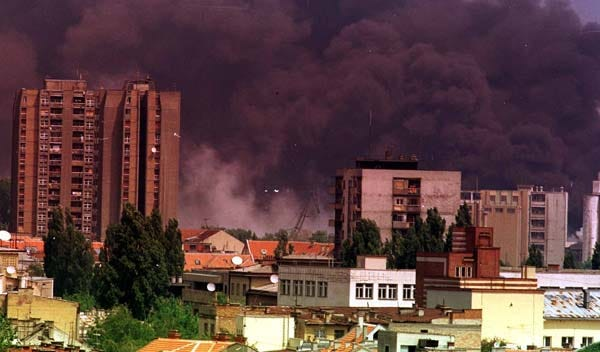
Autorka: Ana Milosavljević Na godišnjicu NATO bombardovanja Srbije — pogled na to šta javni diskurs pamti, a šta briše. Transparent ispred Skupštine Srbije koji osuđuje ubijanje dece od strane NATO-a. Svake godine 24. marta, isti narativ dominira javnim diskursom u Srbiji: više od 2.000 civila ubijenih u ilegalnoj, neosnovanoj NATO agresiji pod izgovorom spasavanja kosovskih Albanaca. Političari, mediji, i nažalost, mnogi iz takozvane levice u Srbiji fokusiraju se na vrlo konkretnu štetu koju je bombardovanje nanelo, ali to čine bez ikakvog priznanja onoga što je srpska vlast radila na Kosovu u godinama koje su prethodile bombardovanju. Razgovarala sam sa dvoje kosovskih Albanaca i jednom kosovskom Srpkinjom o njihovom tumačenju današnjeg obeležavanja, njihovim stavovima o NATO-u i nasilju srpske vlasti, i o tome šta je potrebno da bi se Srbi i Albanci ujedinili u zajedničkoj borbi. Danas političari i mediji (i režimski i opozicioni) predstavljaju događaje od pre 27 godina kao situaciju u kojoj je Srbija bila jedina žrtva. Često prikazuju stradanje Albanaca od strane Srbije kao zaveru koju je Zapad osmislio kako bi opravdao intervenciju. Činjenice govore sasvim drugačiju priču. NATO bombardovanje Novog Sada, Srbija, 1999. godine. Između 1998. i 1999. godine, srpske snage su nasilno proterale oko 850.000 Albanaca iz njihovih domova na Kosovu. Do kraja rata, ubijeno je više od 10.000 Albanaca, a hiljade su silovane ili mučene. Masovne grobnice Albanaca kasnije su pronađene na više lokacija u Srbiji, sa gotovo 1.000 tela koja su prebačena i tajno sahranjena. Mnogi se i danas vode kao nestali. Svedočenja vojnika se takođe zanemaruju u srpskom javnom diskursu. Jedan komandant tenkovske jedinice zabeležen je kako kaže: „Za sve vreme dok sam bio na Kosovu, nikada nisam video nijednog neprijateljskog vojnika i moja jedinica nijednom nije gađala vojne ciljeve. Tenkovi koji koštaju 2,5 miliona dolara korišćeni su za masakriranje albanske dece… Stid me je.“ Povodom sistematskog izostavljanja ovih istorijskih činjenica iz današnjeg diskursa, razgovarala sam sa kosovskim Albancima: sa Leom1, koja živi u Prištini, i Arberom, koji je deo kosovsko-albanske dijaspore u Londonu. Lea je primetila da način na koji se predstavlja NATO bombardovanje, bez ikakvog priznanja kroz šta su Albanci prošli, u njoj izaziva osećaj da je „izluđena“ i „dehumanizovana“. „To nije polazna tačka sa koje možemo da razgovaramo, posebno imajući u vidu da je sa naše strane uložen značajan trud da se priznaju i srpske žrtve rata“, dodaje ona. Arber je slično komentarisao da on takav narativ doživljava kao „šamar u lice“, navodeći da takav narativ odražava širi trend brisanja iskustava kroz koja su Albanci na Kosovu prolazili, ne samo tokom 1998–1999, već kroz čitav 20. vek. To brisanje nije počelo 1999. godine. Za Albance, ono predstavlja dužu istoriju represije, od jugoslovenskih kolonizacionih kampanja početkom 20. veka do institucionalne diskriminacije i nasilja tokom 1990-ih. Mapa iz 20. veka koja prikazuje jugoslovensku kolonizaciju na Kosovu i u Severnoj Makedoniji. Ovaj diskurs ne kritikuju samo Albanci. Marija Savić iz Gnjilana opisala je dominantni srpski prikaz bombardovanja kao primer „selektivnog sećanja“ koje „služi reprodukciji nacionalističkog narativa“. „Fokus je isključivo na Srbiji kao žrtvi spoljne agresije, dok ne postoji sistemsko suočavanje sa kontinuiranom represijom albanskog naroda na Kosovu: od kolonijalnih politika i nasilja početkom 20. veka, preko institucionalne diskriminacije u Jugoslaviji, do otvorenog sistema aparthejda i represije nad Albancima tokom 1990-ih“, rekla je. Upravo taj kontekst pomaže da se razume zašto su mnogi kosovski Albanci podržali NATO intervenciju, koja je okončala srpsku kontrolu nad Kosovom. Kako Lea objašnjava: „Intervencija 1999. zaustavila je rat i omogućila nam da se vratimo svojim životima, domovima, institucijama. Može biti istina da je intervencija bila kolonijalne prirode i da je izazvala civilne žrtve i druge negativne posledice, ali je takođe istina da je period nakon rata i nakon proglašenja nezavisnosti 2008. doneo mnogo nade mnogim ljudima ovde, koji su samo deceniju ranije živeli svakodnevni život u stalnom strahu.“ Arber je slično opisao svoja kontradiktorna osećanja prema NATO-u: „Iako priznajem da je NATO prisustvo na Kosovu uklonilo Srbiju, koja je bila regionalni kolonizator naše zajednice, takođe priznajem i probleme NATO-a kao upravljačkog tela… Neću do kraja života osećati dug njima, niti ću dozvoliti da budem moralno manipulisán od strane NATO-a kako bih izbrisao realnosti i problematične stvari koje rade kao institucija.“ Kosovske novine koje izveštavaju o proglašenju nezavisnosti Kosova 17. februara 2008. godine. Marija je takođe naglasila da je neophodno kritički sagledati i NATO i srpsku državu, te da te dve stvari nisu međusobno isključive. „Diskurs u Srbiji o ovom pitanju je potpuno binaran; ako kritikujete ulogu Srbije, označeni ste kao izdajnik iz nevladinog sektora, dok ako kritikujete NATO agresiju, označeni ste kao srpski nacionalista — a nijedno od toga nije tačno. NATO i srpska vlast su vrlo slični u svojim represivnim i kolonijalnim politikama.“ Izjave američkih zvaničnika dodatno potkrepljuju argument da NATO intervencija nije bila humanitarne prirode. Kako je napisao Stroub Talbot, zamenik američkog državnog sekretara od 1994. do 2001: „Otpor Jugoslavije širim trendovima političkih i ekonomskih reformi — a ne sudbina kosovskih Albanaca — najbolje objašnjava NATO rat.“ Lea i Arber su oboje izrazili spremnost da kritički preispitaju ulogu NATO-a na Kosovu — pod uslovom da se srpsko društvo suoči sa sopstvenim revizionističkim narativima. „Spremna sam da učestvujem u svakom razgovoru koji kritikuje postojanje NATO-a, ali osećam odgovornost da se prvo suočimo sa predrasudama koje nas sprečavaju da budemo ravnopravni učesnici u tim razgovorima“, rekla je Lea. Kako Arber kaže, „na osnovnom nivou, ne možeš biti u solidarnosti sa ljudima koji ne žele da imaš jednaka prava kao oni.“ Percepcija da Srbi ne žele da žive u jednakosti sa Albancima može se videti u brojnim primerima, a najskorije u upotrebi pogrdnog naziva za Albance u skandiranjima protiv predsednika Srbije Aleksandra Vučića na protestima tokom protekle godine. Marija opisuje sopstveni put suočavanja sa tim realnostima: „Bilo je potrebno mnogo odvikavanja da bih se oslobodila anti-albanskog sentimenta i nacionalizma… Verujem da su internacionalizam i klasno jedinstvo u borbi protiv kapitalizma jedini put ka oslobođenju svih balkanskih naroda.“ Nedostatak informacija o represivnoj ulozi srpske vlasti nad Albancima otežava prevazilaženje ovih predrasuda. Nakon što je video da mnogi Srbi ne znaju osnovne istorijske činjenice o Kosovu, Arber je 2020. osnovao edukativno-kulturnu platformu „Balkanism”. Balkanism teži dekonstrukciji etnonacionalističkih narativa širom regiona kroz slavljenje sličnosti i razlika, uz priznanje istorijske represije različitih zajednica. „Razumem da smo u okviru nacionalnih država svi sebe povezali sa državom kao produžetkom sebe. Ali mislim da onog trenutka kada počnemo to da dekonstruišemo i da sebe vidimo više kao nosioce kulture, istorije i identiteta koji se preklapaju, možemo da komuniciramo na mnogo humaniji način“, kaže on. Naslovna strana prvog broja časopisa „Balkanism“, objavljenog u septembru 2024. godine. Dok je Marija kroz obrazovanje i suočavanje sa sopstvenim predrasudama doživela transformaciju, smatra da se stvarna promena ne može svesti na pojedinca. „Anti-albanski sentiment i odbijanje suočavanja sa prošlošću duboko su ukorenjeni u ideološkim aparatima srpske države.“ Da bi se srpsko društvo adekvatno transformisalo, potrebno je promeniti njegove političke i ekonomske sisteme, kaže ona. Za nju to podrazumeva klasnu analizu koja prepoznaje da radnici u Srbiji i na Kosovu imaju zajedničke interese protiv vladajuće kapitalističke elite u obe zemlje. Smatra da pristup treba da bude dvostruk: Srbi bi trebalo bezuslovno da priznaju pravo Kosova na samoopredeljenje, razgrade mit o Kosovu kao „srcu Srbije“, i obnove klasnu politiku i internacionalizam. S druge strane, radnička klasa na Kosovu treba da odbaci sopstvenu vladajuću elitu i radi na proterivanju imperijalističkih sila sa svoje teritorije. Da li je takvo jedinstvo moguće — Lea i Arber se razilaze. „S obzirom na duboko nepoverenje koje postoji, toliko bola i nedostatka odgovornosti, teško je zamisliti kako se to može prevazići. I vidimo kako se Albanci tretiraju u Srbiji 2026. godine, kroz iredentističke grafite o Kosovu i anti-albanske povike, da se ništa nije promenilo. Sa naše strane takođe postoji mnogo neprijateljstva koje deluje nepremostivo. Zbog toga kako su rat i naša politička situacija oblikovali mene, deo mene se već neko vreme mentalno priprema za novi rat. I to mi daje motivaciju da se uključim u ovu diskusiju“, rekla je Lea. Za Arbera, rad na zajedničkoj budućnosti počinje građenjem stvarnih veza preko etničkih linija. „Ja sam veoma optimistična osoba. Deo moje životne prakse je izgradnja odnosa sa zajednicama sa takozvane ‘druge strane’. To je suštinski deo mog života. Vidim to kao ispravljanje istorijskih nepravdi i poništavanje kolonijalnog nasilja koje je nametnuto Kosovu, kao i uspostavljanje odnosa sa zajednicama sa kojima delimo mnogo toga istorijski i kulturno“, kaže on. U različitim kontekstima, istorija se prikazuje kao da počinje u politički pogodnom trenutku. U Palestini, zapadni mejnstrim mediji i političke elite žele da verujete da istorija počinje 7. oktobra 2023. U Srbiji, slični akteri tvrde da istorija počinje 24. marta 1999, čineći sve što je prethodilo nevažnim. Ovakav pristup instrumentalizuje nedostatak obrazovanja kako bi opravdao sistemske predrasude koje u konačnici ne služe interesima običnih ljudi. Kao što razgovori u ovom tekstu sugerišu, suočavanje sa ovim narativima zahteva više od samih informacija. Potrebna je spremnost da se sluša, da se preispituju nasleđene pretpostavke i da se suočimo sa neprijatnim istinama. Put ka trajnom miru na Balkanu ne uključuje selektivno sećanje, već se zasniva na iskrenom i objektivnom pogledu na prošlost — onom koji ostavlja prostor za sve čija su iskustva dugo bila negirana. Ovaj članak je u originalu objavljen na autorkinom blogu Substack, gde možete čitati još njenih članaka.

History Did Not Begin in 1999
Ovaj članak možeš pročitati na naškom ovde. Author: Ana Milosavljević On the anniversary of NATO’s bombing of Serbia, a look at what public discourse remembers — and what it erases. A banner outside the Serbian parliament condemning NATO’s killing of children Every year on March 24, the same narrative dominates public discourse in Serbia: over 2,000 civilians killed in an illegal, unprovoked NATO aggression under the pretext of saving Kosovar Albanians. Politicians, the media, and unfortunately, many part of the so-called left in Serbia focus on the very real damage that the bombing inflicted, but do so without any recognition of what the Serbian state was doing in Kosovo in the years preceding the bombing. I spoke with two Albanian Kosovars and one Kosovar Serb about their interpretation of today’s commemoration, their thoughts on NATO and Serbian state violence, and what it will take for Serbs and Albanians to unite in a common struggle. Today, politicians and media outlets (both regime and opposition) frame the events of 27 years ago as one wherein Serbia was the sole victim. They frequently convey Albanian suffering at the hands of the Serbian state as a conspiracy conjured up by the West in order to justify intervention. The facts tell a very different story. NATO bombing of Novi Sad, Serbia in 1999 Between 1998 and 1999, Serbian forces displaced around 850,000 Albanians from their homes in Kosovo. By the end of the war, over 10,000 Albanians were killed and thousands were raped or tortured. Mass graves of Albanians were later found in multiple locations in Serbia, with nearly 1,000 bodies transferred and buried in secret. Many people are still missing to this day. Soldier testimonies are similarly disregarded in Serbian public discourse. One Serbian commander of a tank unit was recorded stating, “For the entire time I was in Kosovo, I never saw a single enemy soldier and my unit was never once involved in firing at military targets. The tanks which cost $2.5 million each were used to slaughter Albanian children… I am ashamed.” Regarding the systematic exclusion of these historical realities from today’s discourse, I spoke with Kosovar Albanians: Lea1, living in Prishtina, and Arbër, part of the Kosovar Albanian diaspora in London. Lea remarked that the presentation of the NATO bombing without any recognition of the suffering Albanians went through leaves her feeling “gaslit” and “dehumanized.” “It’s not a starting point that we can engage with…Because on our side there has also been a lot of work done to recognize victims of the war who were Serbs” she adds. Arbër similarly commented that “it feels like a slap in the face in many ways,” saying that such a narrative reflects a broader trend of erasure of the experiences Albanians in Kosovo have faced, not only during 1998–1999, but throughout the 20th century. This erasure did not begin in 1999. For Albanians, it reflects a longer history of repression, from early 20th century Yugoslav colonization campaigns to institutional discrimination and violence in the 1990s. A map from the 20th century that reads “Post-war colonization in southern Serbia” and includes Kosovo and North Macedonia. It’s not only Albanians who criticize this discourse. Marija Savić, from Gnjilana, Kosovo described the Serbian mainstream portrayal of the bombing as one of “selective memory” which “serves to reproduce a nationalist narrative.” “The focus is exclusively on Serbia as a victim of external aggression, while there is no systemic reckoning with the continuous repression of the Albanian people in Kosovo: from colonial policies and violence in the early 20th century, through institutional discrimination in Yugoslavia, to the open system of apartheid and repression against Albanians during the 1990s,” she said. It is precisely that context which helps explain why many Kosovar Albanians welcomed NATO’s intervention, which brought an end to Serbian rule in Kosovo. As Lea explains: “The intervention in 1999 stopped the war and enabled us to go back to our lives, homes, institutions. It can be true that the intervention was colonial in nature and caused civilian casualties and had other negative effects, and also that the period after the war and after the declaration of independence in 2008 brought a lot of hope to a lot of people here, who just a decade before were living their everyday lives in constant fear.” Arbër similarly described his own contradictory feelings about NATO: “Although I acknowledge NATO’s presence in Kosovo removed Serbia, which was a regional colonizer of us as a community, I also acknowledge the problems of NATO as a governing body as well… I’m not going to feel indebted for the rest of my life, and I’m not going to be morally manipulated by NATO as a governing body to erase the realities and the problematic things that they do as an institution.” Newspapers in Kosovo reporting the declaration of Kosovo Independence on February 17, 2008. Marija similarly stressed that it was necessary to critically assess both NATO and the Serbian state and that the two are not mutually exclusive. “The discourse in Serbia on this issue is entirely binary; if you criticize the role of the Serbian state, you are labeled an NGO traitor, while if you criticize NATO aggression, you are labeled a Serbian nationalist - yet neither of these is true. NATO and the Serbian state are very similar in their repressive and colonial policies.” Statements by US officials reinforce the argument that NATO’s intervention was not humanitarian in nature. As Strobe Talbott, US Deputy Secretary of State from 1994 to 2001, wrote: “It was Yugoslavia’s resistance to the broader trends of political and economic reform — not the plight of Kosovar Albanians — that best explains NATO’s war.” Lea and Arbër both expressed a willingness to critically examine NATO’s role in Kosovo — on the condition that Serbian society confronts its own revisionist narratives. “I’m open to participating in any conversation that critiques the existence of NATO, but I feel a responsibility to first contend with the prejudices that prevent us from being equal participants in such conversations,” Lea said. As Arbër puts it, “on a fundamental basis, you can’t be in solidarity with people who don’t want you to have the same level of equality that they do.” The perception that Serbs do not want to live in equality with Albanians can be seen in many instances, most recently with the use of the pejorative word for Albanian used in chants against Serbian President Vučić at anti-government protests in the past year. Marija describes her own journey in confronting these realities: “It took a great deal of unlearning to free myself from anti-Albanian sentiment and nationalism… I believe that internationalism and class unity in the struggle against capitalism are the only path to the liberation of all Balkan peoples.” A lack of information about the oppressive role of the Serbian state against Albanians makes overcoming such biases difficult. After witnessing Serb after Serb not know basic historical facts about Kosovo, Arbër founded the educational and cultural platform Balkanism in 2020. Balkanism strives to deconstruct ethno-nationalist narratives from across the region through celebrating similarities and differences, while acknowledging historical oppression of various communities. “I understand that within a nation-state framework, all of us have associated ourselves with our state as an extension of ourselves. But I feel like the moment we start deconstructing that and see ourselves more as vessels of culture, history, and identity that overlap, we’re able to communicate in a way that feels much more human-centered” he says. Cover of Balkanism magazine’s first issue, published in September 2024. While Marija transformed through education and a reckoning of her own anti-Albanian biases, she believes that meaningful transformation cannot be reduced to the individual. “Anti-Albanian sentiment and the refusal to confront the past are deeply rooted in the ideological apparatuses of the Serbian state.” To adequately transform Serbian society, its political and economic systems must be changed, she says. For her, that necessitates a class-based analysis which sees that workers in Serbia and Kosovo have common interests against the ruling capitalist elite in both countries. She believes the approach should be two-fold: Serbians should unconditionally recognize Kosovo’s right to self-determination, dismantle the myth of Kosovo as the “heart of Serbia”, and rebuild class politics and internationalism. On the other end, the working class in Kosovo should reject their own ruling elite and work to expel imperialist forces from its territory, she says. Whether such unity is possible, Lea and Arbër are split. “Considering the deep distrust that exists, and so much pain and lack of accountability, it is hard to imagine how that can be overcome. And we see with how Albanians are being treated in Serbia in 2026, the irredentist Kosovo graffiti and anti-Albanian chants, that nothing has changed. On our side there is a lot of what feels like insurmountable enmity as well. Due to how the war and our political situation shaped me, there’s a part of me that for a while now has been mentally preparing for another war. And that is what gives me urgency to get involved with this conversation” Lea revealed. For Arbër, working towards a common future begins with forging genuine connections across ethnic lines. “I’m a very hopeful individual. A part of my own practice in my life is all about forging relations with communities from supposedly “the other side.” This has been a core aspect of my life and my practice. I see it as righting historical wrongs and undoing the colonial violence that was imposed on Kosovo, and establishing relations with communities that we share so much with historically and culturally,” he said. In various contexts, history is presented as beginning at a politically convenient moment. In Palestine, Western mainstream media and political elites would have you believe history began on October 7, 2023. In Serbia, a similar establishment class claims history began on March 24, 1999, rendering what came before irrelevant. This approach weaponizes a lack of education to justify systemic prejudices that ultimately do not serve the interests of ordinary people. As the conversations in this piece suggest, confronting these narratives requires more than information alone. It demands a willingness to listen, to question inherited assumptions, and to engage with uncomfortable truths. The path towards lasting peace in the Balkans does not include selective memory, but is instead based on an honest, objective look at the past: one which makes space for all those whose experiences have long been denied. This article was originally published on author's Substack, where more of her critical writing is available.